
Late last year, Singapore Airlines announced that it would adopt Low Earth Orbit (LEO) satellite connectivity to further enhance its inflight Wi-Fi experience.
This was a hugely exciting development, because not only is LEO connectivity significantly faster than the current Geostationary Orbit (GEO) solutions, it also provides gate-to-gate connectivity, allowing you to work or stream uninterrupted from the time you board the aircraft to the time you disembark.
While a vendor wasn’t announced at the time, all signs pointed to Starlink, which has already made huge inroads into commercial aviation with Alaska Airlines, Emirates, Qatar Airways, and United, among others.
Well, it’s now official: Singapore Airlines will adopt Starlink internet from early 2027, and it’s going to be a gamechanger.
|
“Fast, seamless connectivity is, today, an essential part of the travel experience. Singapore Airlines already offers the world’s most comprehensive complimentary in-flight Wi-Fi across our entire fleet. Starlink will take this to the next level by delivering next-generation high-speed connectivity, enabling customers to stay entertained, connected, and productive throughout their journey, with a smoother and seamless experience from take-off to landing.” -Yeoh Phee Teik, SVP Customer Experience, SIA |
Singapore Airlines launching Starlink internet in 2027
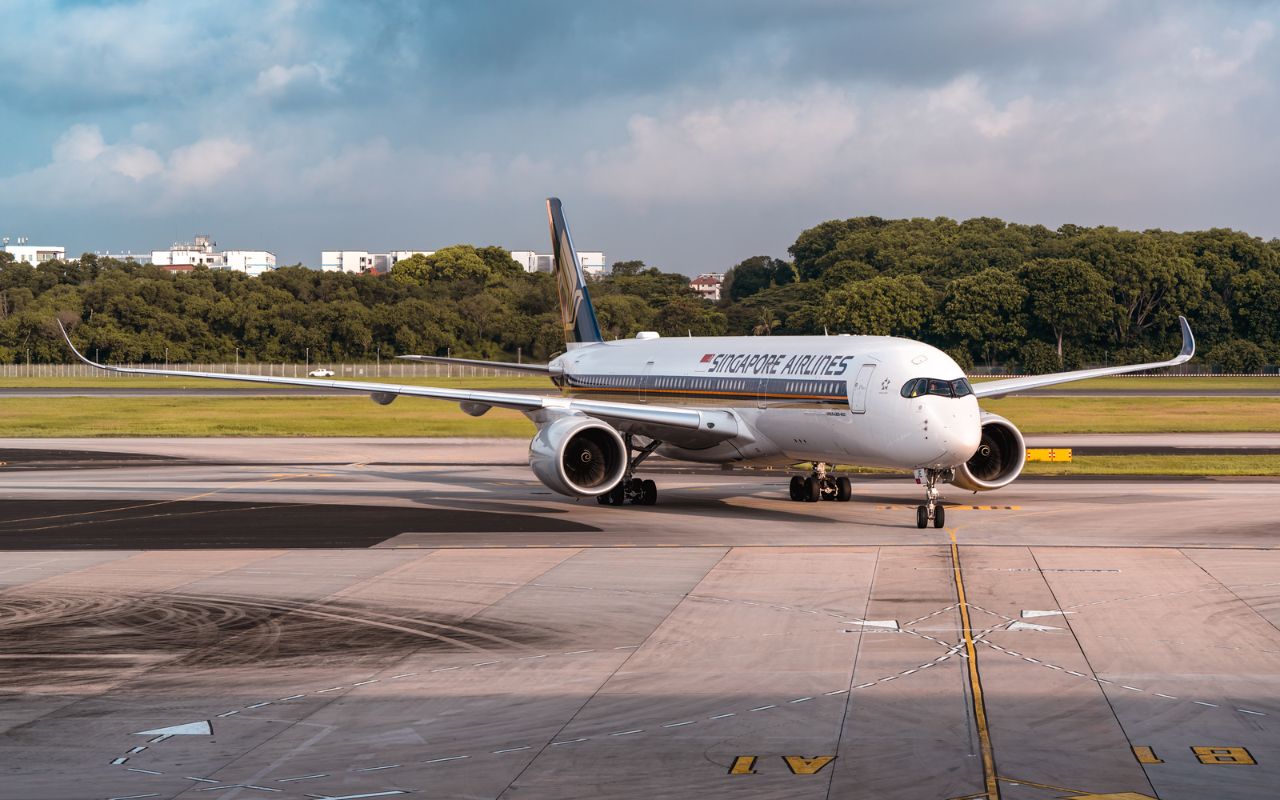
Singapore Airlines has announced that it will progressively introduce Starlink inflight internet from Q1 2027 onboard the following aircraft types:
| Aircraft Type | Number in Fleet | Starlink? |
| Airbus A350-900MH | 24 | ❌ |
| Airbus A350-900LH | 34 | ✅ |
| Airbus A350-900ULR | 7 | ✅ |
| Airbus A380-800 | 12 | ✅ |
| Boeing 737-8 MAX | 21 | ❌ |
| Boeing 777-300ER | 22 | ❌ |
| Boeing 787-10 | 28 | ❌ |
This promises to deliver a quantum leap in connectivity speeds compared to the current Geostationary Orbit (GEO) satellite solutions provided by Panasonic and Viasat, which suffer from high lag and patchy service.
|
“With more than 10,000 satellites launched to low Earth orbit, Starlink can deliver multi-gigabit connectivity to aircraft using its Aero Terminal, which can support up to 1 Gbps per antenna. This means customers in all cabin classes will enjoy faster, smoother, and seamless connectivity from take-off to landing for activities such as video streaming, sharing content on social media, gaming, and sending large files.” -Singapore Airlines |
Starlink internet will be free for customers in Suites, First Class, Business Class and PPS Club members, as well as KrisFlyer members travelling in Premium Economy and Economy Class. This mirrors the current policy for the slower inflight Wi-Fi solutions.
| 📶 Singapore Airlines Inflight Wi-Fi |
|||
| PPS Club | KrisFlyer | Non KrisFlyer | |
| Suites & First | Unlimited | ||
| Business | Unlimited | ||
| Premium Economy | Unlimited | N/A | |
| Economy | |||
There’s no real surprise to see the Airbus A350-900LHs and A350-900ULRs getting the upgrade, since they’ve already been earmarked to be retrofitted with the airline’s next-generation cabin products.
What is surprising is that the Airbus A350-900MHs are excluded, and the Airbus A380-800s are included, given that the former will be in the fleet for a long time to come, while the latter will realistically start to be phased out over the next decade or so. The A350-900MHs operate routes as far as Tokyo, and 6.5 hours is a long time to fly without reliable internet.
While SIA has not announced any Starlink plans for the Boeing fleet yet, I doubt the Boeing 777-300ERs will ever get the upgrade, since they’re going to be phased out once the Boeing 777-9s arrive (if ever!). Those will almost certainly be equipped with Starlink, or some other LEO provider.
I would also expect some of the Boeing 737-8 MAXs and B787-10’s to get Starlink at some point, and perhaps the airline plans a “second wave” announcement once the installations begin in earnest.
How long will the rollout take?
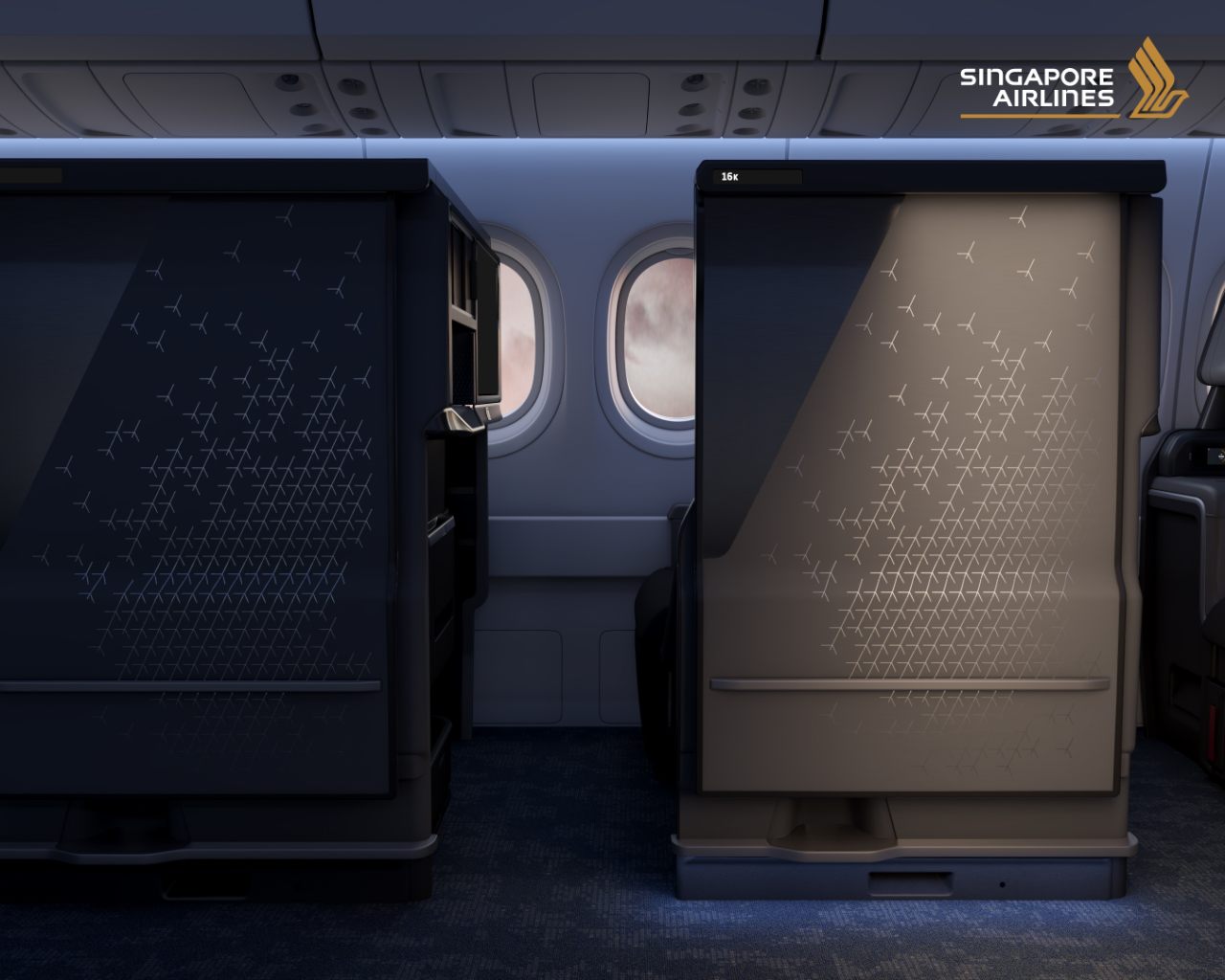
Singapore Airlines intends to complete the Starlink rollout by the end of 2029.
Given the limited rollout of just 53 aircraft, and the fact that Starlink installations can be completed as quickly as a couple of days during routine maintenance, the protracted timeline is curious to say the least. By way of comparison, United Airlines managed to install Starlink on nearly 350 aircraft in just a year, and plans to equip its entire 1,000+ fleet by the end of 2027.
My guess is that SIA plans to time these upgrades to coincide with the retrofit programme for the Airbus A350-900LHs and Airbus A350-900ULRs, which will see all-new cabin products introduced from tip to tail, as well as the installation of an all-new KrisWorld inflight entertainment system.
We should expect to hear more news on the Starlink installation plan by the end of the year, including which routes the airline intends to debut the service on.
What is the current Wi-Fi situation?
| ✈️ Singapore Airlines Fleet |
||
| Aircraft Type | Wi-Fi | System |
| A350-900MH | ✔ | Viasat |
| A350-900LH | ✔ | Panasonic |
| A350-900ULR | ✔ | Panasonic |
| A380-800 | ✔ | Viasat |
| B737-8 MAX | ✔ | Panasonic |
| B777-300ER* | ✔ | Panasonic Viasat |
| B787-10 | ✔ | Panasonic |
| *Viasat: 9V-SWA to 9V-SWT | Panasonic: 9V-SWU onwards, 9V-SNA to SNC. | ||
Singapore Airlines now offers Wi-Fi across 100% of its fleet, following the retirement of the Boeing 737-800s late last year.
It uses two different systems:
- Panasonic Ku-band
- Viasat Ka-band
While the Ka-band system is generally faster, both systems still rely on GEO satellites, which makes them very sluggish compared to LEO. It’s good enough for basic browsing and emails, but struggles with anything beyond that. Forget streaming- even tasks like downloading large files or completing online transactions frequently timeout, making for a frustrating experience.
Moreover, Wi-Fi is only available when the aircraft reaches cruising altitude, meaning you will lose connection during take-off and landing.
Why is Starlink so much faster?

To appreciate how much of a quantum leap Starlink is over traditional inflight Wi-Fi, you first need to understand the difference between LEO satellites and GEO satellites.
| LEO Satellites | GEO Satellites | |
| Orbit Altitude | <2,000 km | >35,000 km |
| Latency | 20-40 ms | ~600 ms+ |
| Connection Speed | Faster | Slower |
| Coverage Area | Smaller | Larger |
| Applications | Real-time communications, IoT, remote sensing | Broadcasting, weather monitoring |
Traditional inflight Wi-Fi systems like Panasonic rely on GEO satellites, which orbit the Earth at altitudes of ~35,000 km. Starlink, on the other hand, uses LEO satellites, which orbit at altitudes of ~500 km. With the average aircraft cruising at just 10 km, the difference in distance has a significant impact on signal quality and bandwidth.
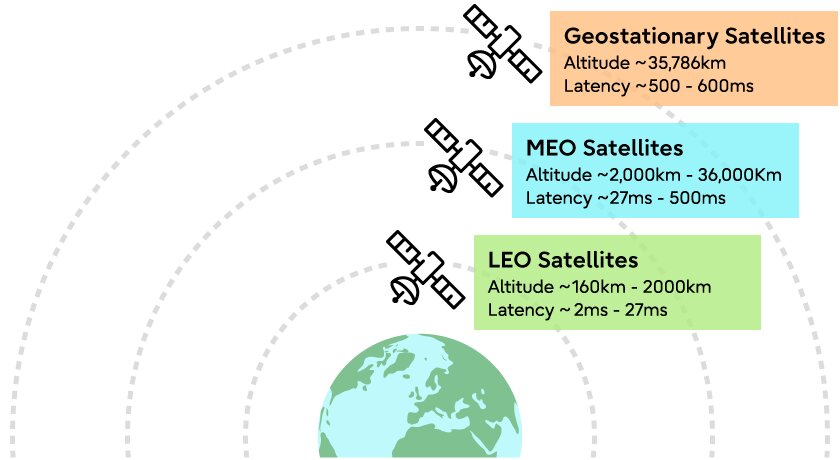
It’s simple physics: the greater the distance, the longer the latency. A longer journey means more signal loss, and therefore lower data rates. To put it another way, LEO is like talking to someone across the room. GEO is like shouting to someone on a faraway mountain!
There are also architectural differences. GEO systems typically connect the aircraft to a single satellite at a time, which limits overall capacity. LEO networks, however, continuously hand off the connection between multiple satellites, allowing for higher bandwidth and better load balancing.
So GEO isn’t “bad tech” as such. It’s just slow because physics is working against it. LEO makes everything faster by bringing the network closer to Earth, which delivers the kind of speeds that GEO never realistically could.
What’s it like using Starlink inflight?

In a word: revolutionary.
I recently had the opportunity to do a test flight on United Airlines with Starlink, and it was every bit the gamechanger it’s hyped up to be.
It’s not just about streaming Netflix or downloading large email attachments, useful as those are. It’s about having a dependable, low-ping connection you can rely on for tasks like collaborative Google Docs editing, stock trading, or even accessing your home camera feeds.
As I wrote at the time:
The inflight Starlink experience was transformative. Entertainment and work aside, a reliable, speedy connection enabled me to handle the minutiae of everyday life. I could use my camera to check why the sliding door at home wasn’t closing properly. I could let the delivery person in via the intercom. I could make precise adjustments to my curtains to keep the harsh afternoon sun from roasting my computer room.
When I wanted to purchase something on Shopee, I knew the 2FA push notification would reliably pop up on my phone banking app, without me having to repeat the transaction multiple times. When I opened an app which required an update before use, it was an annoyance rather than a deal-breaker (imagine trying to download a 100MB app update on a GEO system).
Basically, Starlink removed so many of the small niggles that hamper your workflow and kill your productivity.
I’ve written a full report on the experience, which you can find below.
Conclusion
Singapore Airlines passengers can look forward to Starlink inflight internet from Q1 2027, which promises significantly faster speeds, together with gate-to-gate connectivity.
It’s a bit surprising that the rollout has been limited to the Airbus A350-900LH, A350-900ULR and A380-800 fleet, with no love for the Airbus A350-900MH, or any of the Boeing aircraft for that matter. Perhaps this will be part of a second wave, so we’ll have to keep a close watch on that.
Starlink internet will be effectively free for all passengers, with the only “hurdle” to have a KrisFlyer membership, if you’re in Premium Economy or Economy.
I’ve been looking forward to this for a long time, and hopefully we’ll hear something about those new cabin products soon too!

Extremely disappointing rollout plan by SQ, especially compared to what QR has achieved.
it does strike me as being on the slow side. QR aside, united also has a very ambitious rollout plan for the service.
I used Starlink for the first time recently on a 1hr LH flight and it was amazing. That being said, I don’t want to be stuck in a cabin with someone on their teams meeting or with the person who feels the need to call everyone in their contact list. It’s bad enough in the lounge these days!!
i imagine when this goes live, voice calls and video conferencing will be blocked. it’d better!
Endless noisy scrolls on air as well. This needs to be stopped or blocked to only messaging.
at long last! finally can hold zoom meetings in the air instead of wasting it away doing nothing… those that complain about the noise can go take their own private jet!
i’m actually OK with people taking meetings provided (1) they’re passive participants (beyond the odd word here and there), and (2) they use headphones.
It’s the opposite, actually. If you fly commercial, you are surrounded by hundreds of other people around who all need to be taken into consideration. So it’s only polite and right not to talk right next to them when they are forced to sit next to you for hours on end.
If you feel like you need to talk on the phone or be on a video call while in flight, it is you who should fly private. If you can afford it, which obviously >99.99% of pax cannot.
Only Singapore Airlines could make a mess of a positive announcement like this. 1) It’s way too late. What have they been doing and why are they only starting in 2027? Probably because they only had the brain wave in the last few months as they cruised on autopilot 2) Considering it only takes a couple of days to install, why wouldn’t they decouple this from the wider refurbishment program to get it to market sooner? 3) Why are only 53 aircraft being done? Considering the majority of flights during day time business hours are on the A350MH, 787 and… Read more »
Well… better late than never
Aaron, any idea when the new cabins will be revealed?
standby…
The current coverage of Starlink has to be considered as a point in favour of retaining traditional connectivity on the regional fleet. China is a big dead zone for Starlink, as is India currently and large portions of SEA. If you intend to offer a wifi product, it’s pointless if it has high speeds but only for 25% of the flight, when it has no connectivity otherwise. Panasonic for one has existing approvals for both India and China. Just looking at the current coverage, a Starlink equipped A350/A380 would not have connectivity for almost half the flight to Europe between… Read more »
didn’t starlink get approval with india recently?
https://www.channelnewsasia.com/business/musks-starlink-gets-india-licence-offer-satcom-services-sources-say-5168966
for now it’s still showing as ‘coming soon’ on their website, and knowing the indian government, the paperwork is always the hold up. that CNA article mentions at least 2 more regulatory hurdles
technically according to the Starlink list it isn’t even approved in Singapore
True. I can’t get starlink on a personal plan in Singapore. Have to own a business something like that. Getting a roaming plan and putting it on pause when back home seems ideal but doesn’t seem possible in Singapore. Can do it in Malaysia though. Seem cheaper too.
SIA seems to be losing its competitive edge on multiple fronts. Omitting the regional A350-900 and 787-10 fleets from the Starlink and Cabin upgrade is a missed opportunity, especially as low-cost rivals like ZIPAIR prioritize connectivity and carriers like Starlux elevate the baseline for cabin design and IFE.
This product lag is exacerbated by a questionable fleet strategy. Betting on the delayed 777X while regional competitors successfully integrate the A350-1000 into their networks highlights a potential strategic misalignment. SQ needs to act quickly to ensure its regional and long-haul products remain market-leading.
Sad to see this being pushed back again! they really should have it sooner, including all the MH plane. I felt this is the most important upgrade they should do!!
WFA , work from Aircraft is not dream anymore. I hope the roll out wont be delayed