
Given the relish with which the online community has flogged Singapore Airlines’ new Business Class seat, the airline could be forgiven for thinking it’s stumbled into its very own Fifty Shades of Grey.
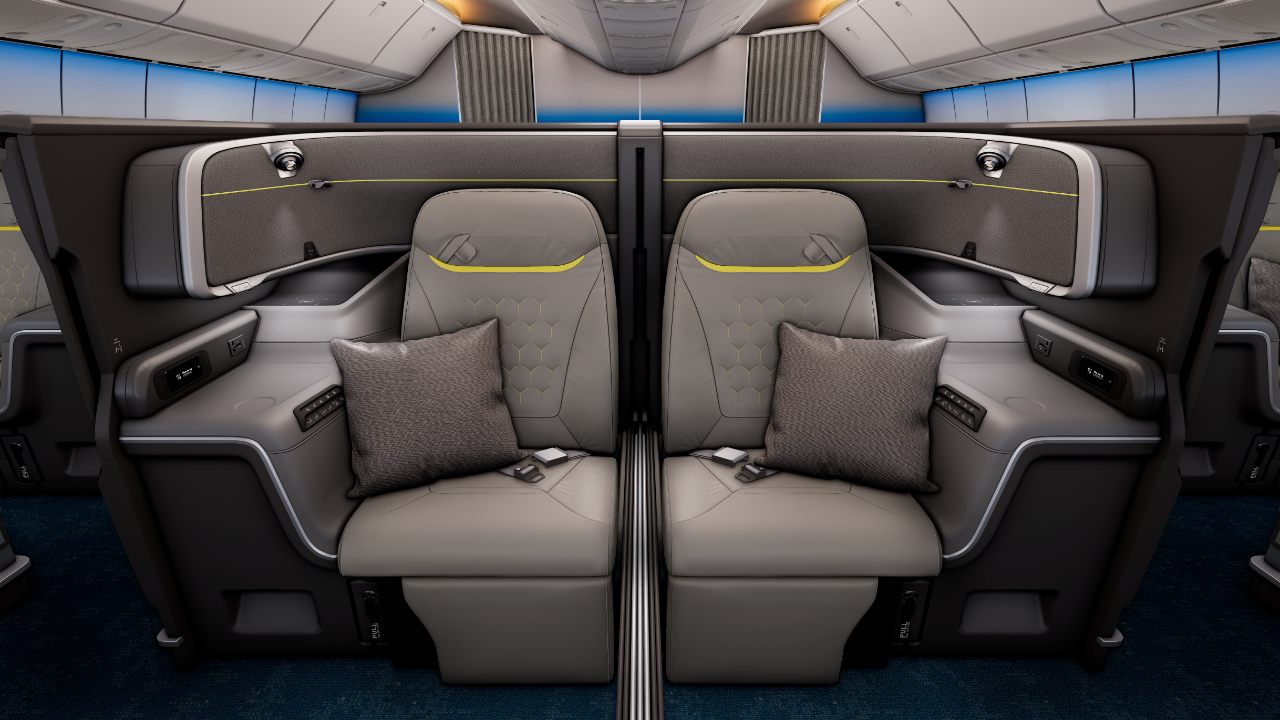
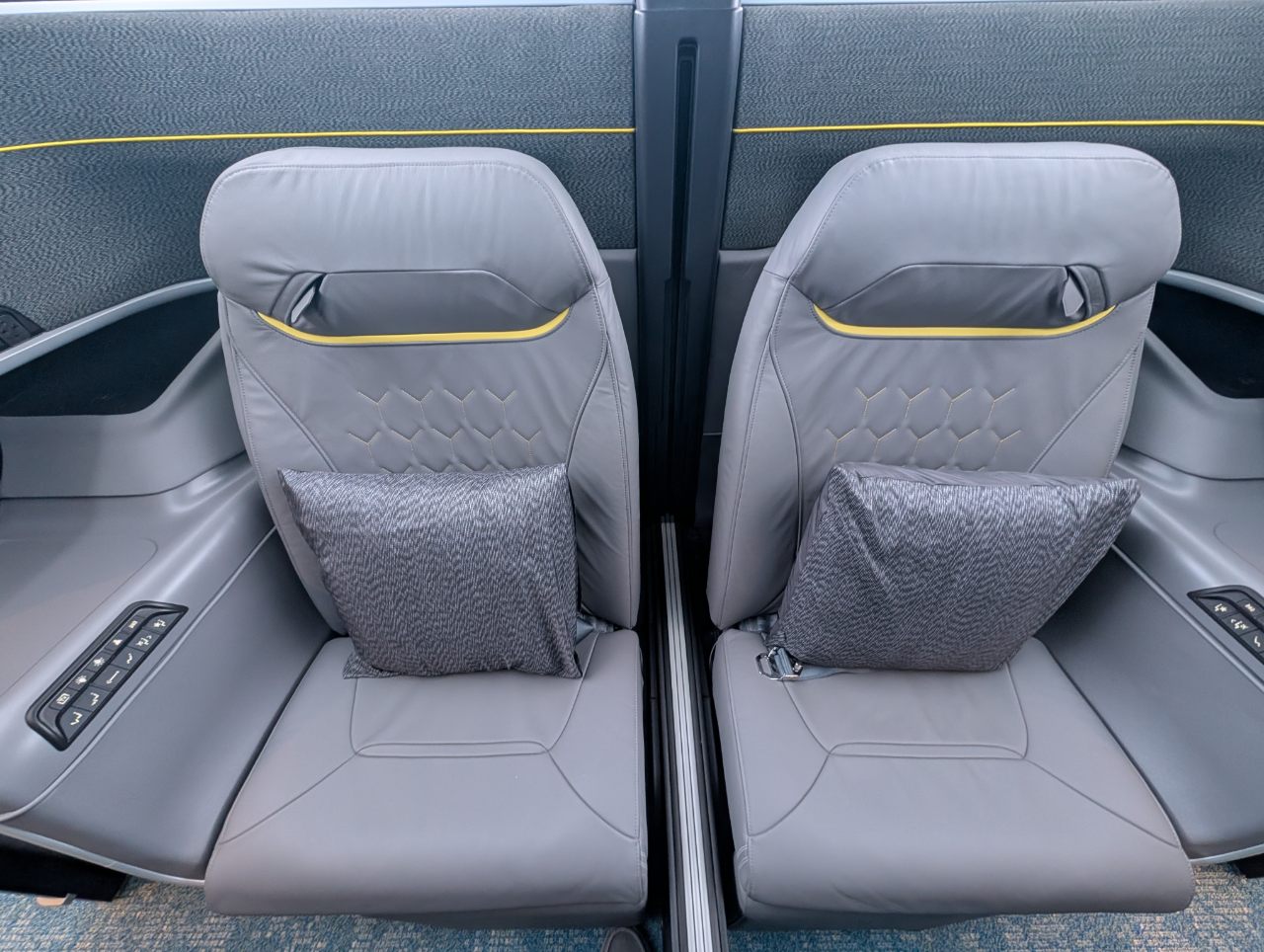
The choice of a grey-on-grey colour scheme — paired with an unfortunate racing stripe of so-called “cool yellow” — has not gone down well with the critics. It’s invited unflattering comparisons to SIA’s budget cousin Scoot, or a Secretlab/dentist’s chair. It’s been called “the ugliest new Business Class seat”. The uproar has escalated so dramatically that the internet has resorted to wielding its most fearsome of nuclear options: an online petition. The open letters can’t be far behind.
For the record, I’m no fan of the design myself. In fact, my heart sank when I saw it at the media preview, because I knew immediately that this one single trait was going to overshadow every substantive improvement that SIA had made to its new Business Class.
And while I feel that some of the online invective is a classic example of why the internet is a known carcinogen, I’m in full agreement that the choice of colours is, at the very least, “a total divorce from its existing brand experience” (Head for Points’ Rhys Jones) and “collateral brand damage” (Executive Traveller’s David Flynn).
That’s a shame, because if we ignore the optical migraine that this seat is, my hands-on experience tells me that it’s a substantial improvement over the 2013 Business Class seat (2013J) that is currently found across the majority of SIA’s long-haul fleet.
When are the new seats coming?
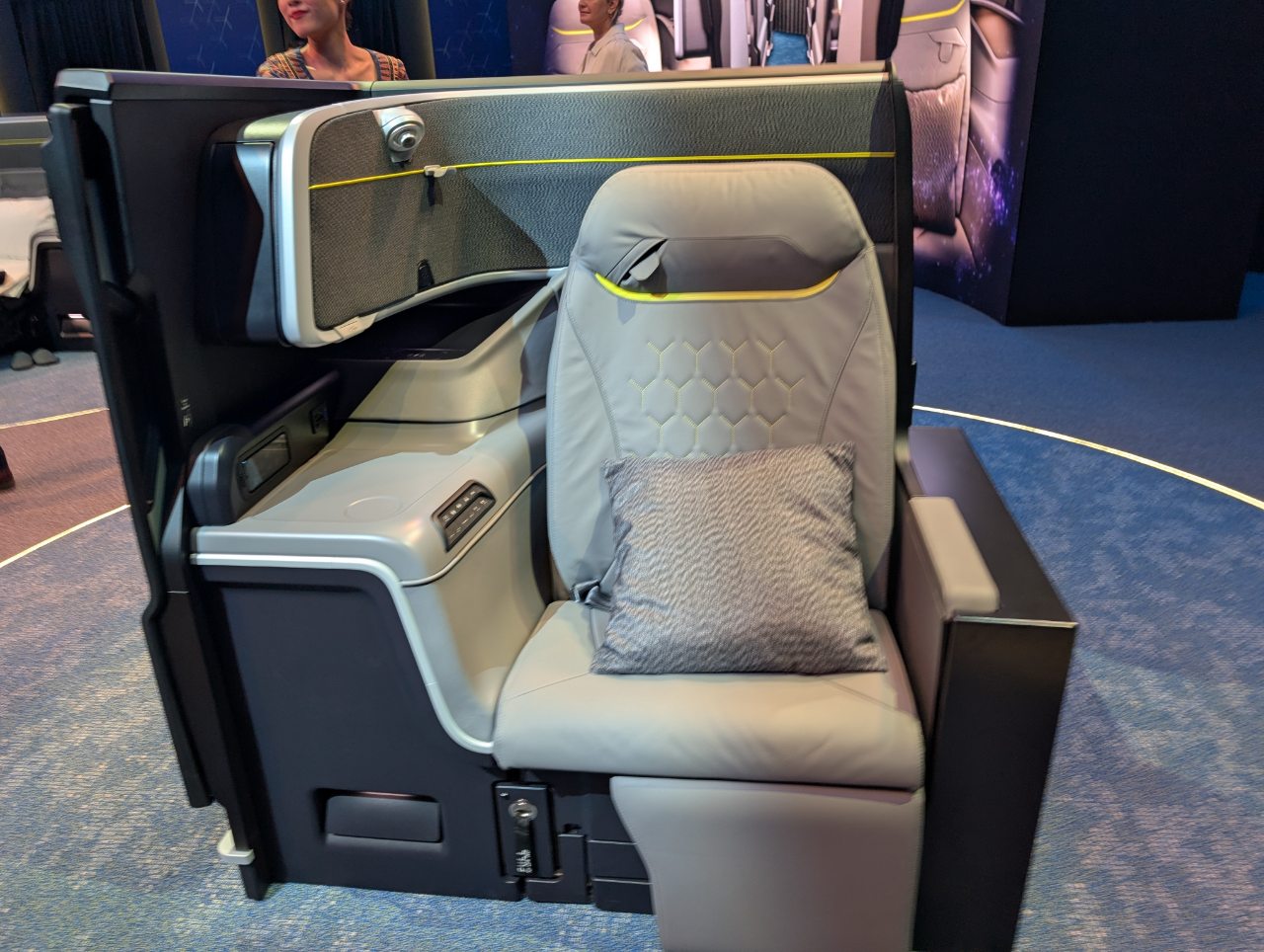
Singapore Airlines’ new Business Class seat — which we’ll call the 2027J — will be installed on the new B777-9s, as well as the retrofitted A350-900LHs and A350-900ULRs.
That makes Business Class the only new cabin with a confirmed timeline. Or at least, a timeline of sorts.
First Class passengers will have to wait until the first retrofitted A350-900ULR comes into service, or the first B777-9 arrives (isn’t that a fun bar bet!). Premium Economy and Economy Class passengers have to wait for the first B777-9. These are all unknowns at the moment.
Business Class passengers, on the other hand, will enjoy the new seat as soon as the first retrofitted A350-900LH enters service, currently slated for H2 2027. I wouldn’t bet the farm on it, mind you, as the date has already slipped twice, from Q2 2026 to Q1 2027, and now to H2 2027. Still, some date is better than none, right?
| A350-900LH | A350-900ULR | B777-9 | |
| First Class | N/A | 4 New |
6 New |
| Business Class | 42 New |
70 New |
54 New |
| Premium Economy Class | 24 Refresh |
58 Refresh |
36 New |
| Economy Class | 192 Refresh |
N/A | 204 New |
| Total Aircraft | 34 | 7 | 31 (on order) |
| Debut | H2 2027 | ? | ? |
The new Singapore Airlines Business Class
Overview
 |
|||
| A350-900LH | A350-900ULR | B777-9 | |
| No. of Seats | 42 | 70 | 54 |
| Layout | 1-2-1 | 1-2-1 | 1-2-1 |
| Privacy Doors | ✅ | ✅ | ✅ |
| Seat Pitch | 50″ | 50″ | 50″ |
| Seat Width | 22″ | 22″ | 24″ |
| Seat Recline | 180° | 180° | 180° |
| Bed Length | 79″ | 79″ | 79″ |
| IFE Screen | 22″ 4K | 22″ 4K | 20″ 4K |
| Touch screen | ✅ | ✅ | ✅ |
| OLED | ✅ | ✅ | ❌ |
| Spatial Audio | ✅ | ✅ | ✅ |
| Bluetooth Audio | ✅ | ✅ | ✅ |
| AC Power | ✅ |
✅ |
✅ |
| USB-A | ❌ | ❌ | ✅ (1x) |
| USB-C | ✅ (2x, 67W) |
✅ (2x, 67W) |
✅ (2x, 45W or 67W) |
| Wireless Charging | ✅ (1x, 15W) |
✅ (1x, 15W) |
✅ (1x, 15W) |
Singapore Airlines has selected Recaro to manufacture its new Business Class seat. While it was rumoured that the seat would be based on the R7 platform, SIA says it’s a completely bespoke product.
Styling was handled by Designworks (formerly BMW Designworks), which previously worked with Singapore Airlines on its 2013 First Class seats. I think it’s safe to say those were much more warmly received than its latest creation!
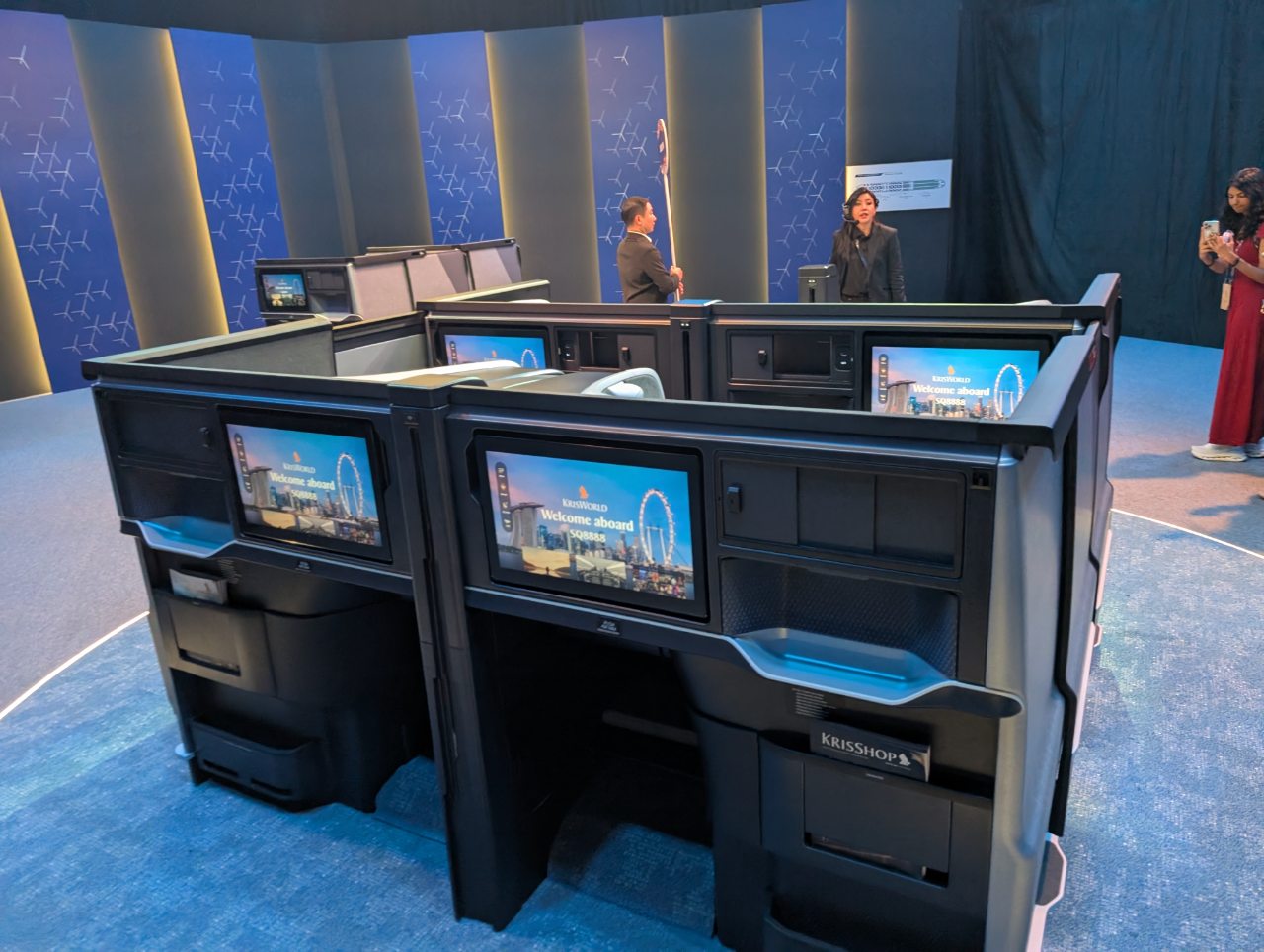
I had the opportunity to view the seats twice: once at the SIA Training Centre, and again at the launch event.
The seats at the event use the actual production materials, so they’re the best guide to what the finishes will look and feel like. However, they’re displayed cutaway-style, without any surrounding cabin, which makes it difficult to judge how spacious things will really feel.
The mockup is the opposite. Apart from a handful of seats, it doesn’t use the real materials, which is why some textures may look flat or a bit off. But because it’s built inside a proper cabin shell with walls, it gives a better sense of space.
In short: look at the event photos for materials, and the mockup photos for space. I’ve labelled the mockup photos so you can tell them apart.
It’s also important to note that both sets of seats were built for the B777-9, and are 24 inches wide. The A350-900LH/ULR seats are 22 inches wide, so some width-related measurements below (especially the footwell) may come out slightly smaller on the A350.
Configuration
The 2027J is arranged in a 1-2-1 configuration, giving every passenger direct aisle access.
The seat maps for the retrofitted A350-900LH and A350-900ULR haven’t been released yet, but the B777-9 seat map was displayed during the event.
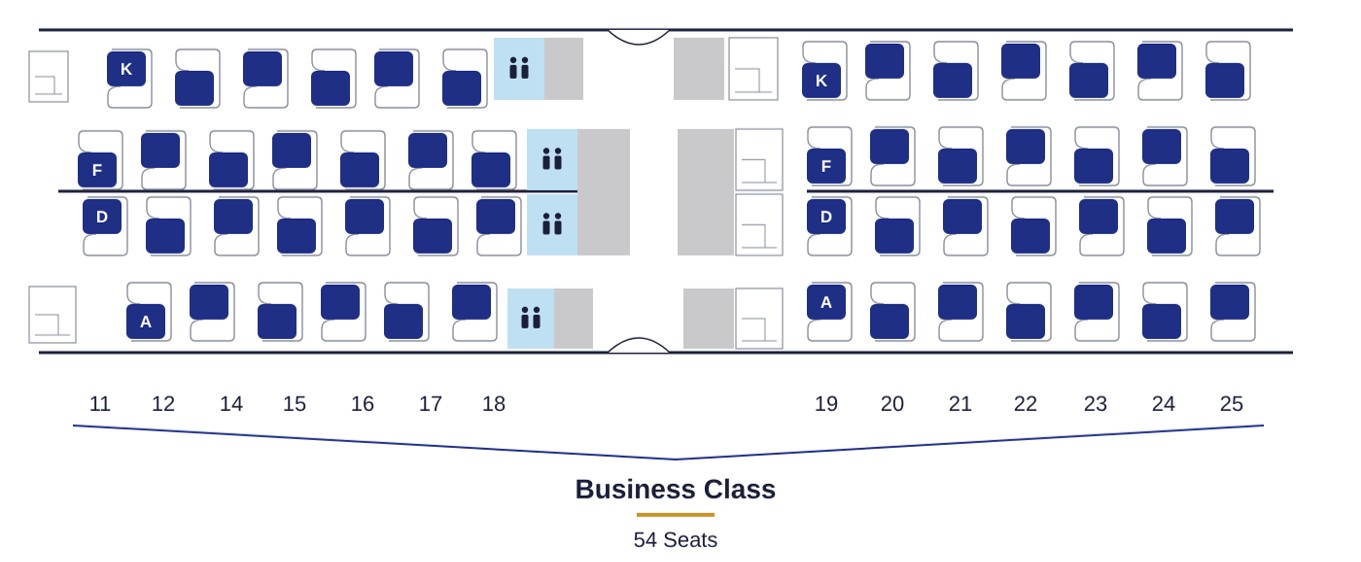
It shows 54 Business Class seats, divided into:
- a forward cabin of 26 seats
- a rear cabin of 28 seats
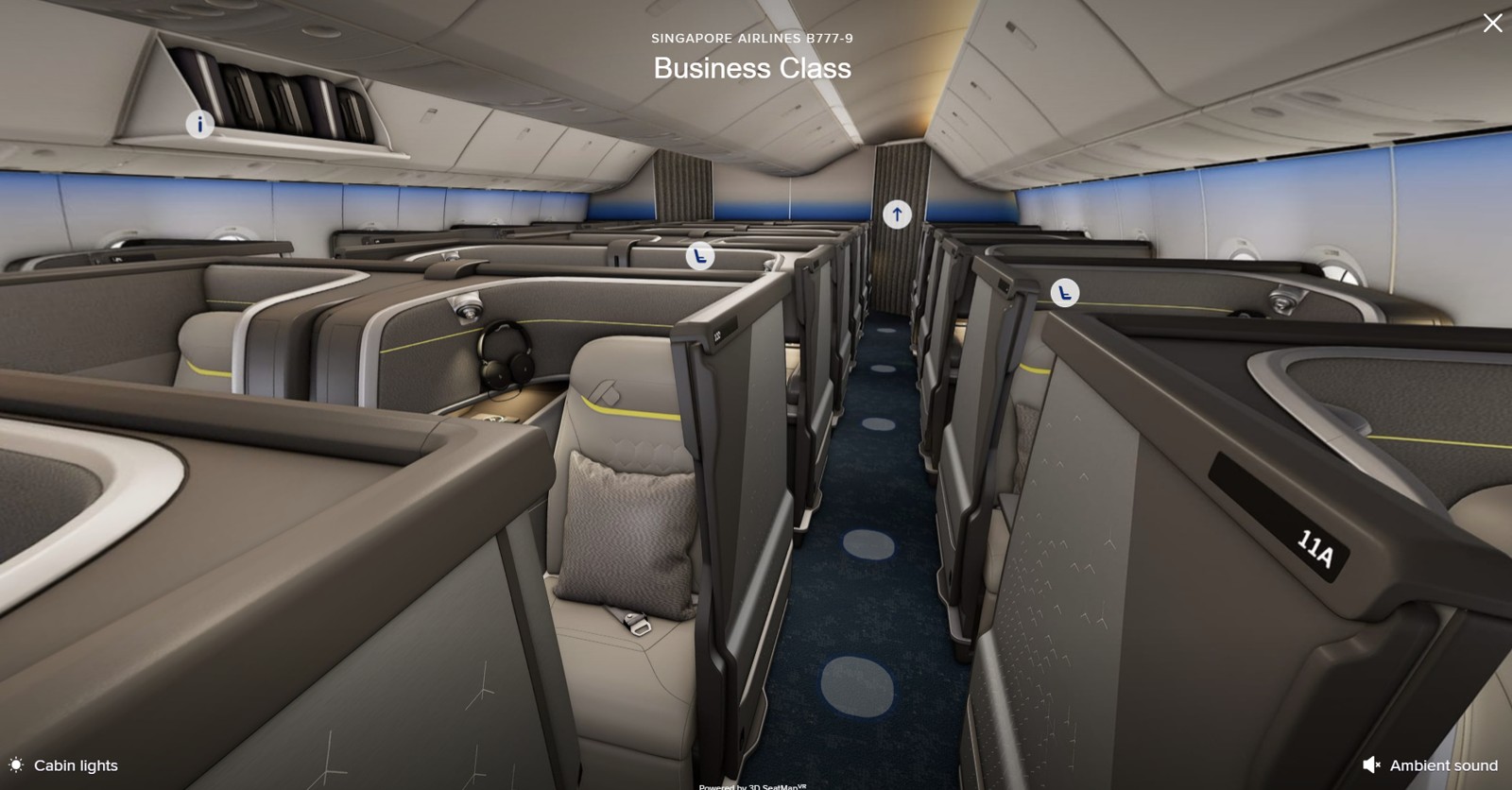
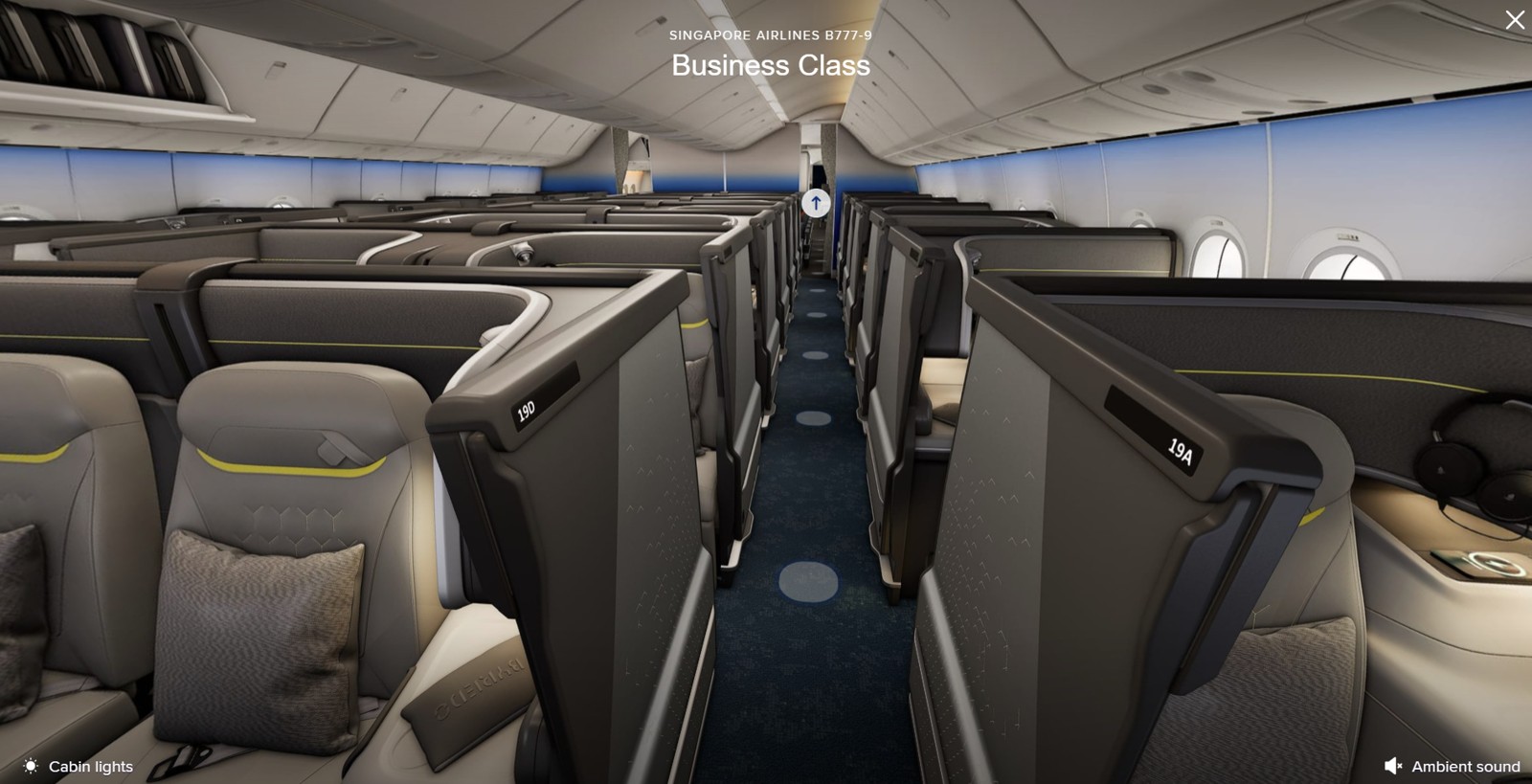
Incidentally, the virtual cabin tour also shows that SIA’s B777-9 will have individual air nozzles in Business Class (and First Class).
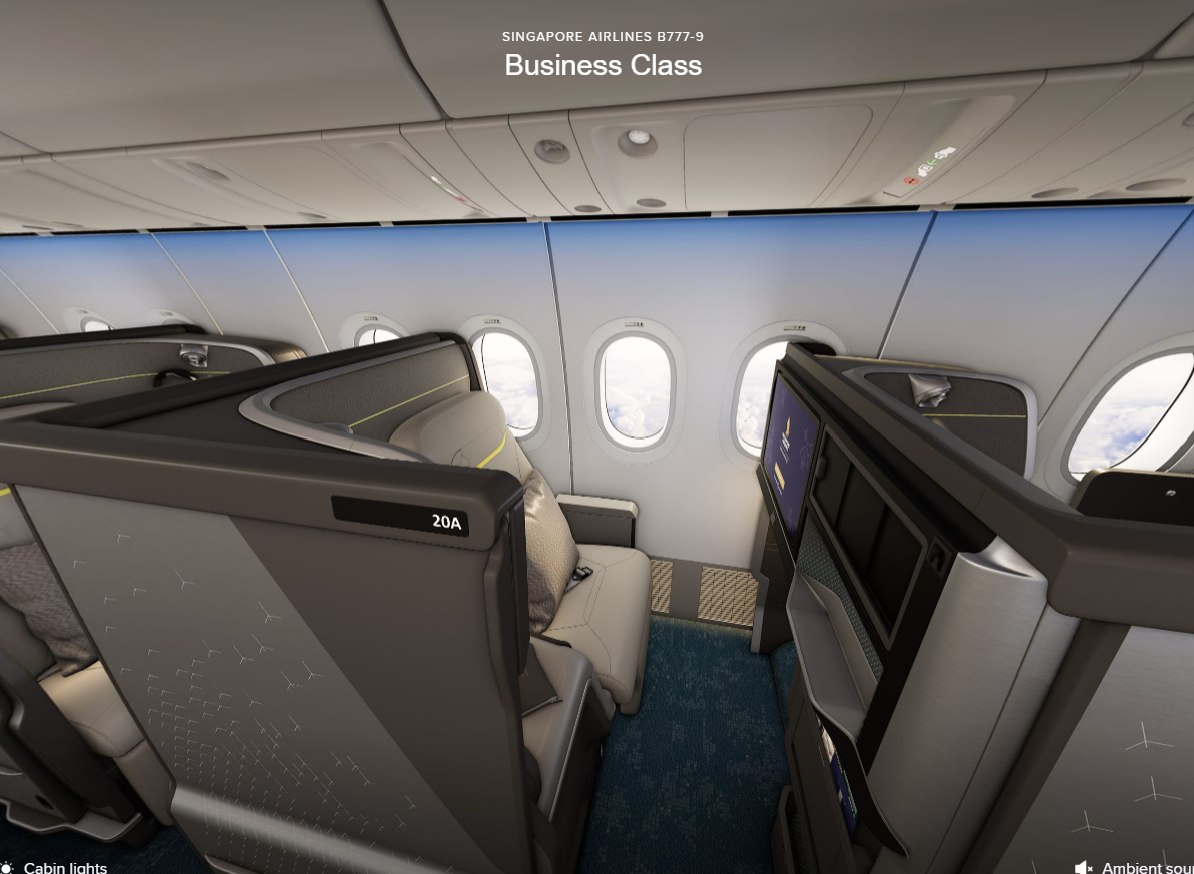
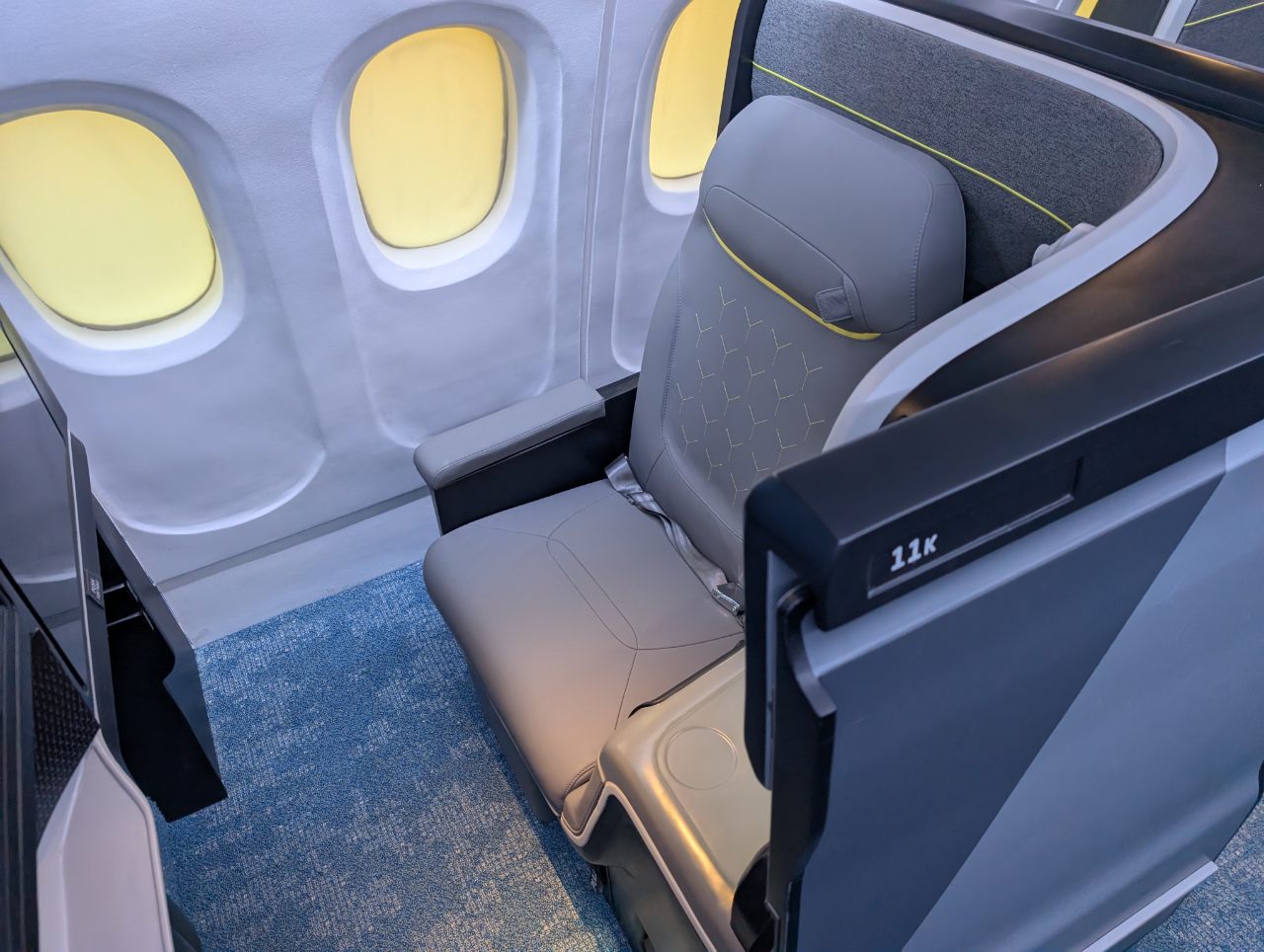
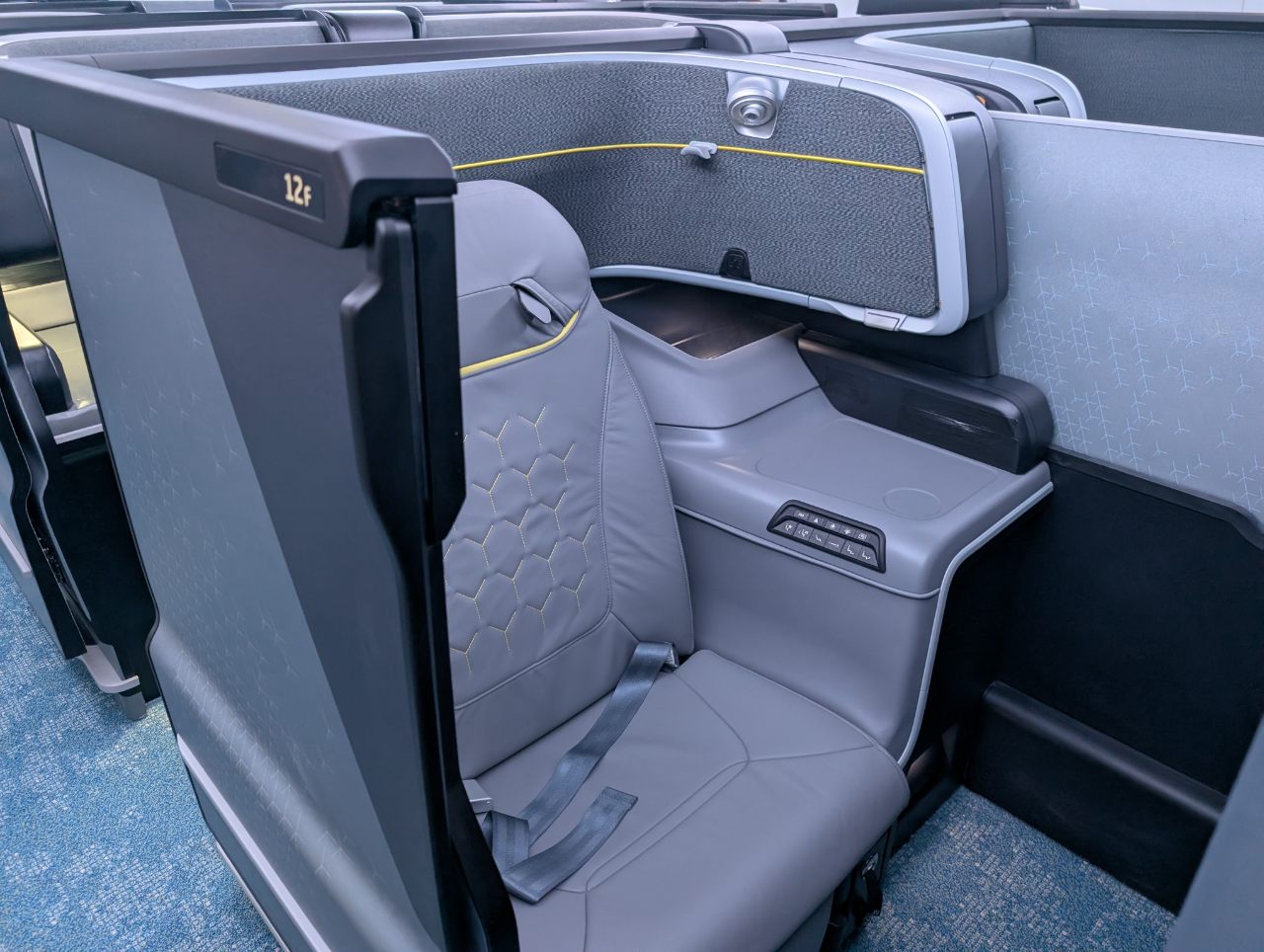
Single seats alternate between window alignment, separated from the aisle by the side console, and aisle alignment, separated from the window by the side console. Aisle-aligned seats still have window views, but you’ll have to lean forward to see out.
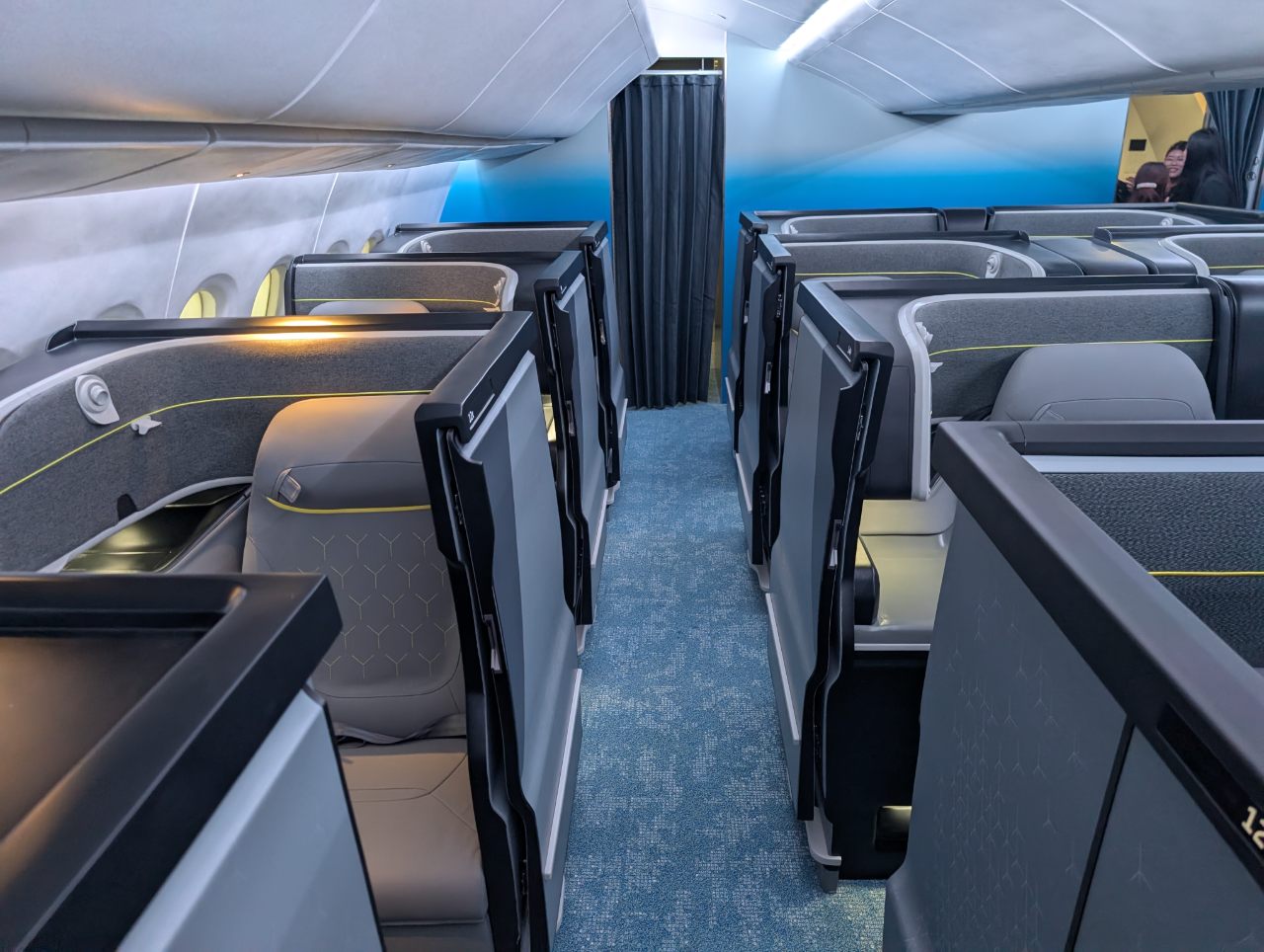
Centre seats alternate between “honeymoon” seats (pushed together) and “divorce” seats (separated by the side console).
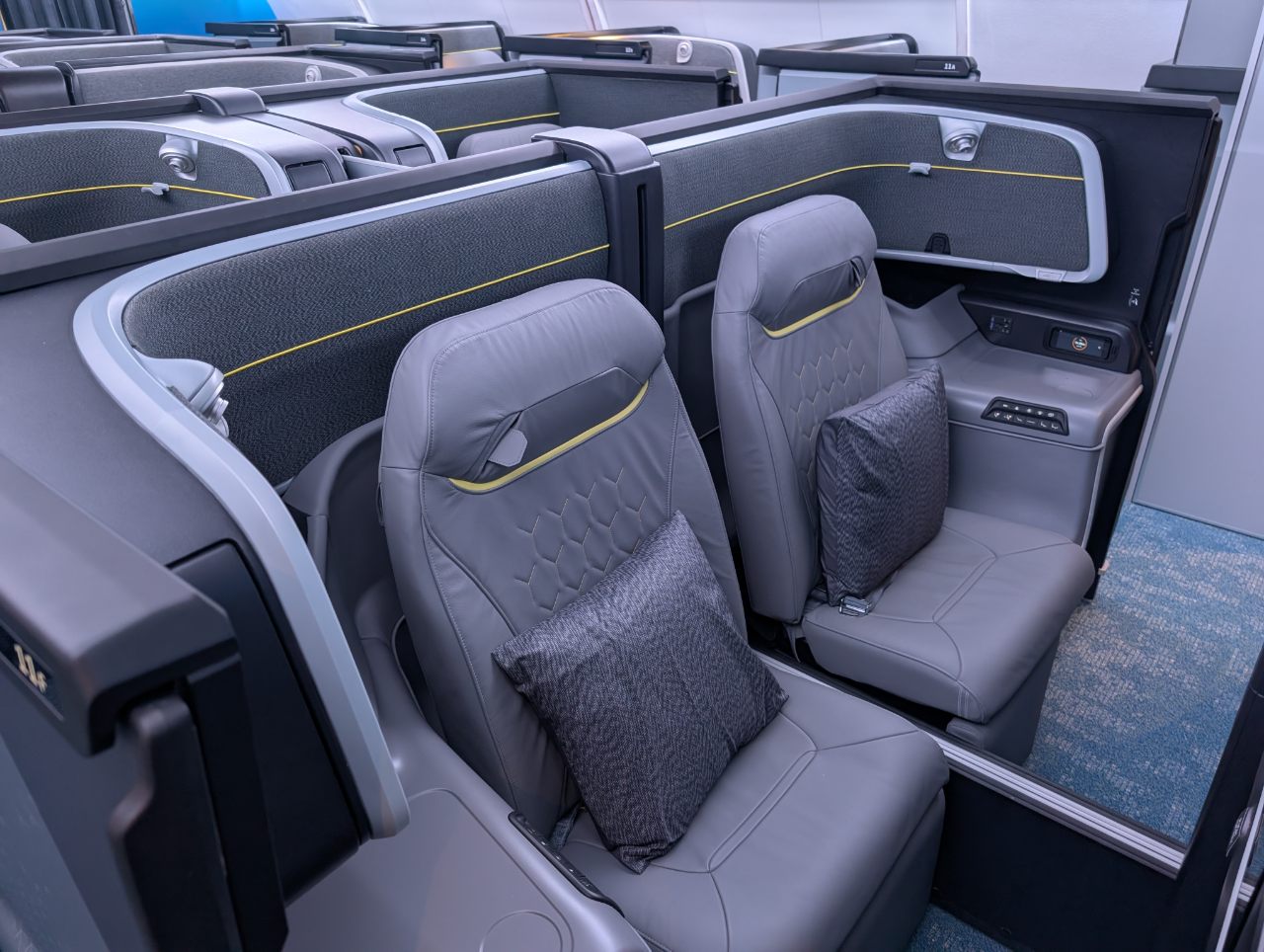
The honeymoon seats are a huge improvement for couples and parents. On the 2013J, all centre seats are separated by side consoles, so while you’re technically next to your partner/child, you can’t see each other when seated. Talking requires leaning forward and craning around the shell, and you can’t easily share a meal, point at something on the screen, or hold hands across the armrest.

Privacy divider
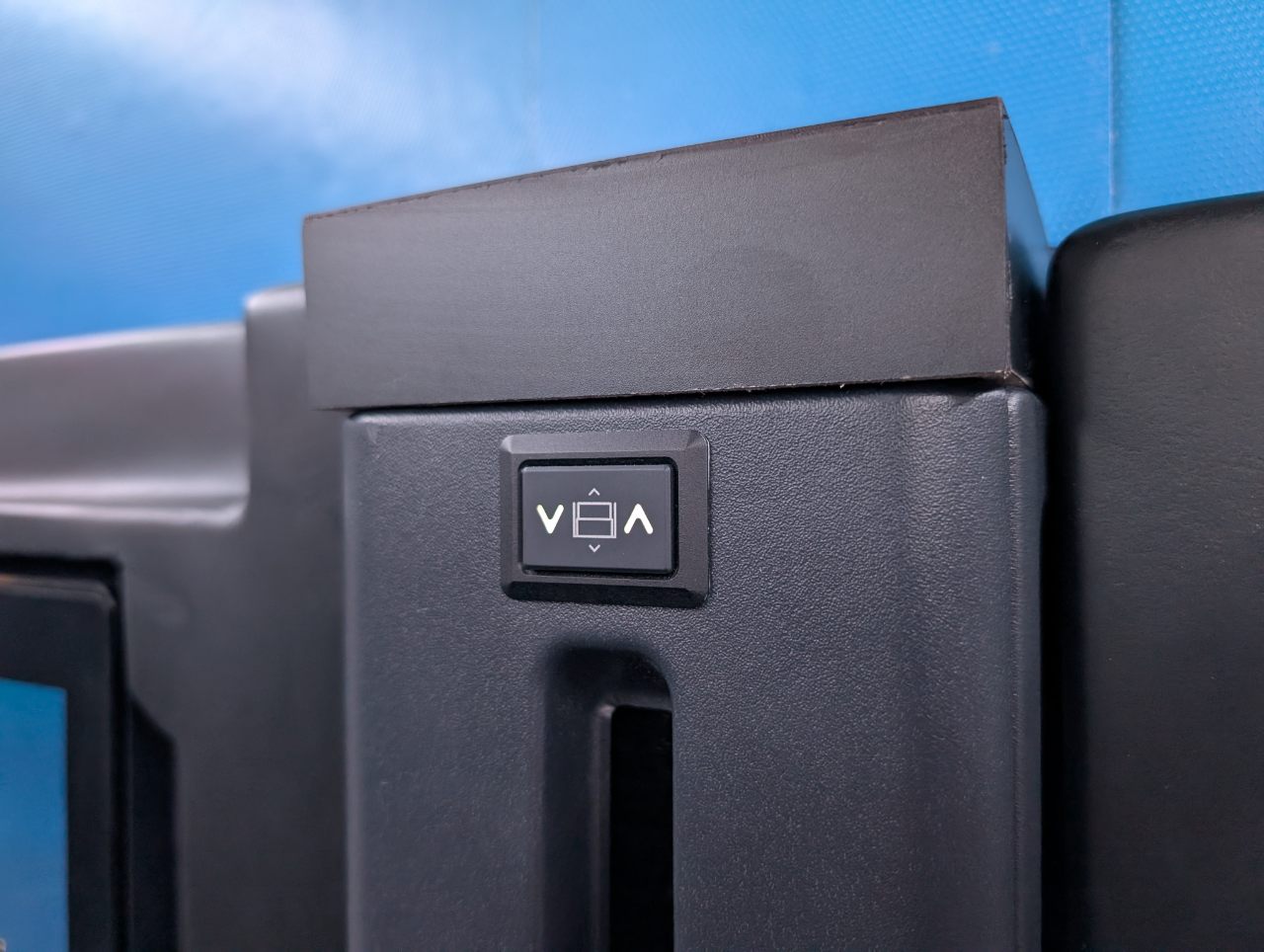
Centre seats have an electrically-powered privacy divider, which can be fully raised or lowered in 12 seconds at the tap of a button (no need to press and hold).
For the divorce seats, the raised divider is high enough that the most you’ll see of your neighbour is their forehead.
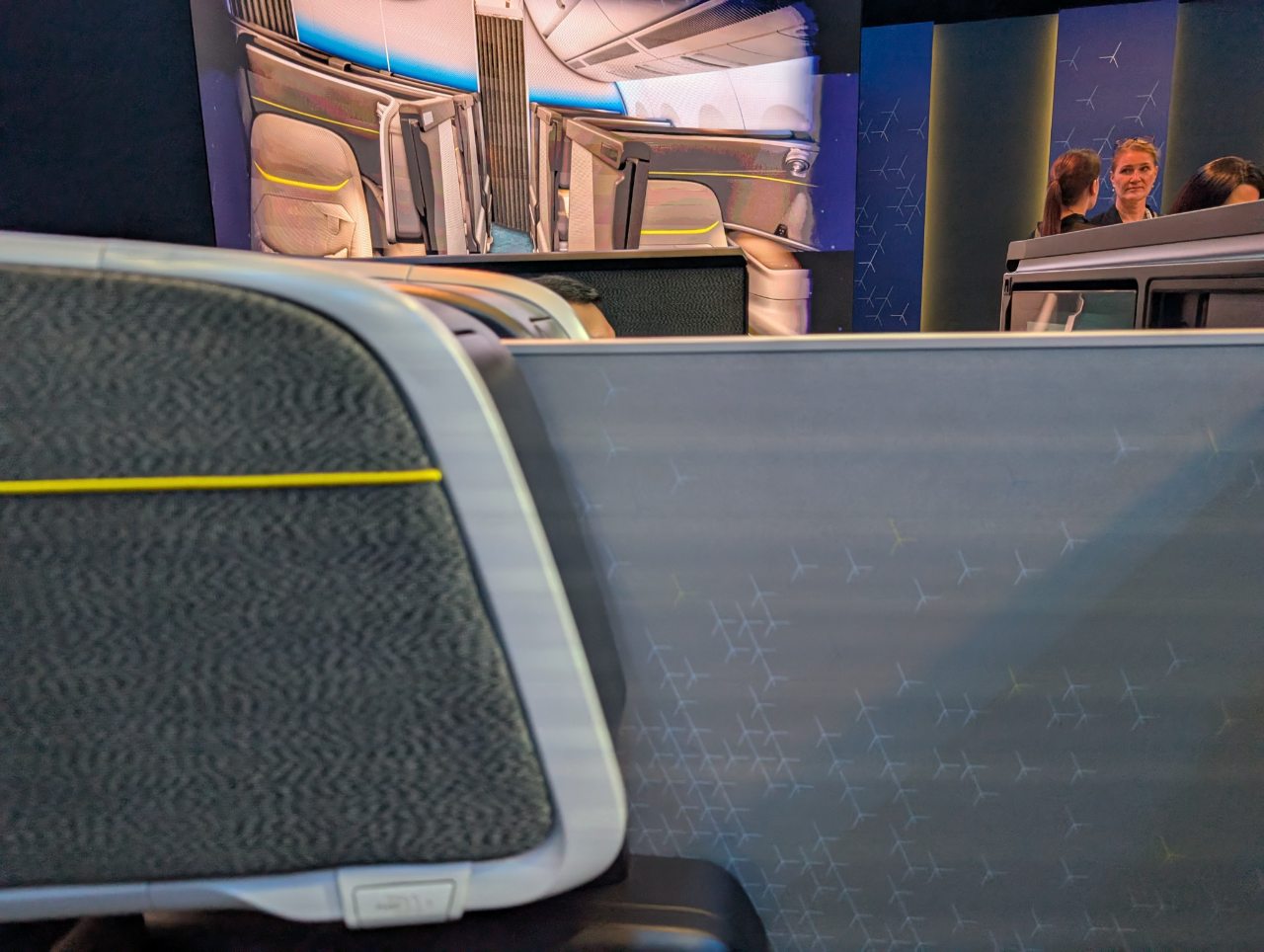
Fully lowered, the divider sits at 29 inches on the divorce seats, and 14 inches on the honeymoon seats.
Privacy door and walls
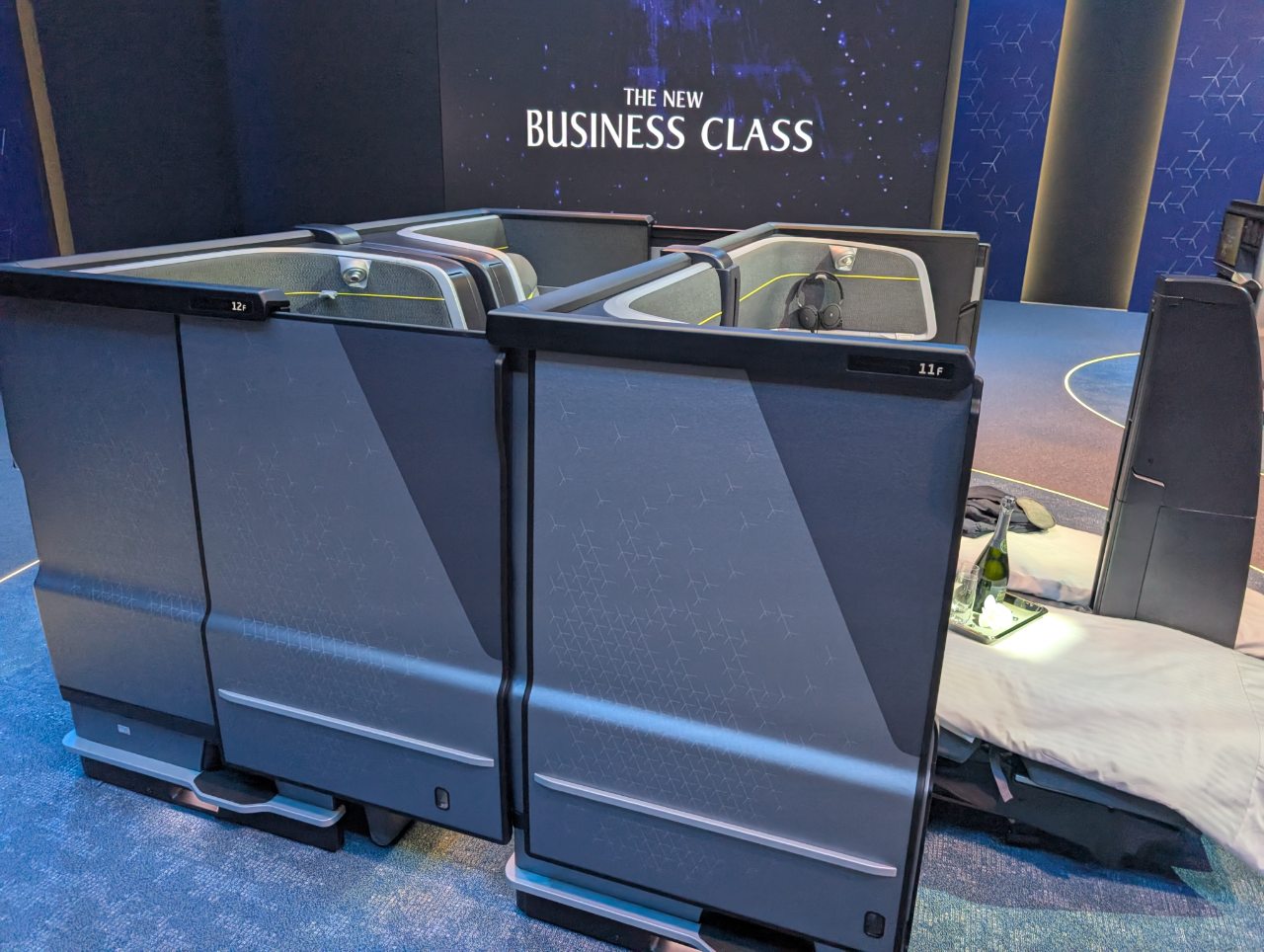
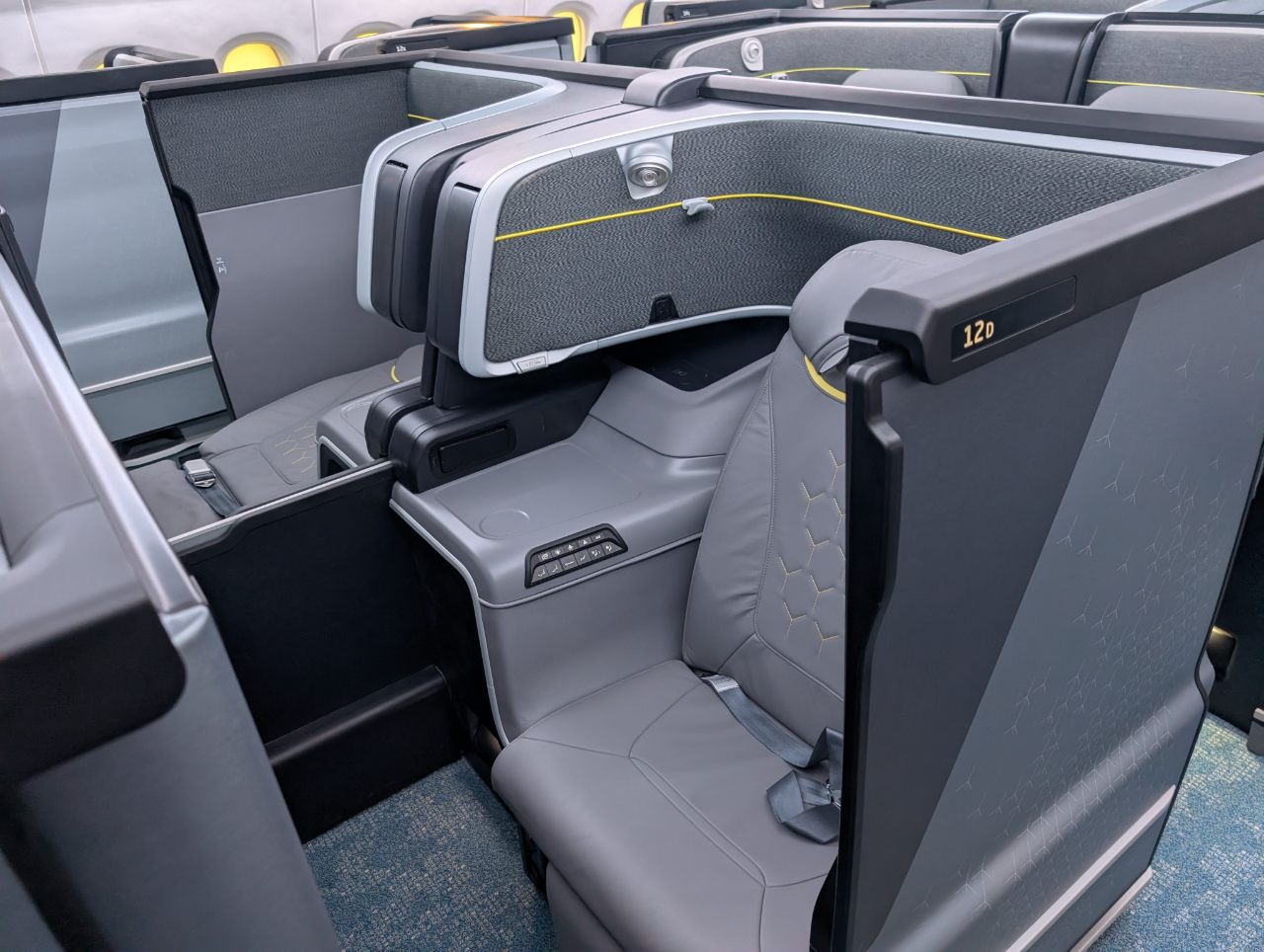
The 2027J has a sliding privacy door and walls 52 inches (132cm) high. According to Designworks, regulations would actually have allowed for taller walls, but it chose to stop at 52 inches so passengers get privacy without feeling boxed in.
52 inches isn’t what most people would consider tall — for scale, here’s me (1.8m) standing next to the seat.
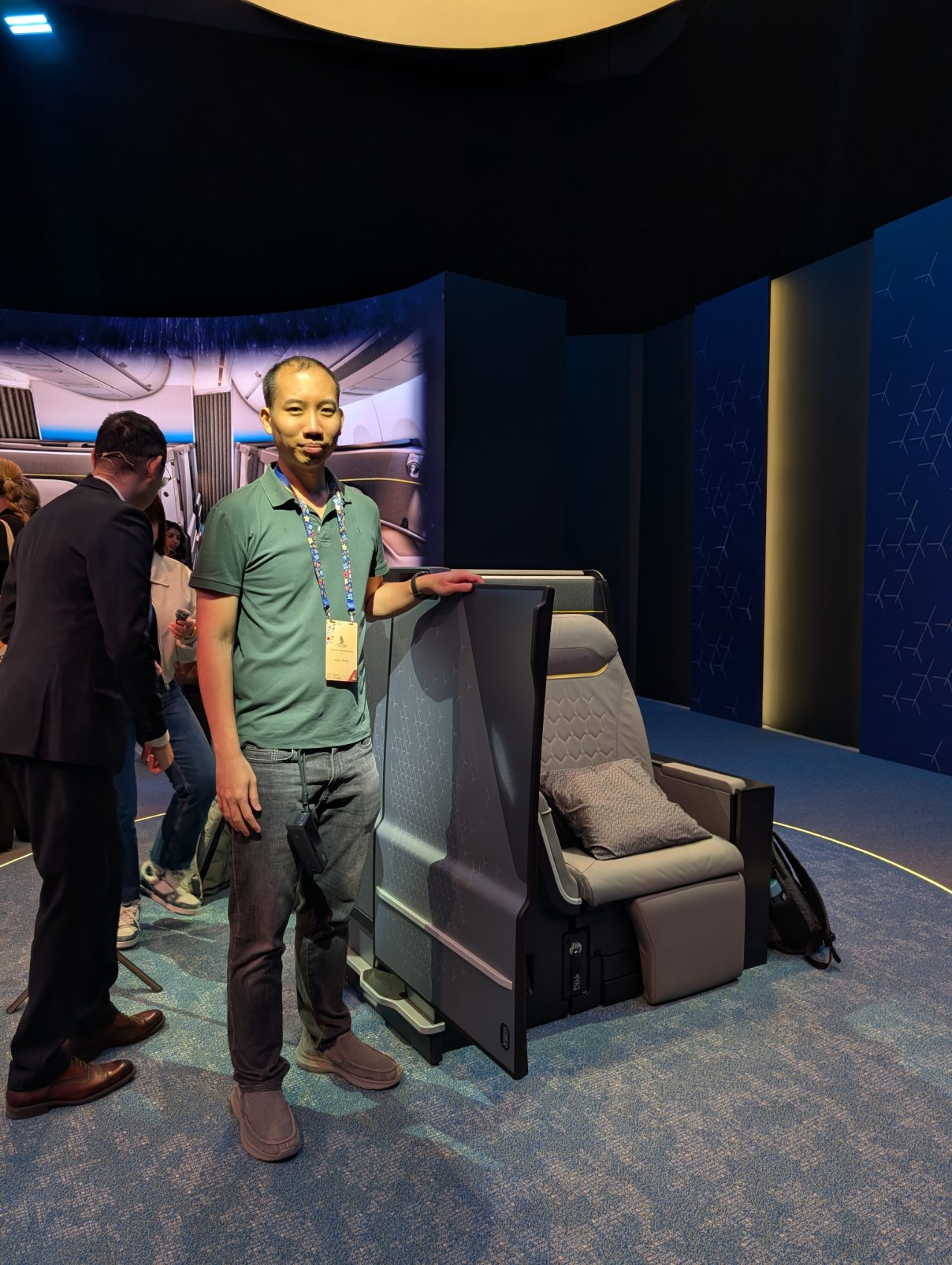
Even so, 52 inches is about as good as it gets right now. The only product that beats this is the yet-to-launch Qatar Airways Qsuite Next Gen, which will have 56-inch doors.
| Airline | Product | Door height |
| Qatar Airways | Qsuite Next Gen | 56″ |
| ANA | The Room FX | 52″ |
| Japan Airlines | A350-1000 | 52″ |
| Korean Air | Prestige Suites | 52″ |
| Singapore Airlines | 2027J | 52″ |
| Qatar Airways | Qsuite | 52″ |
| Cathay Pacific | Aria Suite | 48″ |
| ANA | The Room | 48″ |
| Qantas | Project Sunrise | 47″ |
| British Airways | Club Suite | 44″ |
Many privacy doors leave a notable gap even when closed, which lets light leak into the suite. Fortunately, that’s not the case here. There is a very small gap, but it’s hardly noticeable.
The cabin crew can lock and unlock all the cabin doors centrally. That saves them from having to go around to every seat to unlock the doors after take-off, as they have to with other seats like Qsuites.
Seat width and pitch
The 2027J offers 50 inches of seat pitch, and 22 inches (A350-900LH/ULR) or 24 inches (B777-9) of width.
That makes it SIA’s narrowest long-haul Business Class seat since the turn of the century — a fact that has attracted much criticism.
| Seat | Width |
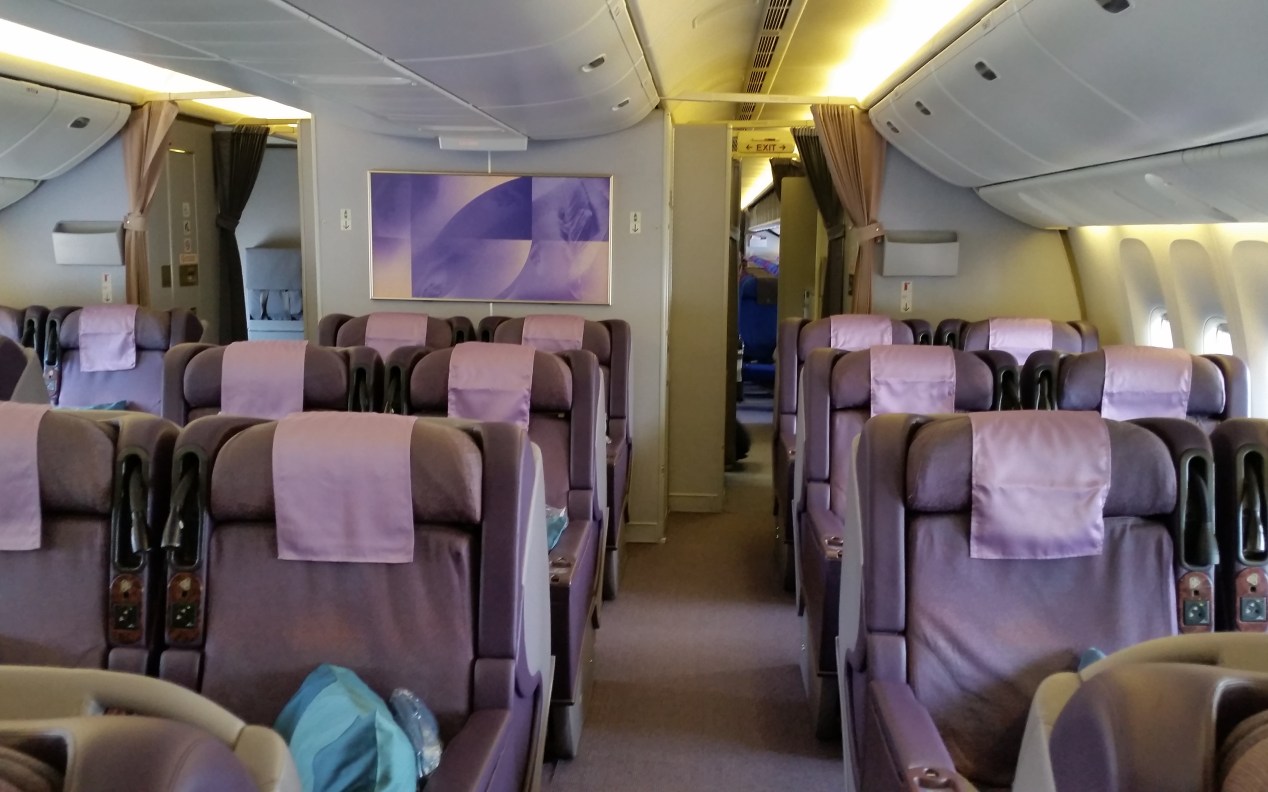 2002 Spacebed |
27″ |
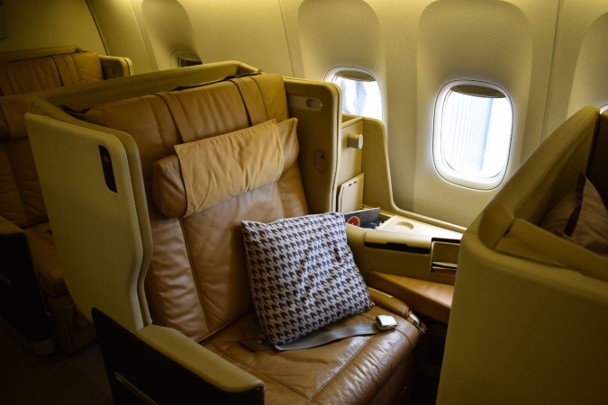 2006J |
34″ (A380) 30″ (B777) |
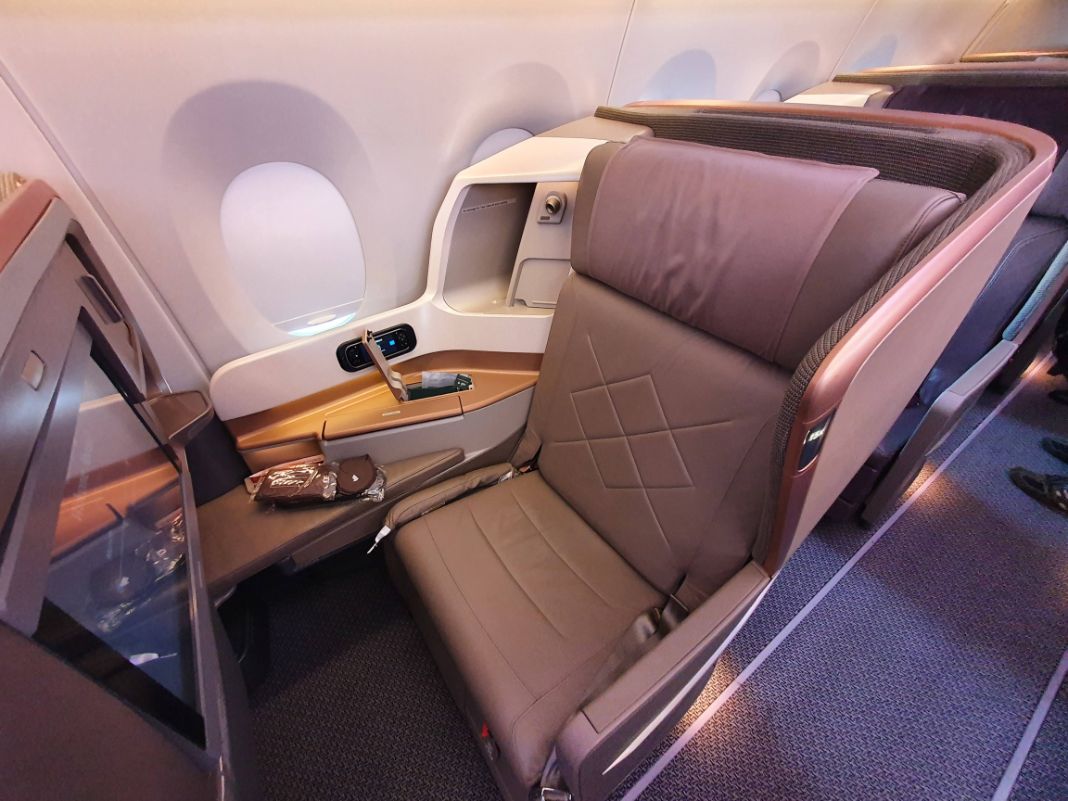 2013J |
28″ |
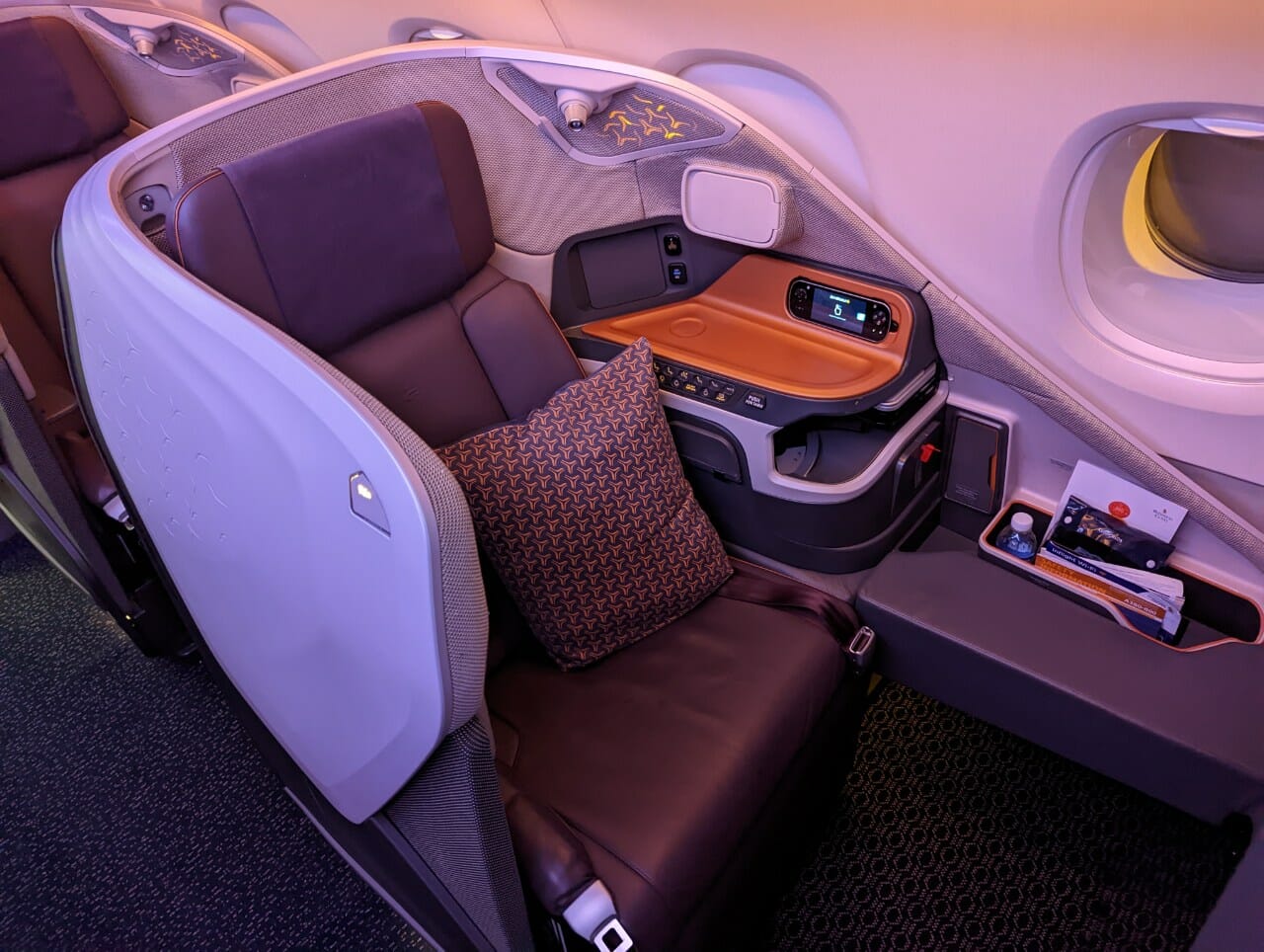 2017J |
25″ |
| 2027J |
24″ (B777-9) 22″ (A350-900LH/ULR) |
But you can’t look at width in a vacuum, and narrower doesn’t automatically mean worse.
If width were all that mattered, then SIA’s new Business Class seat — at least the B777-9 version that was on display at the launch — should actually be getting plaudits for being among the widest next-generation Business Class products, and Qatar Qsuites should be criticised for being “only” 21 inches!
| Airline | Product | Seat Width |
| ANA | The Room FX | 27″ |
| Qantas | Project Sunrise | 25″ |
| Singapore Airlines | 2027J | 24″ (B777-9) 22″ (A350LH/ULR) |
| Qatar Airways | Qsuite Next Gen | 23″ |
| Japan Airlines | A350-1000 | 22″ |
| British Airways | Club Suite | 21″ |
| Cathay Pacific | Aria Suite | 21″ |
| Emirates | S-Lounge Cabin | 21″ |
| Korean Air | Prestige Suites | 21″ |
| Qatar Airways | Qsuite | 21″ |
| STARLUX | Business Class | 21″ (A35K) 19.6″ (A359) |
| United | Polaris Studio | 21″ |
| Air New Zealand | Business Premier | 20.5″ |
| Malaysia Airlines | A330neo | 19.7″ |
What makes a great Business Class seat isn’t width per se. It’s what you do with it.
Seat design is all about trade-offs, which is why I found it a bit exasperating to read this comment quoted in CNA’s report.
“I’m not sure why the seats are now not as wide as before, even though the footwell has now more space.”
That’s exactly the point. The footwell has more space because the seat is narrower. In a staggered layout, your footwell tucks under the side console of the seat in front. Therefore, the footwell can only get wider if the seat gets narrower.
The real question is what you get for giving up that width, and in the case of SIA’s new Business Class, it’s the bigger footwell, sliding privacy doors, higher walls, and the ability to sleep parallel to the aisle. That’s a trade I’d take any day of the week.
I realise there’s a vocal contingent out there who are nostalgic for the days of the 2006J seat and its massive 34-inch width, but I’m not one of them. I felt that seat was actually too wide, making it superb for sleeping, but awkward for regular sitting. The fact that the designers had to add a bolster-style pillow to “reduce” the width suggests that many customers gave feedback to that tune.
Flat bed
Converting the 2013J seat into a bed means standing up and flipping the seatback over. I’ve always hated this, and I doubt I’m alone.
To be fair, the flip mechanism gives you a large, uniform sleeping surface. The catch is that it limits your recline options. The seat reclines to a point, but anything beyond that is 180 degrees. Personally, I sleep best on planes at around 160 to 170 degrees, since the aircraft cruises slightly nose up, and a fully flat bed isn’t quite level. And because you have to get out of your seat to flip it, you can’t make the bed during turbulence.
Thankfully, that’s now a thing of the past. SIA experimented with a recline-to-flat design with the 2017J seat (found only on its 12 A380s), and has adopted the same approach for its new Business Class.
Recline-to-flat lets you settle into whatever position suits you. You can also recline right after take-off and fall asleep, which is invaluable on shorter red-eyes, where every minute of sleep counts.
Going from fully upright to fully flat takes about 30 seconds. SIA quotes a bed length of 79 inches, but by my measurements, the usable space is closer to 75 inches, because of a gap between the top of the headrest and the shell.
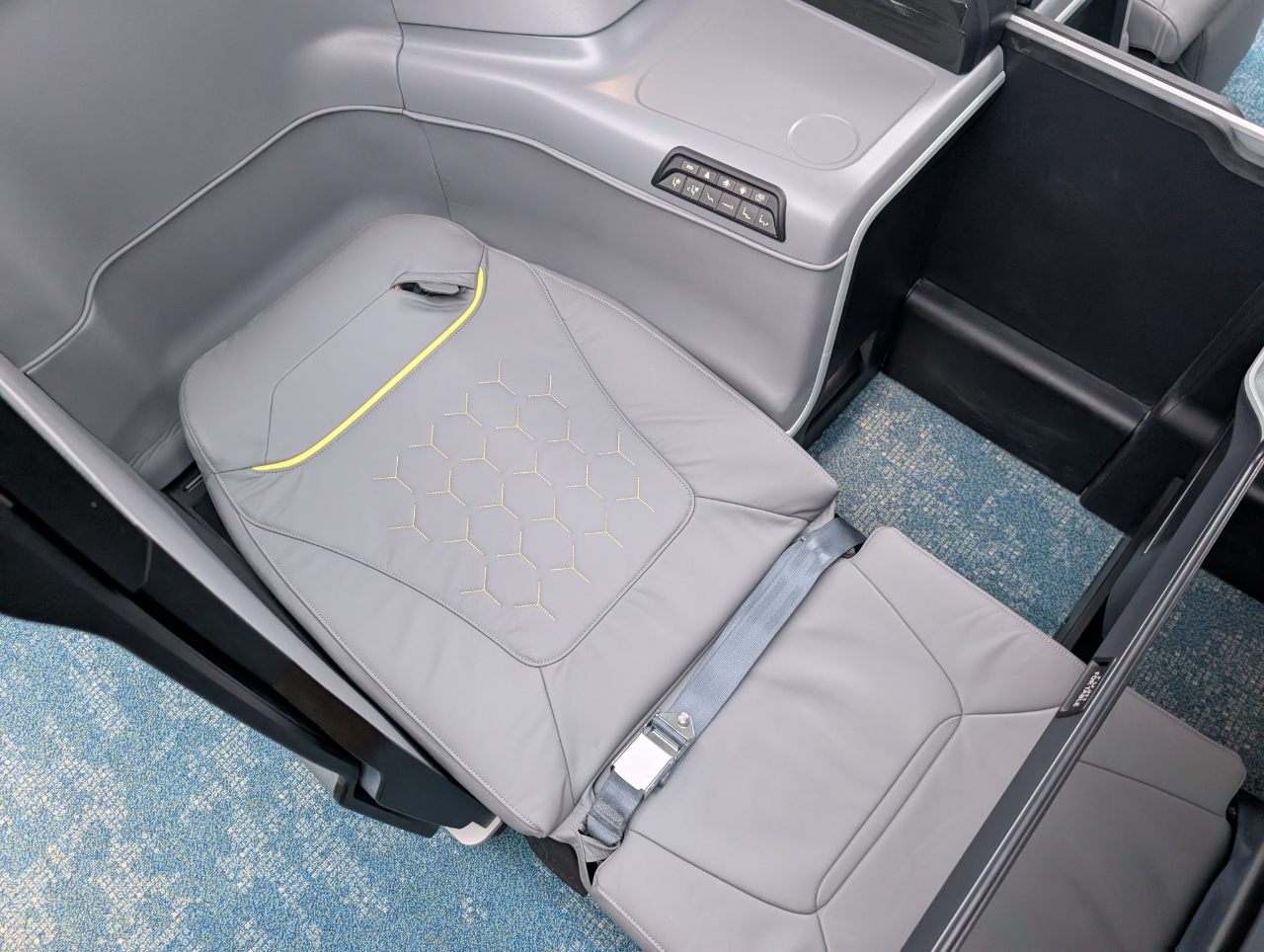
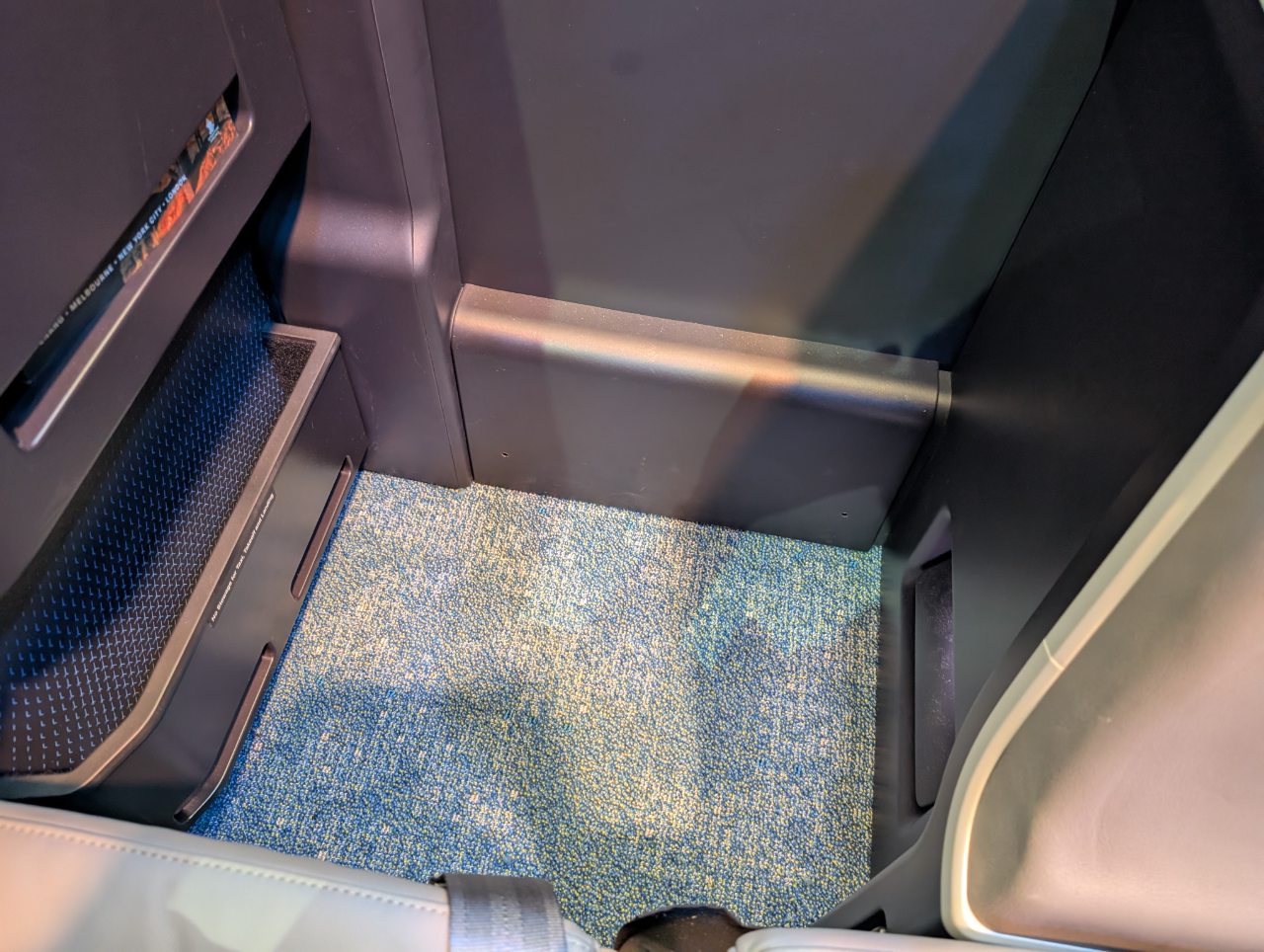
While the 2027J bed is narrower than before, this creates a space to place backpacks or shoes next to the fully reclined seat — unlike the current 2013J seat, where your things are “trapped” beneath the sleeping surface once the seat is flipped over.
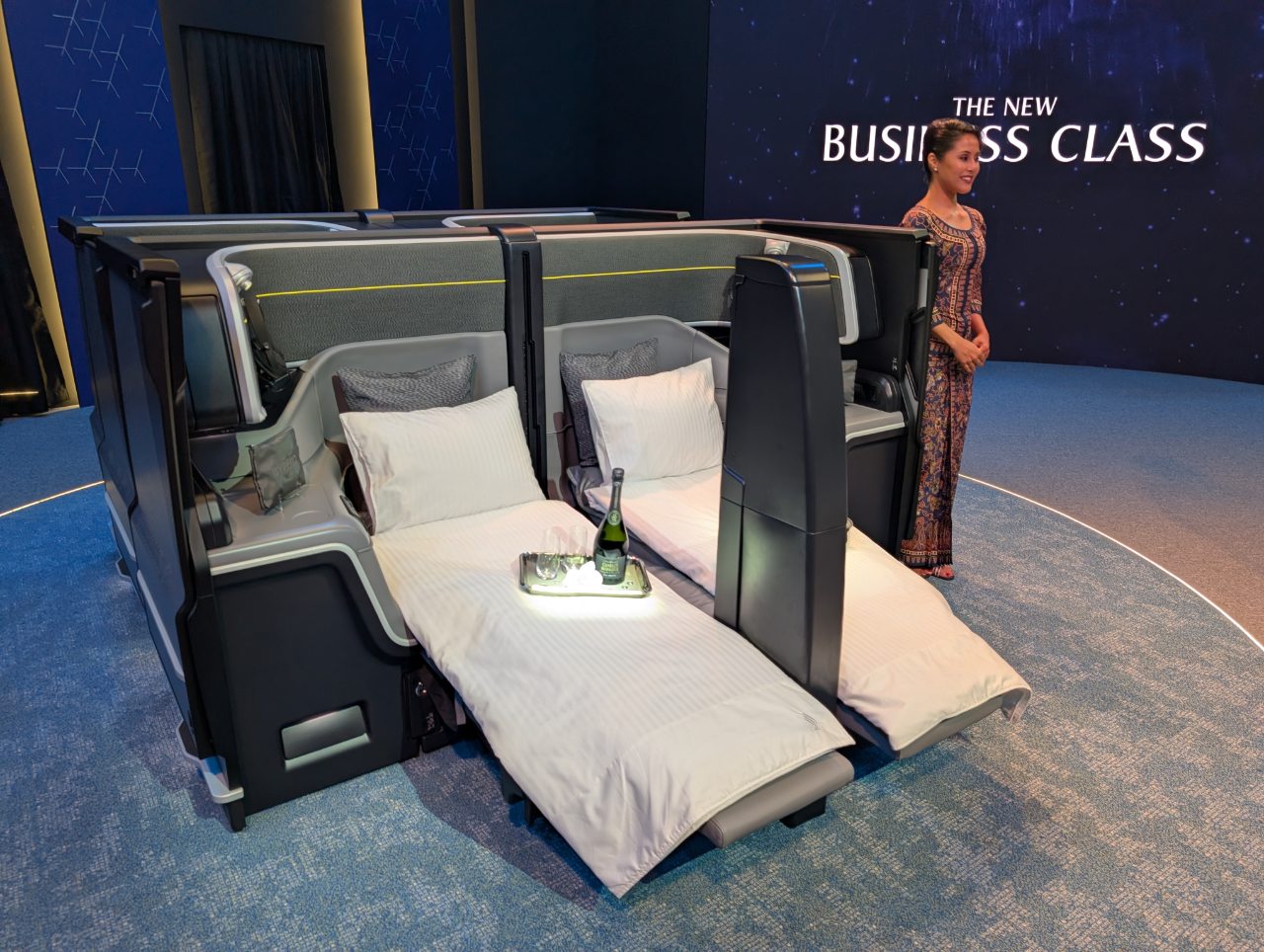
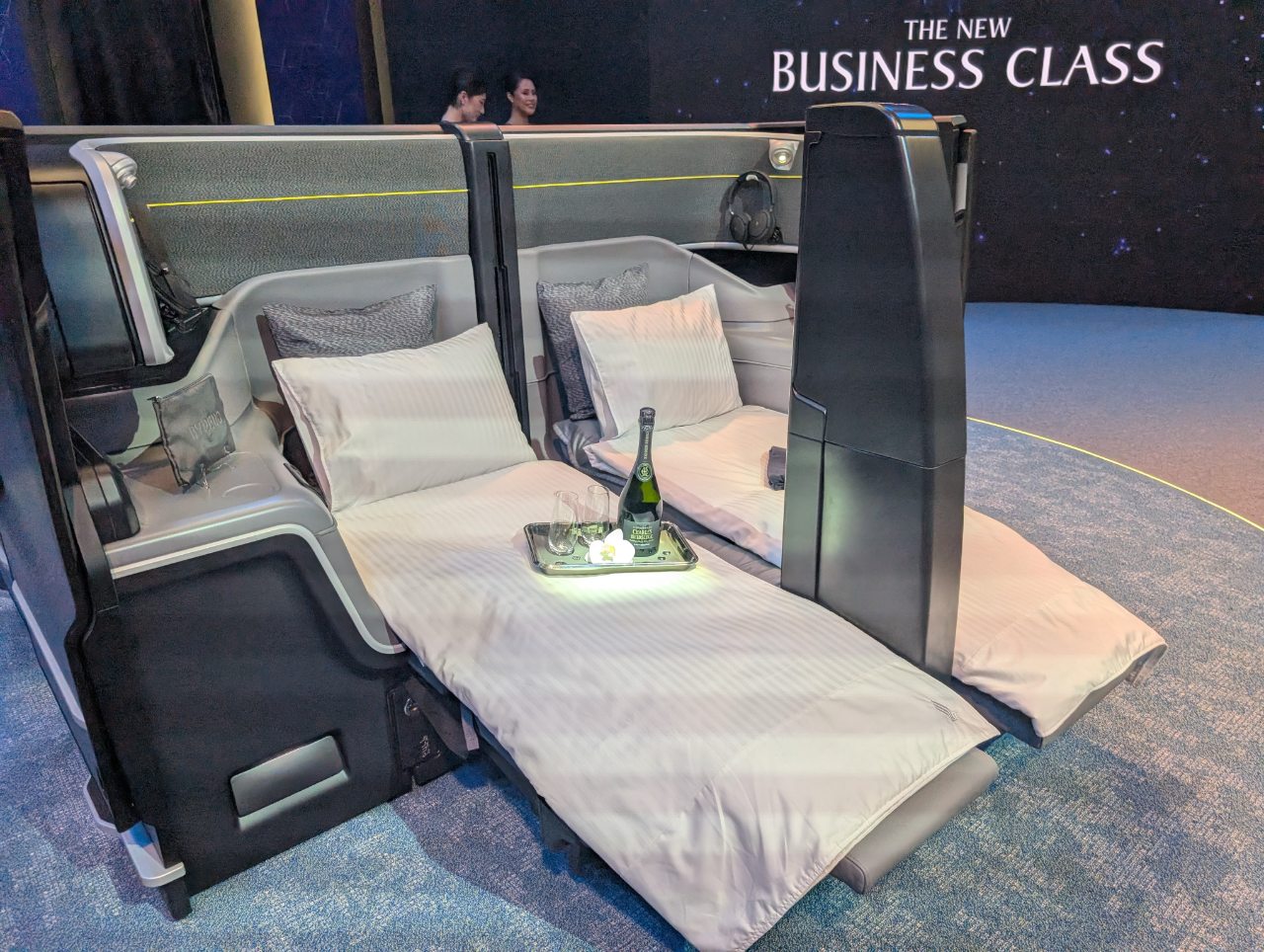
But the hero feature will probably be the double bed, which can be created by reclining the honeymoon seats and lowering the privacy divider.
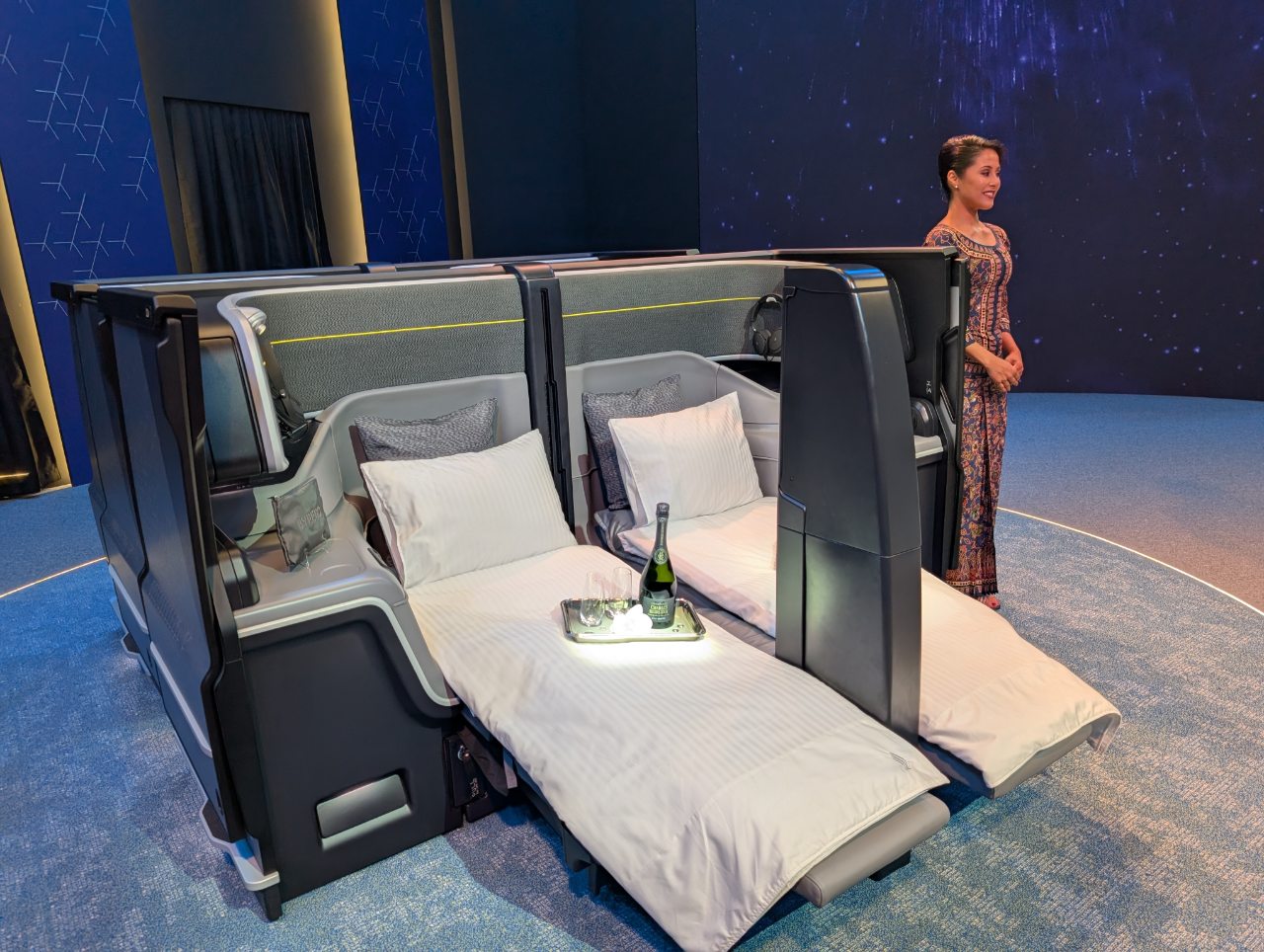
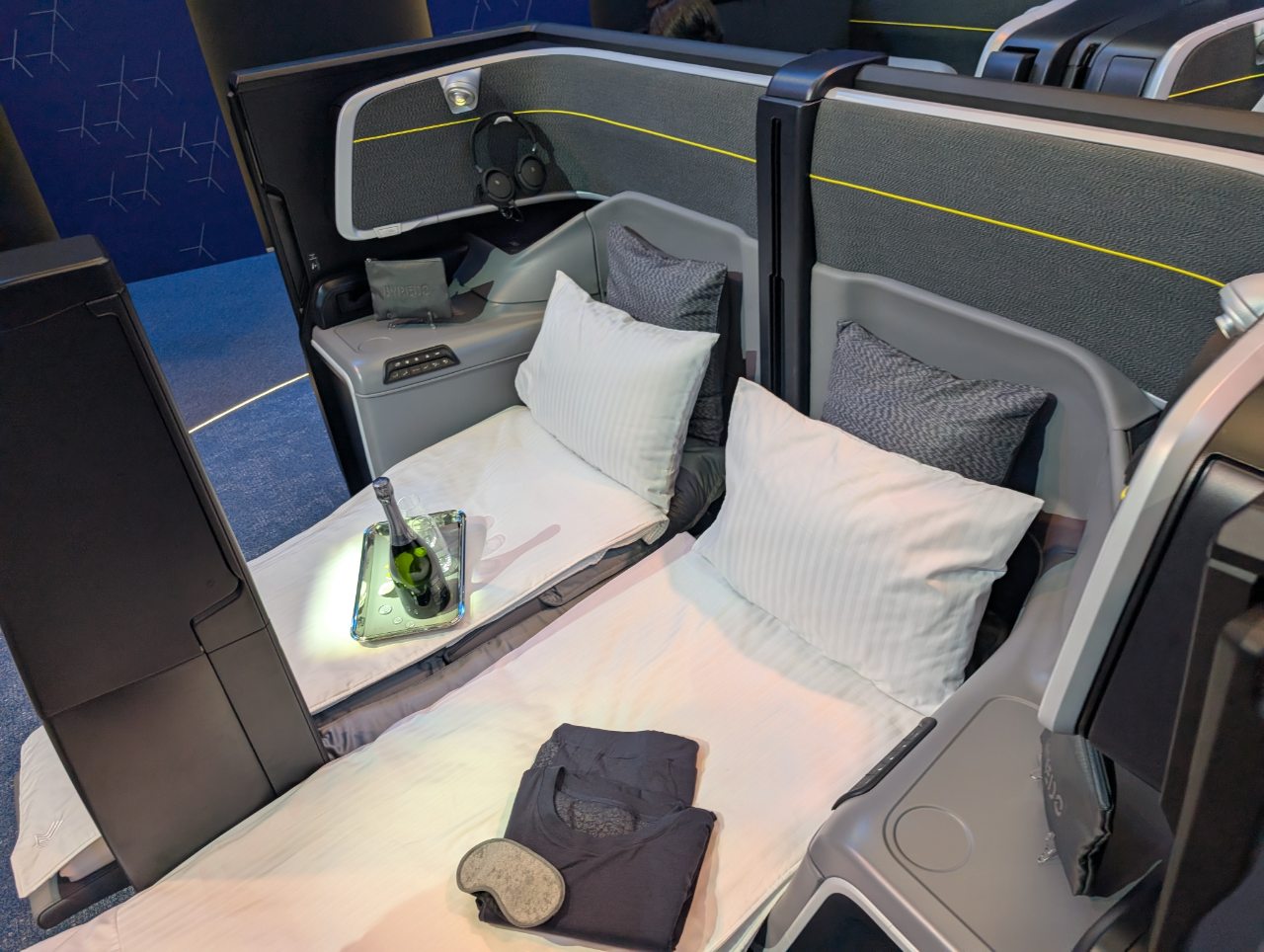
There’s a seam of about 15cm between the seats, but it’s covered by a mattress pad. Even so, it’s best to think of this as two single beds pushed together, because your feet are still separated by the foot cubbies. Here’s what it looks like, without the sheets.
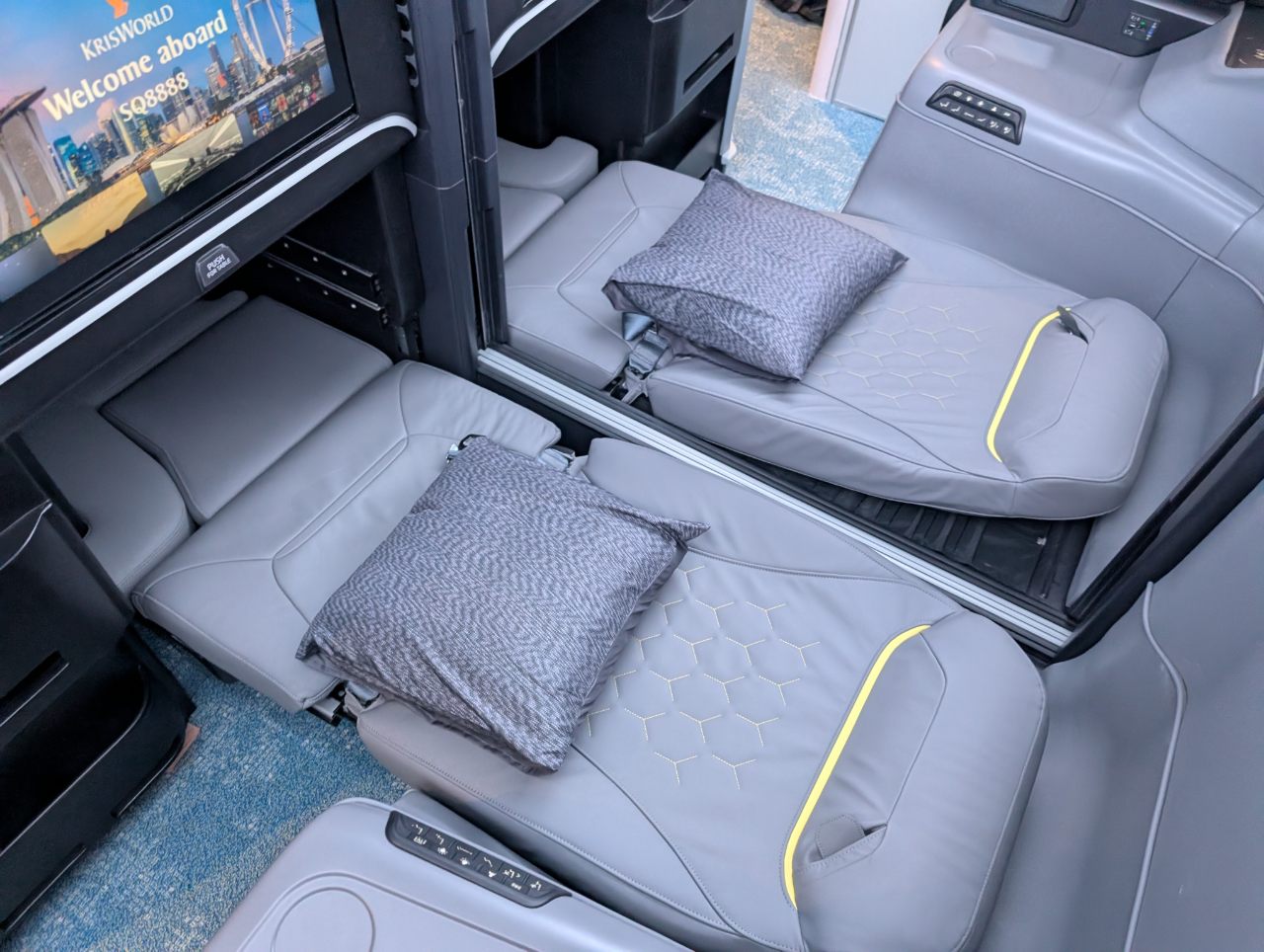
Today, the only SIA aircraft to offer double beds in Business Class is the A380, and even then, only for 6 of 78 seats, or 8% of passengers. On the A350-900LH/ULR and B777-9, that figure should be closer to 30%.
| Aircraft | Business Class Seats | Double Bed Seats (%) |
| A380-800 | 78 | 6 (8%) |
| B777-9 | 54 | 16 (30%) |
| A350-900LH | 42 | 12* (29%) |
| A350-900ULR | 70 | 20* (29%) |
| *Figures are estimated because the seat map has not been published yet | ||
However, given SIA’s recent move to limit advance seat selection for passengers on Business Lite fares, as well as Business Advantage, Saver and Promo awards, it remains to be seen how many of these seats will actually be available for advance selection.
Footwell
One of the biggest complaints about the 2013J seat was its notorious “foot dungeon” (great name for a Tarantino movie), which forced non-bulkhead passengers to compress their feet into a cubby roughly 10 inches wide.
The good news is that SIA has addressed this with the 2027J, where the foot cubby is 15 inches at its narrowest. I tried lying on my side and on my back, and in both positions, I could move my feet around comfortably. It may sound like a small thing, but this is probably the greatest quality-of-life improvement. I can’t tell you how annoying it is trying to fall asleep on the 2013J when your feet bump into something when you so much as cough.
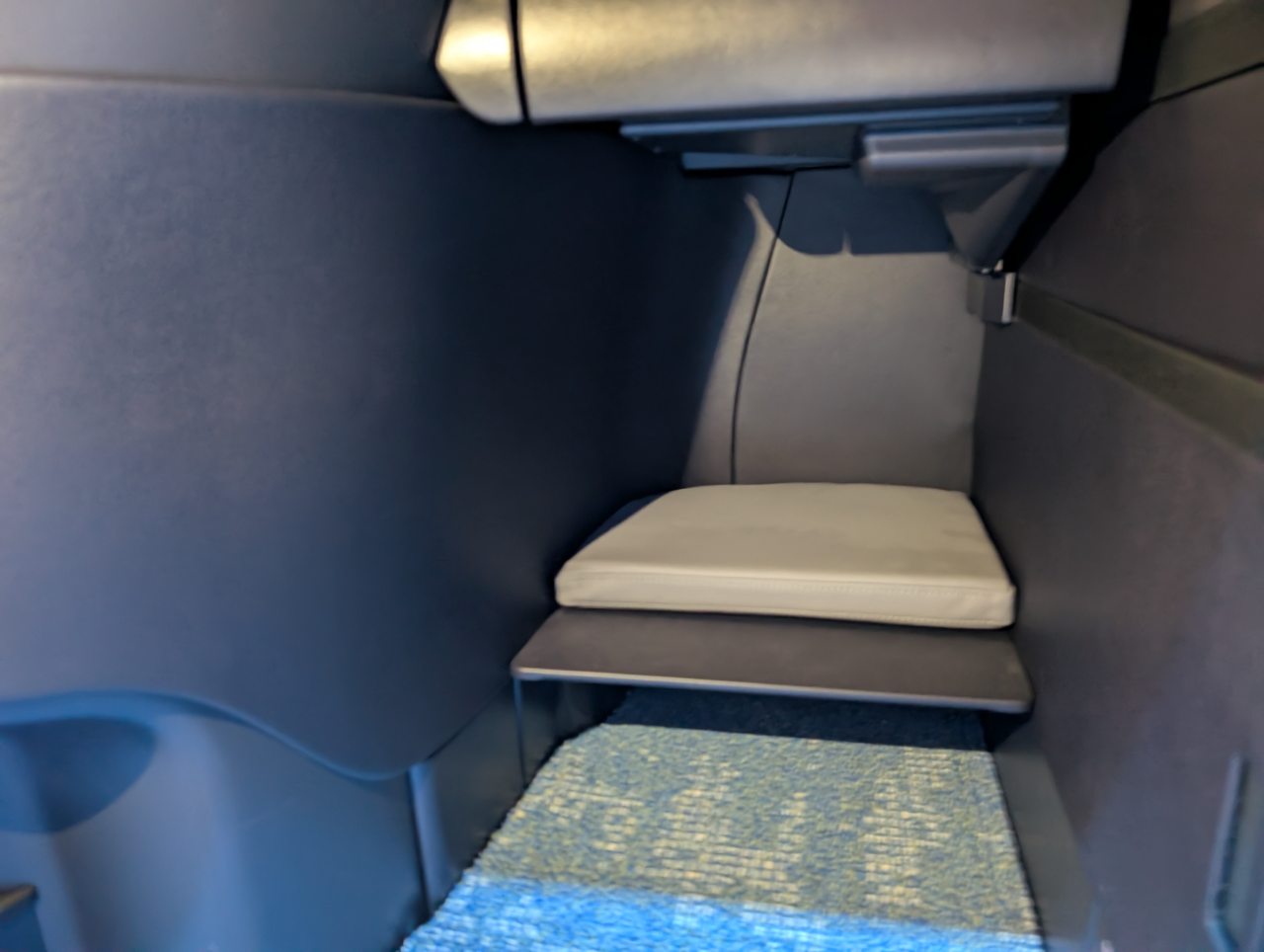
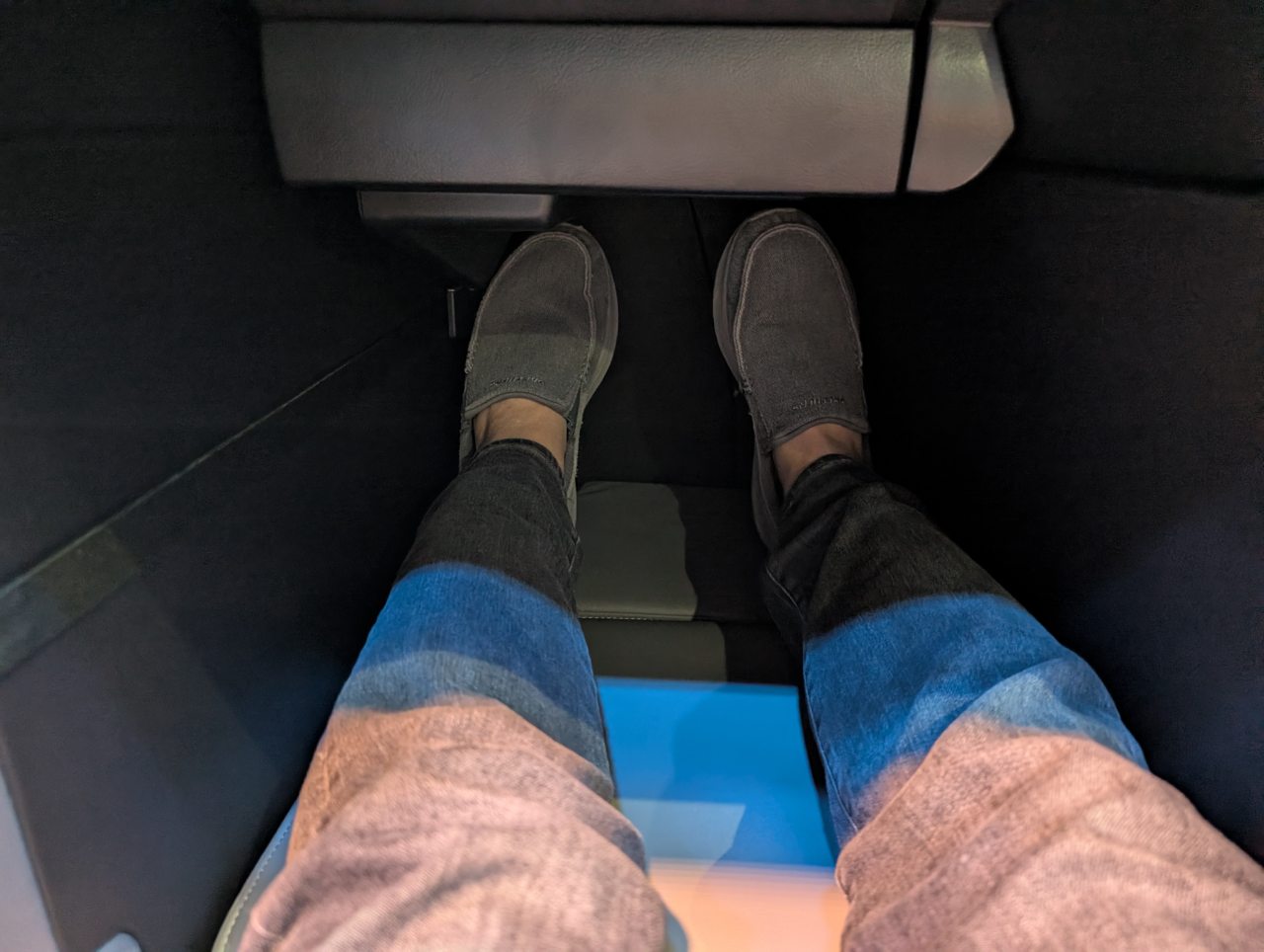
If you’re in the bulkhead row, you’ll have an even more generous 19 inches of footwell space.
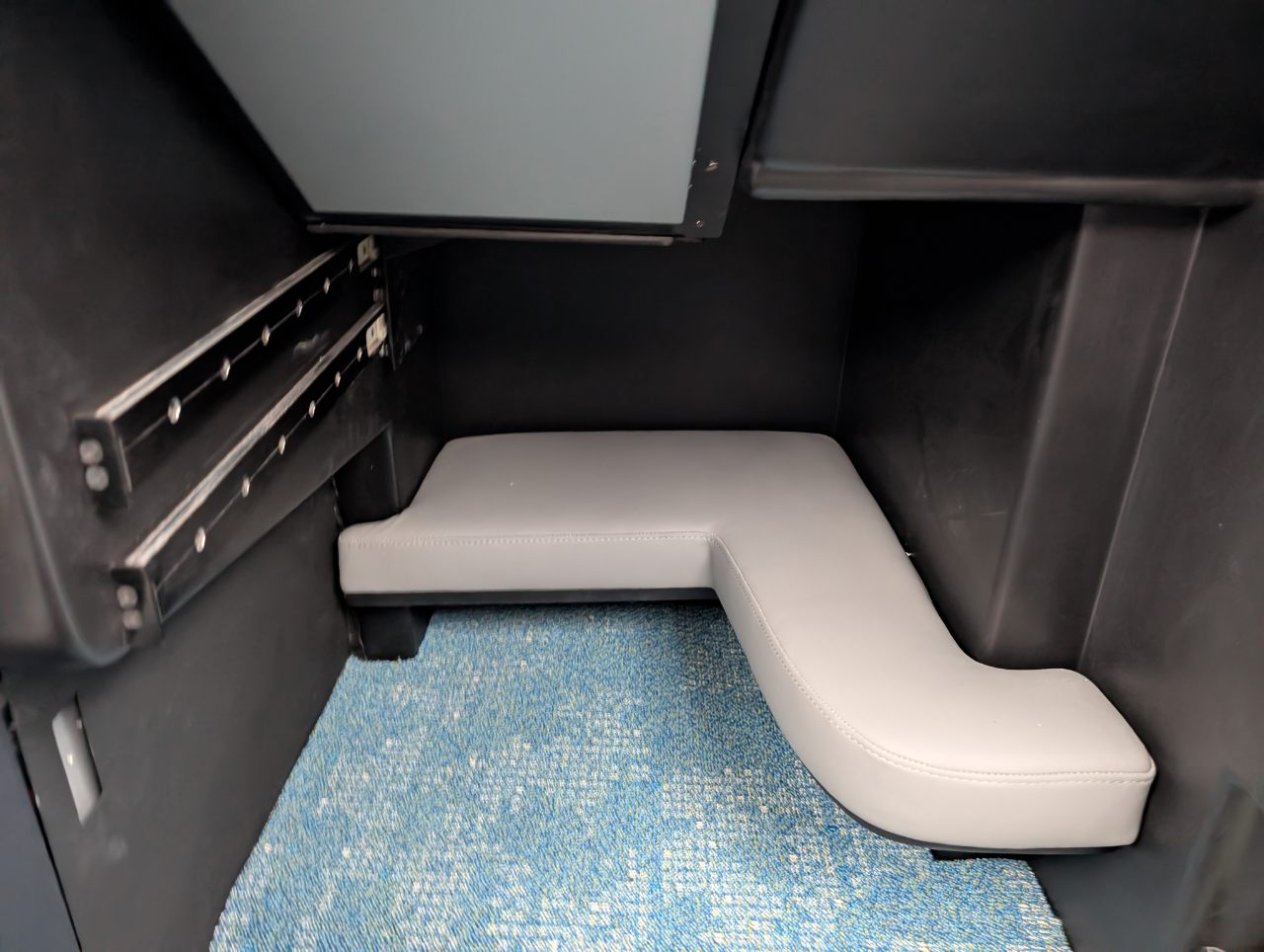
I should caveat that the seats at the event and the SIA Training Centre were both the B777-9 models, where the seat width is 24 inches. On the A350-900LH/ULR, the seat width is 22 inches, so it stands to reason that the footwell should be slightly narrower. However, a proportionate reduction would yield 13.75 inches (22/24 * 15), still 38% better than the 2013J.
Storage options
The new Business Class seat has several places to put things.
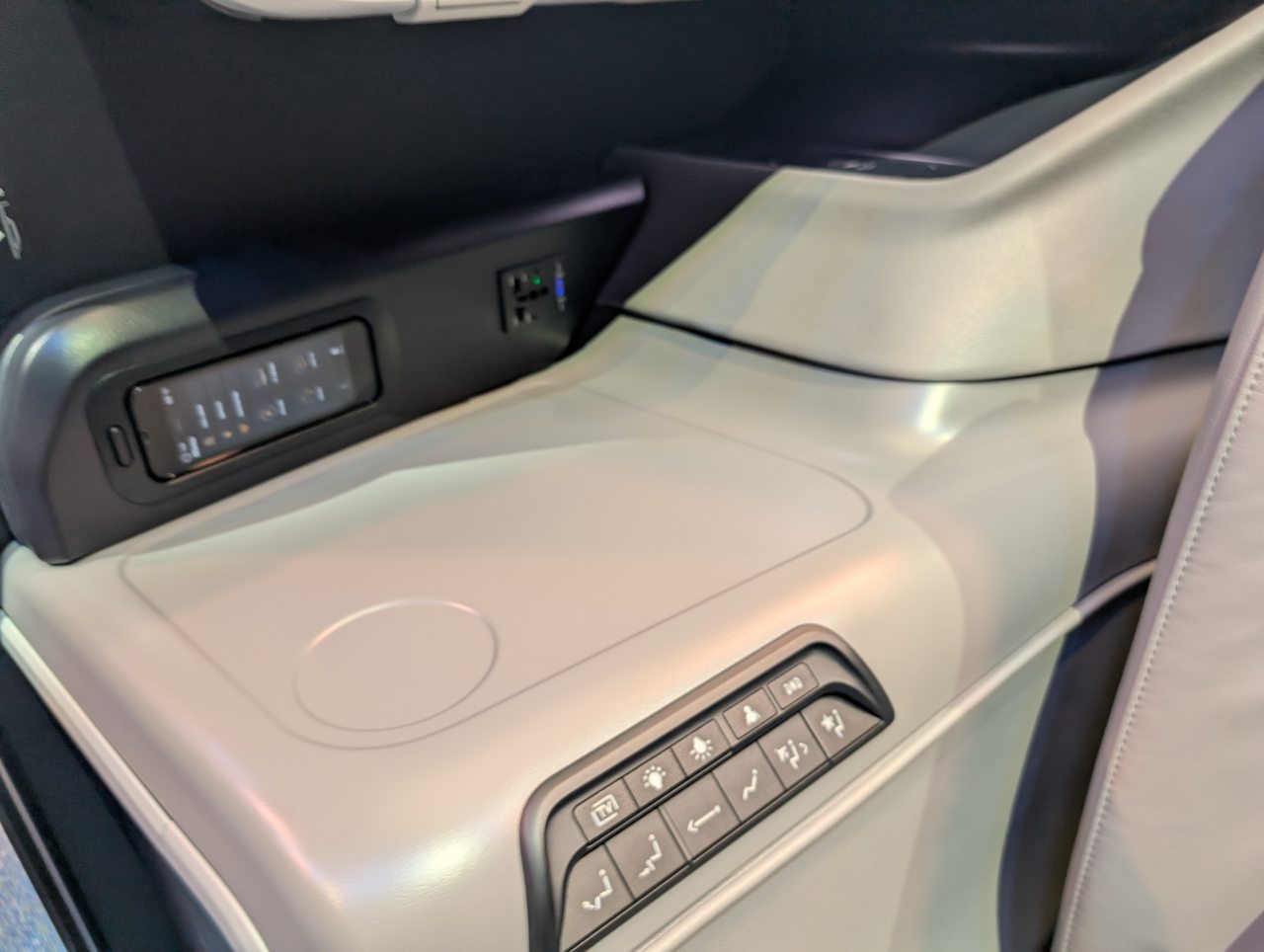
The obvious option is the side console, which has a slight lip to stop small items sliding off.
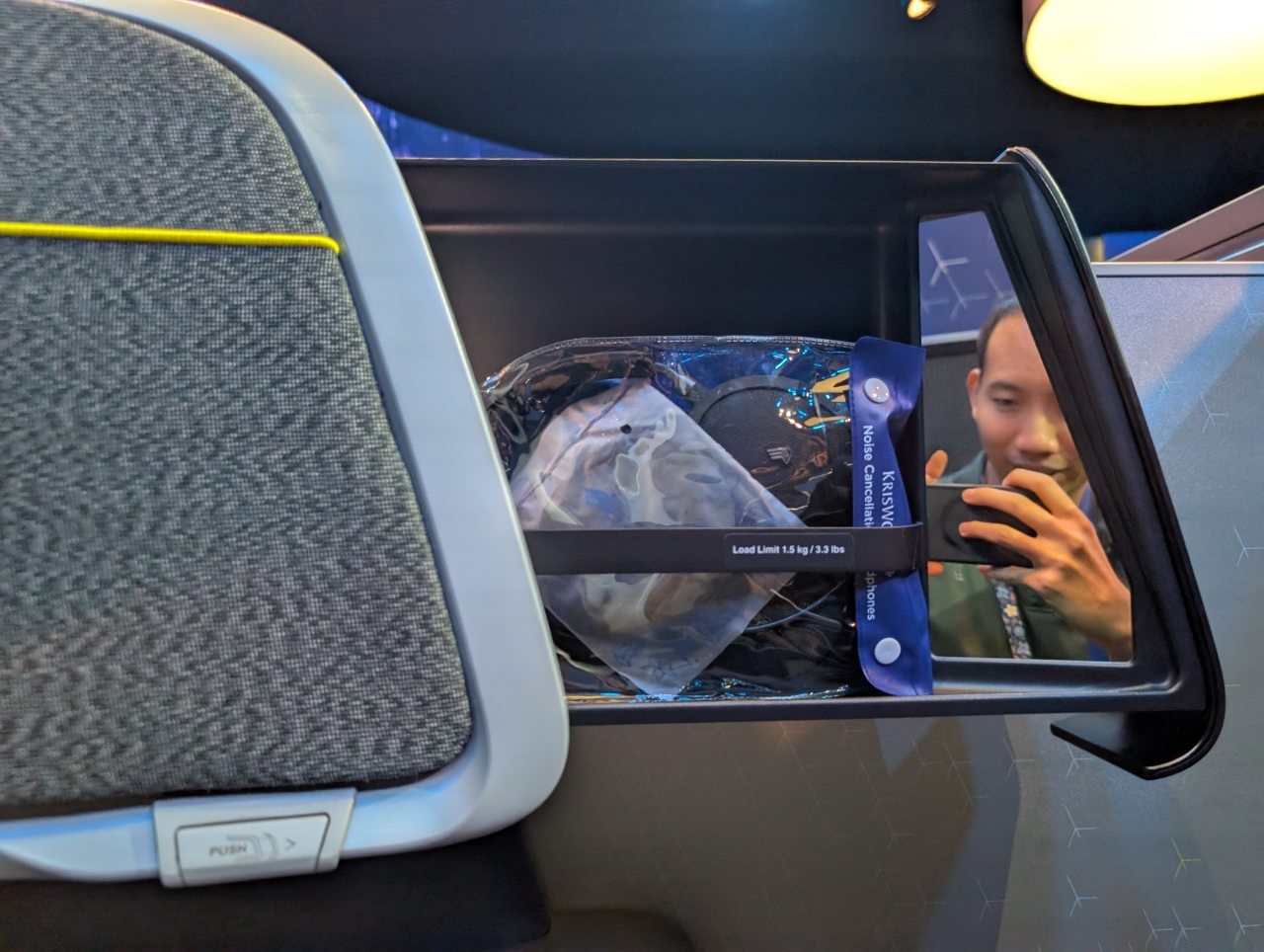
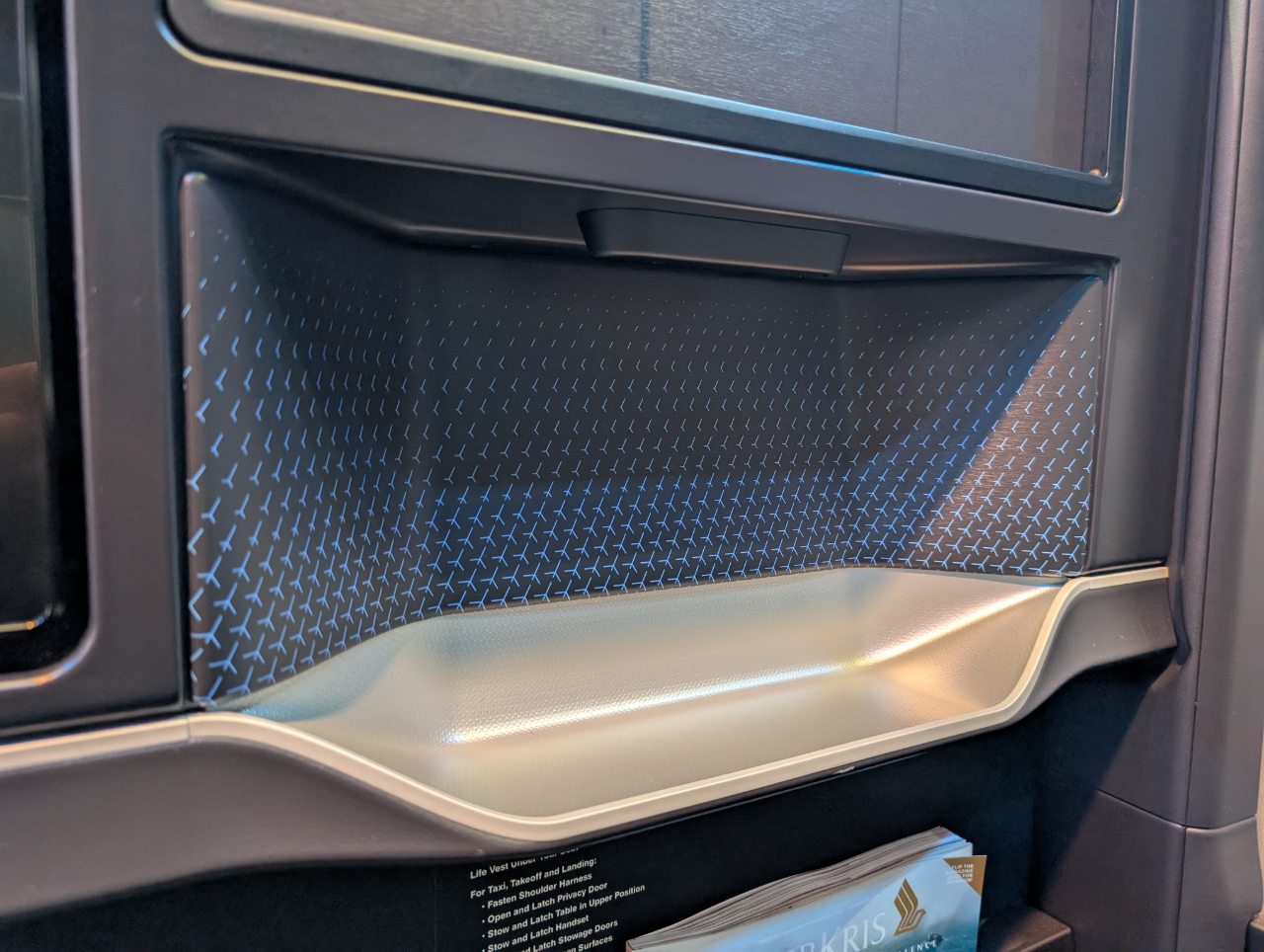
Another storage compartment is cleverly tucked into the wing panel beside your head. It slides out to reveal a tray for water bottles or headphones, plus a vanity mirror.
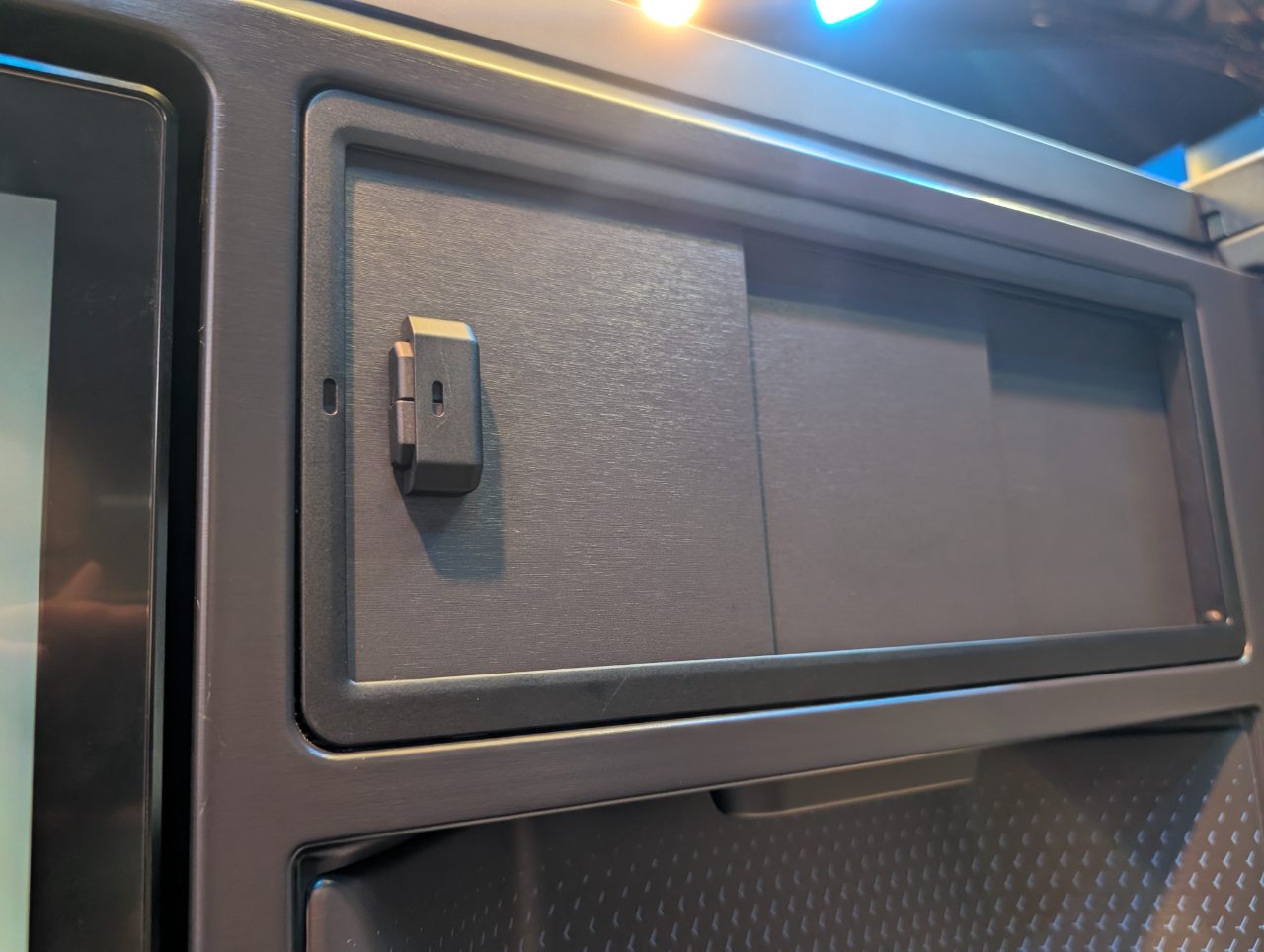
There’s also a storage cubby next to the IFE monitor, which also holds the extra charging ports (more on those below).
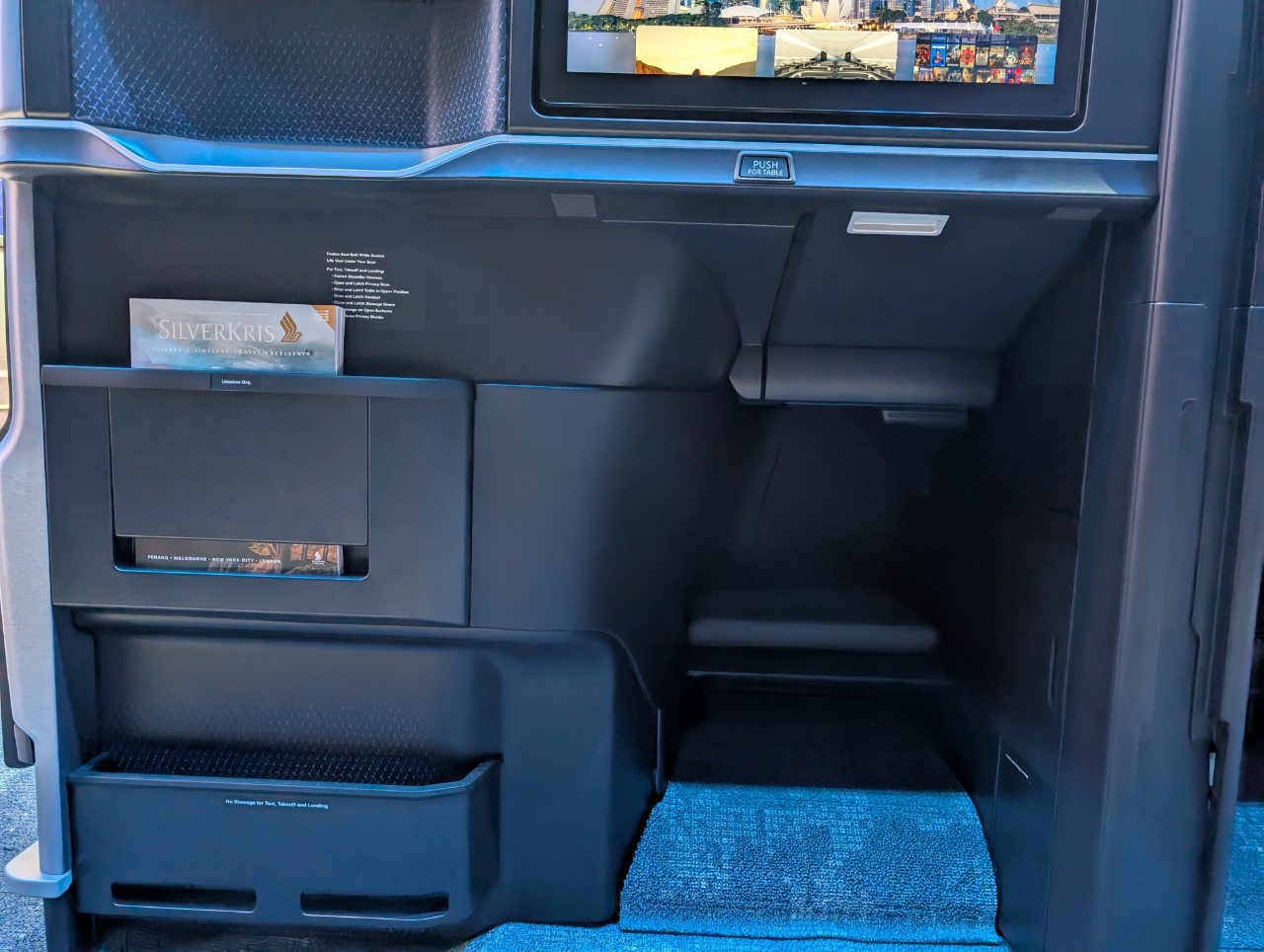
Finally, more storage areas can be found next to the footwell: a literature pocket, and a low bin near the floor that’s big enough for a laptop.
Tray table
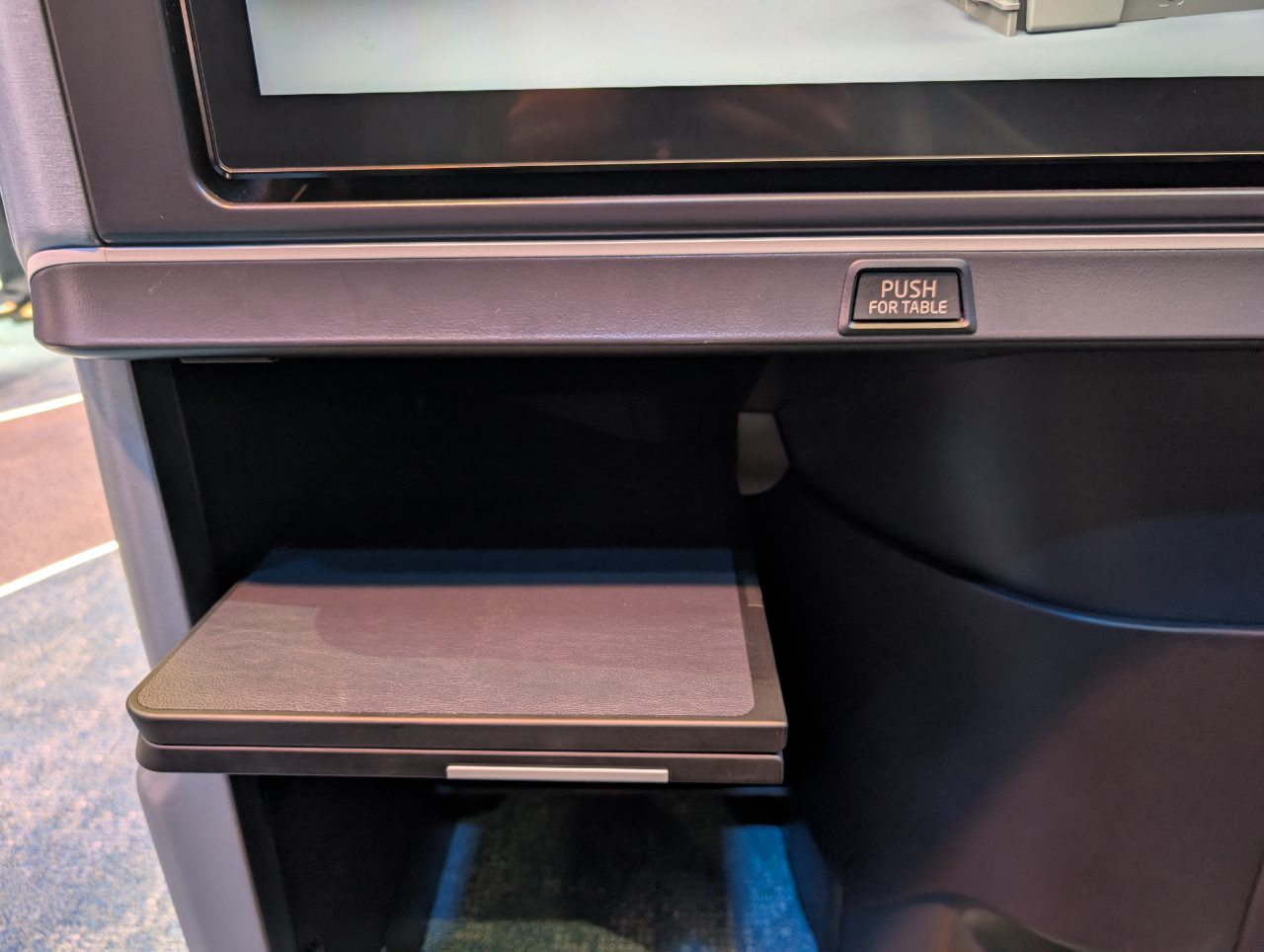
The 2013J seat’s adjustable-height tray table was built into the armrest, and was annoyingly easy to trigger accidentally by resting your arm in the general vicinity.
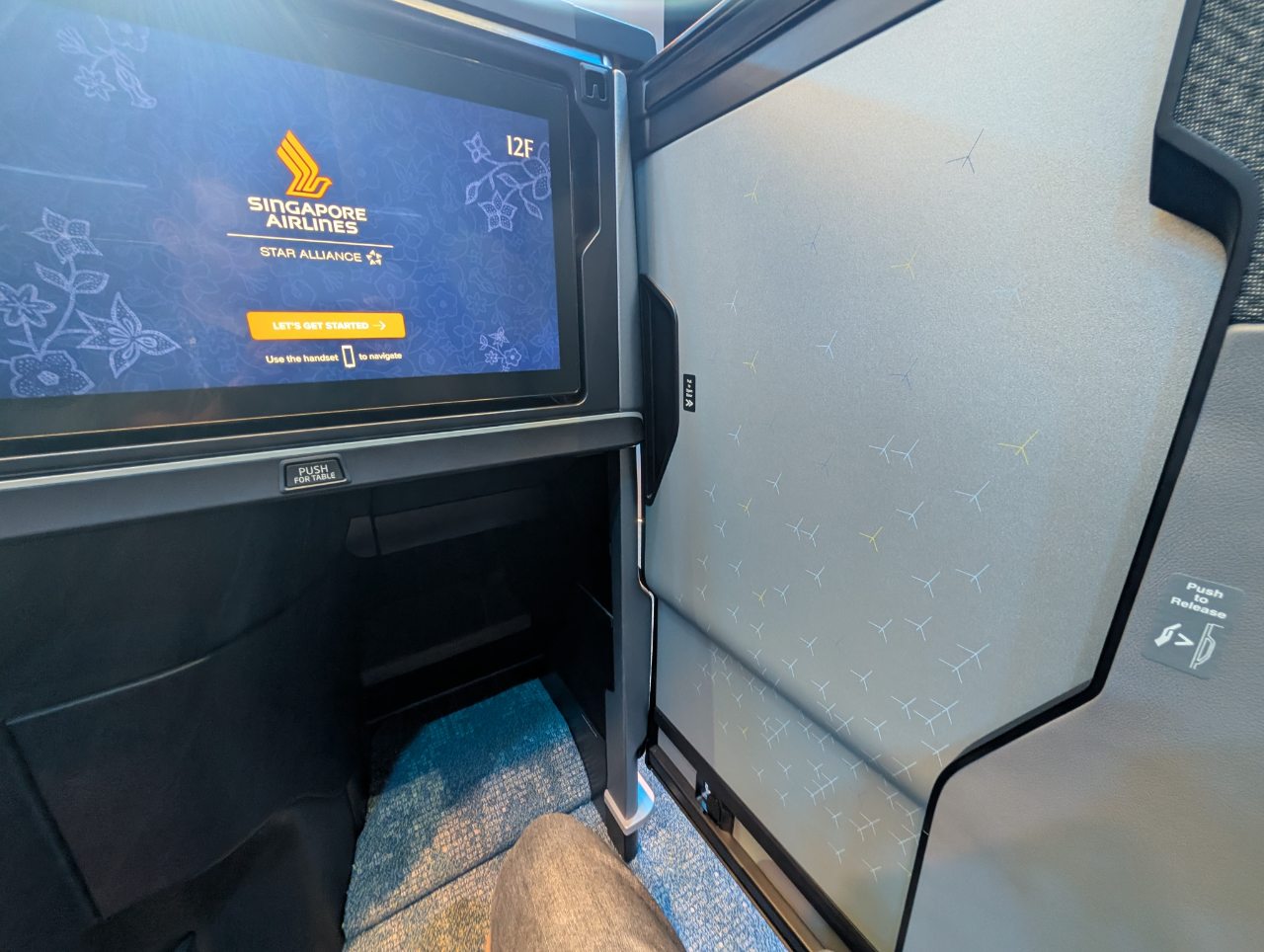
Singapore Airlines has now redesigned the tray table mechanism entirely. The tray table is stowed in a compartment beneath the IFE monitor. To deploy it, you press a release button, and the folded tray table swings down to rest horizontally. You then pull it towards you and unfold it. Because the table tucks up under the screen when stowed, it stays clear of the footwell, leaving more room for your feet (another reason for the more spacious footwell mentioned previously).
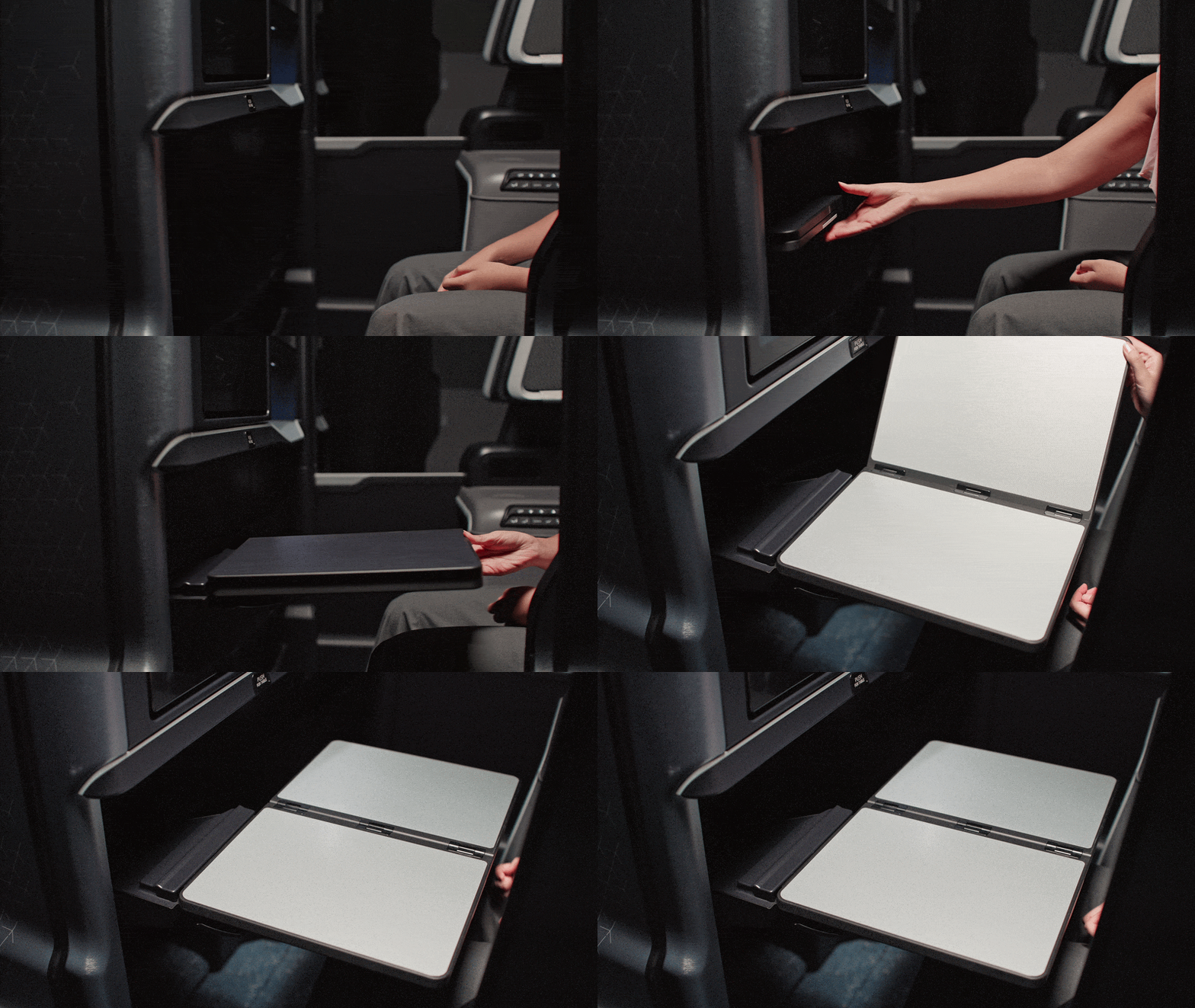
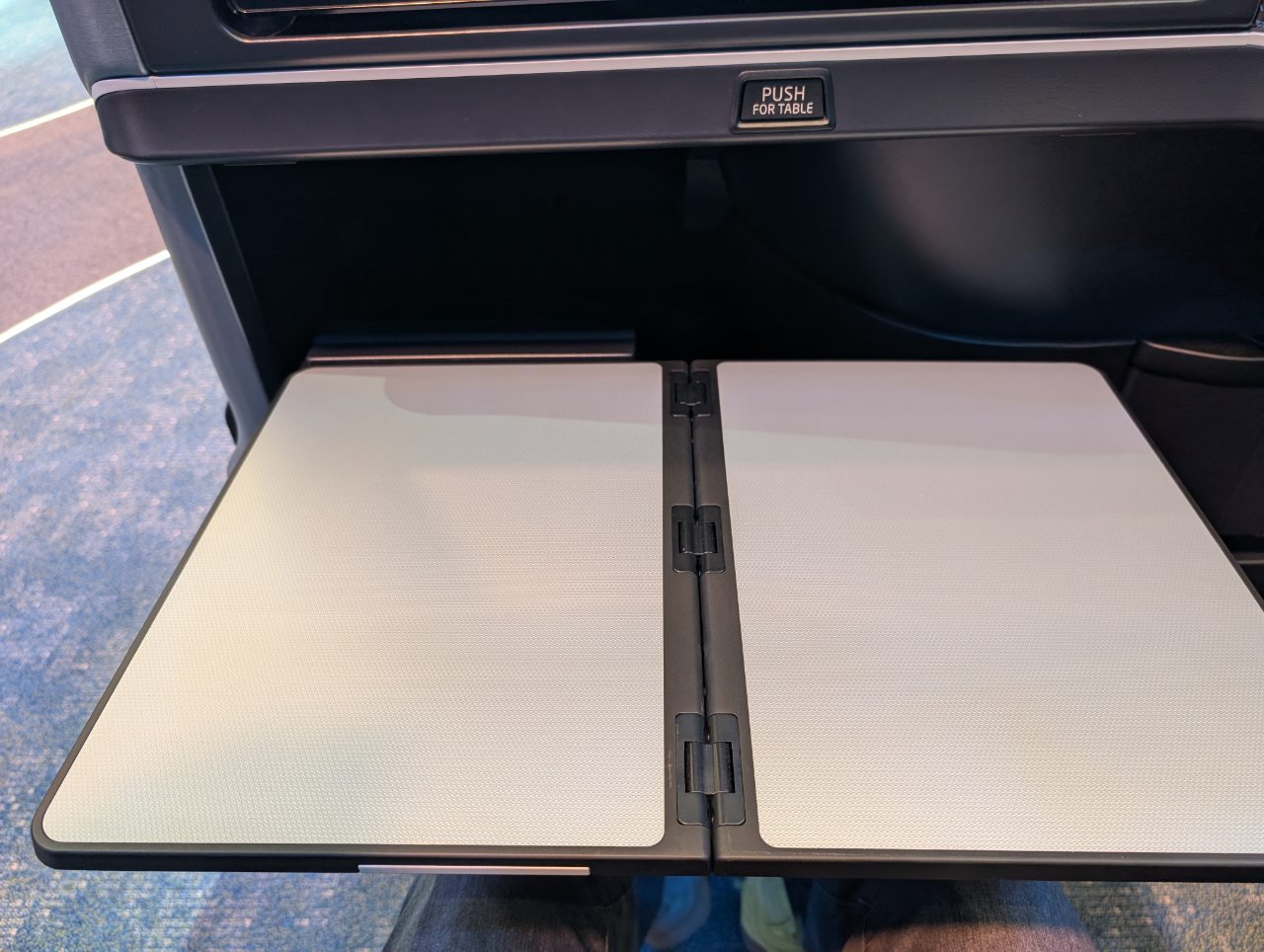
Unfolded, the tray table measures 22 x 14.7 inches (56 x 37cm). It felt solid, with very little give, which should make it good for laptop work.
However, the fully deployed tray table traps you in your seat, which is a pet peeve of mine. You can slide it forward towards the monitor to make room, but because of the curvature of the seat shell, the widest gap you can create is just 13cm. That’s not enough to easily exit or enter the seat, which could be a problem during meal service.
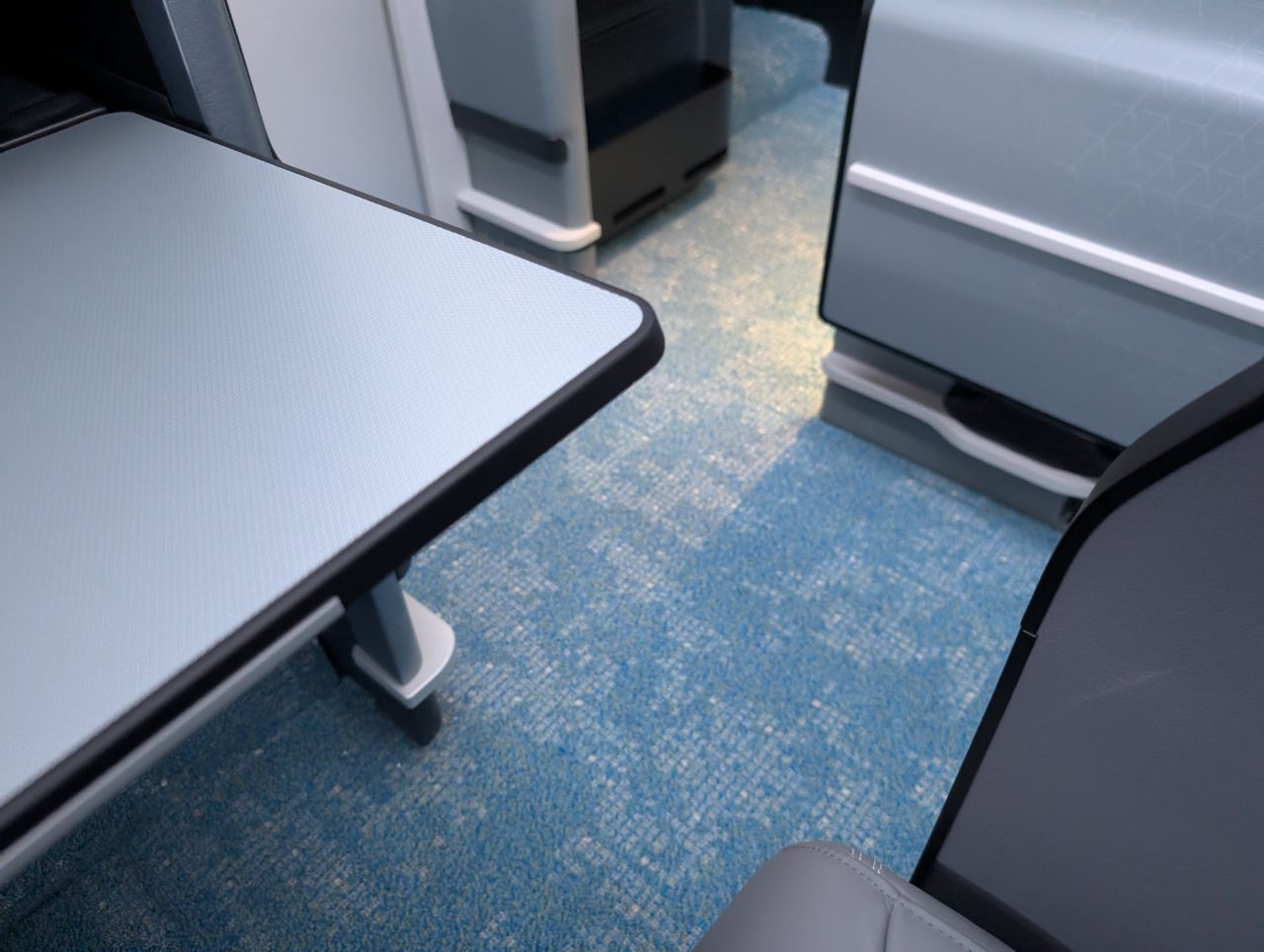
Also note that unlike the 2013J, the tray table’s height is not adjustable. I measured it at 28 inches (71cm) off the ground.
Next to the IFE monitor is an additional cocktail tray, so you can keep drinks off your side console in case you have electronics there.
Inflight entertainment system
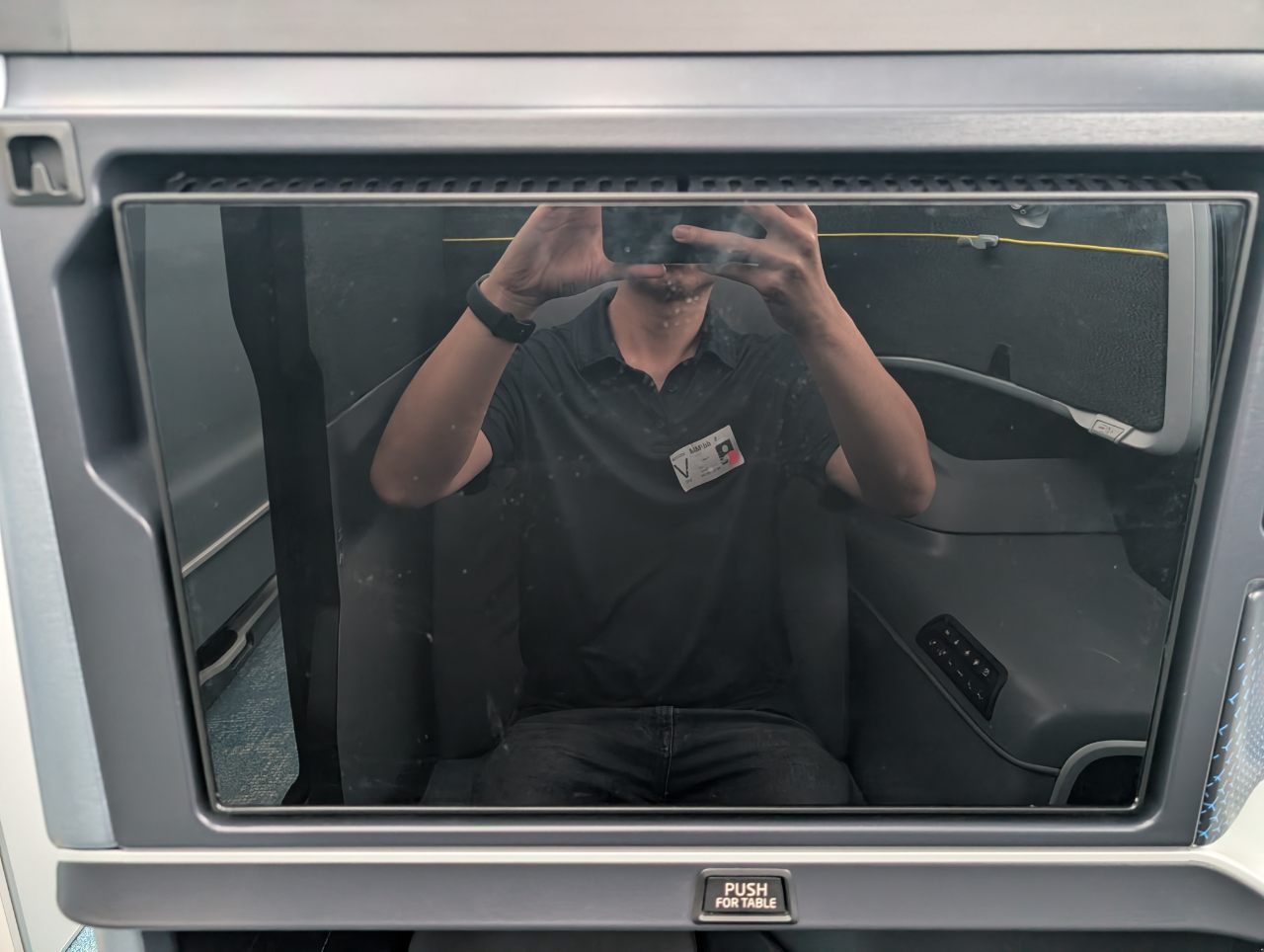
The 2027J is equipped with a 4K inflight entertainment screen, measuring 22 inches on the A350-900LH/ULR, and 20 inches on the B777-9 (surprisingly, while the B777-9 seat is wider, the A350 screen is bigger).
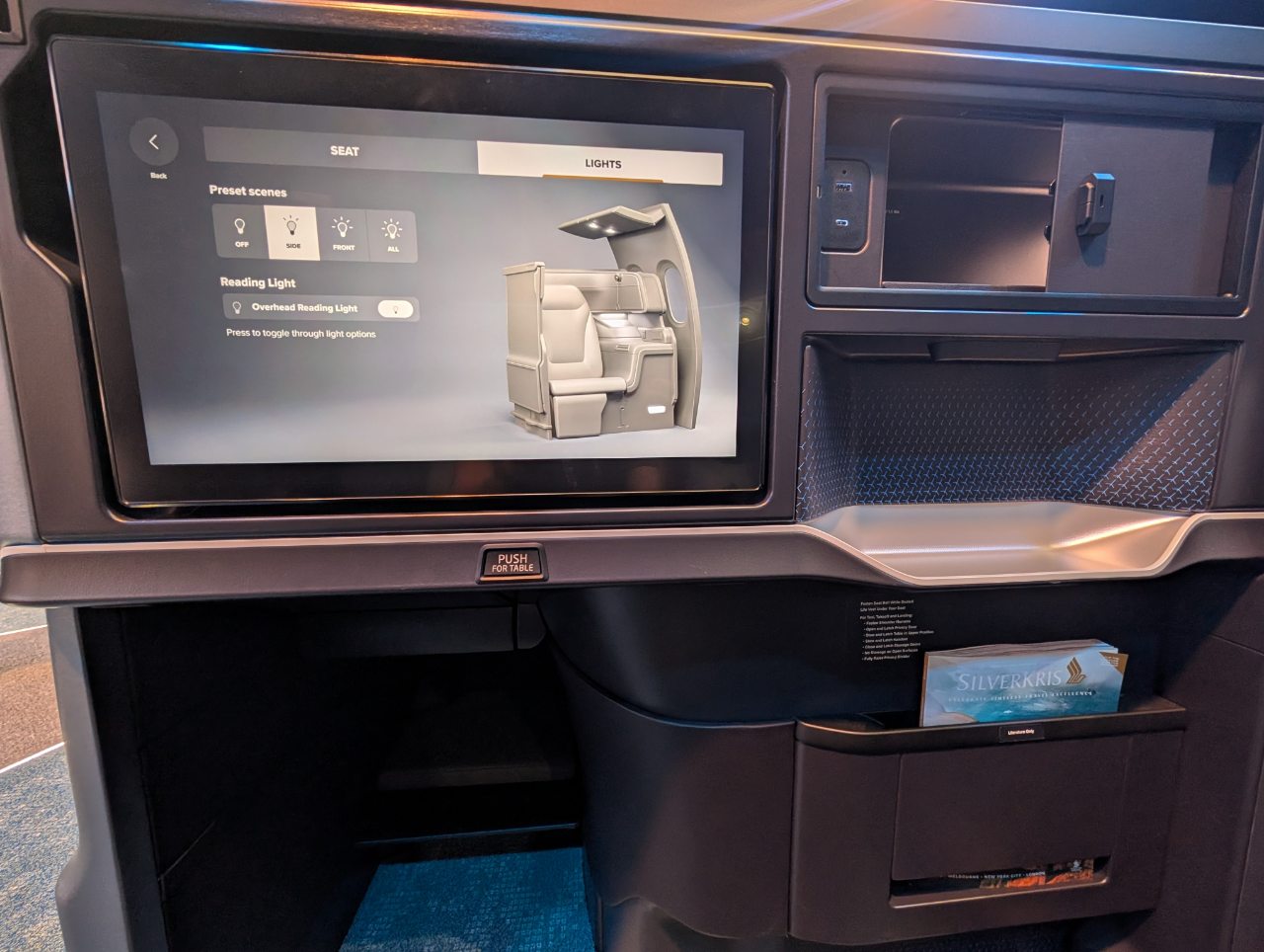
A discreet finger grip sculpted into the edge of the bezel lets you tilt the screen down towards you when you’re reclined.
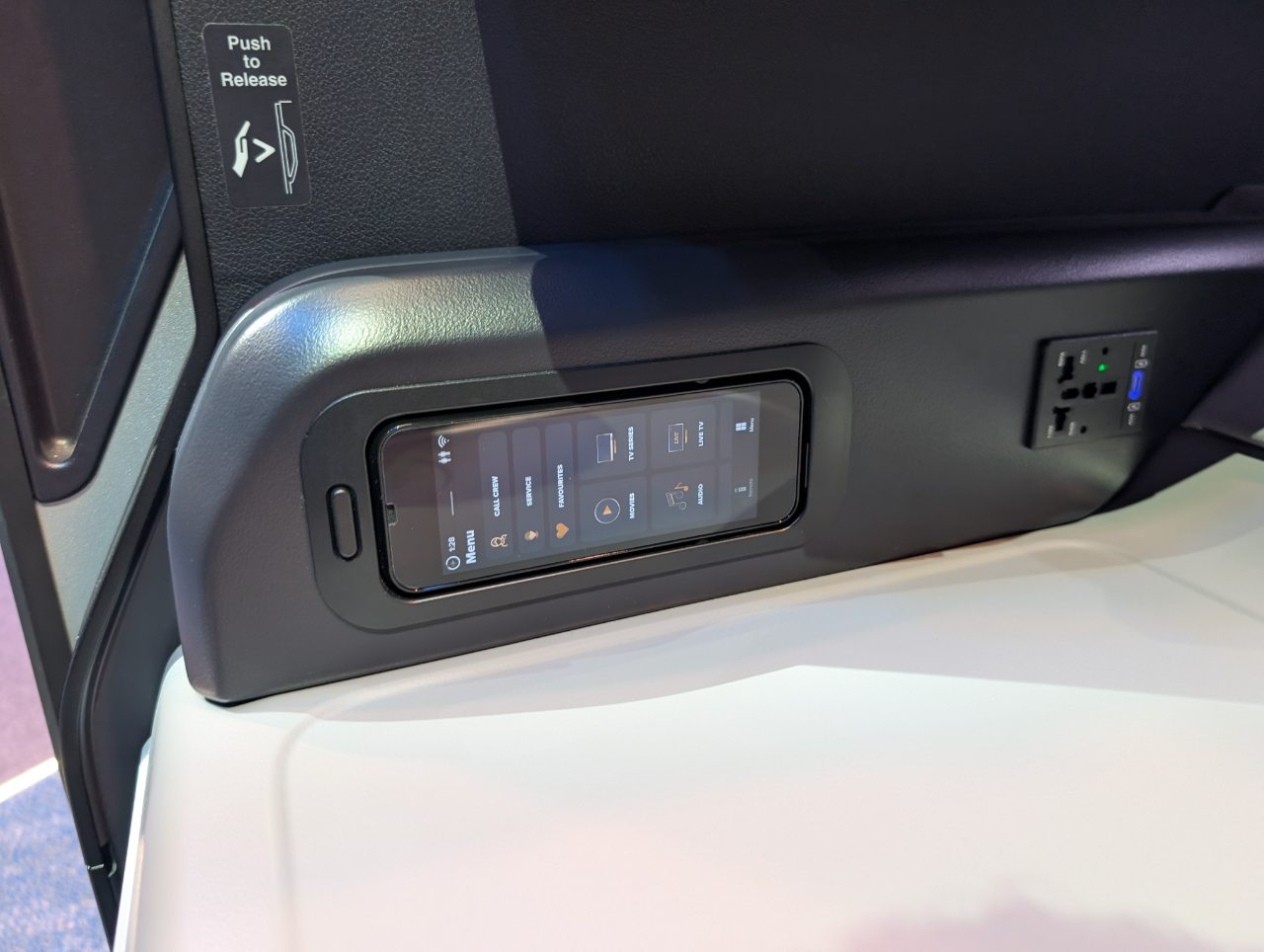
You can also browse the entertainment selection on a touchscreen remote stored above the side console.
Seat controls
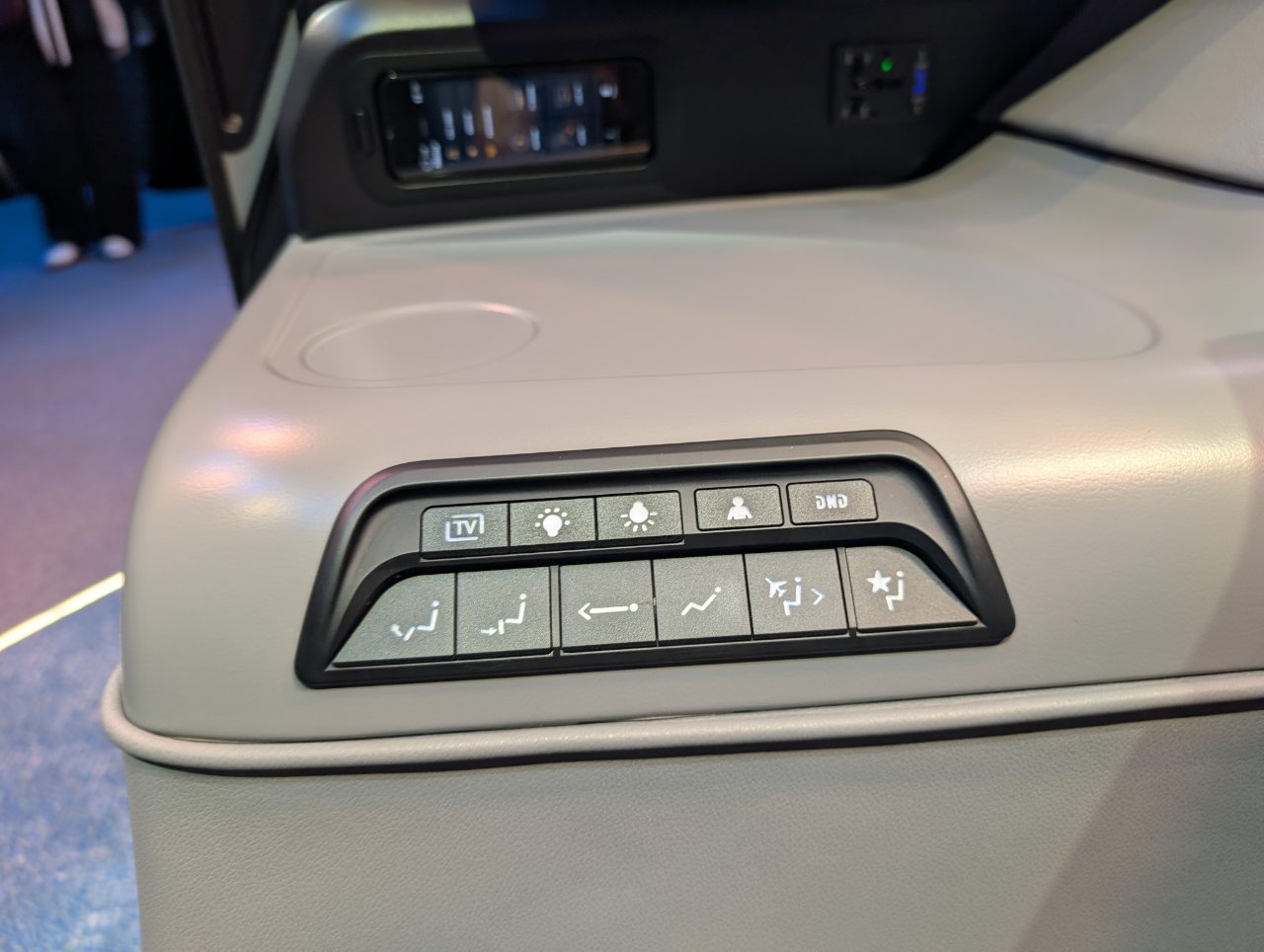
The seat control panel is embedded in the side console, split across two rows. The first row has buttons for the monitor, lighting, attendant call and Do Not Disturb. The second row is for seat adjustments, with presets for full upright, lounging and bed modes. The button with a star is for the passenger’s individual preferred seating position, which can be saved and recalled on future flights.
These are all physical buttons. SIA tried touch-sensitive buttons on the 2017J, but they were poorly received because you had to press inordinately hard before a touch was registered. Later versions adjusted the sensitivity, but customers had already developed a dislike for the concept by then.
Charging options
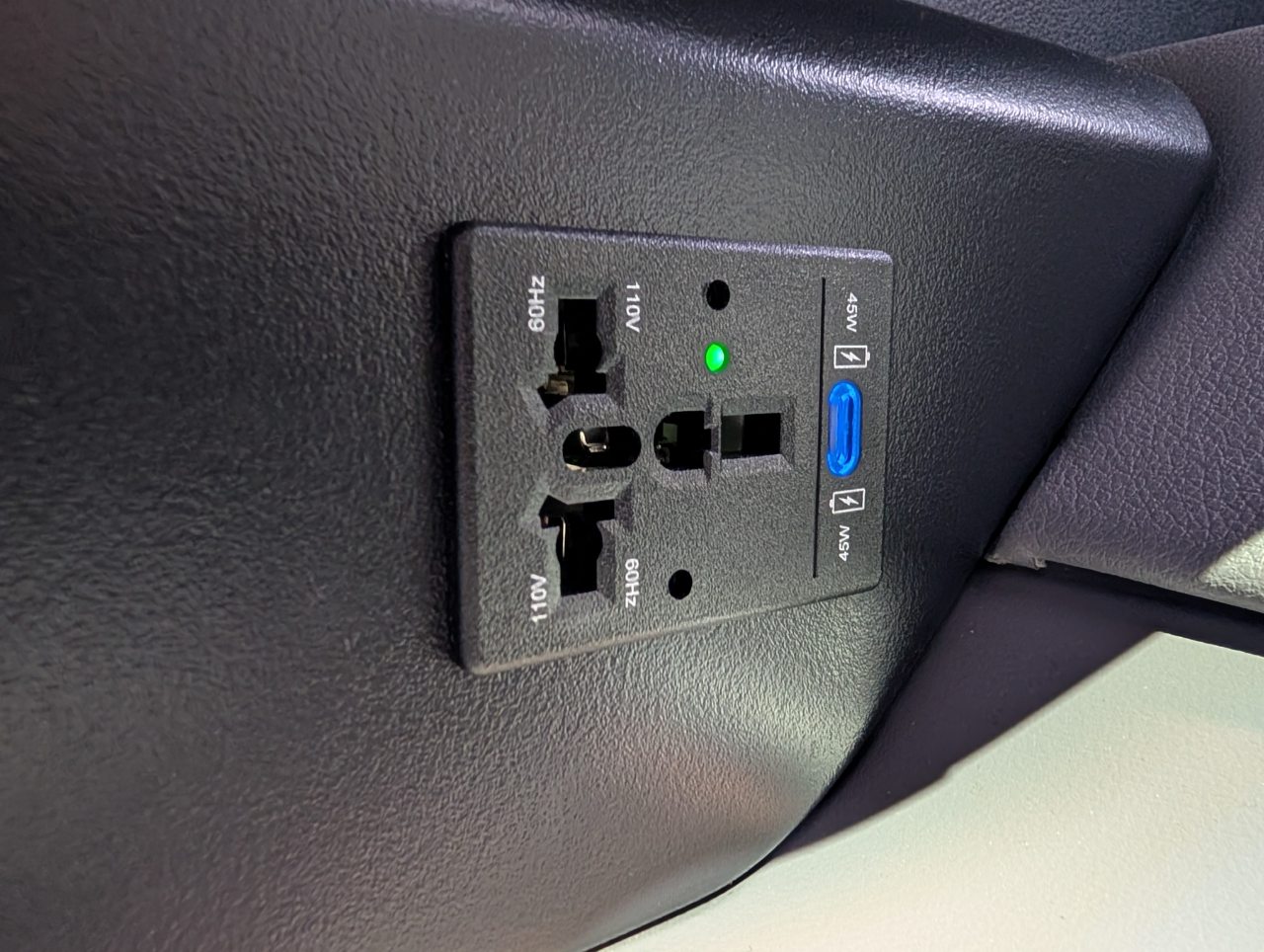
The 2027J has a universal AC power outlet with an embedded USB-C port, which outputs 67W on the A350-900LH/ULR, and 45W or 67W on the B777-9.
| ❓ Why the difference on the B777-9? |
| The first 12 B777-9s that SIA receives will have the Panasonic NEXT system, which only supports up to 45W USB-C charging. The next 19 will have the Panasonic Astrova system, which guarantees 67W USB-C charging and can even go to 100W. |
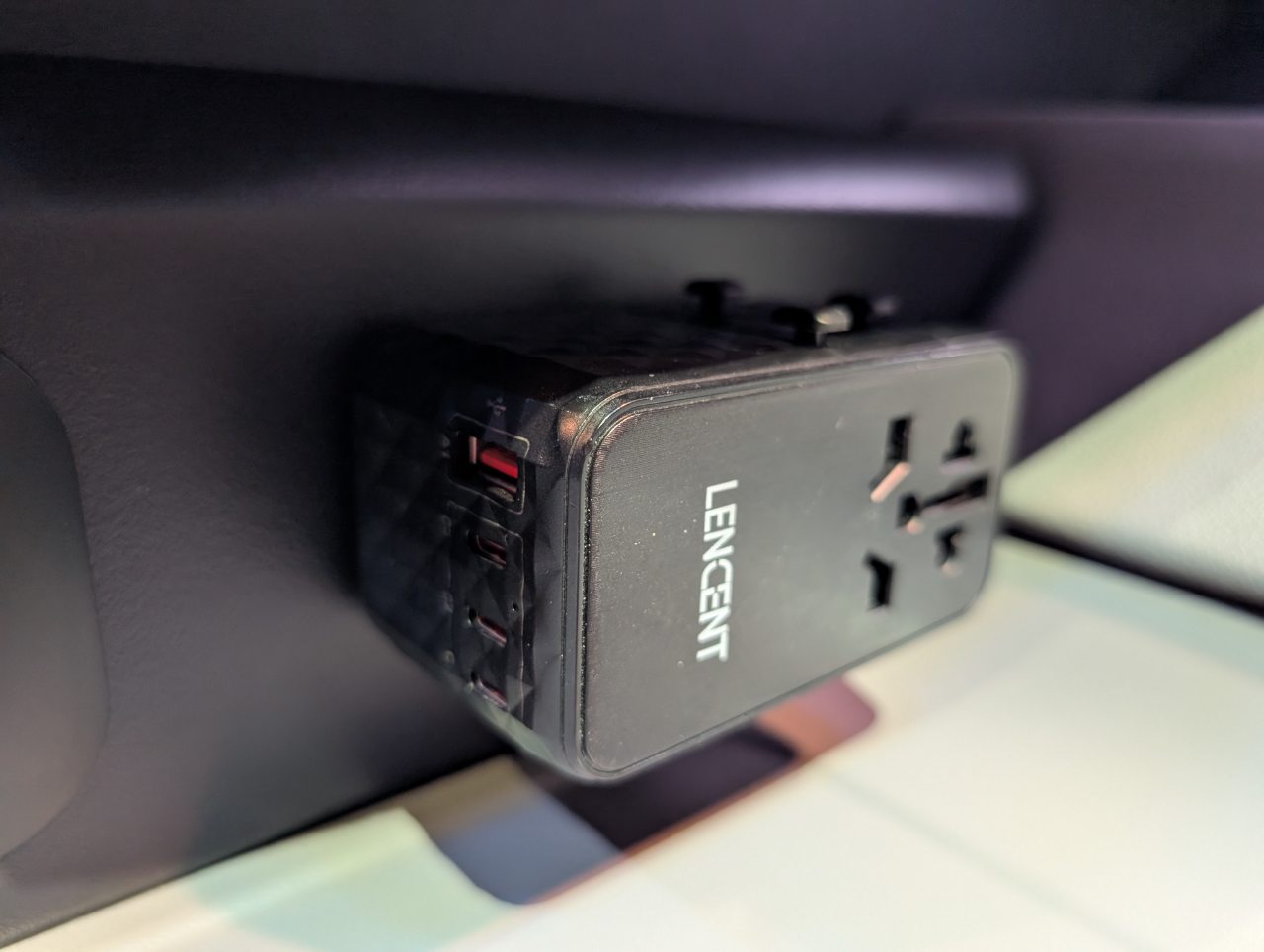
Plug grip was good, as it should be for a brand new seat, and even my bulky 120W GaN power adapter was held securely. The plug socket is oriented sideways, which leaves more clearance for cables and minimises cable bend.
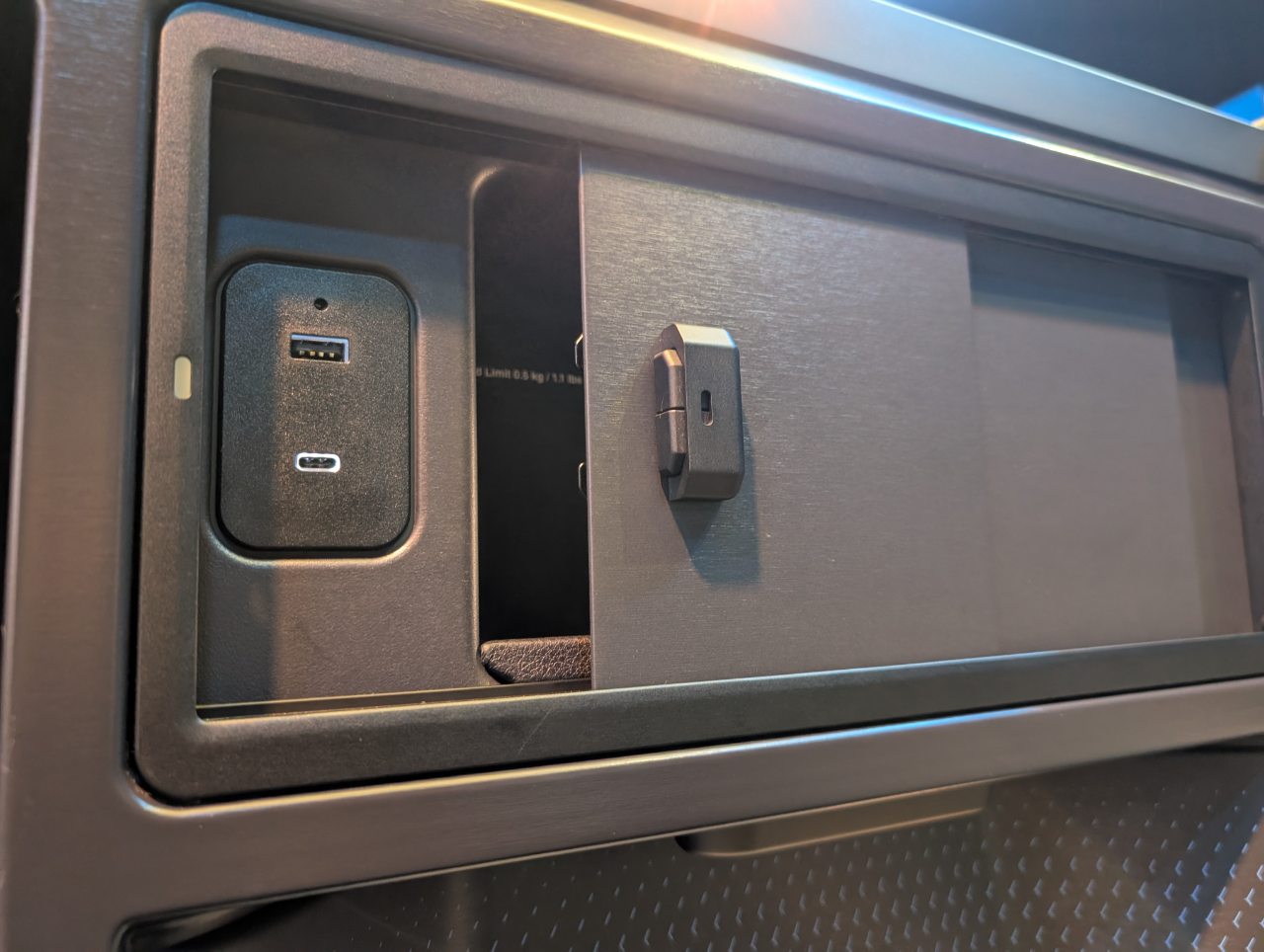
An additional USB-C port, plus a USB-A port on the B777-9 only, sits inside the cubby next to the IFE monitor. The design is rather clever, as you can’t close the cubby while the ports are in use. This keeps charging devices in view at all times for safety.
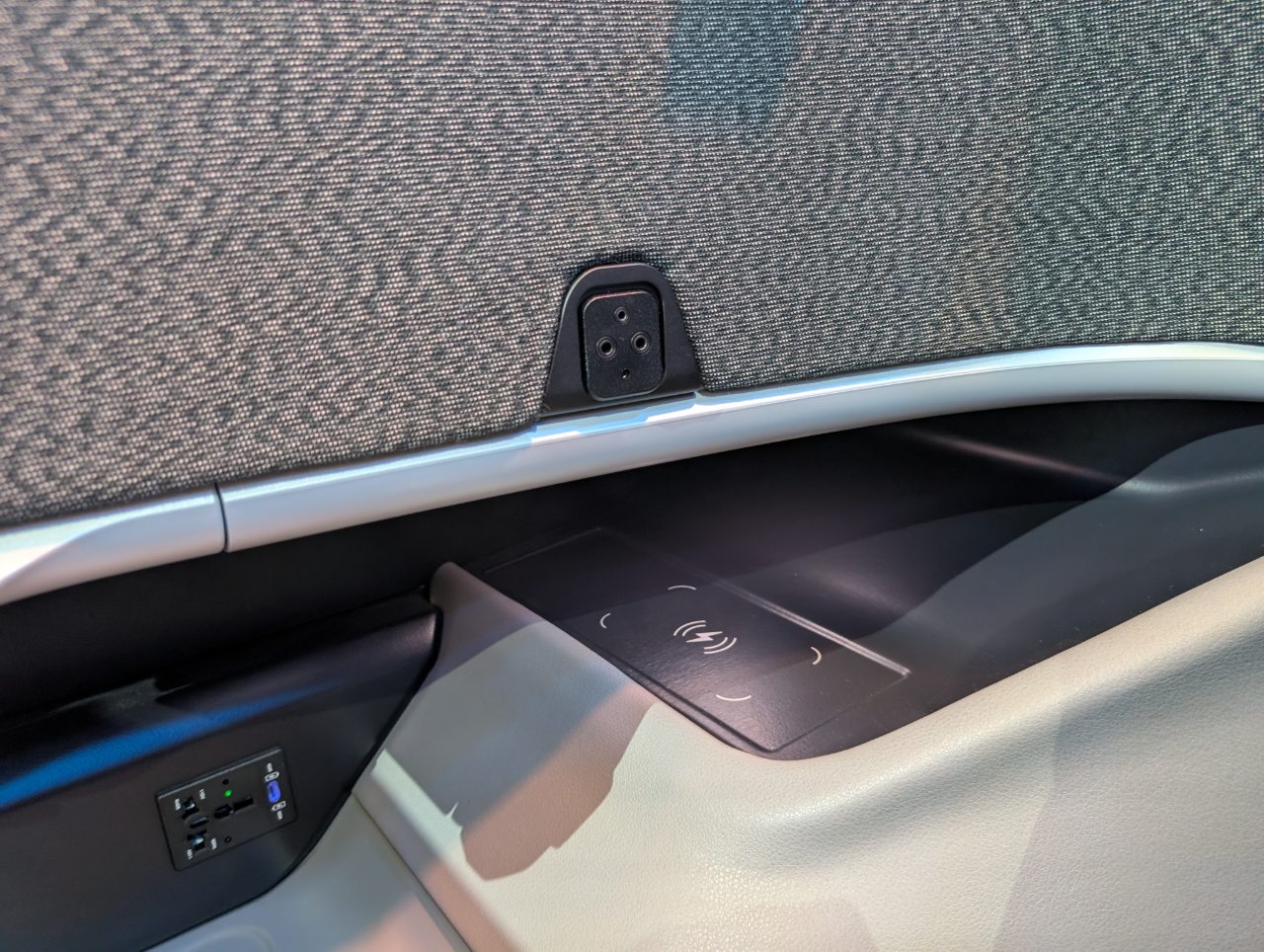
Finally, there’s a 15W Qi charging pad. Qi2 charging pads for aircraft were only launched in early 2026, so they weren’t an option when the new cabin products were being designed (a shame, because the magnetic alignment feature would be really useful on a bumpy aircraft).
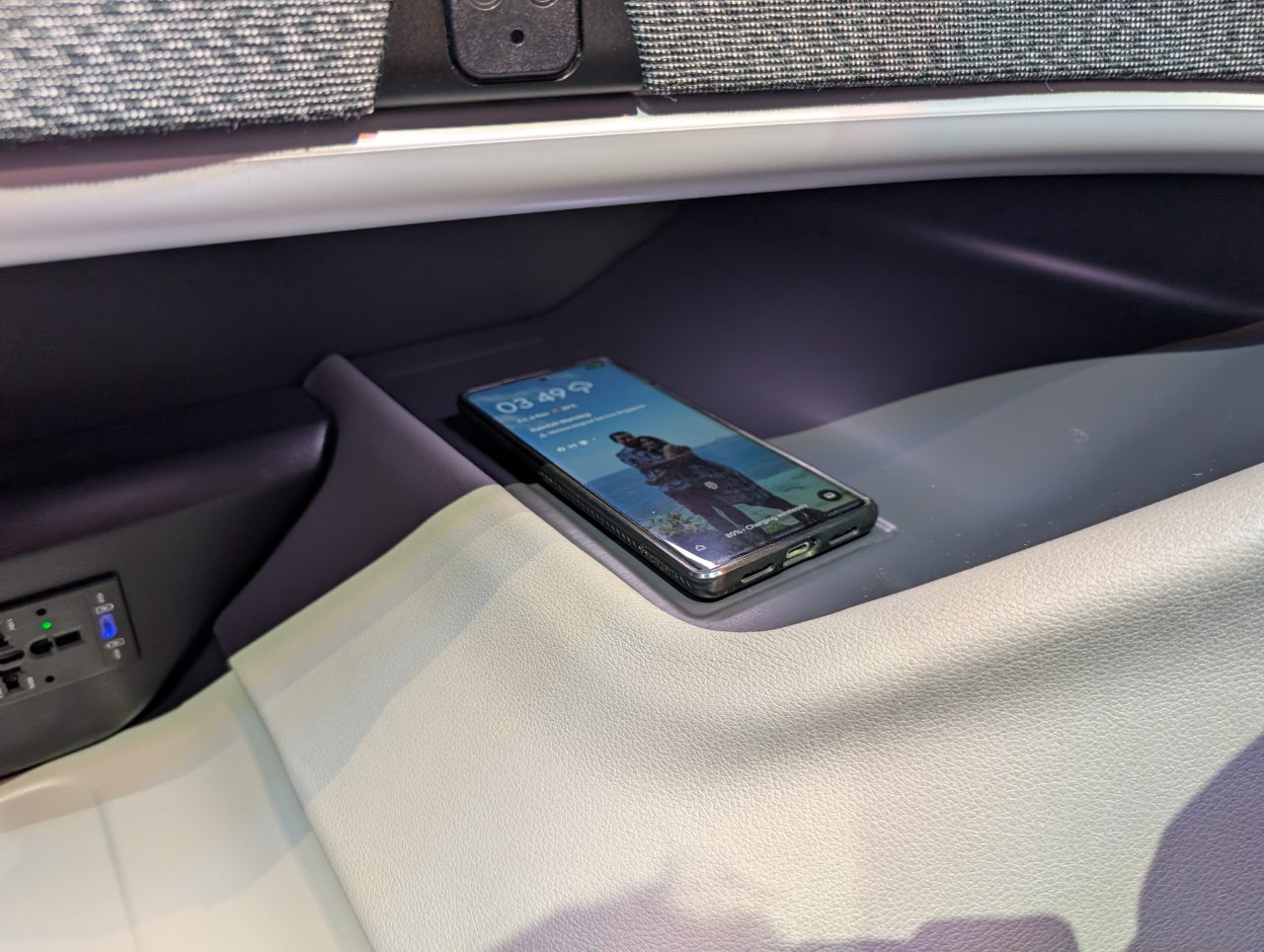
Lavatories
On the B777-9, four lavatories sit between the two Business Class cabins, which works out to one for every 13.5 passengers, one of the best ratios in SIA’s fleet.
| Aircraft | Business Class Pax. | Lavatories | Ratio |
| B737-8 | 10 | 1 | 10:1 |
| A350-900MH | 40 | 3 | 13.3:1 |
| B777-9 | 54 | 4 | 13.5:1 |
| A350-900LH (refit) |
42 | 3 | 14:1 |
| A380-800 | 78 | 5 | 15.6:1 |
| B777-300ER | 48 | 3 | 16:1 |
| A350-900ULR (refit) |
70 | 4 | 17.5:1 |
| B787-10 | 36 | 2 | 18:1 |
SIA has said that the lavatories will stay the same on the retrofitted A350-900LH/ULRs, but it’s looking at options for the B777-9. I don’t think you should expect a shower or anything too over the top, but hopefully they can provide something better than the bog-standard lavatory.
My overall take
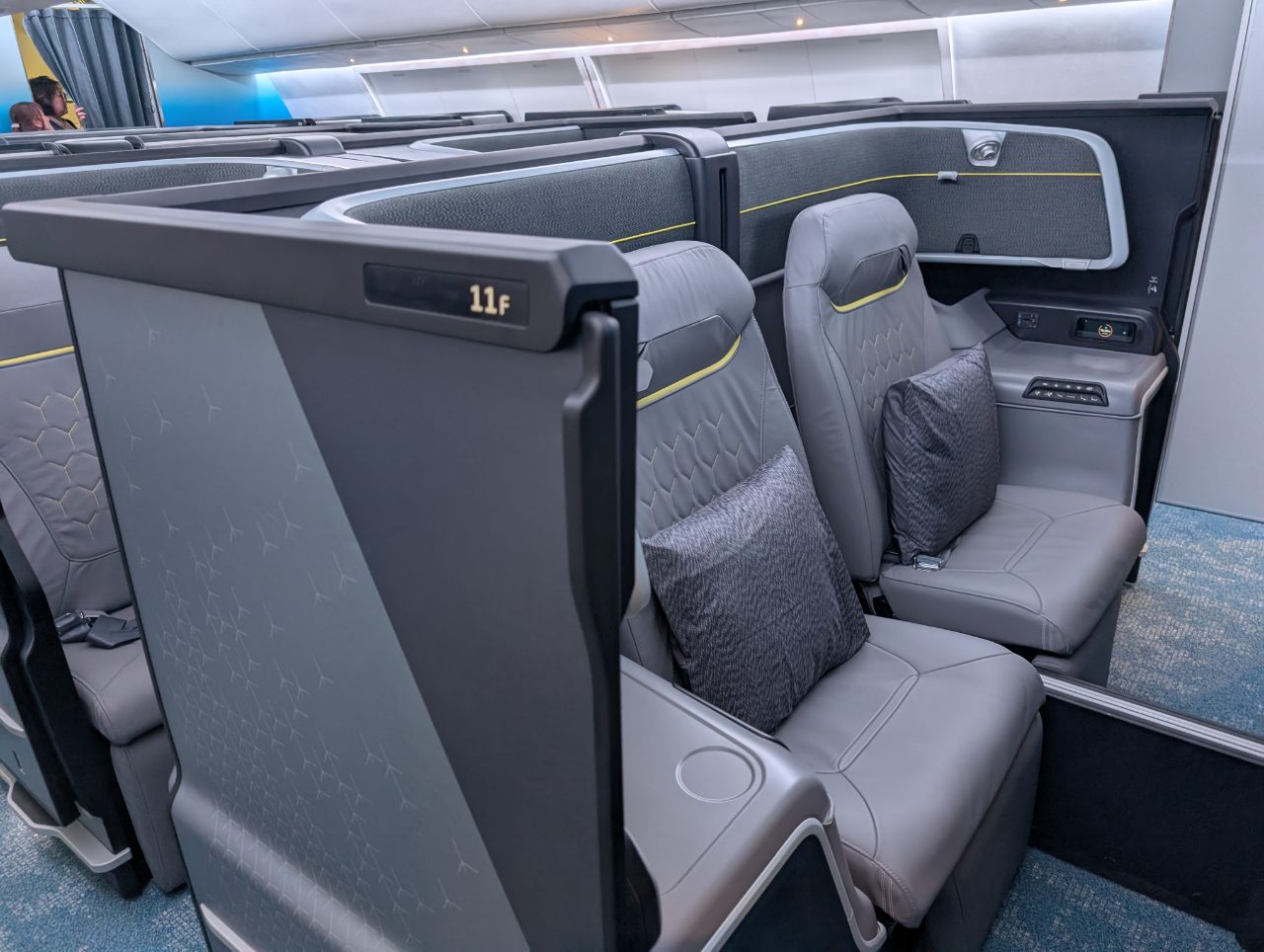
The way I see it, the 2027J addresses virtually every issue that customers had with the 2013J.
- It has a privacy door
- You no longer need to flip the seat to sleep
- There’s a wider range of recline angles
- No more diagonal sleeping
- The footwell is larger
- Personal items aren’t trapped beneath the seat when in bed mode
- Double beds are now an option for up to 30% of passengers
- Couples and parents can now see and interact with their partner/child more easily
I get that some people are unhappy about the loss of seat width, but as I said before, everything is a trade-off. I don’t need that much width in my seat, and I’d happily give up some for other improvements.
Besides, many of the other Business Class seats that I’ve rated highly, like Cathay’s Aria Suites, JAL’s A350-1000 Business Class, Qatar’s Qsuites and STARLUX’s A350 Business Class are the same width or narrower.
All this to say: I’m very pleased with the new seat, and can’t wait to fly it. Which is also why I’m bummed out about the next point…
“But the colour!”
In a weird sort of way, I wonder if it’s good news for Singapore Airlines that the thing people are criticising the most about its new Business Class seat is the colours.
But what a mountain of criticism that is.
While some of the outcry is just standard internet hysteria — boycott an airline over a choice of seat colour, really? — there are legitimate concerns that SIA has done itself a great disservice by taking a seat that’s a substantial improvement over its predecessor, and cladding it in…that. In fact, there’s a tinge of irony that SIA, so often accused of playing things too safe, decided to roll the dice on the one seat it badly needs to succeed.
I attended a media preview of the new seats a few days before their public unveiling, where the Designworks CEO explained the thinking behind their design process.
Singapore Airlines’ warmer style had served the airline for a long time, and many cabins in the market are going more and more traditional. We wanted this Business Class to stand on its own. With its own attitude. Modern, progressive, and refreshing.
But as the CEO continued to wax lyrical about mineral greys and cool, energetic yellows, I suspected we might be in emperor’s new clothes territory. My scepticism only deepened when the Juno spacecraft was cited as the inspiration behind the seat’s motif. Really? A 2011 space probe for a 2027 Business Class seat? Wasn’t there already a perfectly good batik motif?
Many design decisions struck me as odd. Was light grey upholstery a good choice for a cabin where red wine and coffee spills were a regular fact of life? Were moulded thermoplastics really compatible with a premium feel?
In fact, all I could think of as I stared at the renders before me was how unSIA-ish the new Business Class looked.
First Class, Premium Economy Class and Economy Class were all instantly recognisable for their SIA lineage, but Business Class was like that hitherto unknown cousin who loudly crashes a family reunion and demands everyone pay attention to him.
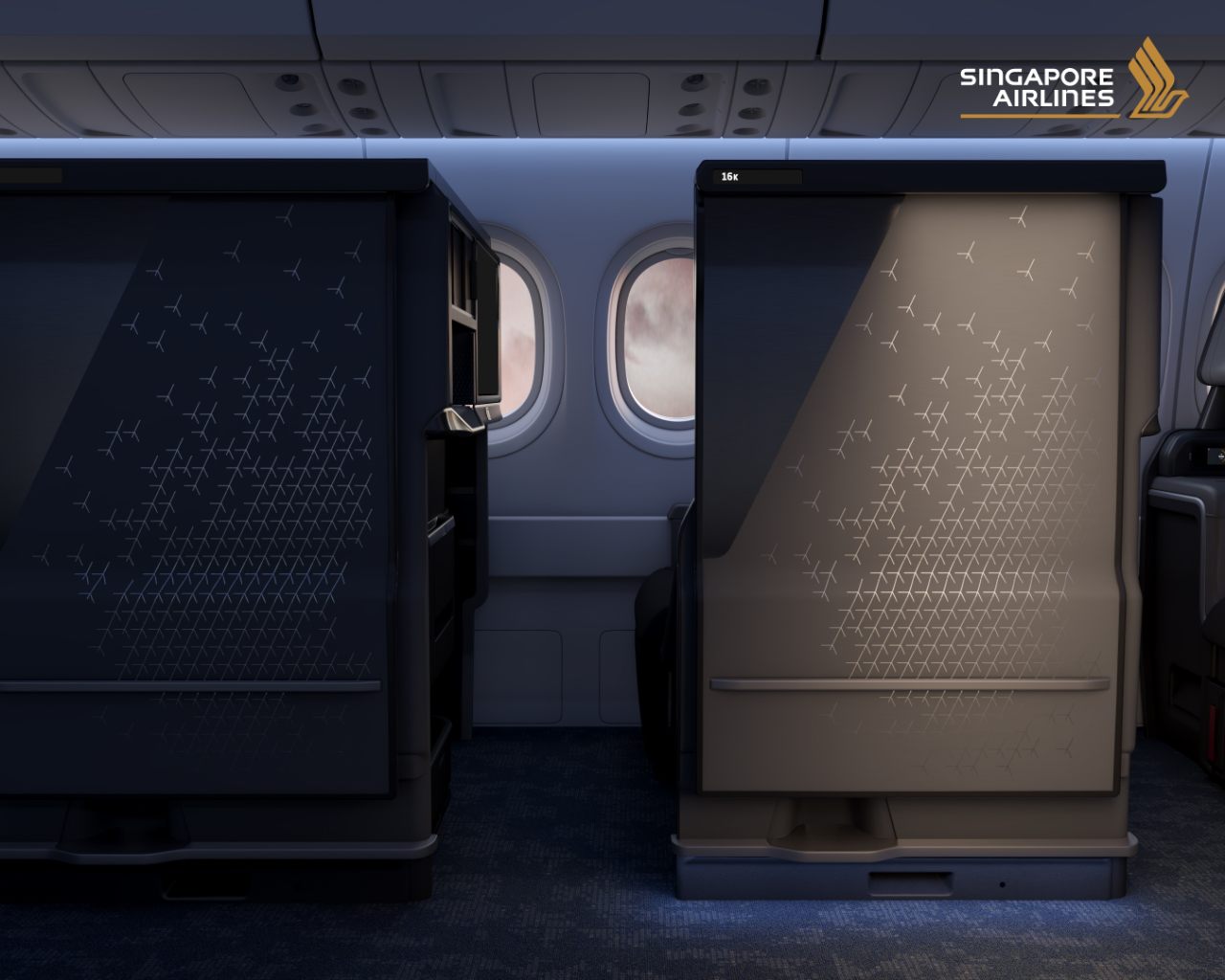
And sure, you could argue that we should have seen this coming, as SIA released a render of the new Business Class seat in November 2024. But that only showed the seat’s exterior door and shell, and you really don’t expect to peek inside a suite like that and see a seat like this. Designworks says it drew inspiration from the automotive world when designing the new Business Class, which then begs the question: what car? Mid-life crisis roadster?
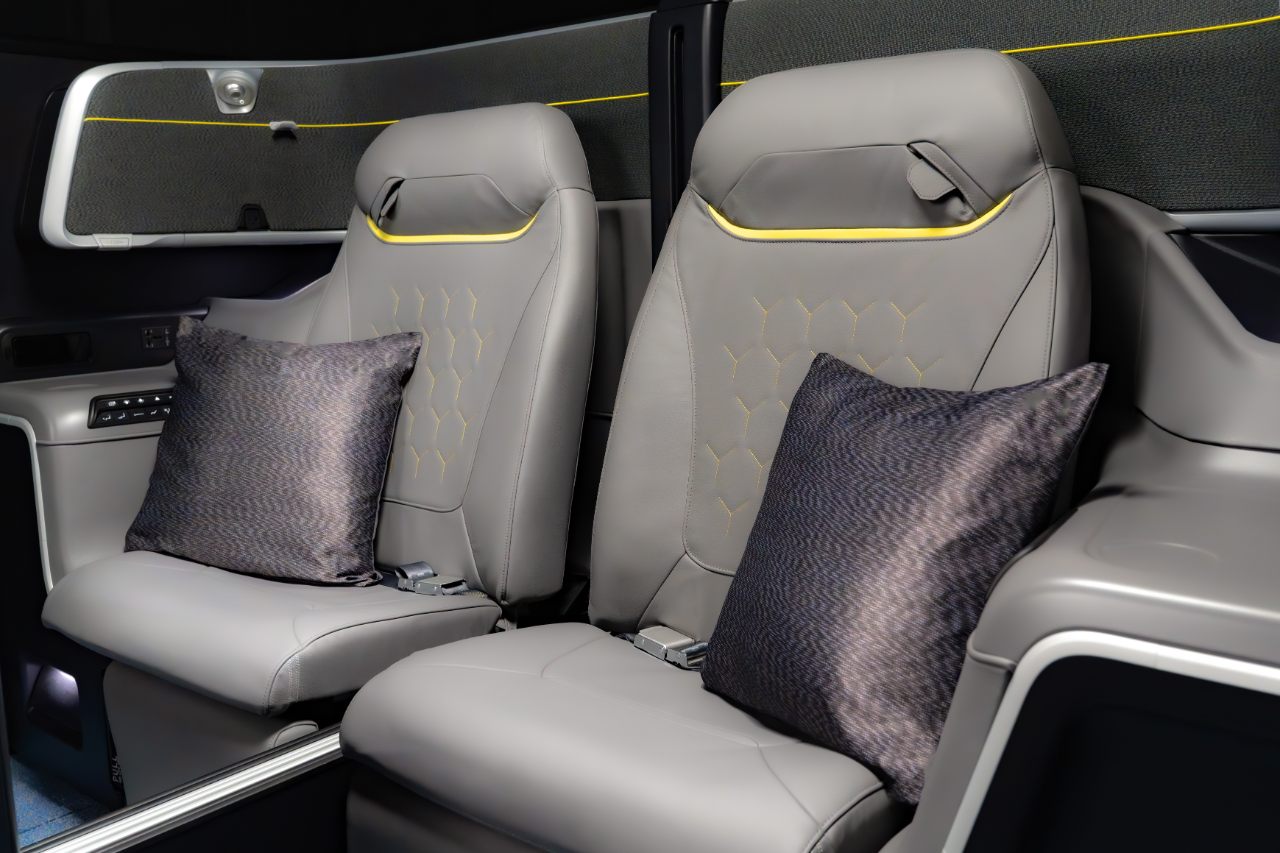
Perhaps the root of the disgruntlement stems from the notion some have that SIA is almost pathologically resistant to feedback. Now that the seats are in the open and NDAs have lifted, I’ve been hearing stories from readers who claim they were part of the focus groups during seat development. The common thread is that the concerns they voiced over the seat colours went unheeded.
Anyway, if SIA wasn’t aware of the strength of feeling towards the design, they certainly are now. It’s a little telling that, 30 minutes before the embargo lifted, it sent out the following statement.
|
“Our new Business Class cabin has been designed to offer a fresh and contemporary take on premium travel, with a distinctive visual identity that reflects a modern, progressive, and forward-looking design philosophy. While SIA’s signature warm and classic aesthetic has served us well over the years, we wanted this new product to have its own character, combining a refreshing aesthetic with a sense of sophistication and understated luxury. We do not subscribe to a fixed colour palette across our cabins. Instead, our design choices are guided by the overall vision and experience we seek to create for each product. For our new Business Class, the colours, materials, and finishes have been carefully selected to create a refined, contemporary, and distinctive environment for our customers.” |
On the other hand, I also wonder how much of this is a storm in a teacup.
At the end of the day, business travellers aren’t going to switch carriers because of seat colours. I’ve never heard anyone say “I’d totally fly with that airline, but I don’t like their colour scheme”. Premium bookings come down to corporate contracts, KrisFlyer status, schedules and network, and none of those change with a palette. What does matter is comfort, privacy and productivity. This new seat, together with the upcoming Starlink connectivity, delivers all three in spades.
Then there’s how little of the flight you’ll actually spend looking at it. On a long-haul flight, the cabin is dark for hours, and the seat spends much of that time as a bed under a duvet and pillows. When you’re awake, you’re looking at the screen, or your meal, or your phone/laptop. The colours are mostly noticeable on the walk to your seat (not a great first impression, granted).
Also, it’s worth remembering that most people have only seen the seat in renders and event photos, which is no substitute for a cabin’s LED mood lighting. As this article on RGN shows, with the right lighting, the grey doesn’t look as bad as under harsh white light (though nothing can hide that racing stripe!).
So it remains to be seen whether SIA backtracks (given how far in advance materials and suppliers need to be locked in, I don’t know if that’s even feasible), but I’d be very surprised if the choice of colours, poor as it may be, has any material impact beyond some online outrage.
And besides, as someone told me: if you don’t like the colour, just look forward.
Conclusion
The 2027J seat fixes almost everything that was wrong with the 2013J, providing Business Class passengers with greater privacy, a better sleep experience, a far more couple/parent-friendly layout, and upgraded tech features. Yes, it’s narrower, but the width it gives up buys some genuine improvements.
Unfortunately, all the hubbub over the colours threatens to drown this out, and it does feel like a bit of an own goal — though I suspect that once passengers are actually on board, door closed, lights dimmed and stretched out in bed, few will be thinking about mineral grey or cool yellow.
The bigger issue I have with all this is the timeline. The first retrofitted A350-900LH isn’t due until H2 2027, and with the introduction date already slipping twice, the 2013J will be with us for a while yet.
Well, at least it’s got nicer colours…

Wait, where are the arm rests? Where am I suppose to put both my arms during the flight? Even my dental clinic’s chair has arm rests on it!
I dont understand why SQ is doubling down on this colour choice. Just admit you got it wrong and change the colour to what the customers prefer.
It REALLY looks like Scoot.