
If you’re new to the miles game and credit cards in general, one of the most valuable things you have is your new customer status — credit card virginity, if you will.
You see, banks generally don’t give two hoots about existing cardholders. If you’re lucky, maybe you get an annual fee waiver. However, they go all out to woo new ones, with very generous welcome offers that sometimes seem too good to be true. Over the years, we’ve seen banks dangle five or six-digit bonus miles offers, Apple iPads, PlayStation 5s, S$500 eCapitaVouchers, and cold hard cash, all in an attempt to secure applications.
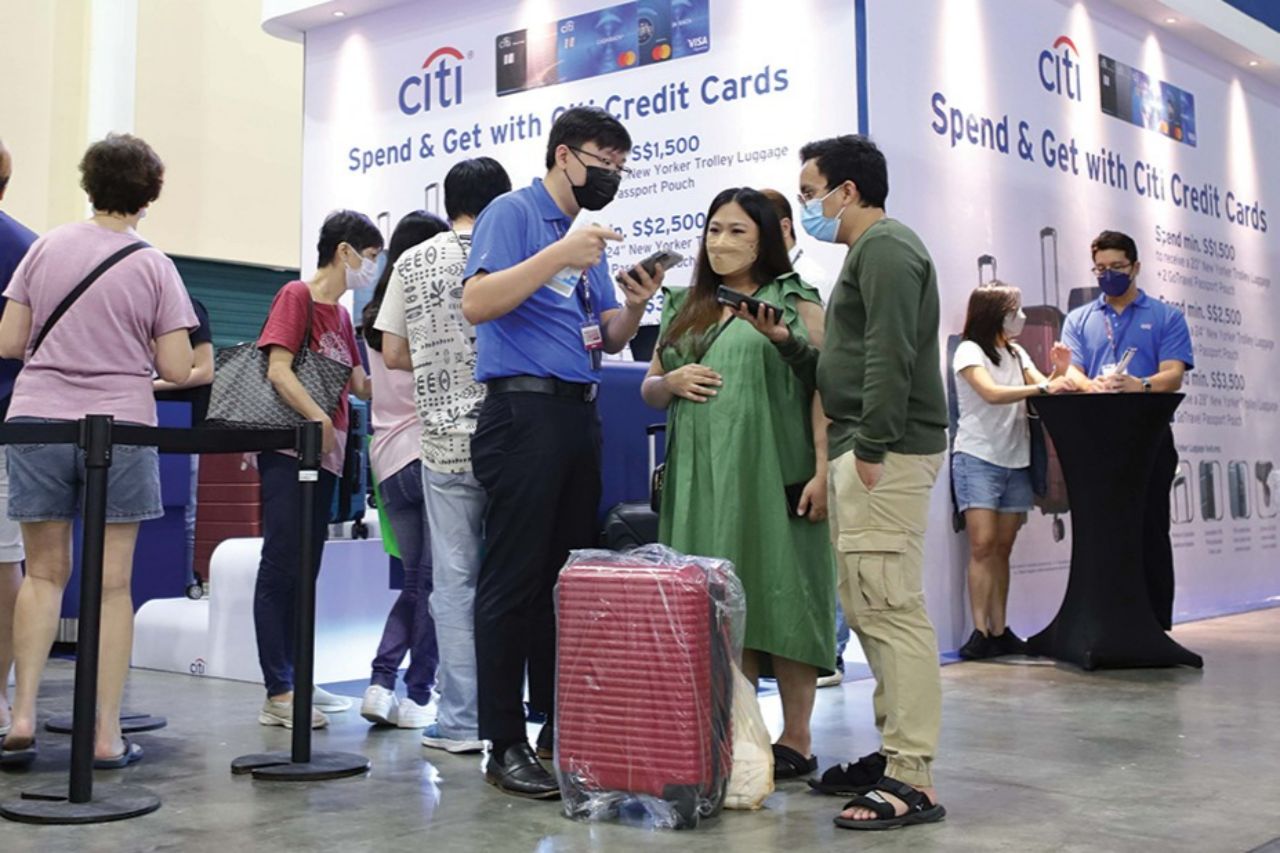
This then begs the question: who exactly counts as a new customer?
| ⚠️Note: New-to-bank vs new-to-card |
|
Even though “new-to-bank” is a common shorthand for new customers, it might be more technically accurate to say “new-to-card”. That’s because having a bank account alone does not disqualify you from new customer gifts when signing up for credit cards. In this article, I’ll use “new customer” to cover both terms. |
How do banks define new customers?
In practice, most banks define a “new customer” based on whether you currently hold, or recently cancelled, a principal credit card with them.
Here’s a rundown of how each bank defines a new customer. Do note that definitions can change over time, so always refer to the relevant promotion’s T&Cs for the most up-to-date information!
| Bank | Definition |
| AMEX |
*Does not include AMEX cards issued by DBS or UOB. The AMEX HighFlyer Card is not a consumer card. |
| CIMB |
|
| Citibank |
|
| DBS |
|
| HSBC |
|
| Maybank |
|
| OCBC |
|
| Standard Chartered |
|
| UOB |
|
Specific rules may apply for certain cards
While the rules in the table above apply to cards in general, banks may have specific rule sets for particular credit cards.

For example, the Citi Prestige Card’s welcome offer is available to customers who:
- Do not currently hold a principal Citi Prestige Card, and
- Have not cancelled a principal Citi Prestige Card in the past 12 months
In other words, you would still be eligible for the welcome offer even if you currently held another principal Citi credit card, like the Citi Rewards or Citi PremierMiles Card.
The same applies to the HSBC Premier Mastercard’s welcome offer.
Timeout periods
Banks stipulate a timeout period before an applicant with a recently-cancelled card can be considered new again. This is to keep people from gaming the system by applying for a card, getting the gift, then cancelling the card and reapplying immediately for another gift.
In general, the period is 12 months, though UOB (6 months) and Maybank (9 months) are noticeable outliers. OCBC used to adopt a 6-month timeout period too until 1 November 2023, after which they extended it to 12 months.
Another point of confusion is when the timeout period is counted from. There are three possibilities:
- Date the promotion period starts
- Date of application for the new card
- Date of approval for the new card
Here’s an illustration. Suppose:
- Bank A has a timeout period of 12 months
- Bank A runs a promotion valid for applications from 1-31 March 2026
- John applies for a credit card on 5 March 2026
- John gets approval on 11 March 2026
| If Bank A uses 12 months from… | John’s last card with Bank A must be cancelled no later than… |
| Date the promotion period starts | 1 March 2025 |
| Date of application | 5 March 2025 |
| Date of approval | 11 March 2025 |
Of course, application and approval dates are usually fairly close to each other (unless the bank is dealing with a huge backlog), so in most cases this difference won’t be material unless you’re really riding the edges of that 12-month timeout period.
HSBC’s existing customer quirk
You might think that new customers and existing customers are MECE (mutually exclusive, completely exhaustive) categories. If you’re not new, you must be existing. If you’re not existing, you must be new.
That’s true for most banks, but not HSBC.
While HSBC defines a new customer pretty much the same as any other bank (no principal cards now, or in the past 12 months), it defines an existing customer as someone who meets both of the following conditions:
- Most recent principal HSBC credit card was issued more than 12 months ago, and
- Has not cancelled any principal HSBC credit card in the past 12 months
To qualify as an existing cardholder, all your principal HSBC credit cards must have been issued more than 12 months ago. To put it another way, if you were approved for any HSBC principal credit card within the past 12 months, you will not count as an existing cardholder.
That’s not all — you must also not have cancelled any principal HSBC credit cards in the past 12 months.
Therefore, with HSBC, it’s possible to be neither new nor existing.
For more on this strange rule, refer to the post below.
FAQs: New customer status
Do debit cards count?
No. Debit cards are not the same as credit cards, and holding one does not disqualify you from new customer status.
Do supplementary cards count?
Mostly no. A supplementary card will not disqualify you from new customer status, because banks only look at principal cards.
There are two exceptions:
- American Express excludes current and historical (past 12 months) supplementary cardholders from its definition of a new-to-AMEX customer, ever since 31 July 2025
- Bank of China excludes current and historical (past six months) supplementary cardholders from its definition of a new-to-bank customer, though its welcome offers are extremely infrequent anyway (the last came in 2023)
Do corporate cards count?
No. A corporate card does not disqualify you from new customer status.
Do bank accounts count?
No. As mentioned earlier, even though we sometimes use “new-to-bank” as a shorthand, having a bank account alone has no bearing on your new customer status where credit cards are concerned.
What if I applied for a card previously but didn’t activate it?
Suppose you apply for a credit card and receive approval, but the approval only comes after the deadline stipulated in the welcome offer T&Cs. You might think of declining to activate the card, cancelling it, and then reapplying again.
Unfortunately, that won’t work. Once you’ve been approved, you’re no longer considered a new customer, regardless of whether you activate the card. Approval is what matters, not activation.
Admittedly, this can feel unfair, especially if the delay in approval wasn’t your fault. That said, approvals are sometimes delayed because applicants forget to attach supporting documents, or submit unclear copies. In any case, there’s usually little recourse once approval has been granted.
Should I “churn” my status?
For the uninitiated, “churning” refers to repeatedly opening and closing credit card accounts in an attempt to enjoy new customer welcome gifts, and quickly reset your new customer status subsequently.
I’m not going to make a judgement on the ethics of this practice, but I will point out two things.
First, the welcome offer’s T&Cs may contain “clawback clauses”, which give the bank the right to charge customers the value of the welcome gift, if the card is cancelled within a certain period of account opening (usually 6-12 months).
Second, banks aren’t dumb. If you establish a pattern of repeatedly opening and closing credit card accounts, you shouldn’t be surprised if your future applications are rejected despite meeting all the eligibility criteria otherwise. Banks reserve the right to choose who they want to do business with.
What constitutes a “pattern?” It’s hard to say, and it will differ from bank to bank. Doing it once or twice probably won’t hurt. Doing it repeatedly probably will.
Conclusion
New customer status is extremely valuable when applying for credit cards, but each bank has its own definition, and subtle differences may mean the difference between a generous welcome gift and going home empty-handed.
It may sound like a motherhood statement, but before applying for any card, do take a few minutes to read the T&Cs carefully- especially the sections covering eligibility and new customer definitions.
Also, treat your new customer status carefully. Once it’s gone, it usually takes 6-12 months to earn it back, so only trade it if the welcome offer is genuinely worthwhile.




My personal experience with SCB is like below:
2014 – get $200 sign-up bonus
2016 – cancel
2018 – apply for $250 sign-up bonus but only $50 is given. Emailed SCB & their reply is, sign-up bonus will deduct the amount “previously paid”.
I am not sure whether SCB is still doing that, and whether it is the only bank doing that (not experienced such with other banks). Perhaps you can put some insights on this?
Yes they have a “previous cashback cap” mechanism – https://www.sc.com/sg/terms-and-conditions/credit-card-sign-up-promotion/
I have not had the opportunity to try this but in theory I think next time you can still sign up via Singsaver if SS is the one who fulfills the gifts
Planning to sign up for HSBC Revo to get the sign up bonus gift. Had previously cancelled my HSBC Revo on 3 Dec 2022 because i, for some reason, did not consent to the marketing materials hence did not receive the gift back then. As per the t&c, one of the conditions is – has not cancelled any HSBC Credit Card within the last 12 months prior to the “Card Account Opening Date”. “Card Account Opening Date” means the calendar month printed on the letter sent to an Eligible Applicant enclosing his/her Card issued pursuant to this Promotion. Does it mean if… Read more »