
When DCS (formerly known as Diners Club) launched the Flex Card in October 2024, it also introduced a new kind of fee structure. Instead of the tried-and-tested annual fee, the DCS Flex Card would instead charge a “monthly service fee” of S$16.35, waived for the first year.
The question on my mind was how many cardholders would actually be willing to accept an ongoing monthly charge, and perhaps DCS got cold feet too, because it later cut the monthly fee to S$10.90 in July 2025 — well before the first cohort of customers had even completed their initial fee-free period!
Well, things must have worked out better than expected, because from August 2026, DCS will roll out the monthly service fee model to two additional cards: the DCS Ultimate Mastercard and COURTS DCS Mastercard.
While this remains a uniquely DCS phenomenon for now, I’m sure other banks are watching this closely. Will customers be willing to treat credit cards like Netflix or Spotify or any other monthly subscription?
How do DCS’s monthly service fees work?
| Card | Monthly Fee | Waiver |
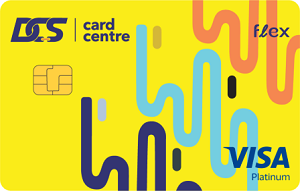 DCS Flex Card DCS Flex Card |
S$10.90 | 5x retail transactions |
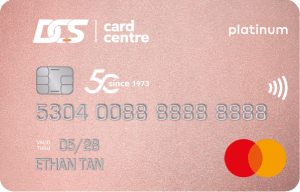 DCS Ultimate Mastercard DCS Ultimate Mastercard |
S$10.90 From 1 Aug 26 |
8x retail transactions or S$800 spend |
 COURTS DCS Mastercard COURTS DCS Mastercard |
S$10.90 From 1 Aug 26 |
8x retail transactions or S$800 spend |
From 1 August 2026, the DCS Ultimate Mastercard and COURTS DCS Mastercard will switch from an annual fee to a monthly service fee of S$10.90 per principal card, and S$5.45 per supplementary card.
This applies to cards which are approved or renewed from this date. For example, if your last annual fee was charged on 1 September 2025, you will be subject to the monthly service fee from 1 September 2026.
The monthly service fee will be waived if cardholders meet either of the following criteria in a given month:
- Make at least eight retail transactions (of any amount), or
- Spend at least S$800
The DCS Flex Card, as mentioned earlier, already charges a monthly service fee of S$10.90, which is waived for cardholders who make at least five retail transactions per month.
Why pay a monthly fee?

Here’s how DCS justifies the switch from an annual fee to a monthly fee:
The change from an annual fee to a monthly service fee is designed to provide cardmembers with greater flexibility and easier fee management. Instead of paying a larger lump-sum annual fee, cardmembers can enjoy lower monthly servicing charges that are better aligned with their monthly card usage.
In addition, cardmembers may enjoy automatic fee waivers by meeting simple monthly spend or transaction criteria.
-DCS
Basically, the argument is that a monthly fee lowers the barrier to entry, and offers more flexibility (because you can cancel at any time). Besides, if a DCS card is your daily driver, then clocking 5-8 transactions a month shouldn’t be difficult at all.
But this sidesteps a more fundamental question: why are you even paying for an entry-level card in the first place?
This isn’t an OCBC VOYAGE or StanChart Beyond Card with airport limo rides and unlimited lounge access. These are basic, no-frills cards that offer 2% cashback and nothing more. Granted, that’s a competitive rate, but if I’m not even willing to pay the annual fee for my 4 mpd cards, what makes you think I’ll pay one here?
The way I see it, this is obviously intended to nudge more customers into paying card membership fees. The annual “call and waive” exercise is already well entrenched here, but would customers really be willing to do that 12 times a year? I doubt so, and clearly DCS does too.
DCS might argue that the DCS Ultimate Mastercard and COURTS DCS Mastercard are now cheaper, since the S$196.20 annual fee has been replaced with 12 payments of S$10.90 (S$130.80). But what’s better? S$196.20 that you don’t collect, or S$130.80 that you do?
Don’t other cards charge monthly fees too?
Of course, DCS is not pioneering the idea of a monthly card fee. Revolut has done this for a while now, with its three-tiered plans that range from free to S$21.99 a month.
There’s a difference though. Revolut is a platform that offers better FX rates, free ATM withdrawals and bundled subscriptions like NordVPN, Financial Times, WeWork, ClassPass and Tinder Gold (really). Whether these are actually worth paying for is a separate discussion altogether (e.g. you could solve for better FX rates and free ATM withdrawals with free options like the Mari Credit Card and Trust), but at least you can kind of see where your money is going.
With DCS, you’re essentially paying for…a payment instrument. And it’s hard to see why that fee should exist at all, given the abundance of alternatives on the market.
I mean, sure, other entry-level cards have annual fees too, but they only try to charge you once a year, and there’s a general expectation those fees can be waived. Even where banks have tightened their waiver policies, such as the HSBC TravelOne Card and StanChart Journey Card, cardholders at least receive miles in return, so they don’t end up empty-handed.
DCS, on the other hand, wants to charge you 12 times a year, offers nothing in return for those fees, and based on the setup, looks like it’s serious about collecting them.
Conclusion
A “card-as-a-service” model works great for DCS, because customers either use their cards more often, or get hit with a fee every month. It creates a more predictable revenue stream (this must be that “easier fee management” that DCS talks about!), and drives regular usage.
For customers, it’s mixed. If you’re already a regular user of the DCS Ultimate Mastercard or COURTS DCS Mastercard, then you’re never going to have to worry about the fee anyway. But if these are cards that you keep as backup options, then you might want to cancel them before the monthly fee comes into effect, and save yourself a lot of headache.
To put it another way, DCS is taking an annual annoyance and turning it into a monthly one, and I certainly hope the rest of the market doesn’t follow suit. One phone call a year? OK. One dozen phone calls? Forget it.

I literally don’t know who give them courage to do so, they are already as bad as BOC in my mind, now they are worse. Cancel the card today…
Why does anyone even consider the card?
2% cashback with no min. spend is actually quite compelling, since the next closest competitor is 1.7%. the catch is that there’s a cap of S$200 cashback per month (S$10k spend), but most people won’t come anywhere close.
so the card is still fine if you use it as a daily driver, since you’ll meet the 8x transactions requirement easily. but if you use it as a backup option, then it’s kind of dangerous to keep around once the monthly fee comes into play.
For years, the Maybank Platinum Visa Card has been charging a Quarterly service fee (currently at S$21.80), waived for the first 3 years. Subsequently, the quarterly service fee is waived when the cardholder charges to the card once every 3 months.
One point missed in the article is that, you don’t need to call DCS for a fee waiver. My experience in the past 3 years: each time I met the requirements for fee waiver, it was waived automatically.
i don’t doubt that if you meet the requirements for a fee waiver, it’s waived automatically. what i’m referring to is the case where you don’t qualify, but want to appeal nonetheless
I wonder where they find the balls to do this and who are those customers that are willing to pay these fees or free enough to call in monthly to ask for waiver
For this type of conditions I would expect some insane product like unlimited 5+% cashback or something along these lines
2% is NOT competitive at all given the additional charges and T&C of making X transaction for waiver