
Back in 2024, Singapore announced plans for a sustainable aviation fuel (SAF) levy aimed at decarbonising airline operations. Singapore would become the first country in the world to impose such a “green tax” — YEAH! — with the levy varying according to the distance and class of travel.
The SAF levy was originally slated to take effect on 1 April 2026, but with the spike in oil prices amid the Middle East conflict, the CAAS decided to postpone its implementation by six months.
With oil prices remaining elevated, there was hope that the SAF levy might be further delayed. Unfortunately, there will be no further reprieve — at least not for passengers. While the levy for air cargo shipments will be deferred for a year, the levy for passengers is very much happening, and will start being collected from 1 October 2026.
SAF levy collection to begin from October 2026
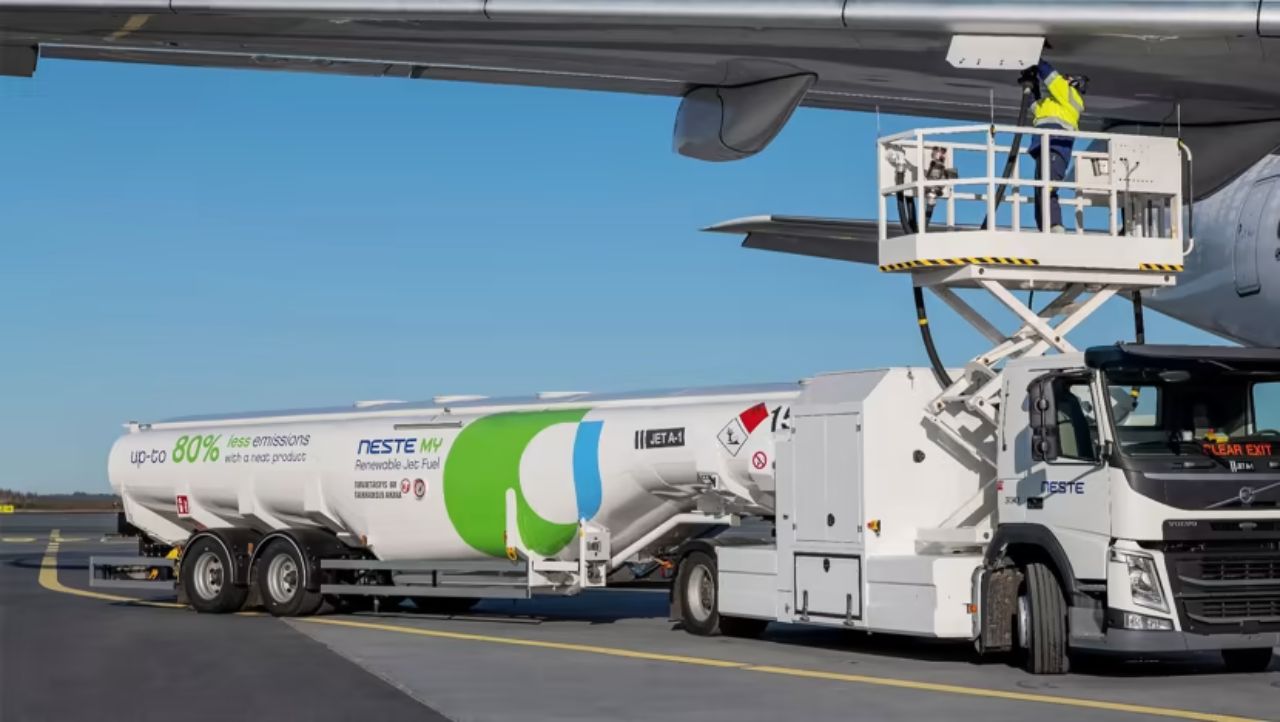
The CAAS has confirmed in a statement that collection of the SAF levy will commence on 1 October 2026, on flights departing from Singapore from 1 January 2027.
| Ticket Sold | Travel Date | Levy |
| Before 1 October 2026 | Before 1 January 2027 | No |
| Before 1 October 2026 | From 1 January 2027 | No |
| After 1 October 2026 | Before 1 January 2027 | No |
| After 1 October 2026 | From 1 January 2027 | Yes |
To be clear, the levy will not apply to tickets sold before 1 October 2026, even if your flight departs on or after 1 January 2027. Therefore, it is possible to avoid the levy by locking in your travel plans early — though airlines typically only sell tickets one year in advance, so you will feel the impact sooner or later.
There is no change to the levy structure, which depends on two factors: destination and cabin. Destinations will be divided into four bands, with one rate for Premium Economy and Economy Class passengers, and another for First and Business Class passengers.
| First & Business | Premium Economy & Economy | |
| Band 1 Southeast Asia |
S$4 | S$1 |
| Band 2 Northeast Asia, South Asia, Australia, Papua New Guinea |
S$11.20 | S$2.80 |
| Band 3 Africa, Central and West Asia, Europe, Middle East, Pacific Islands, New Zealand |
S$25.60 | S$6.40 |
| Band 4 Americas |
S$41.60 | S$10.40 |
The levy will be reflected as a distinct line item in the fare breakdown, like for other taxes and surcharges.
As a reminder, the current levy is based on SAF making up 1% of all jet fuel used for departing flights. That target is expected to increase to 3-5% by 2030, at which point the levy will also increase.
Can you minimise the SAF with stopovers?
For flights with multiple stops, the levy will be calculated based on the immediate next destination after departing Singapore.
| ✈️ Transit vs non-stop flights |
| Ironically, this has the effect of penalising passengers who fly non-stop routes, which are more fuel-efficient than connecting flights. For example, a passenger who flies from SIN-HKG-SFO on Cathay Pacific would pay a lower levy (S$2.80 to S$11.20) than one who flies from SIN-SFO on Singapore Airlines (S$10.40 to S$41.60). |
Since the SAF is calculated based on the immediate next destination rather than final destination, could you save money by booking stopover flights instead? Yes and no. While you may save on SAF, those savings could be offset by the additional airport taxes incurred from a transit.
To illustrate, here’s the taxes and surcharges on Singapore Airlines’ two USA routes with non-stop and stopover options, based on current airport taxes and the upcoming SAF levy.
| Route | First & Business | Premium Economy & Economy |
| SIN-LAX Non-stop |
S$130.80 SAF: S$41.60 |
S$99.60 SAF: S$10.40 |
| SIN-NRT-LAX Stopover |
S$116.90 SAF: S$11.20 |
S$108.50 SAF: S$2.80 |
| Route | First & Business | Premium Economy & Economy |
| SIN-JFK Non-stop |
S$130.80 SAF: S$41.60 |
S$99.60 SAF: S$10.40 |
| SIN-FRA-JFK Stopover |
S$155.60 SAF: S$25.60 |
S$136.40 SAF: S$6.40 |
In the case of Premium Economy and Economy Class travel, any savings on SAF from adding a stopover are more than offset by the higher airport taxes incurred due to transit.
It’s slightly more complicated for First and Business Class. For Singapore to New York, making a stopover in Frankfurt would offset the savings in SAF. However, for Singapore to Los Angeles, making a stopover in Tokyo Narita will save you S$13.90 — though you should also consider whether the savings are worth the time lost due to transit.
Of course, it’s worth remembering that one-stop itineraries on competitors like Cathay, Japan Airlines and the ME3 are already cheaper than Singapore Airlines to begin with, and the SAF may further exacerbate these differences.
Transit passengers are exempt
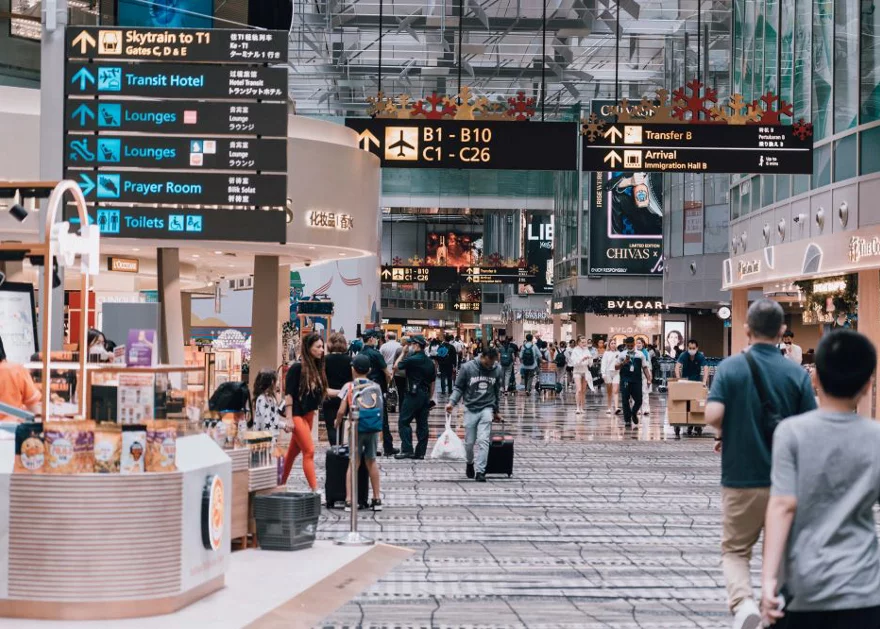
The SAF levy will not apply to passengers transiting through Singapore, a decision that makes sense from a business perspective, but feels distinctly unfair nonetheless.
Transit passengers account for more than a third of Changi’s total traffic, and imposing an additional fee could weaken Singapore’s position as a major transit hub. That said, exempting them effectively means that Singapore residents are subsidising transit passengers.
It’s one thing to charge transit passengers lower airport taxes, since they don’t make use of the immigration or public-area facilities. However, the fuel uplifted in Changi is used for both transit and originating passengers. Why does only one group pay the SAF levy?
He asked, rhetorically.
The SAF levy is particularly bad for award tickets
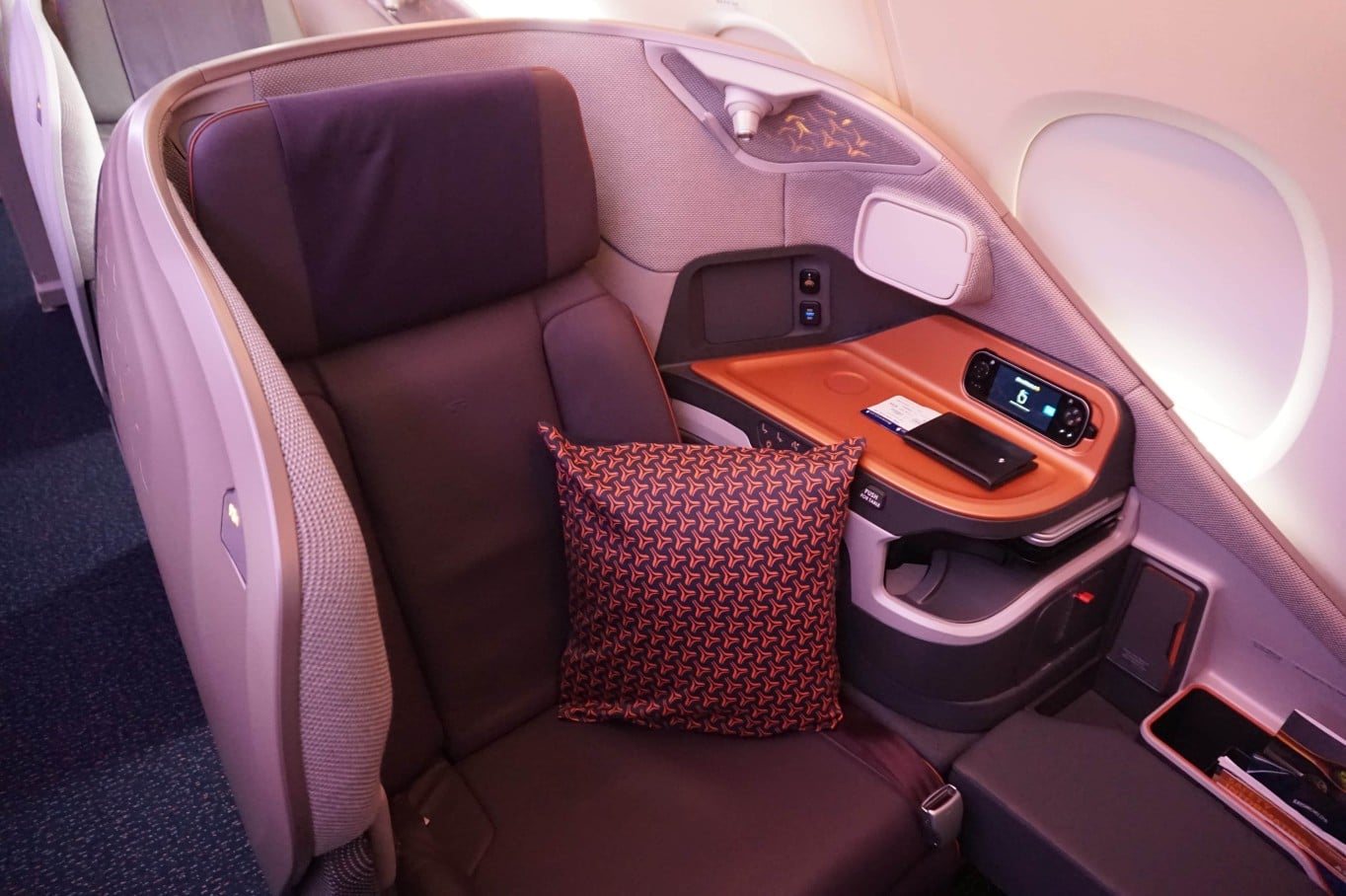
The introduction of a S$1 to S$41.60 SAF levy does not necessarily mean that the cost of commercial tickets will increase by S$1 to S$41.60.
Airlines may tweak their base fares to keep the overall cost of tickets competitive, thereby absorbing some of the levy. In other words, the burden of the levy will end up being split between the passenger and airline, depending on the extent to which the latter believes the former will be willing to absorb it.
In the case of award tickets, however, it’s a completely different matter. The full burden of the levy will fall on the passenger, just like any other tax or surcharge.
It’s getting expensive to fly from Singapore
Unfortunately, the SAF levy is not the only fee hike on the horizon. Changi Airport previously announced plans to hike airline and passenger fees to finance a S$3 billion airport investment, which will be progressively implemented from 1 April 2027 onwards.
In short, the current fee of S$65.20 will be increased by 21% to S$79.20 by 2030.
| Passenger Service and Security Fee (PSSF) |
Aviation Levy (AL) |
Airport Development Levy (ADL) |
|
| Current S$65.20 |
S$46.40 | S$8 | S$10.80 |
| 1 April 2027 S$70.20 |
S$49.40 +S$3 |
S$10 +S$2 |
S$10.80 |
| 1 April 2028 S$73.20 |
S$52.40 +S$3 |
S$10 | S$10.80 |
| 1 April 2029 S$76.20 |
S$55.40 +S$3 |
S$10 | S$10.80 |
| 1 April 2030 S$79.20 |
S$58.40 +S$3 |
S$10 | S$10.80 |
Together with the SAF levy, a departing passenger could have to pay as much as S$120.80 by 2030 — or likely even more, given the expected increases in the levy. This is significantly more expensive than other airports in the region, where airport taxes start from S$12.
| 🛫 Southeast Asian Airport Taxes | ||
| Airport | Business | Economy |
| 🇸🇬 Singapore | S$69.20 to S$106.80 | S$66.20 to S$75.60 |
| 🇰🇭 Siem Reap | S$44.93 | S$44.93 |
| 🇰🇭 Phnom Penh | S$44.93 | S$44.93 |
| 🇲🇲 Yangon | S$36.26 | S$36.26 |
| 🇻🇳 Hanoi | S$34.86 | S$34.86 |
| 🇹🇭 Bangkok | S$32.23 | S$32.23 |
| 🇹🇭 Phuket | S$32.23 | S$32.23 |
| 🇻🇳 Da Nang | S$28.42 | S$28.42 |
| 🇻🇳 Ho Chi Minh | S$28.42 | S$28.42 |
| 🇲🇾 Kuala Lumpur | S$26.01 | S$26.01 |
| 🇵🇭 Cebu | S$22.46 | S$22.46 |
| 🇵🇭 Manila | S$20.79 | S$20.79 |
| 🇮🇩 Jakarta | S$20.40 | S$20.40 |
| 🇮🇩 Medan | S$20.40 | S$20.40 |
| 🇲🇾 Penang | S$18.72 | S$18.72 |
| 🇮🇩 Bali | S$18.38 | S$18.38 |
| 🇮🇩 Surabaya | S$17.61 | S$17.61 |
| 🇧🇳 Brunei | S$12.00 | S$12.00 |
Yes, I know — they don’t offer the Changi Experience™, and all things considered, I wouldn’t trade Changi for the world. But still…
| ❓ Why am I being charged more? |
|
If you’re booking a ticket and wondering why you’re being charged more than the figures in the table above, it’s because some countries charge fees to arriving passengers as well.
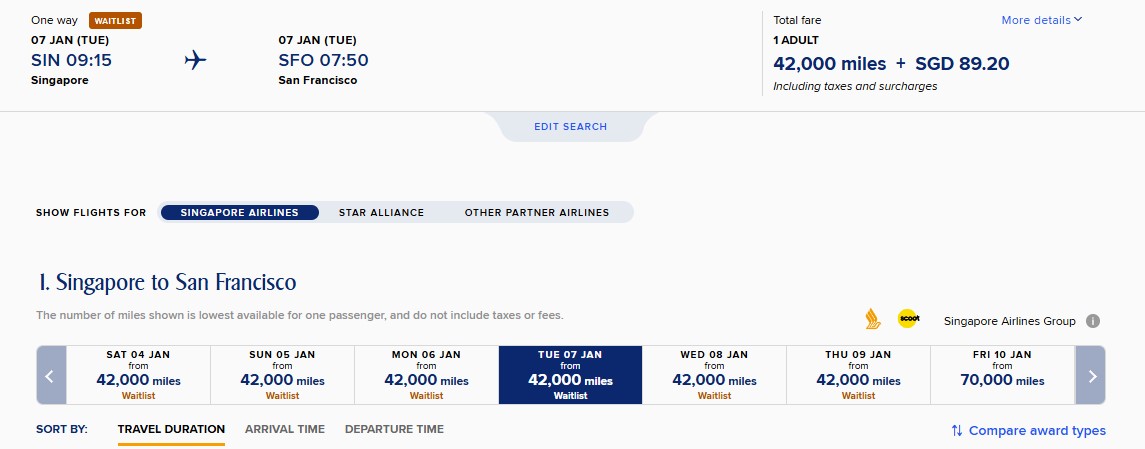
For example, a one-way Economy Class redemption from SIN-SFO has S$89.20 of fees. This is broken down into:
The fees in bold are collected by the USA authorities from arriving passengers. Countries which impose fees on arriving passengers include:
These fees are on top of those collected by the Singapore authorities. If you’re reviewing the charges on your ticket and want to know which country is responsible for what, you can look up the codes on this page. |
Conclusion
Singapore will start collecting its world-first sustainable aviation fuel levy from 1 October 2026, on flights that depart from 1 January 2027 onwards.
While you could avoid the levy by booking your flights before it comes into effect, that would only delay the inevitable. One way or another, we’ll all be paying an extra S$1 to S$41.60 on tickets in the future, and even more once the SAF target increases.
Despite its professed benevolent intentions, I’ve always been highly skeptical of the SAF because it shifts the costs of decarbonisation from companies to consumers — and Singapore residents in particular — while transit passengers through Changi are exempt. Are the miles flown by transit passengers somehow less polluting?
