
Here’s a little piece of trivia: despite opening in October 2010, the St. Regis Osaka remains the only St. Regis property in Japan today.
That feels somewhat unexpected for a country as affluent as this — you’d have thought that Tokyo would have gotten one of their own by now! —but I’m not even aware of any rumours about plans for a second property.
In any case, I wasn’t planning to stay here originally, but while planning my visit to Osaka, I spotted this property going for 61,000 Marriott Bonvoy points and snapped it up.
But having stayed, I think the pricing makes a lot more sense. This isn’t a terrible hotel by any means, but neither is it exceptional. The rooms felt bland and dated — though a renovation is supposedly in the works — and the facilities were extremely limited: a small gym, no swimming pool, and a basic spa.
It really stretches the definition of a five-star hotel, and if it’s luxury you’re after, the Waldorf Astoria Osaka would trounce this hands down.
| 🏨 tl;dr: St. Regis Osaka | |
| With dated rooms and basic facilities, Japan’s only St. Regis property feels like it’s stretching the definition of a 5-Star hotel. | |
| 👍 The Good | 👎 The Bad |
|
|
St. Regis Osaka: Arrival & Check-in
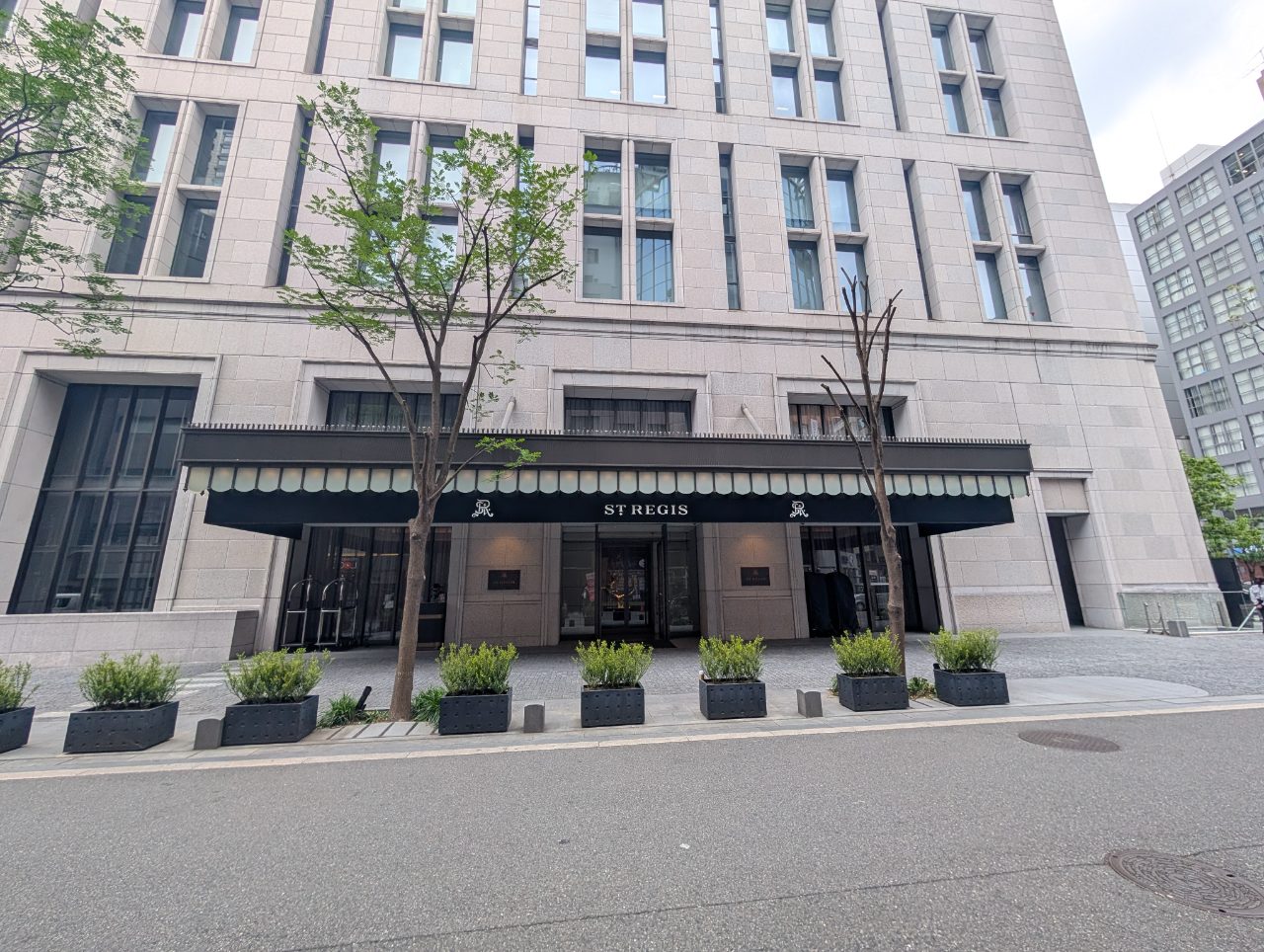
The St. Regis Osaka certainly has a prestigious address — the hotel is located on Midosuji Avenue, often referred to as the “Champs-Élysées of Osaka”, and surrounded by high-end shopping and dining outlets.
It’s approximately an hour’s train ride from Kansai International Airport, and located near the Honmachi Station, making it a good staging point to visit Osaka’s biggest attractions such as the Dotonbori district and Osaka Castle.
The hotel has two entrances. Those arriving by car or taxi will be dropped at the porte-cochère at the main entrance.
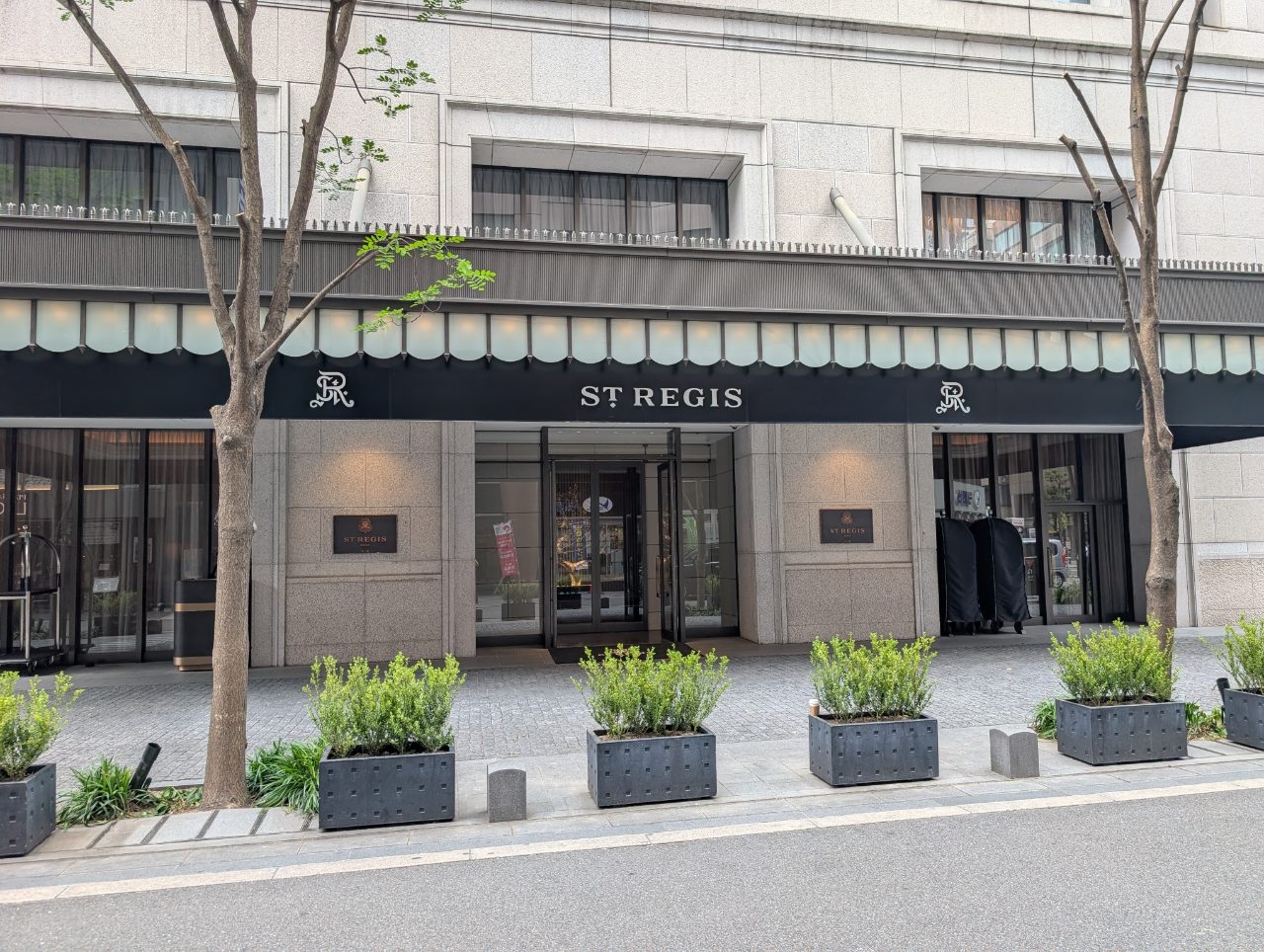
Those arriving by train are more likely to come across the side entrance first. I know, it’s the St. Regis, but believe me — many people take the train here too!
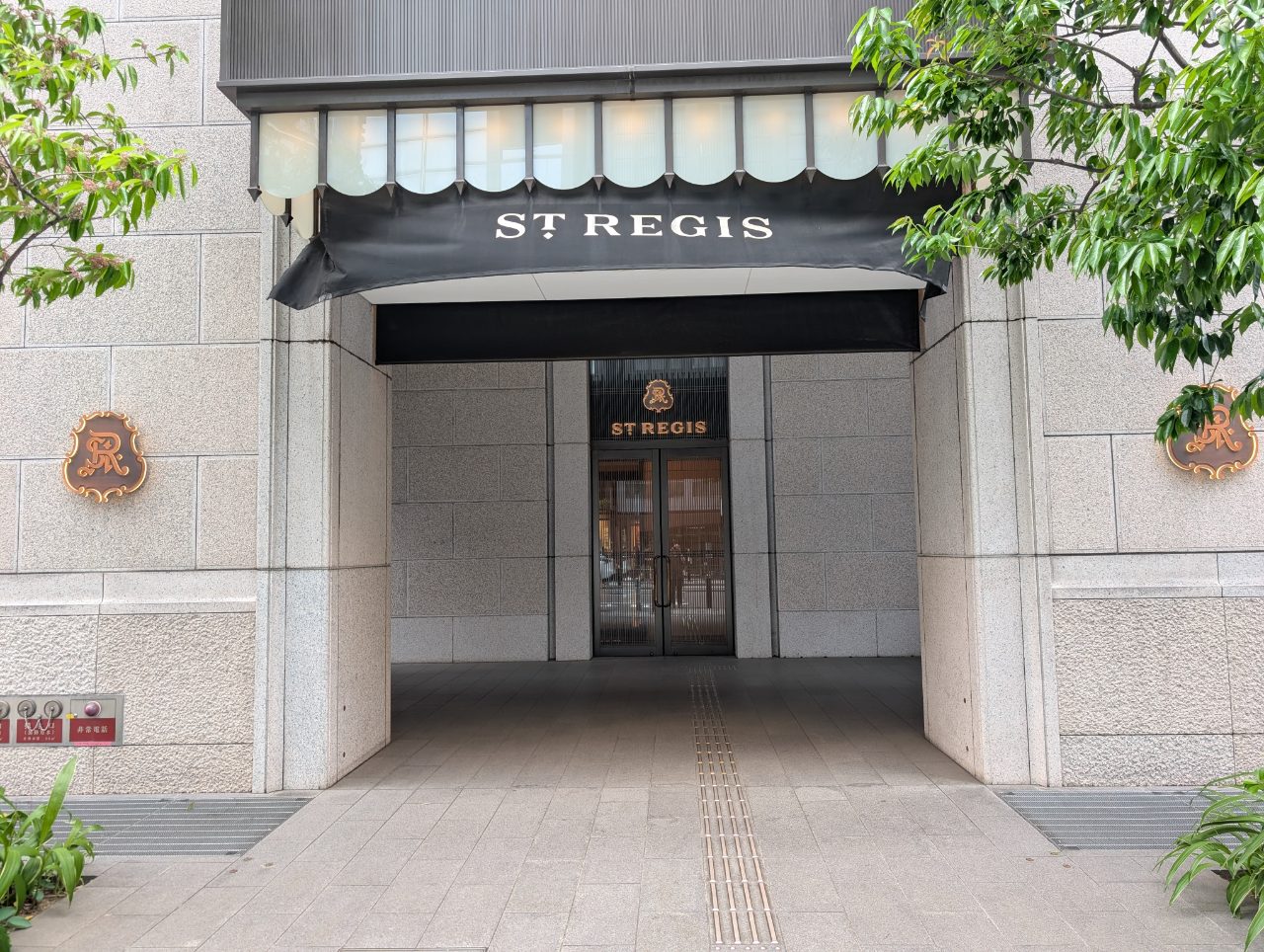
This 27-storey hotel was designed by renowned Japanese architectural firm Nikken Sekki, whose portfolio also includes The Osaka Station Hotel, Canopy by Hilton Osaka Umeda and, interestingly enough, the south wing of Narita International Airport’s Terminal 1.
Guests are greeted on the ground floor by a crystal tree, paired dramatically with bronze and dark marble flooring, timber screens and stone. The theming here is supposed to evoke moonlight, which eventually turns to sun as you ascend towards the 12th floor lobby.
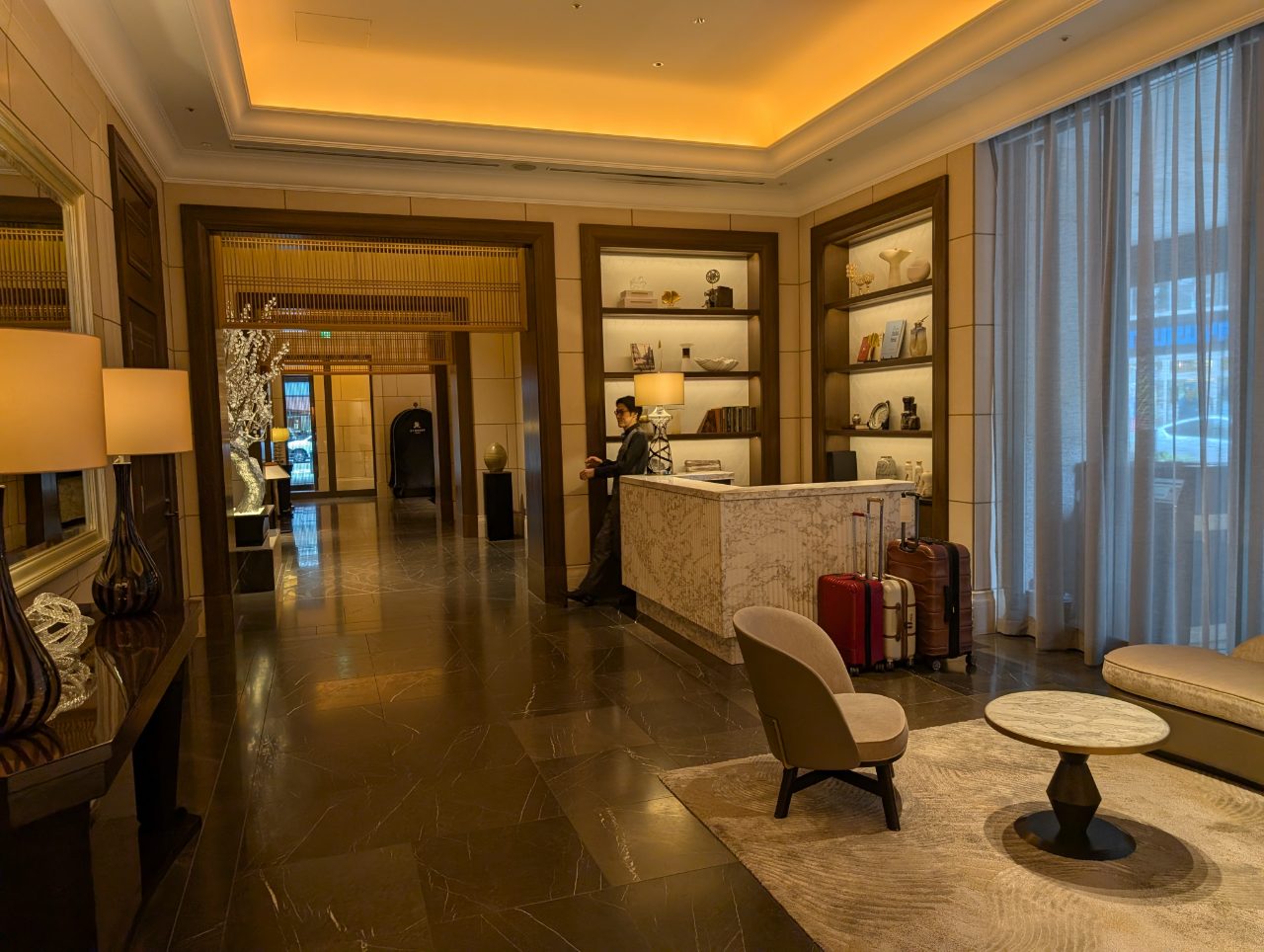
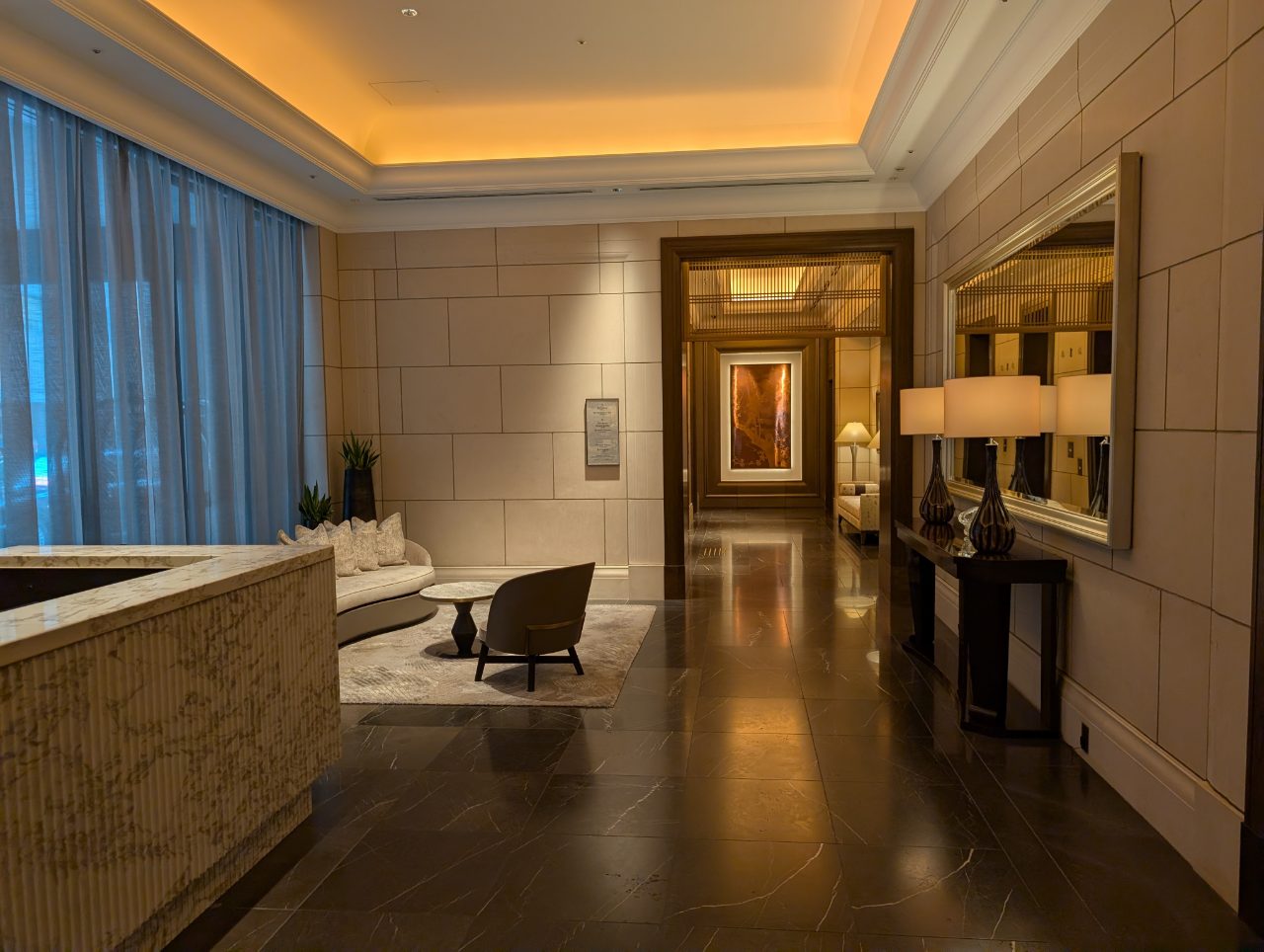
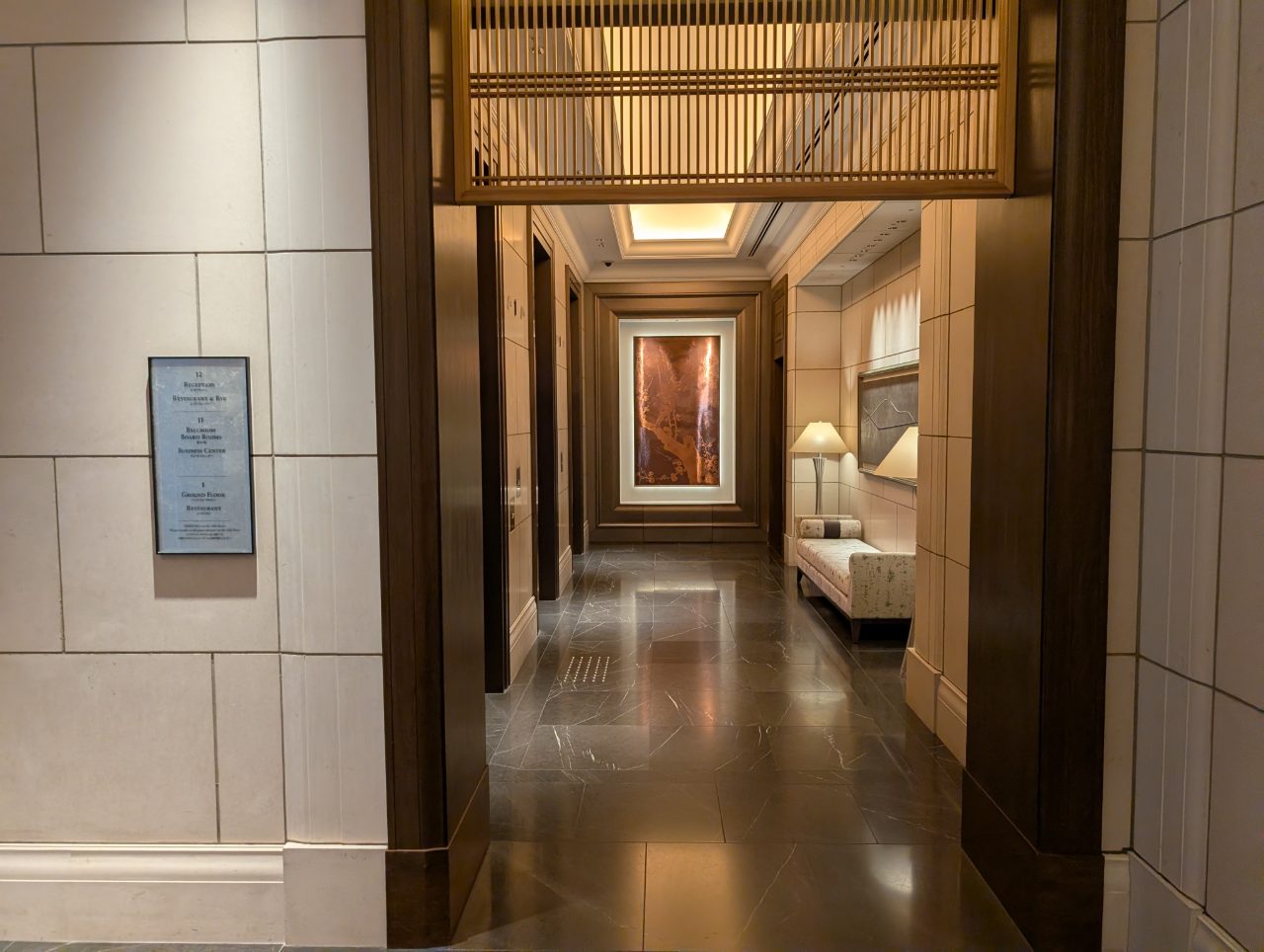
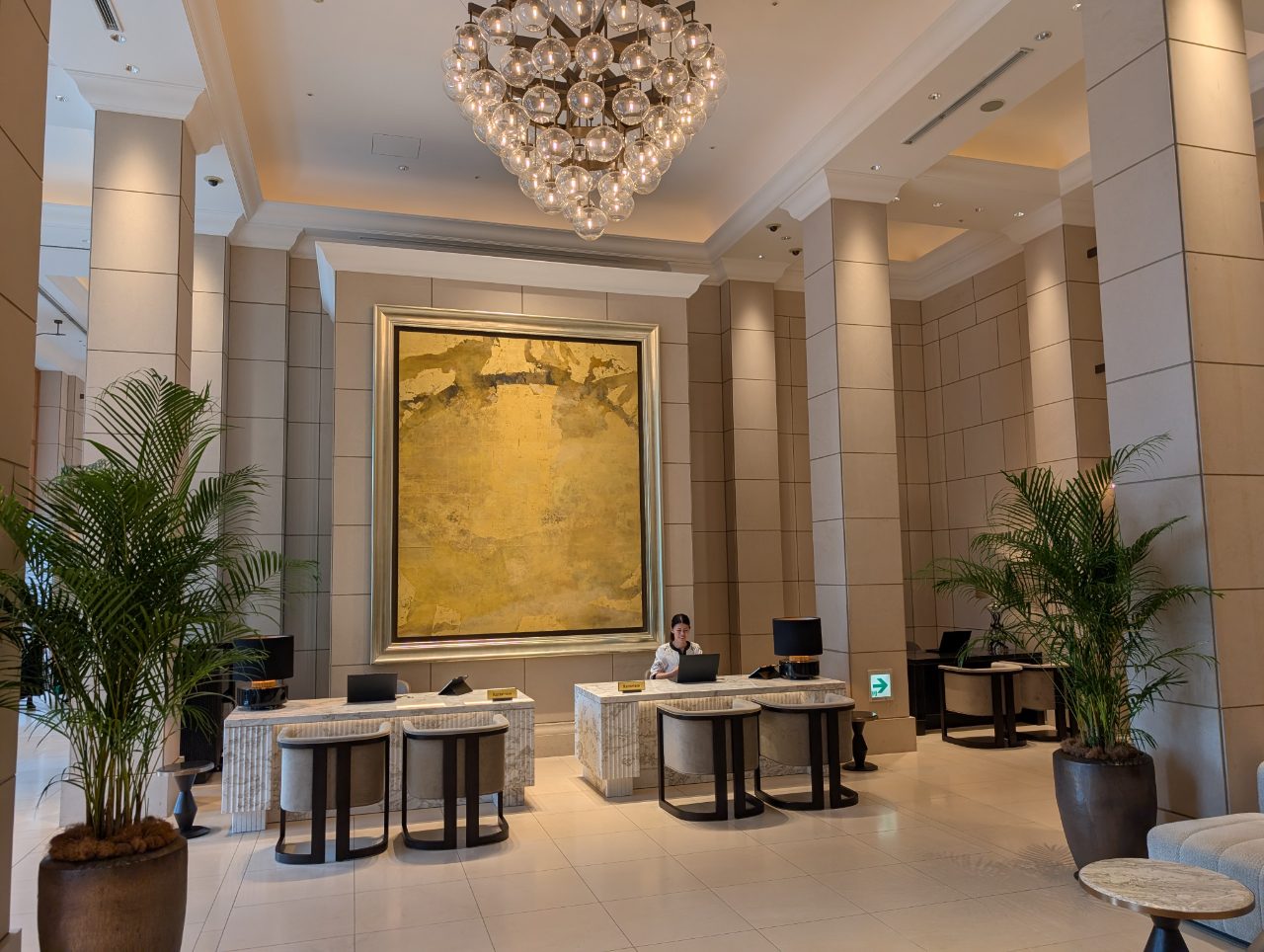
Check-in takes place on the 12th floor, in a grand reception hall with high coffered ceilings and chandeliers.
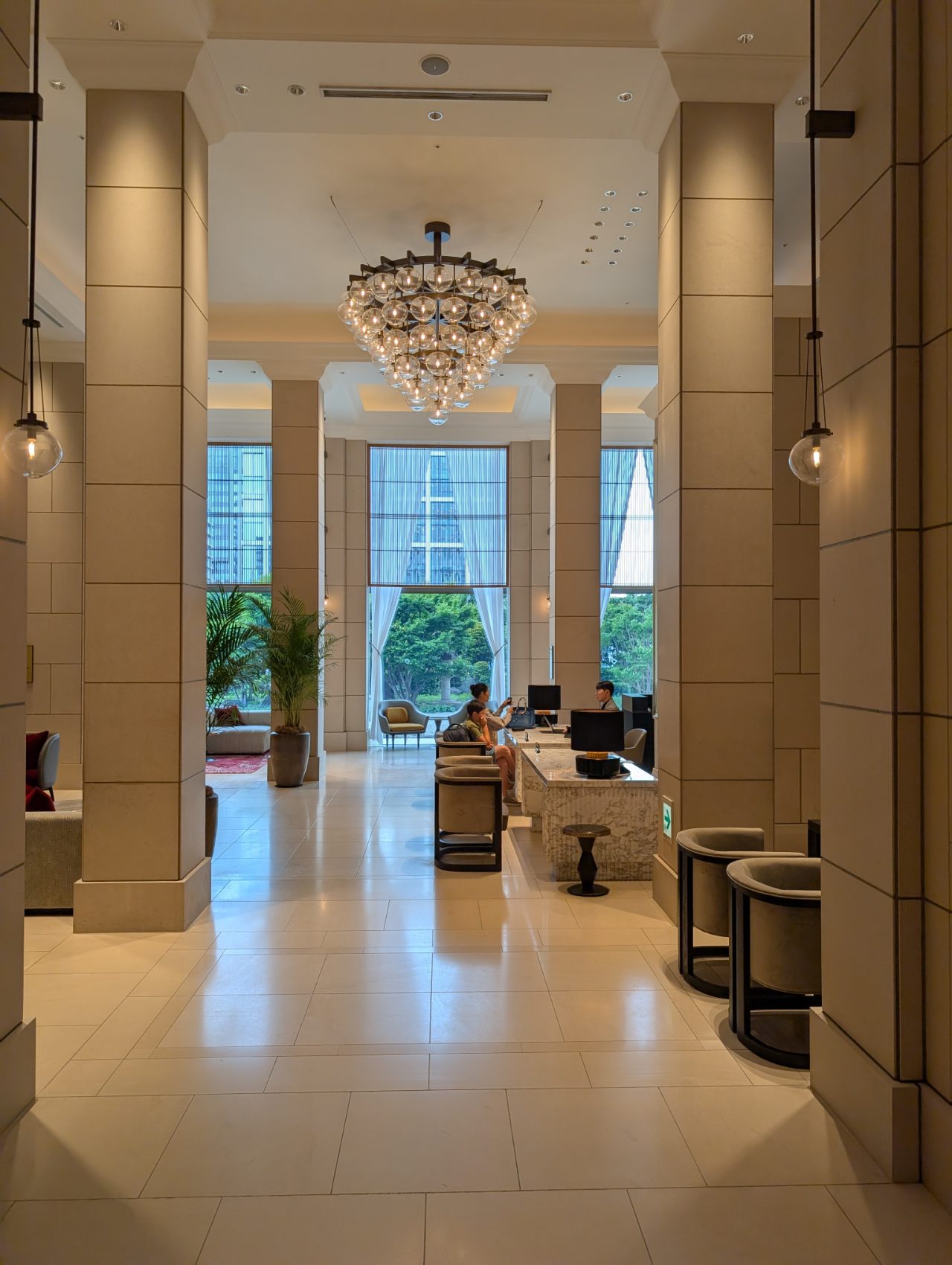
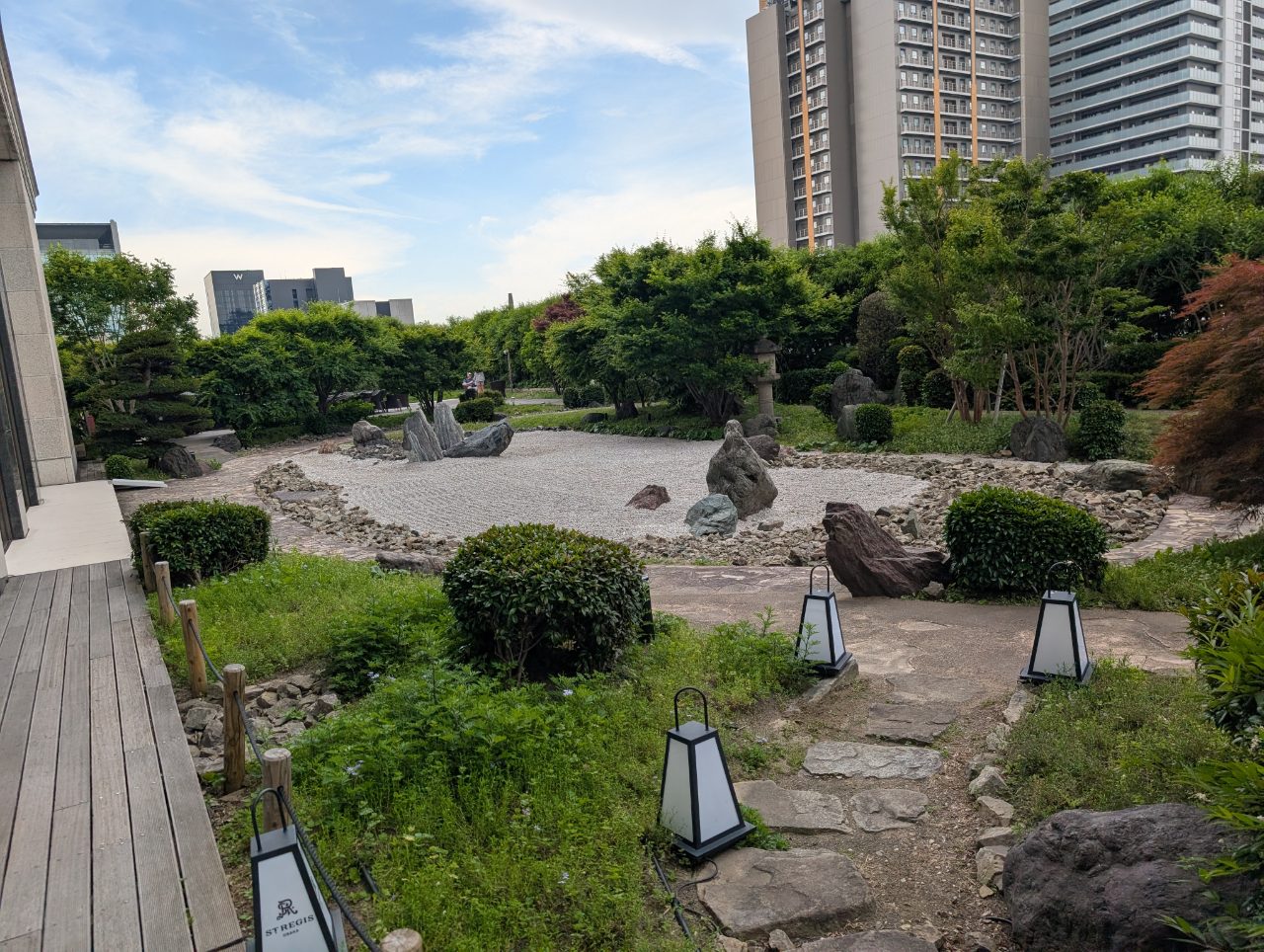
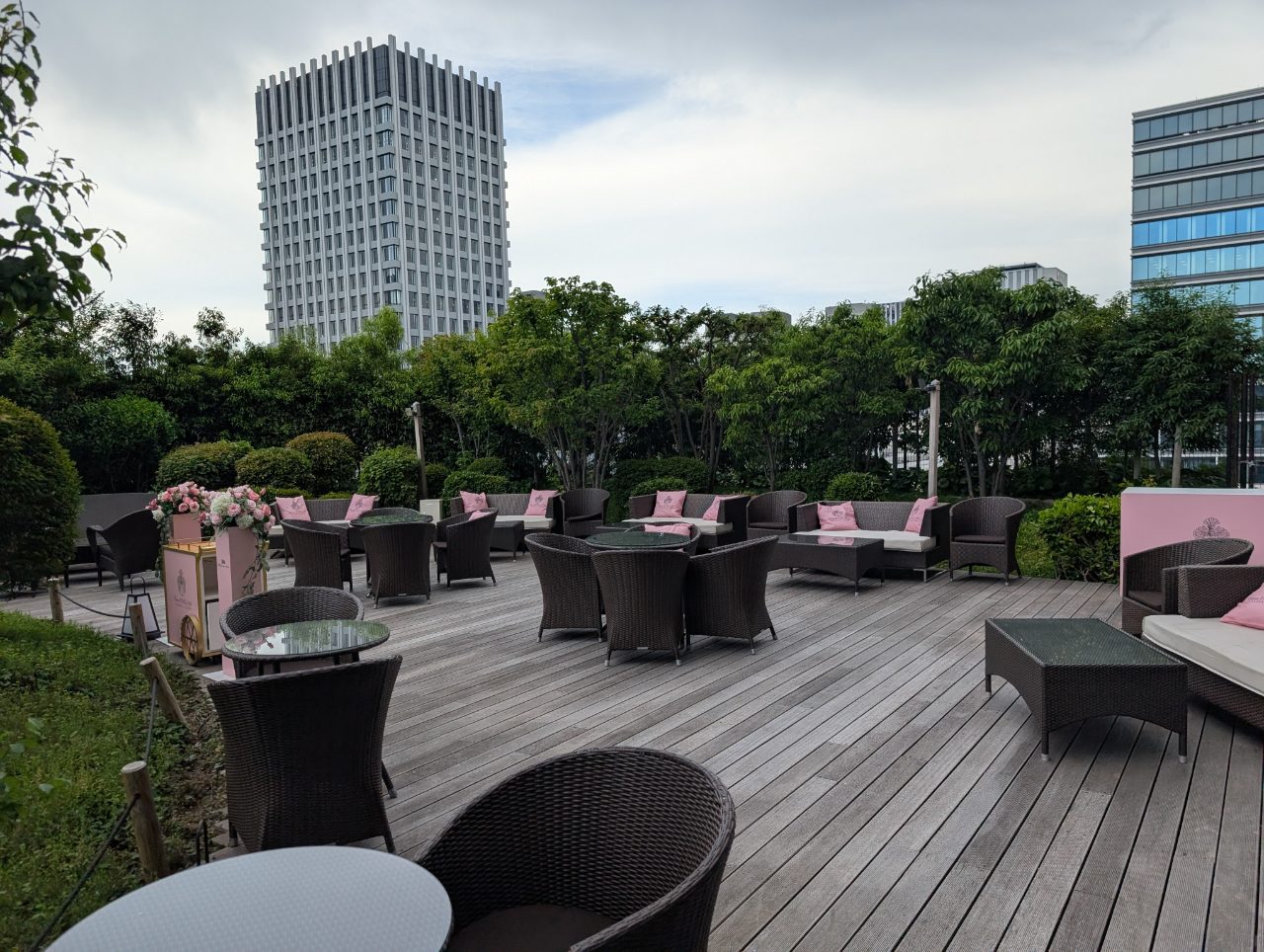
Just outside is a serene, open-air Japanese zen garden, meticulously landscaped as always. This offers a brief escape from the urban sprawl of Osaka, and during the summer months, also hosts a beer garden and champagne bar.
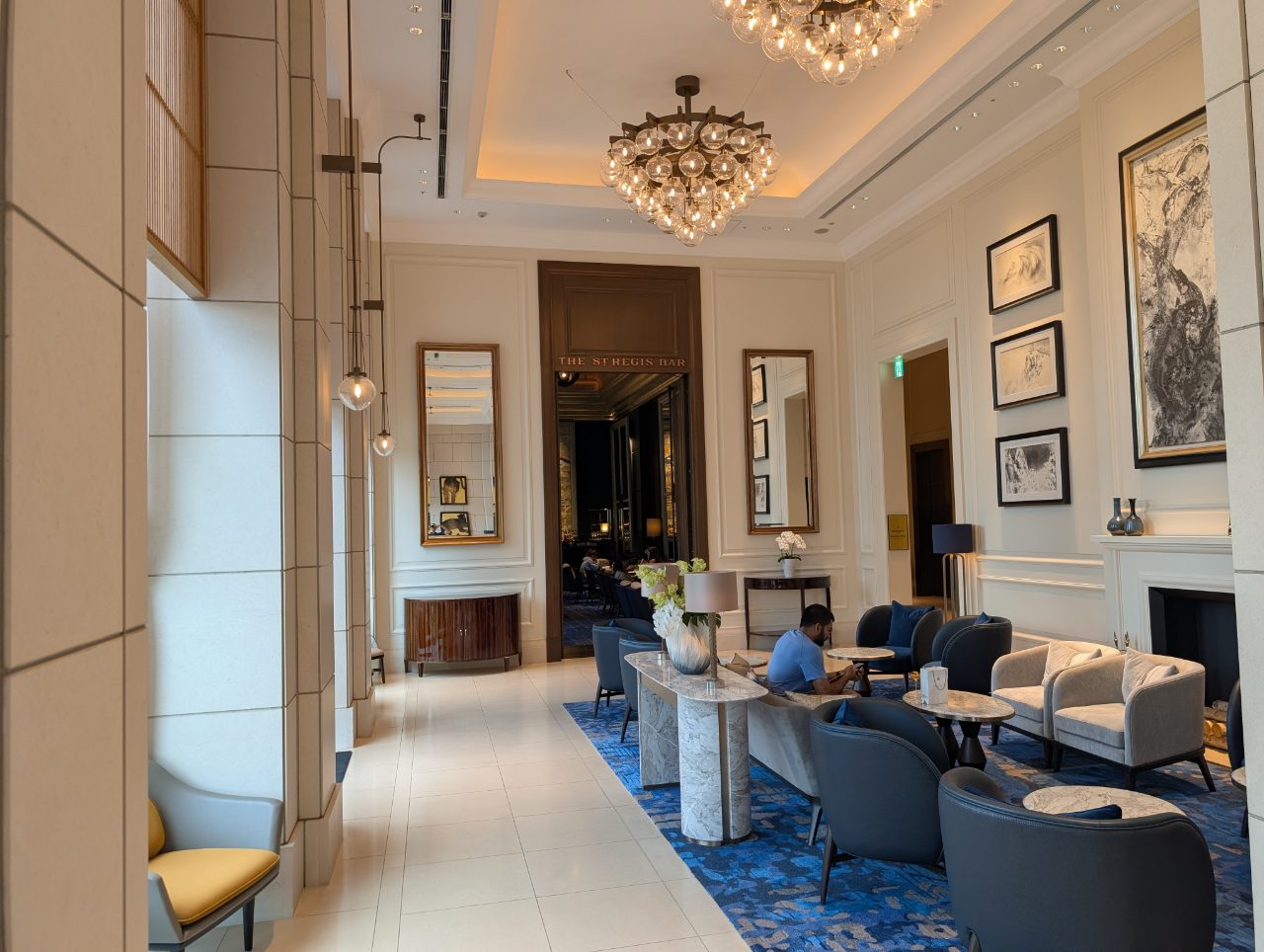
Further down the corridor is a sitting area, as well as the St. Regis Bar, where the evening sabrage takes place at 5 p.m daily, and all in attendance receive a complimentary glass of champagne.
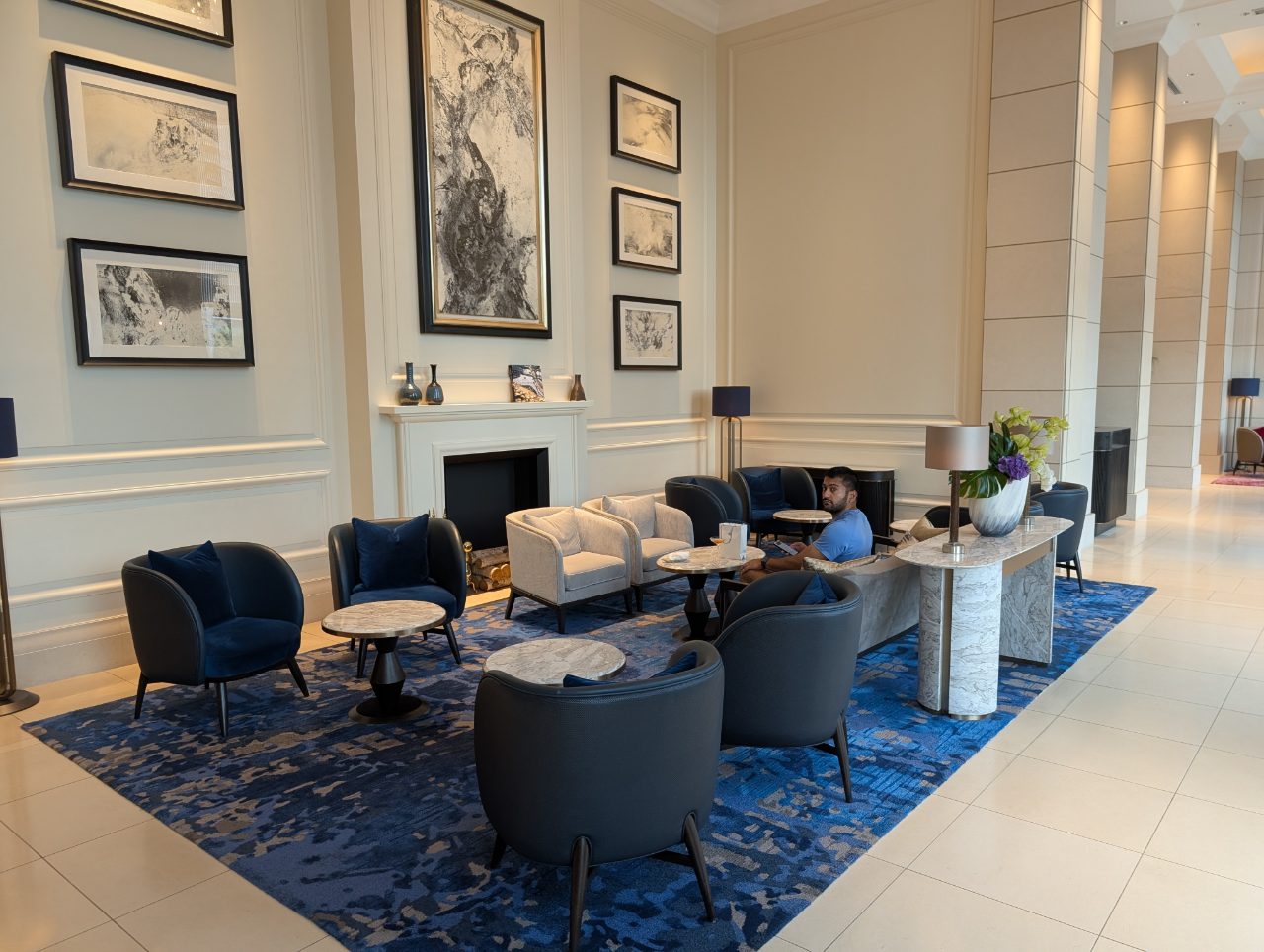
Check-in was completed quickly, and I was actively offered a 4 p.m check-out for the following day.
St. Regis Osaka: Grand Deluxe Room
The St. Regis Osaka has a total of 160 rooms and suites, split into the following categories.
| Category | Size | Number of Rooms |
| Deluxe | 43 sqm | 39 |
| Grand Deluxe Premier | 46 sqm | 40 |
| Grand Deluxe | 51 sqm | 69 |
| Grand Deluxe Suite | 87 sqm | 5 |
| Yuri Suite | 88 sqm | 1 |
| Executive Suite | 102 sqm | 2 |
| Hanashoubu Suite | 112 sqm | 1 |
| Fuji Suite | 129 sqm | 1 |
| Matsu Suite | 142 sqm | 1 |
| Royal Suite | 197 sqm | 1 |
What’s slightly surprising is that during booking, members can select either the lead-in Deluxe category or the larger Grand Deluxe category for the same number of points. Obviously, I went for the larger room.
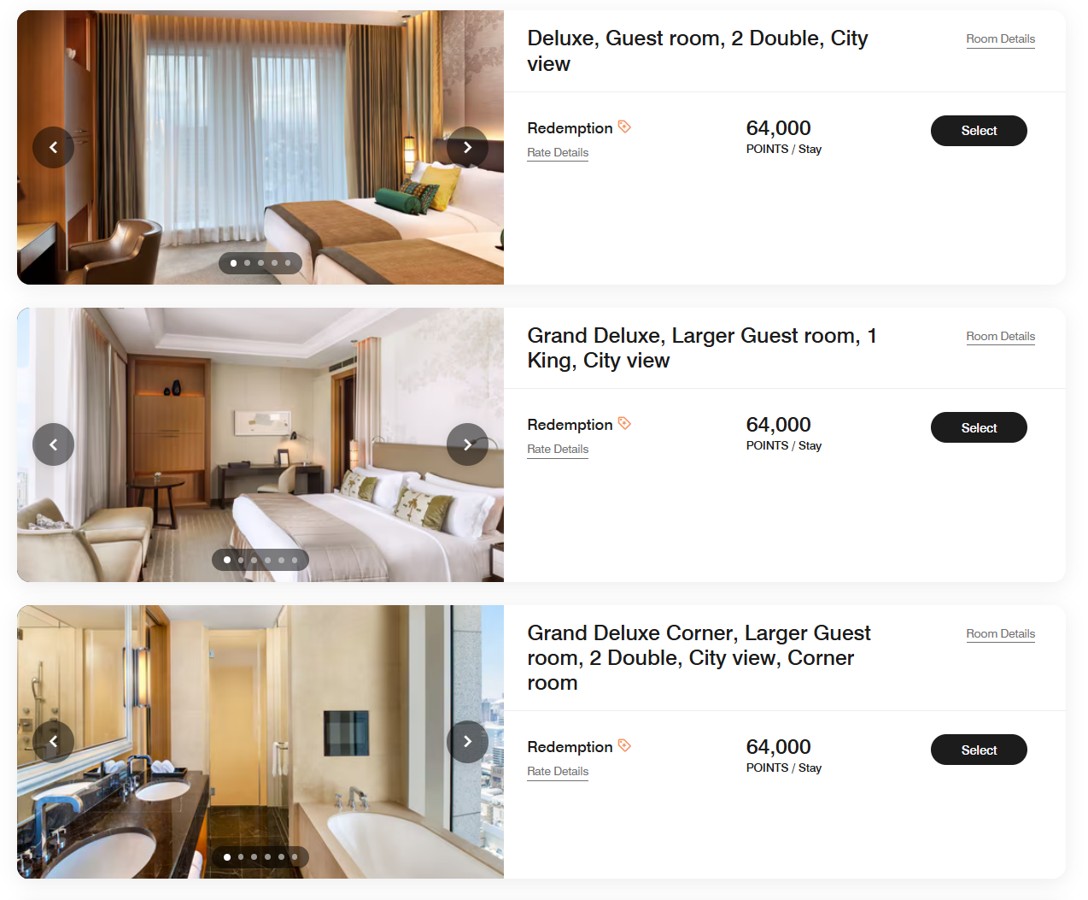
There was no further upgrade, though I wasn’t really expecting one, given that the hotel only has 12 suites (of which I’m pretty certain only six are in the upgrade pool). Fact is, being a Marriott Bonvoy Platinum isn’t that special these days — not when the status is handed out for free with credit cards in the USA!
In any case, the 51 sqm Grand Deluxe corner room offered more than enough space for a solo traveler.
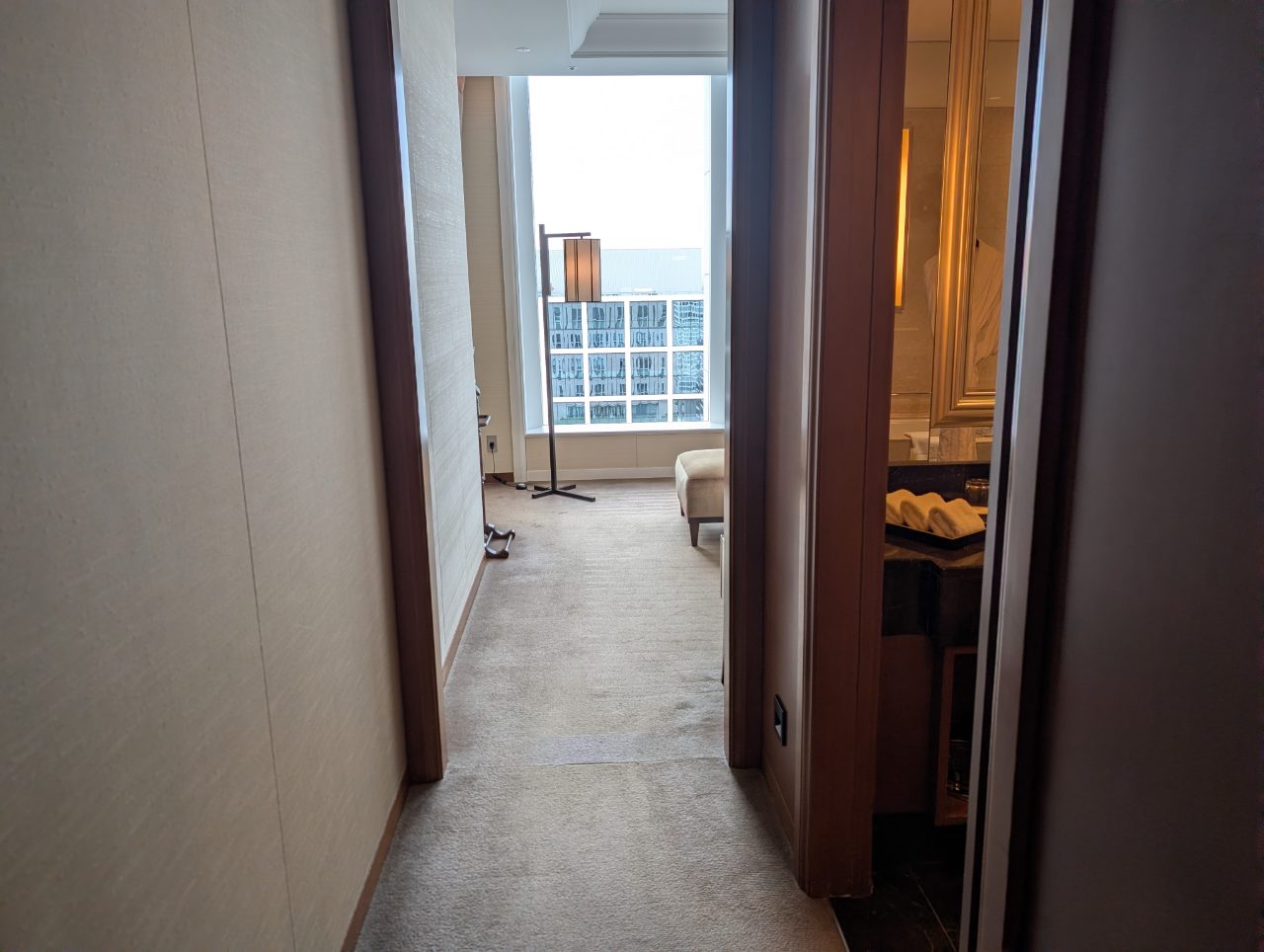
My first impression of the room? Man, this place feels old.
The hotel was supposed to undergo a major renovation in 2023, but the works so far have focused on the restaurants and public spaces. It claims to have started a phased refurbishment of the guestrooms in February 2026, but I must have received an older room because this was bland and tired.
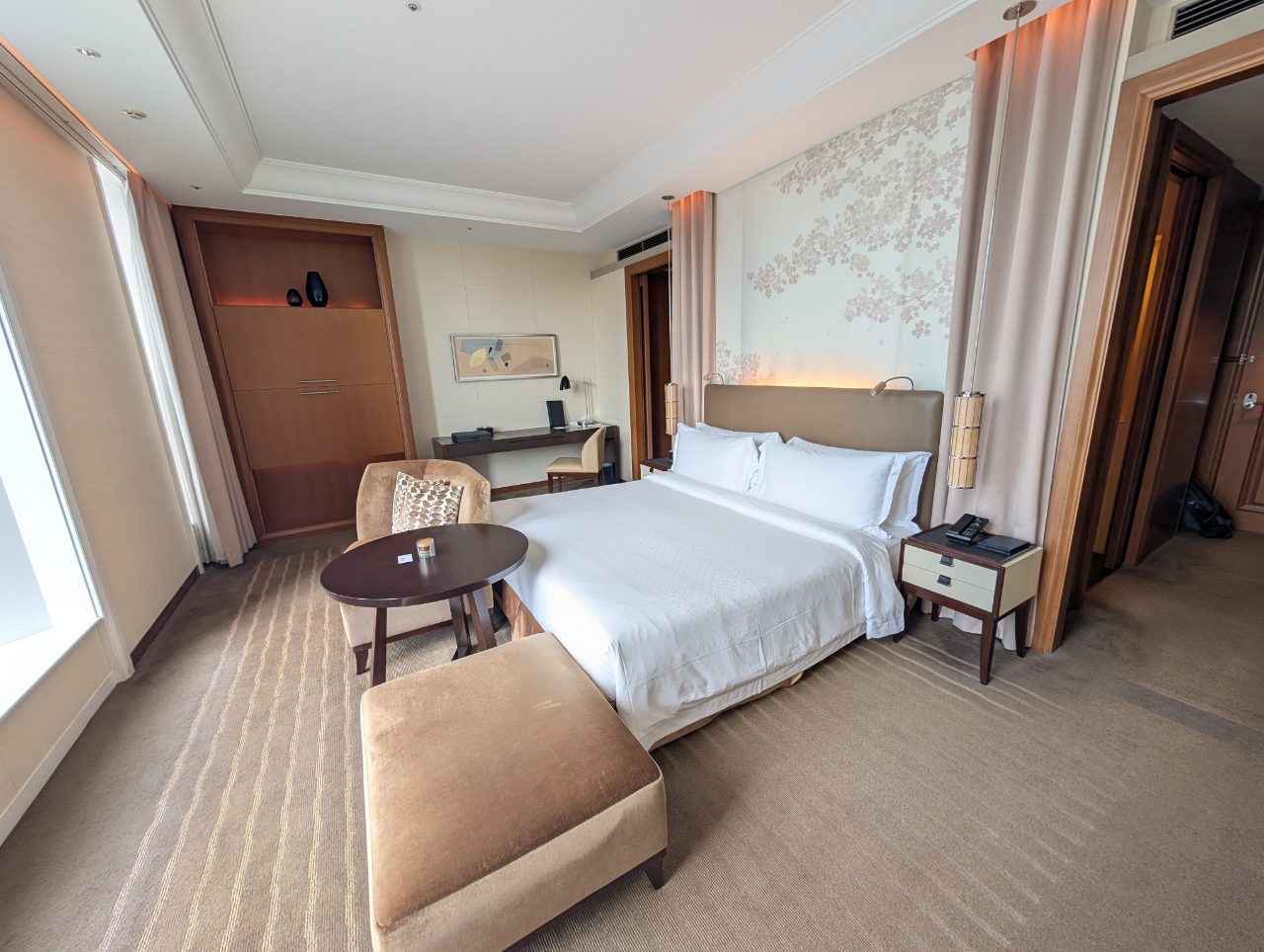 St. Regis Osaka Grand Deluxe Room
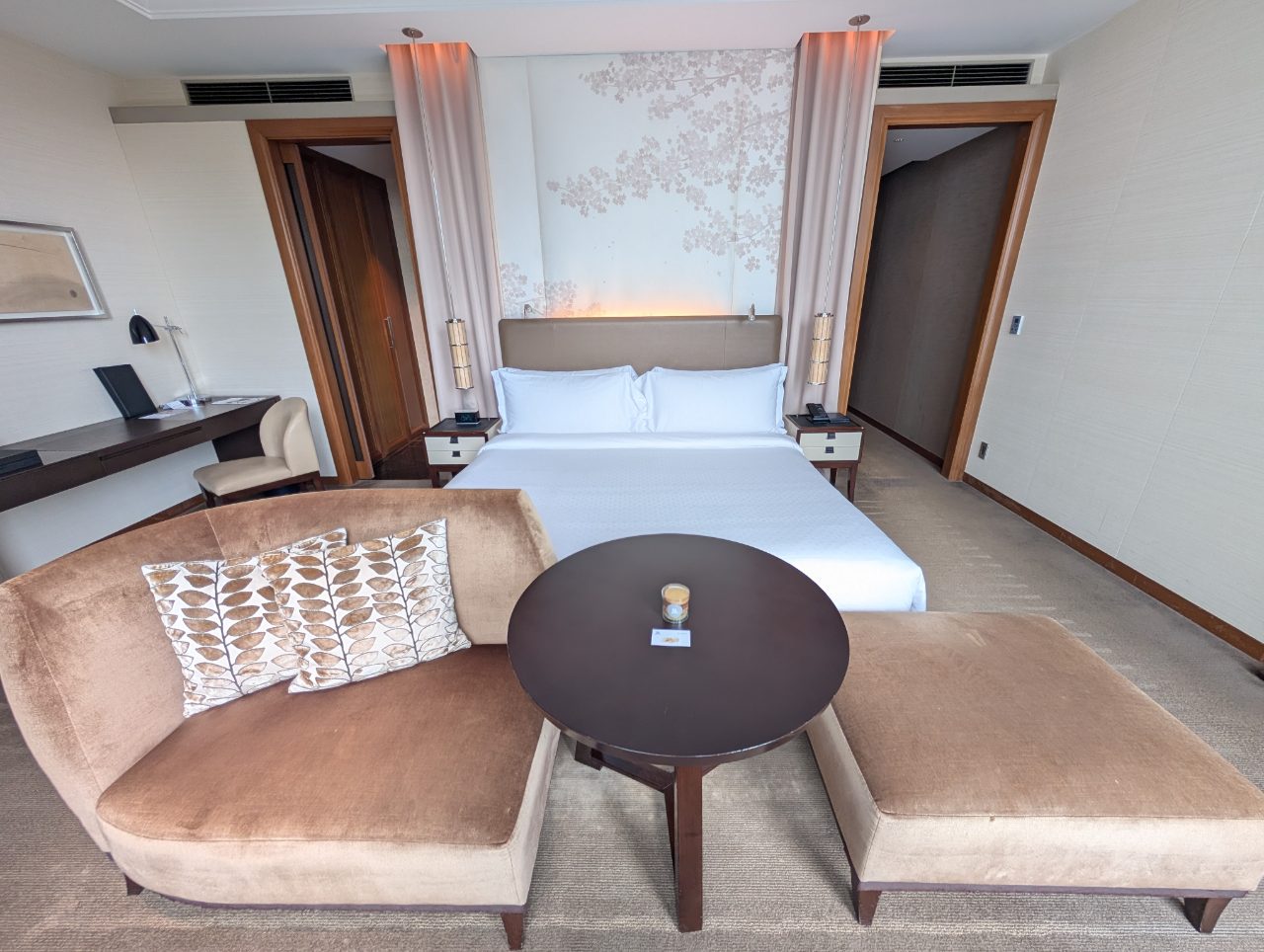
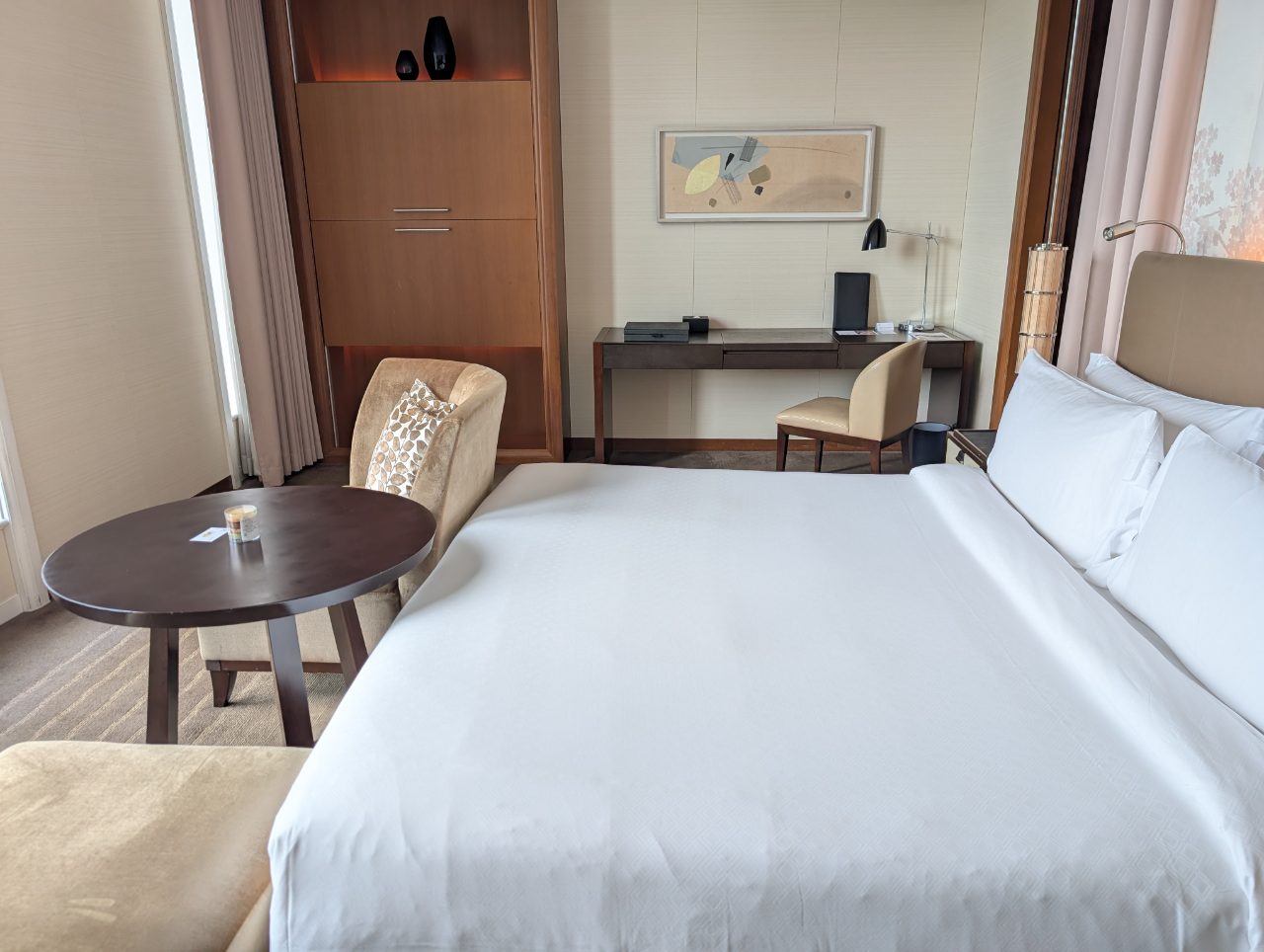
Mind you, that’s not just my opinion. A cursory scroll of TripAdvisor brings up multiple complaints of this nature, with guests pointing out scuffed furniture, worn out fixtures, and peeling wallpaper. It really puts the “old” in old-world luxury.
Neither bedside table had USB charging (though the hotel tries to compensate for this by adding a digital alarm clock with a wireless charging pad). There were power outlets concealed within the drawers, though I’m not a fan of this design because you need to leave it open while using them, inevitably resulting in a painful bump when you stumble out of bed to use the toilet at night.
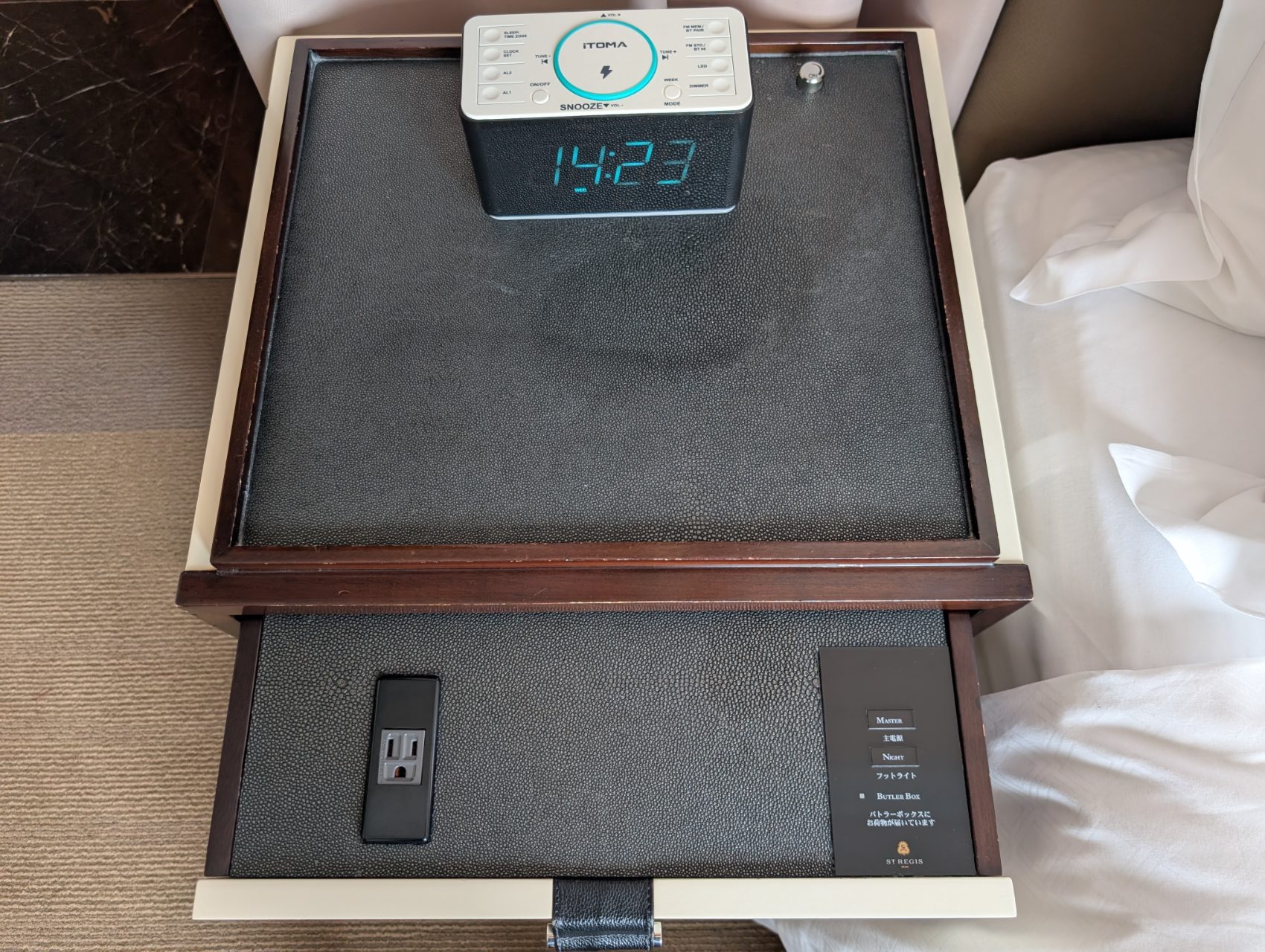
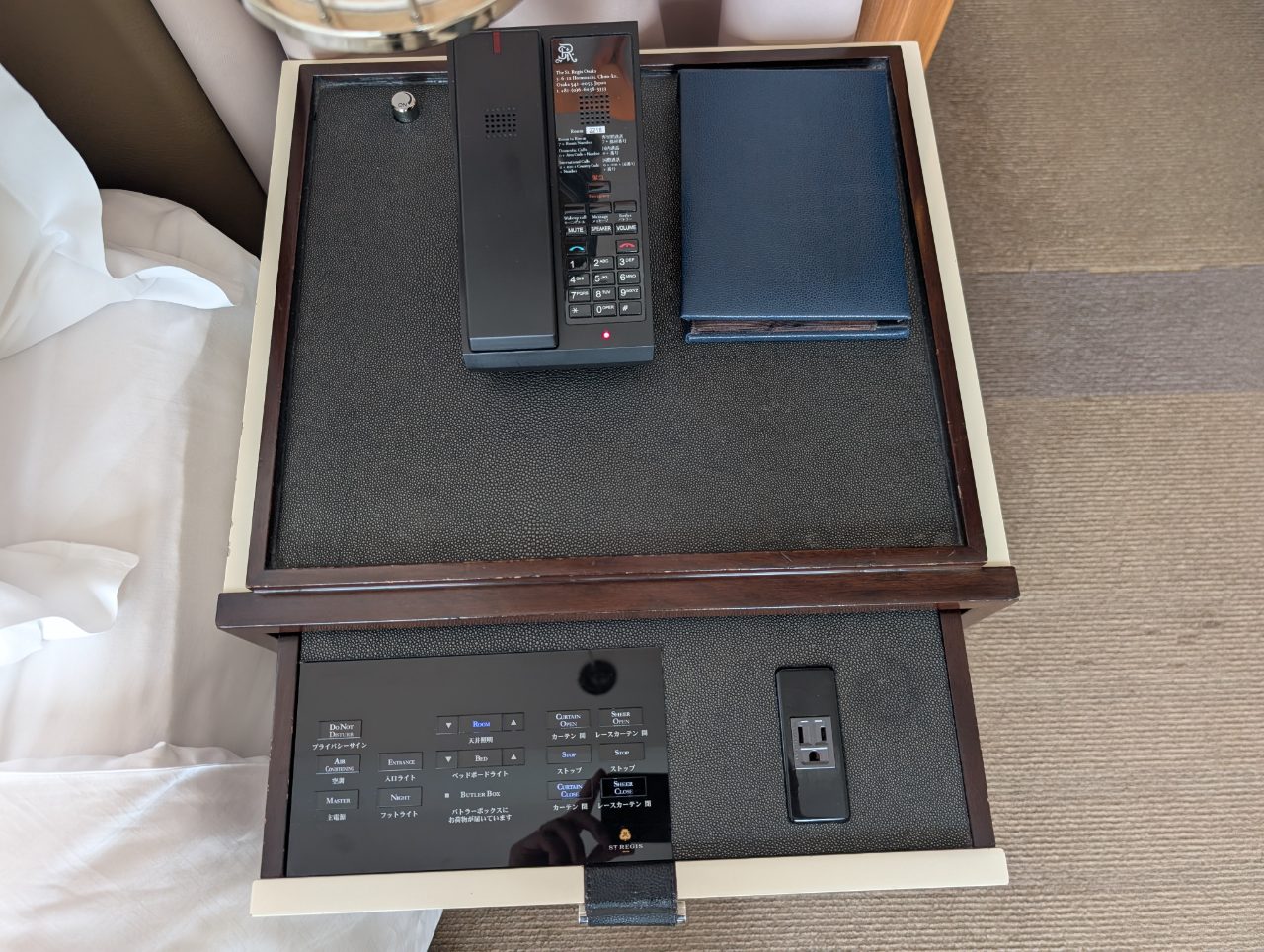
The writing desk doubled up as a dressing table, with a concealed mirror built into the table top. There were also charging outlets, but again, no USB ports.
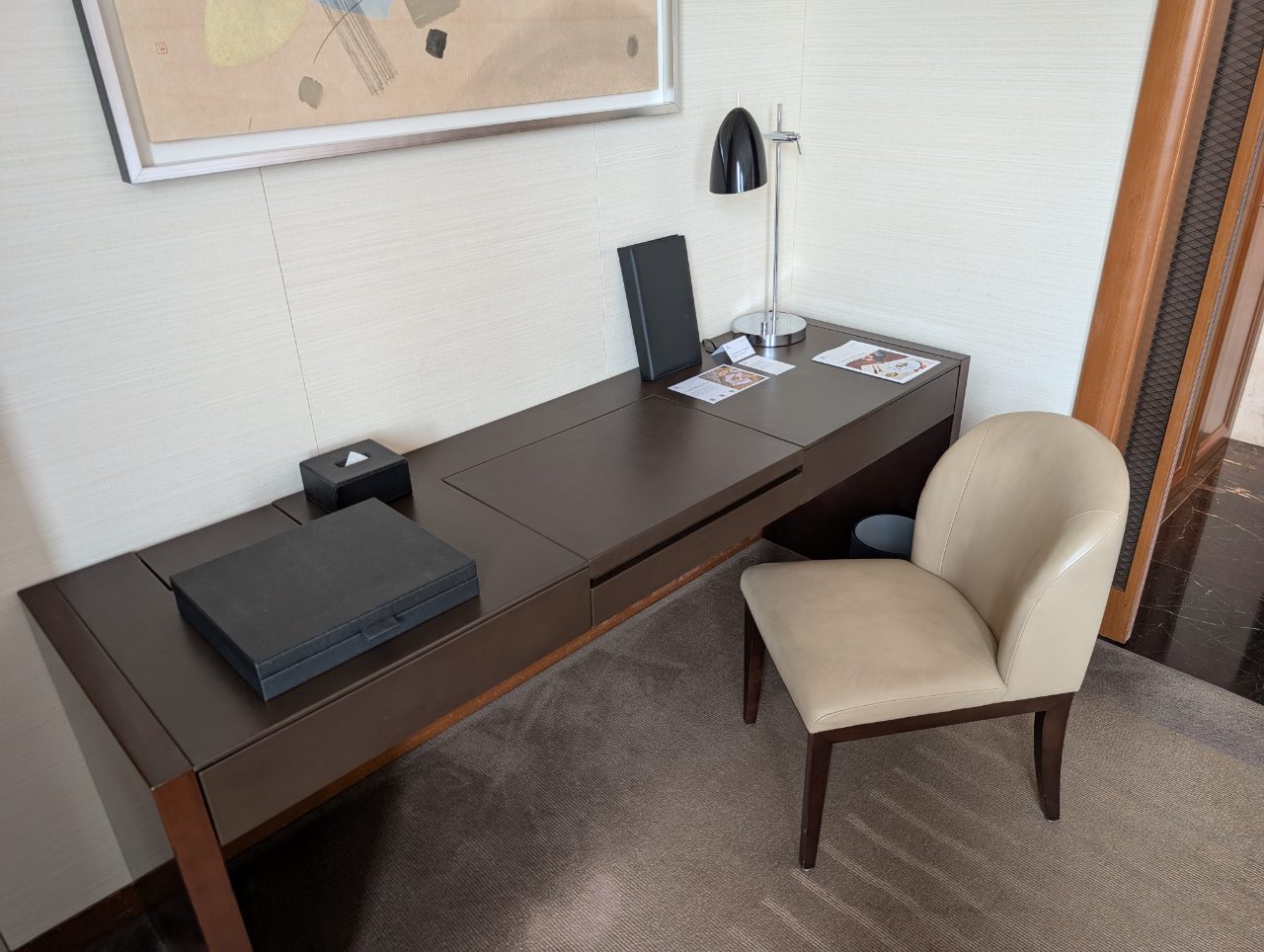
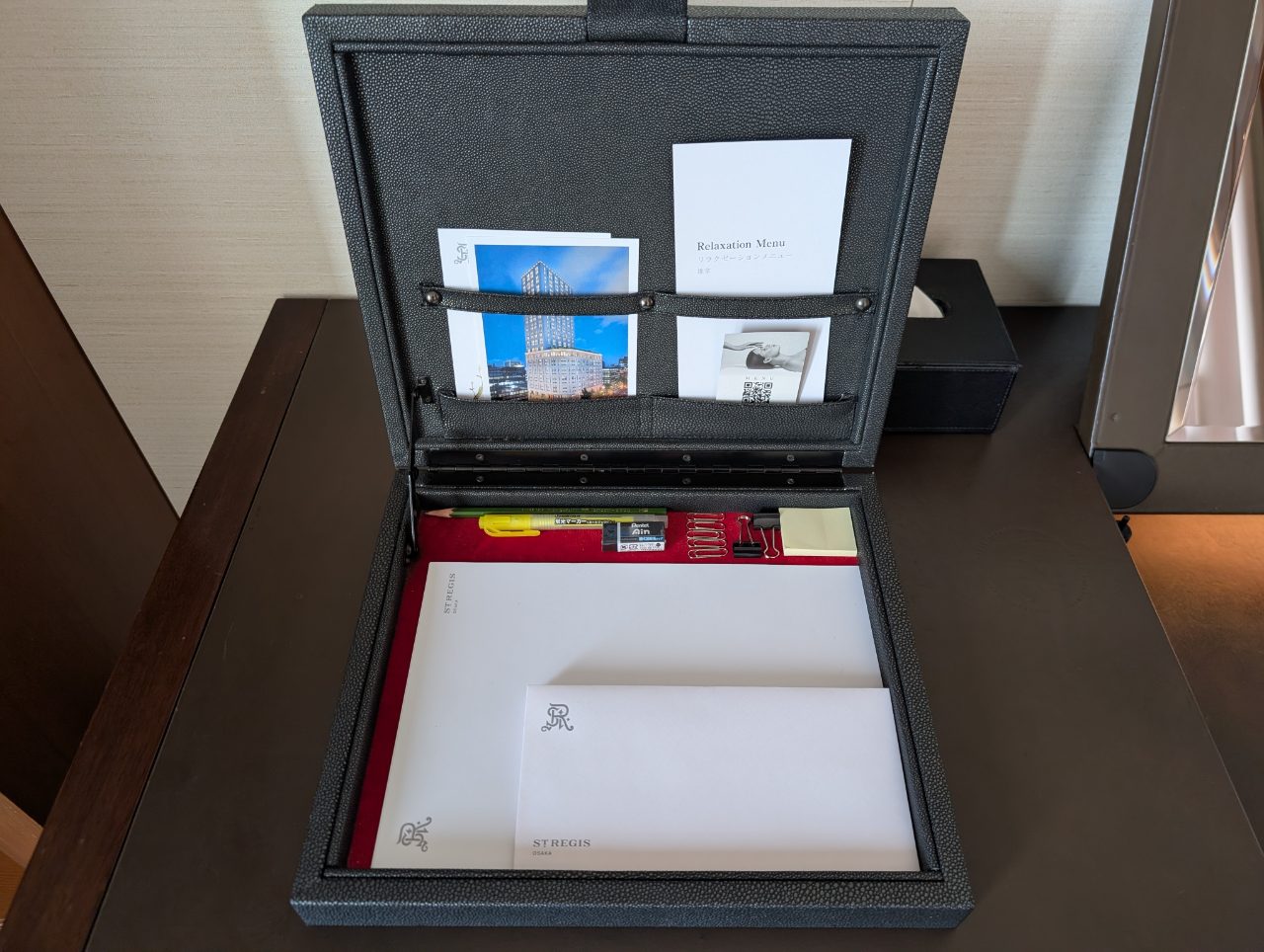
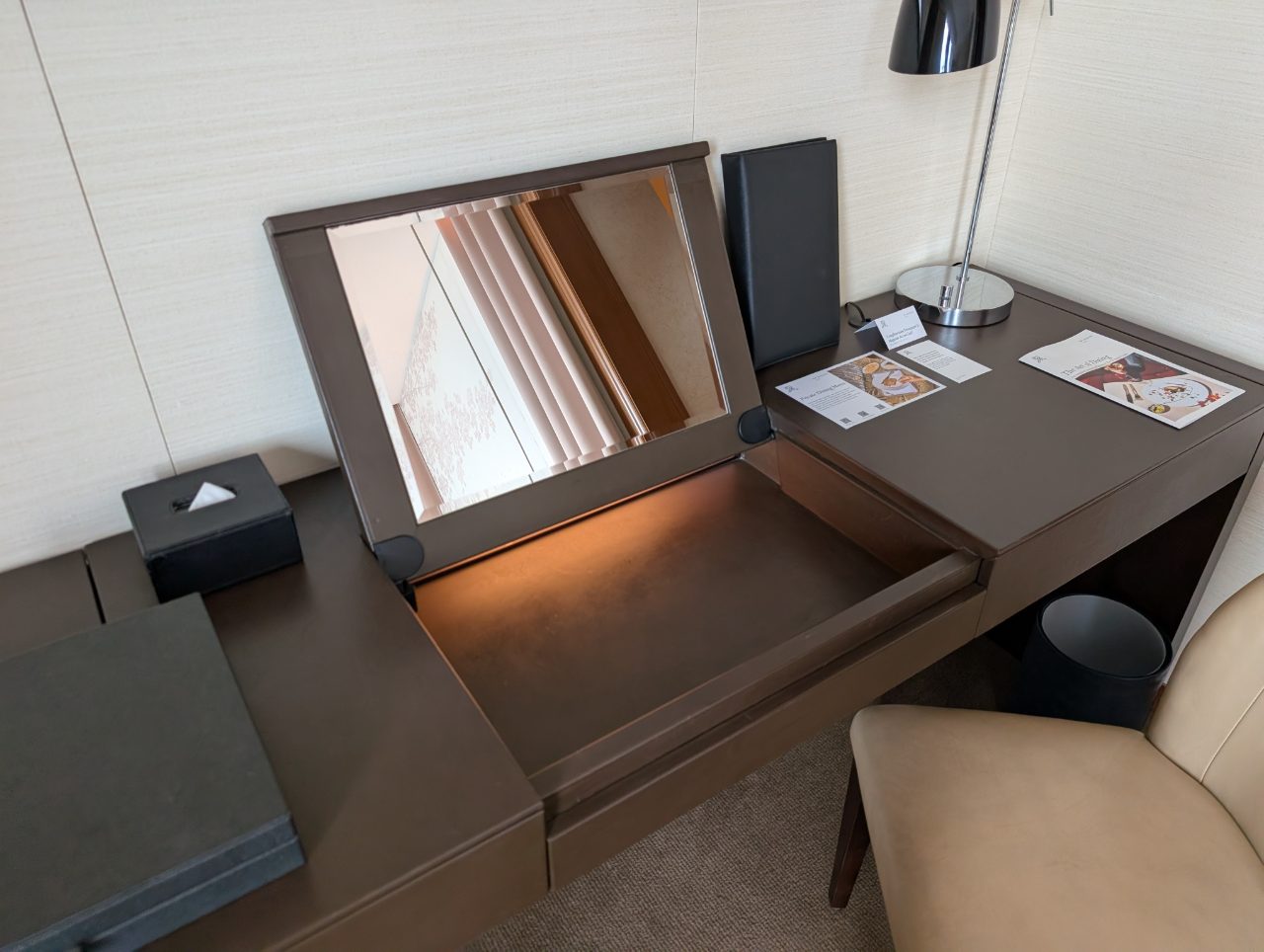
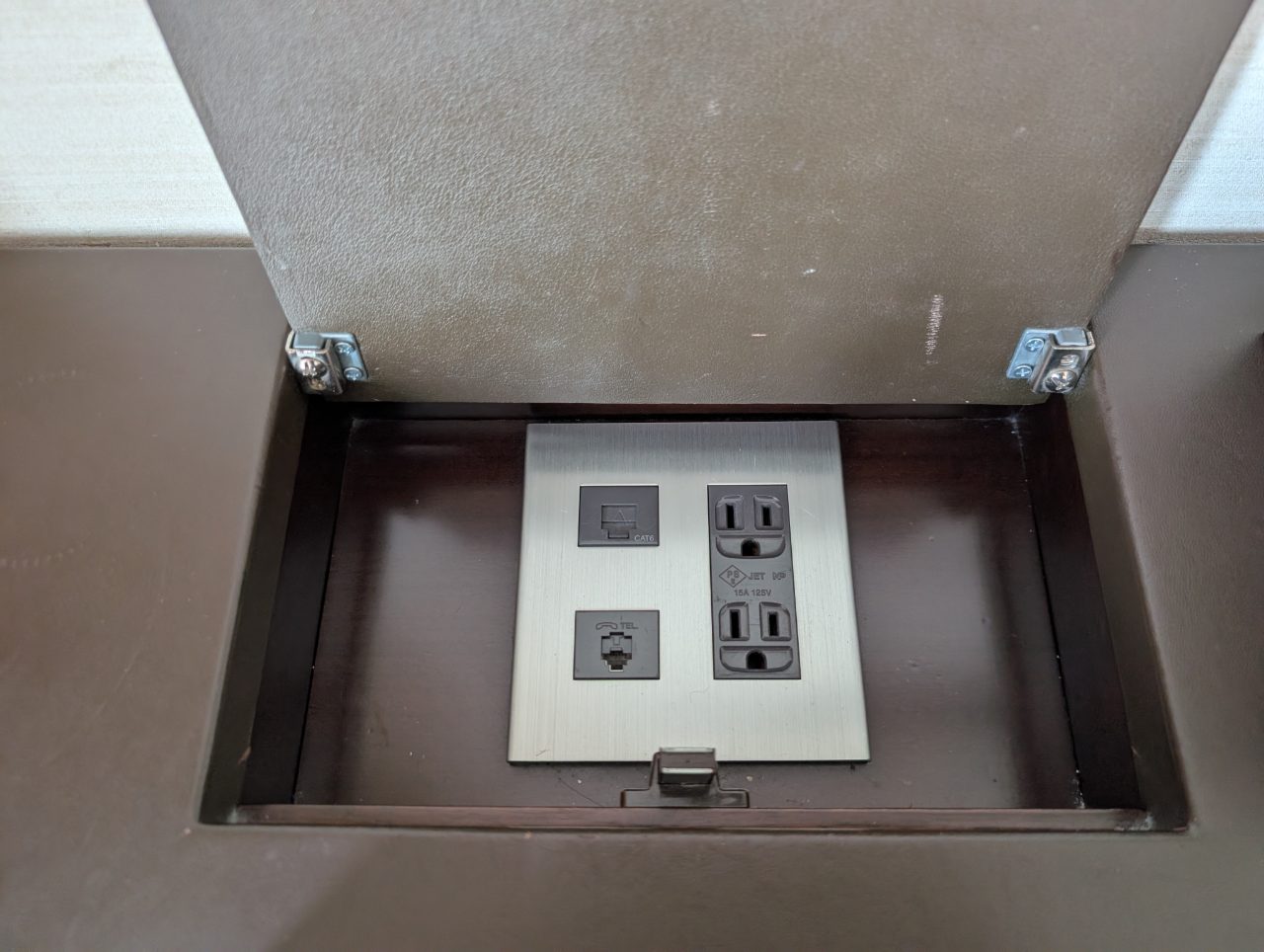
In the corner, a set of sliding cabinets could be pulled apart to reveal a 50-inch HD TV, which didn’t support any smart features like apps or streaming.
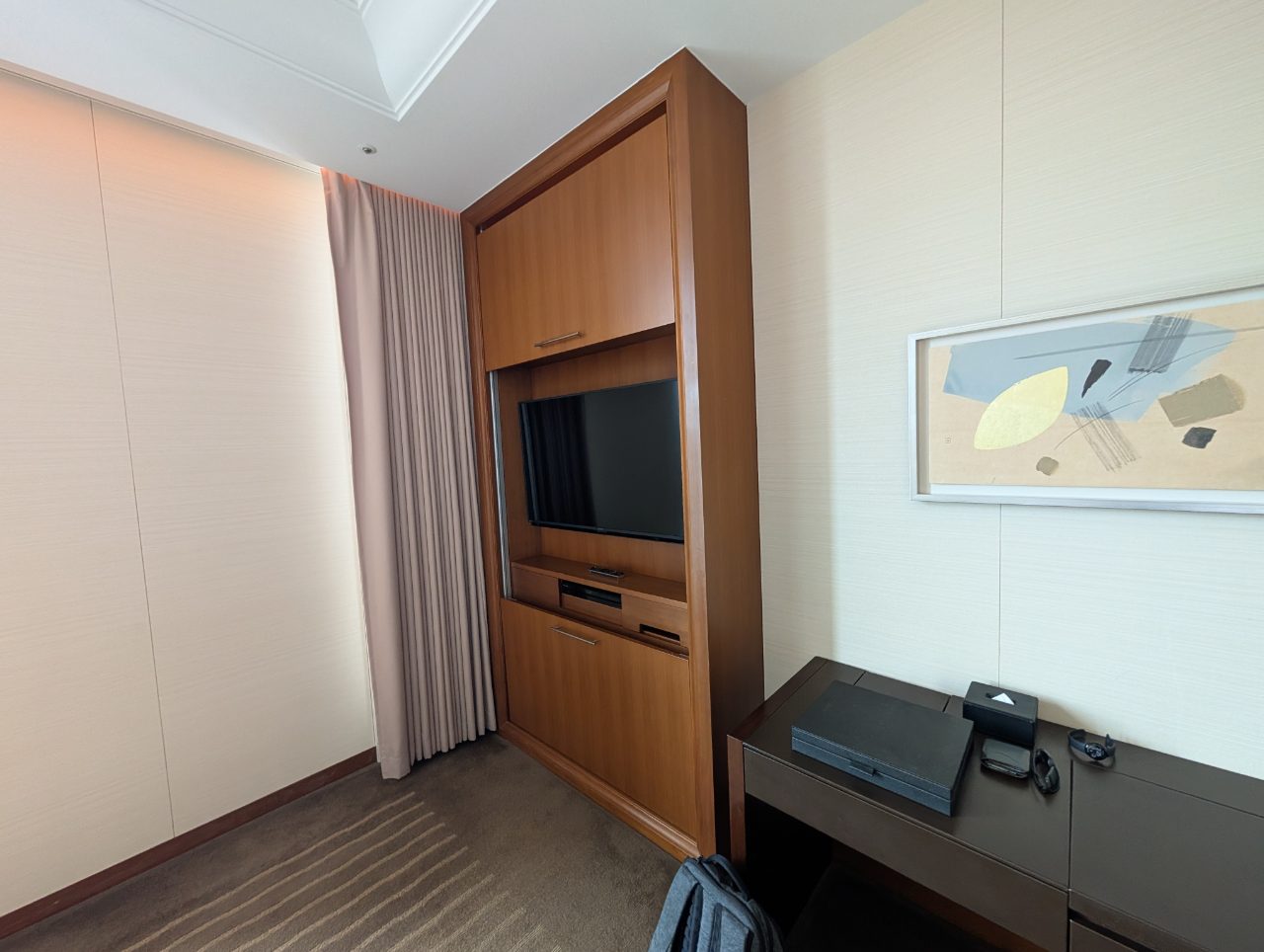
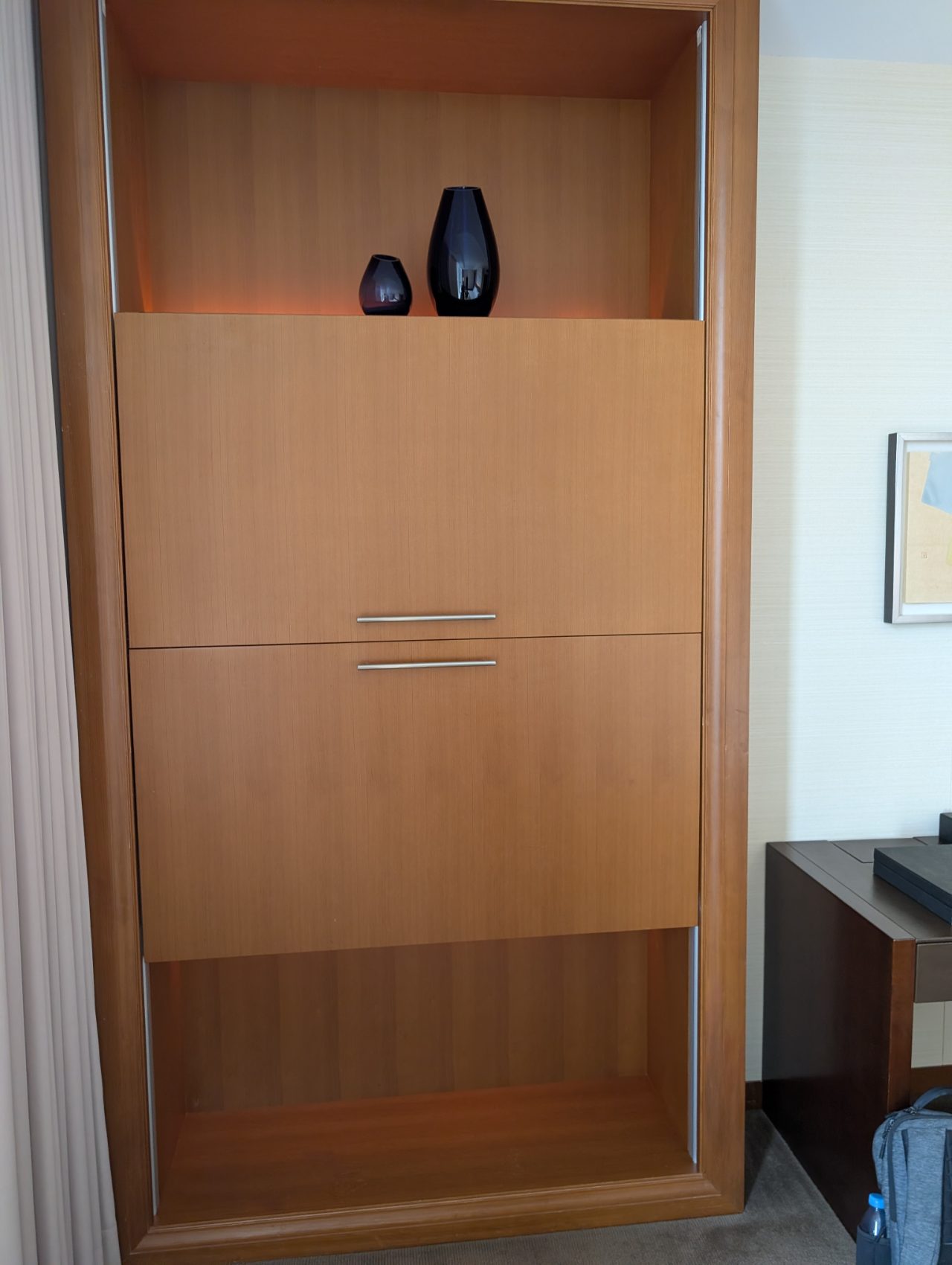
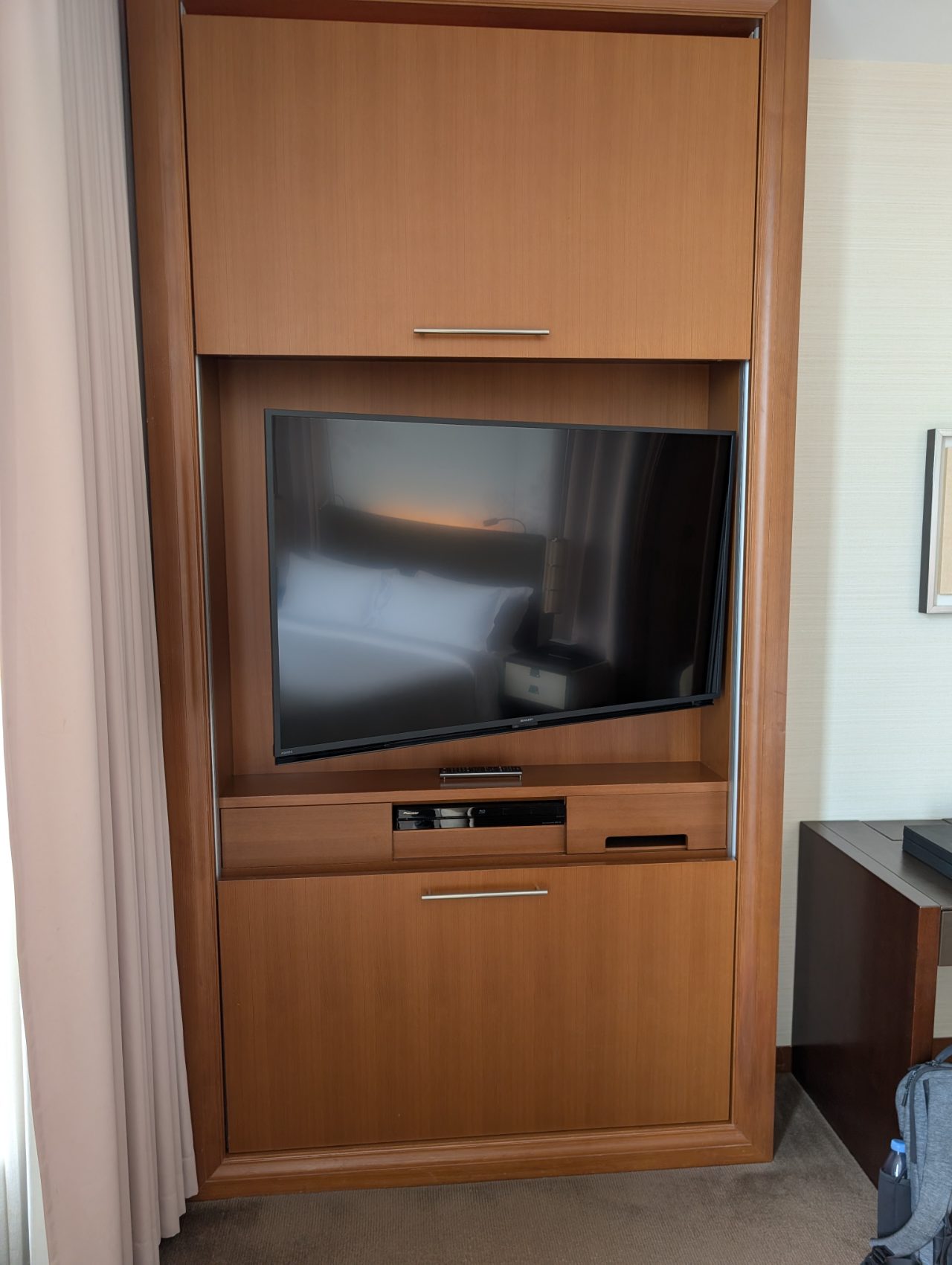
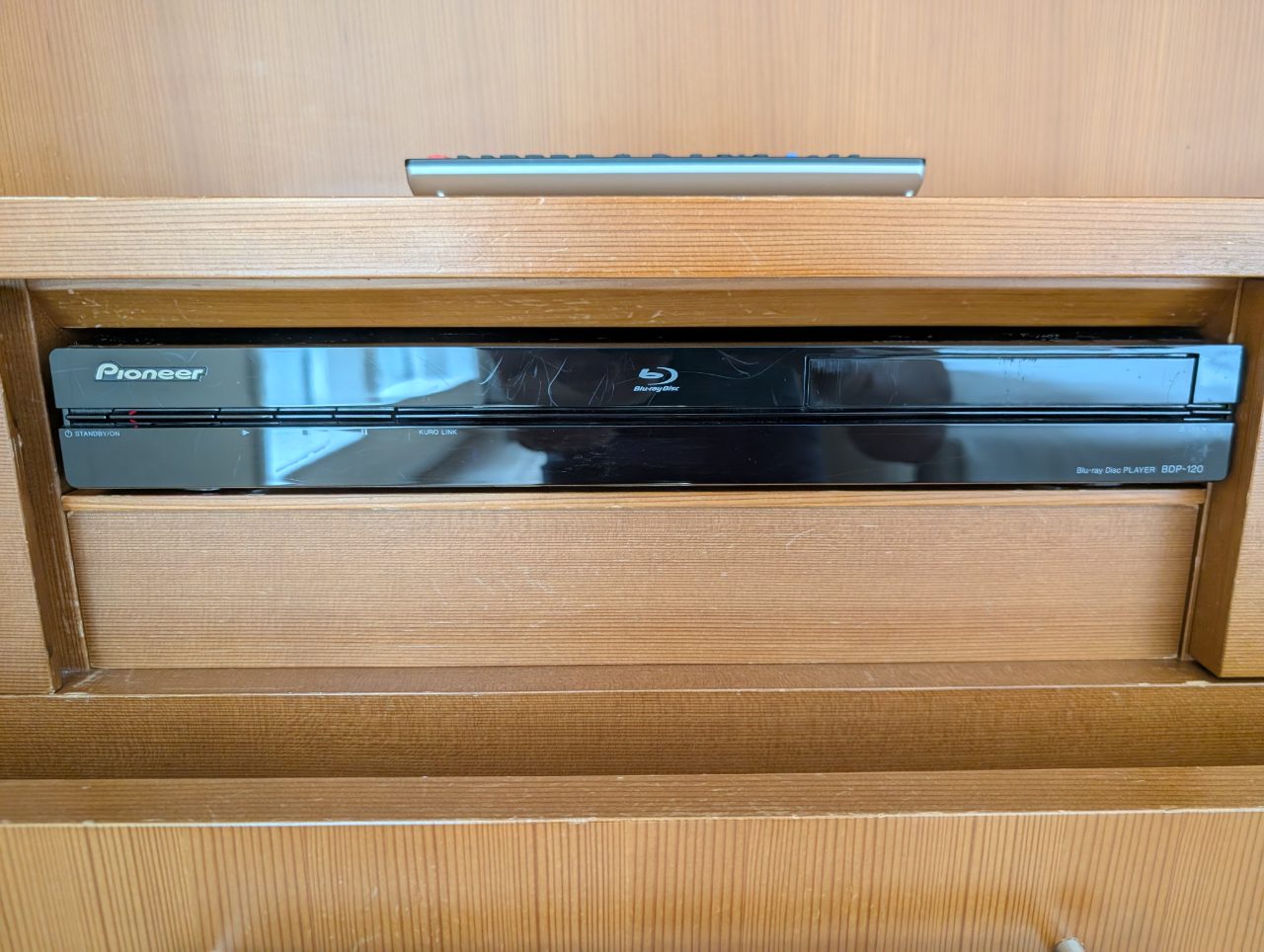
But who needs streaming when you have a Blu-ray player! Yes, a Blu-ray player, winner of the high-definition optical disc format war, and another reminder that Japan loves its obsolete technology. I would assume the hotel has a movie library, though I couldn’t find any mention of this.
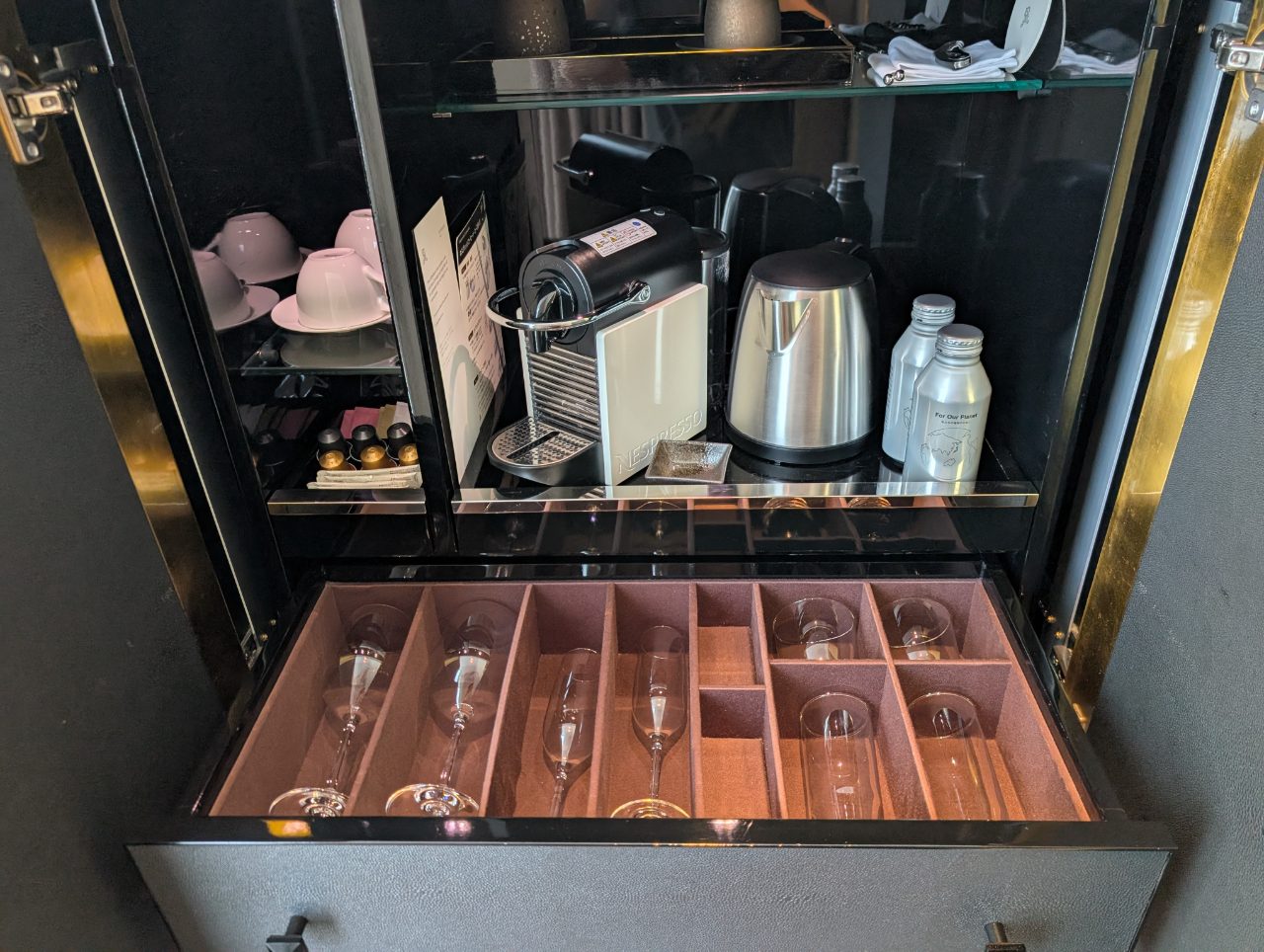
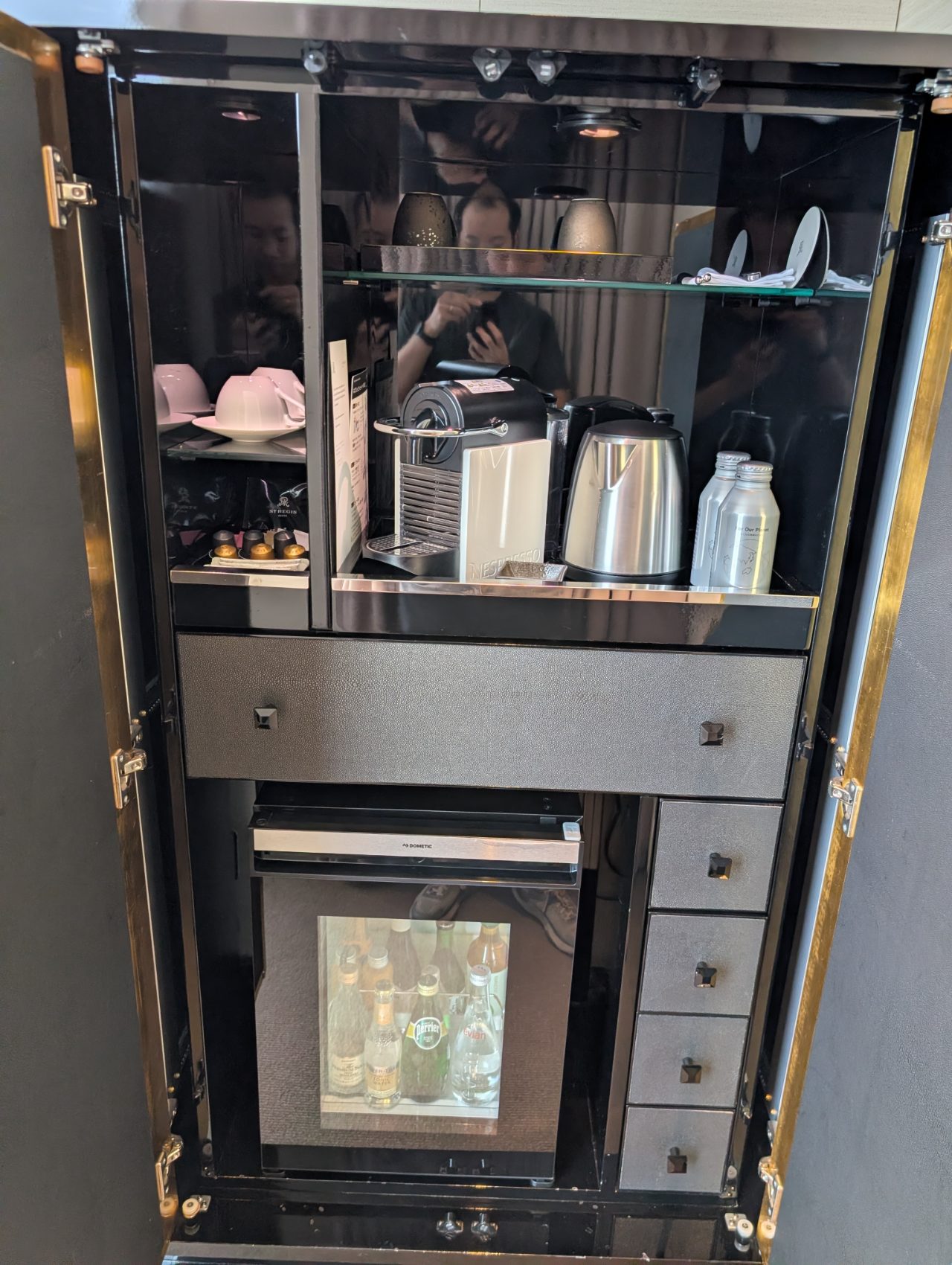
The room’s mini-bar had a Nespresso machine, two aluminium bottles of water, a kettle and assorted stemware.
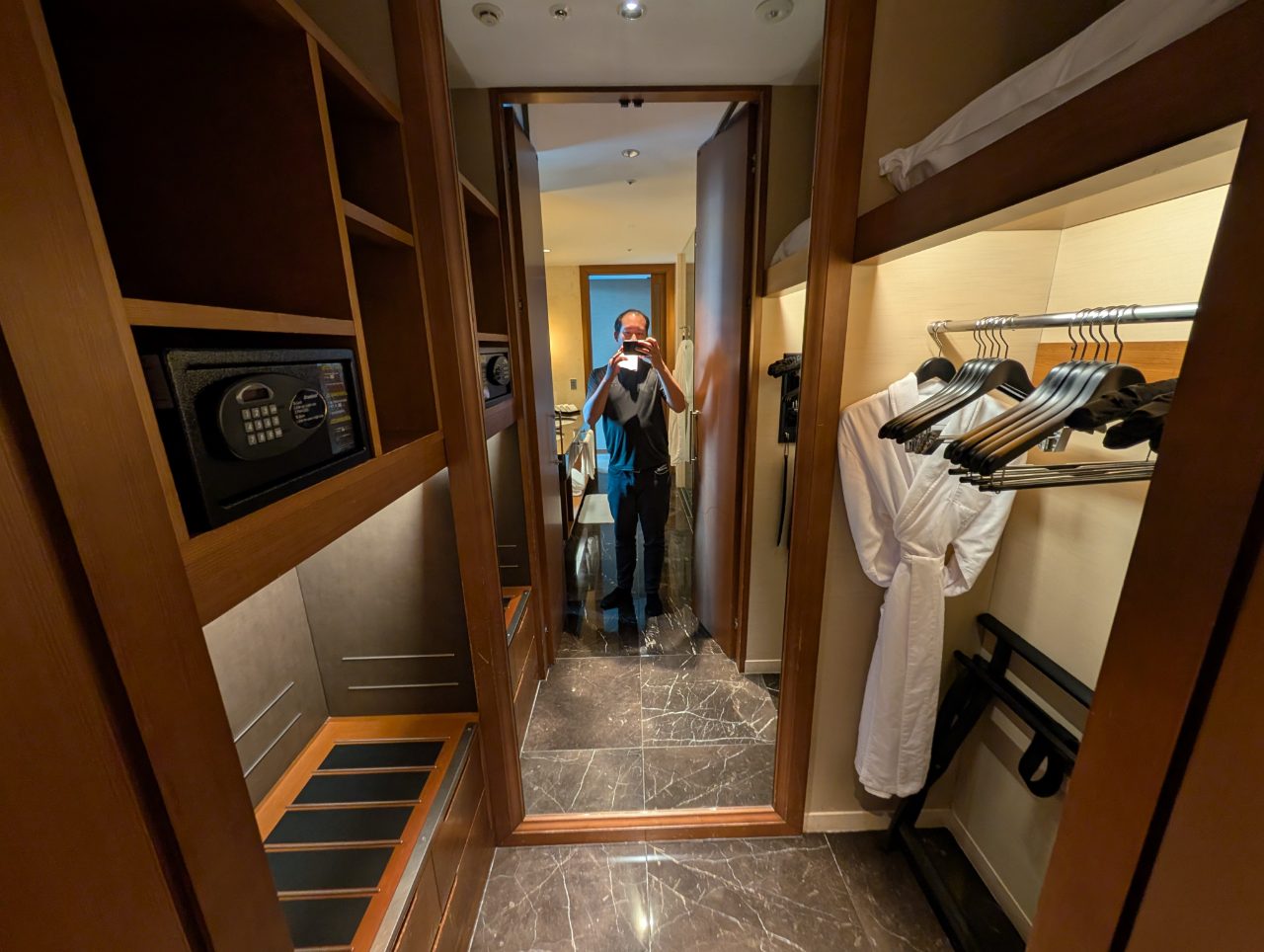
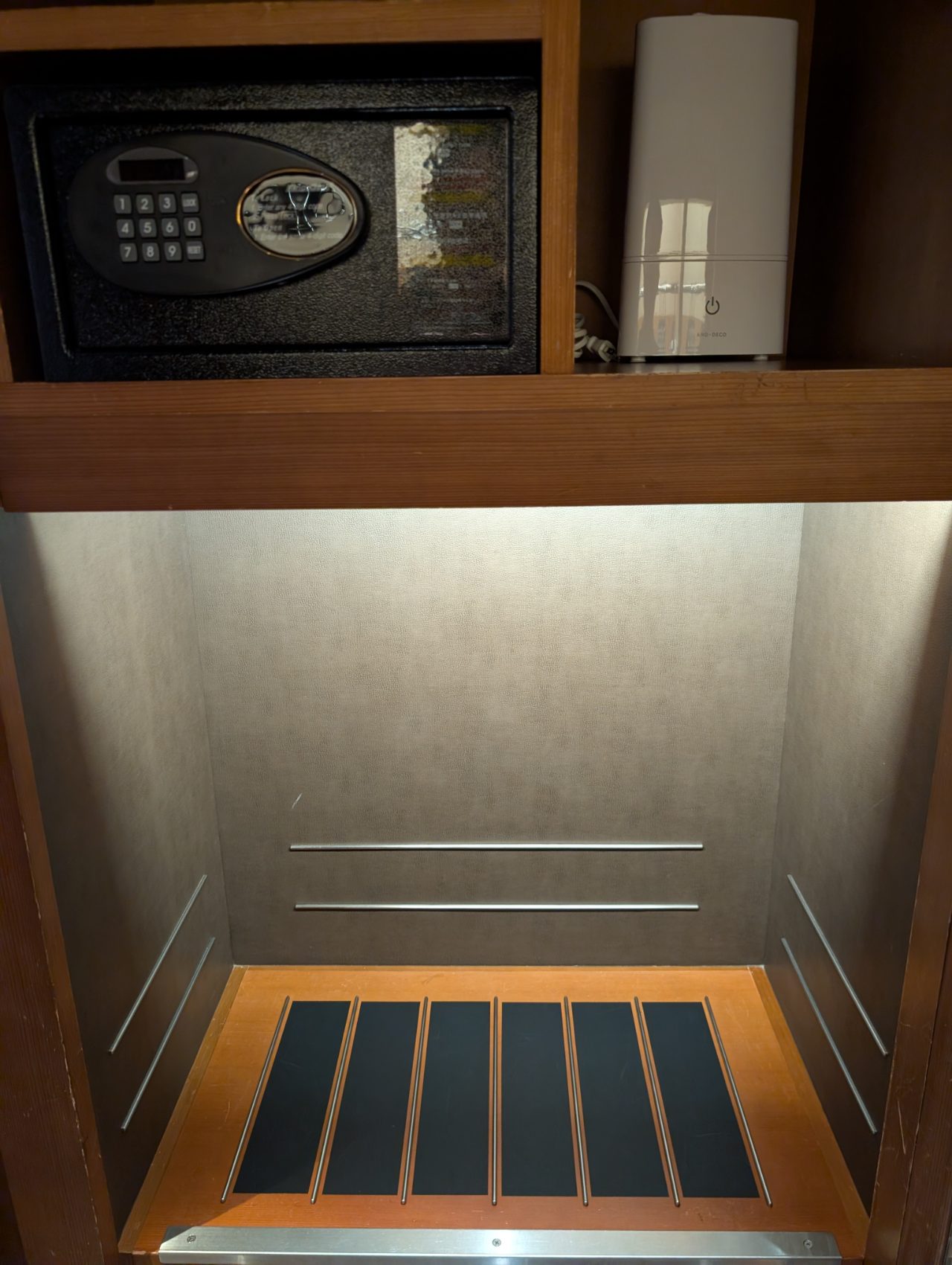
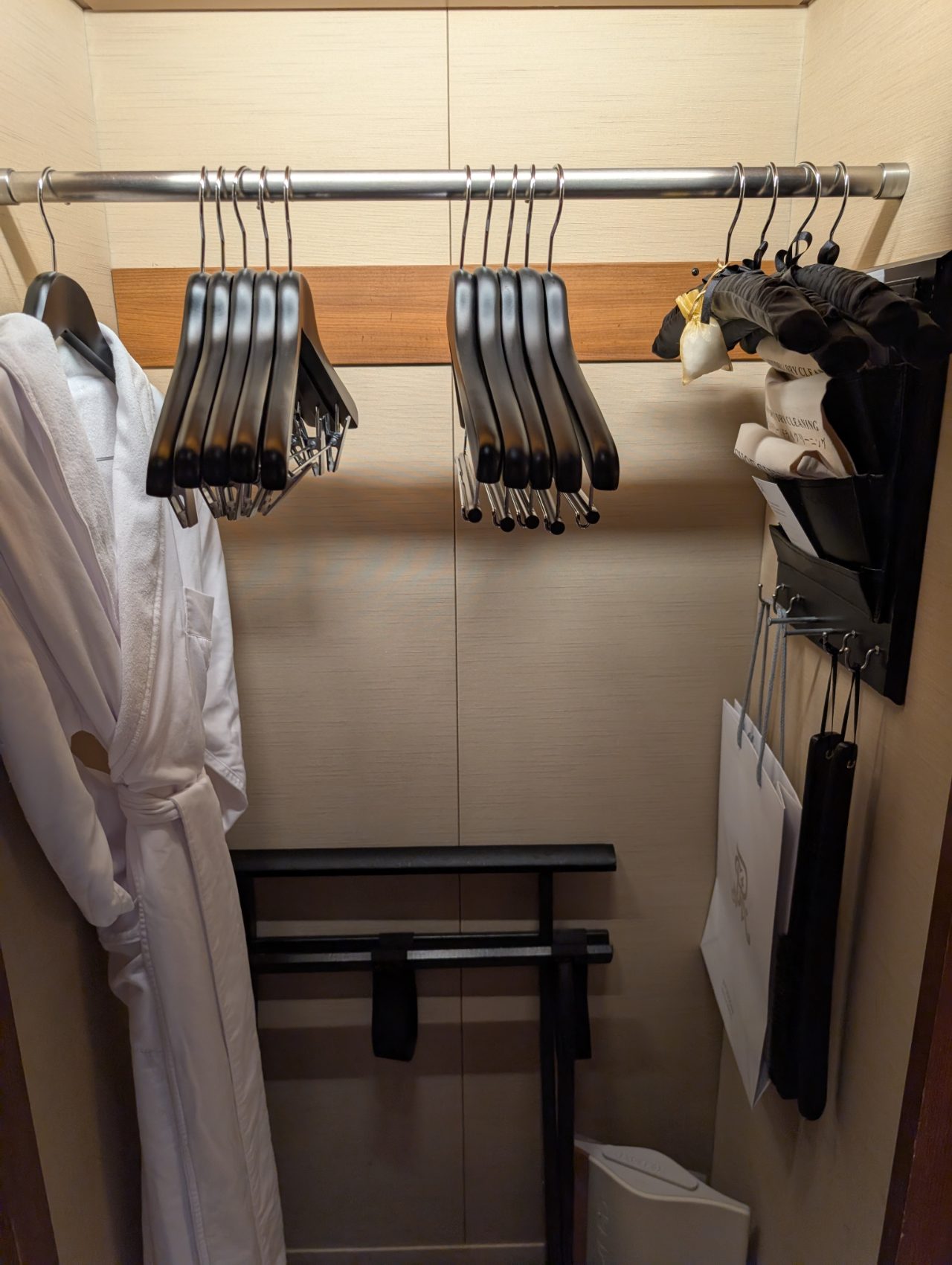
if you’re packing a lot of clothes, you won’t be short of storage space. The room’s walk-in wardrobe offered plenty of hangers, a luggage nook, and a mini-safe. I felt the bathrobes were disappointing though — nowhere as smooth as the Boca Terry ones I’ve had at the Waldorf.
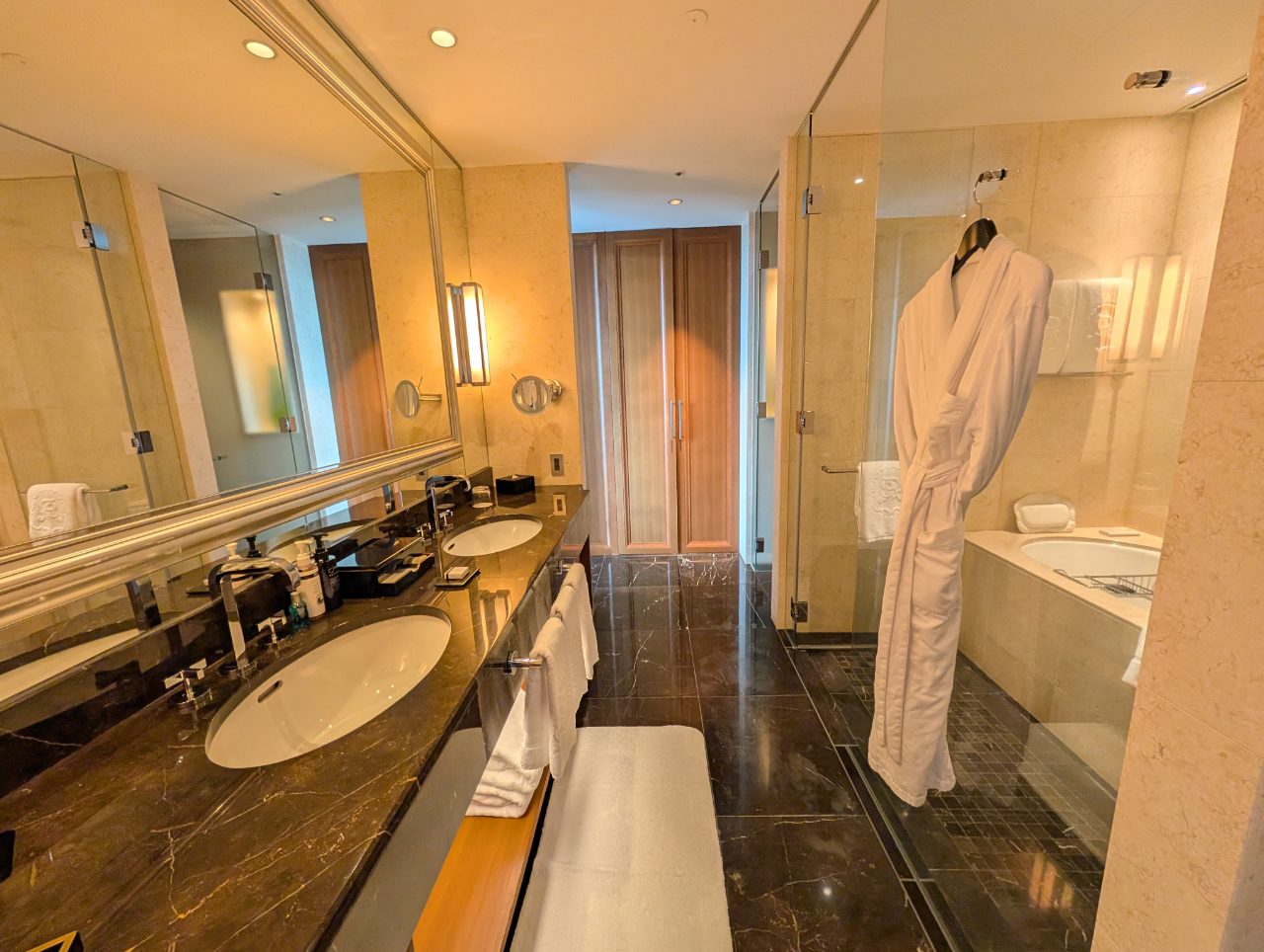
The bathroom, clad in French marble, could be accessed from either side. It had his-and-hers sinks and plenty of vanity space.
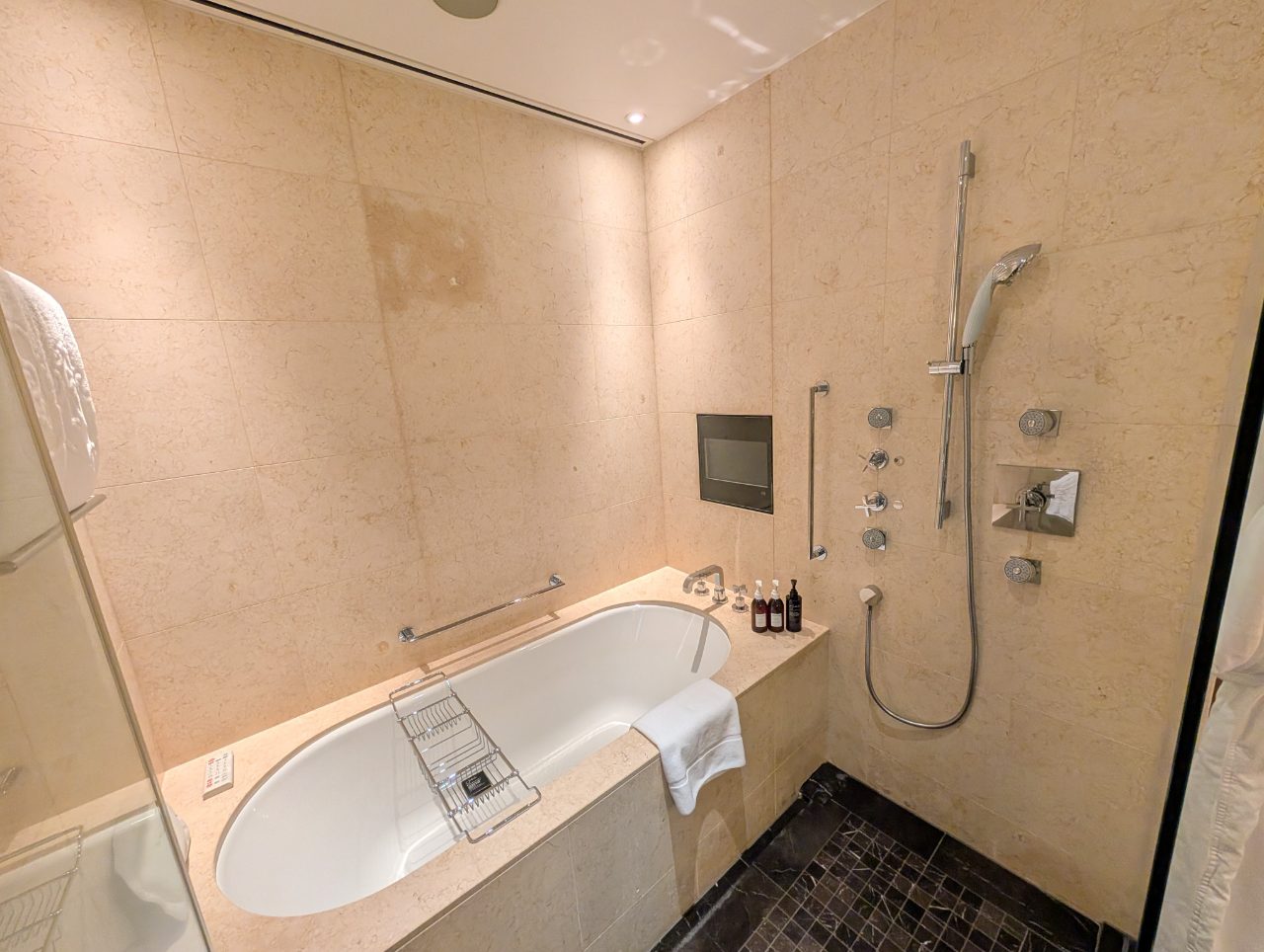
The tub and shower were in a combined wet area. Surprisingly, there was no rain shower option, just a hand shower and wall-mounted body jets. A TV was built into the wall, though the picture quality was grainy and you’re limited to whatever channels the hotel has subscribed to.
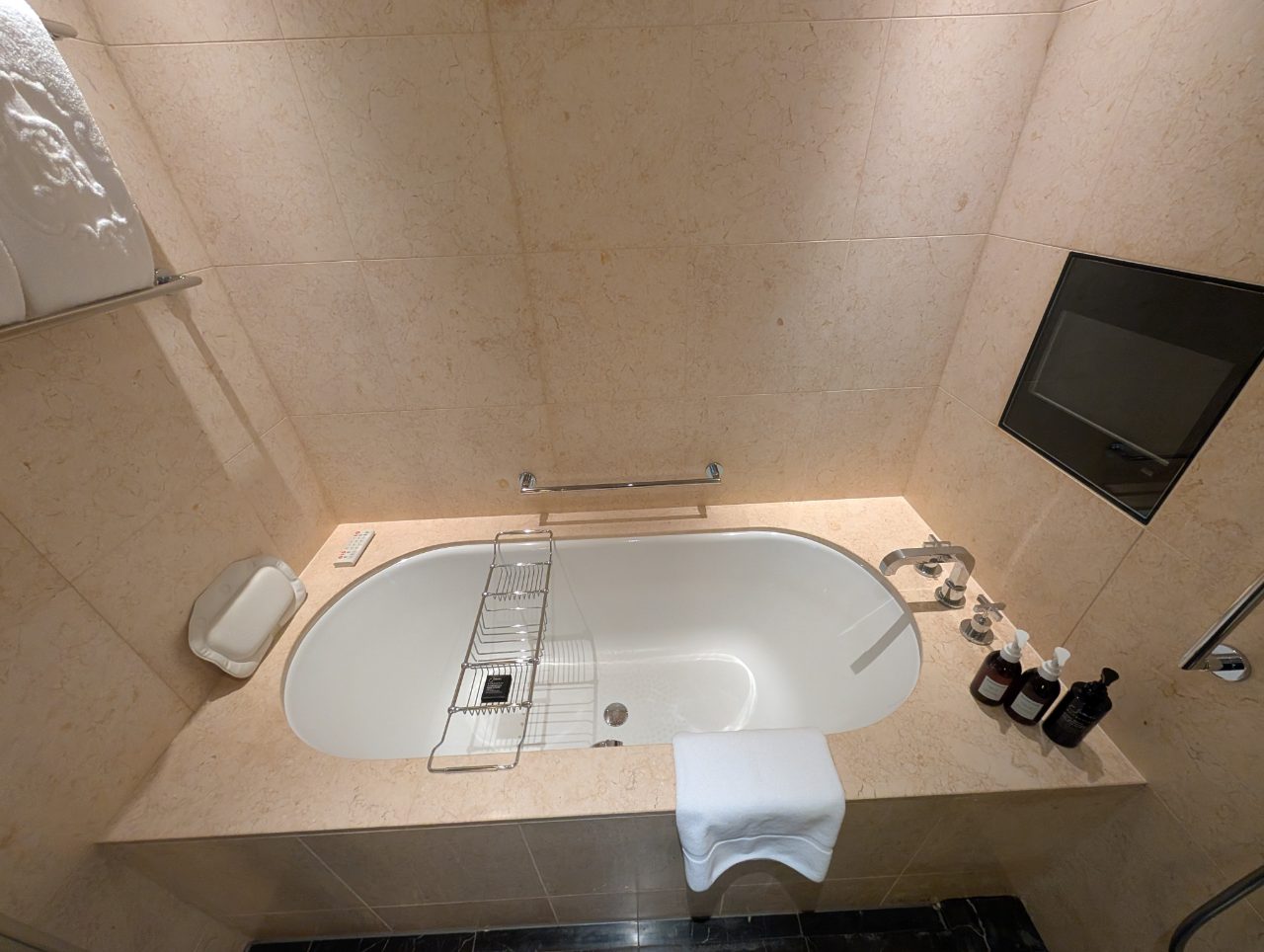
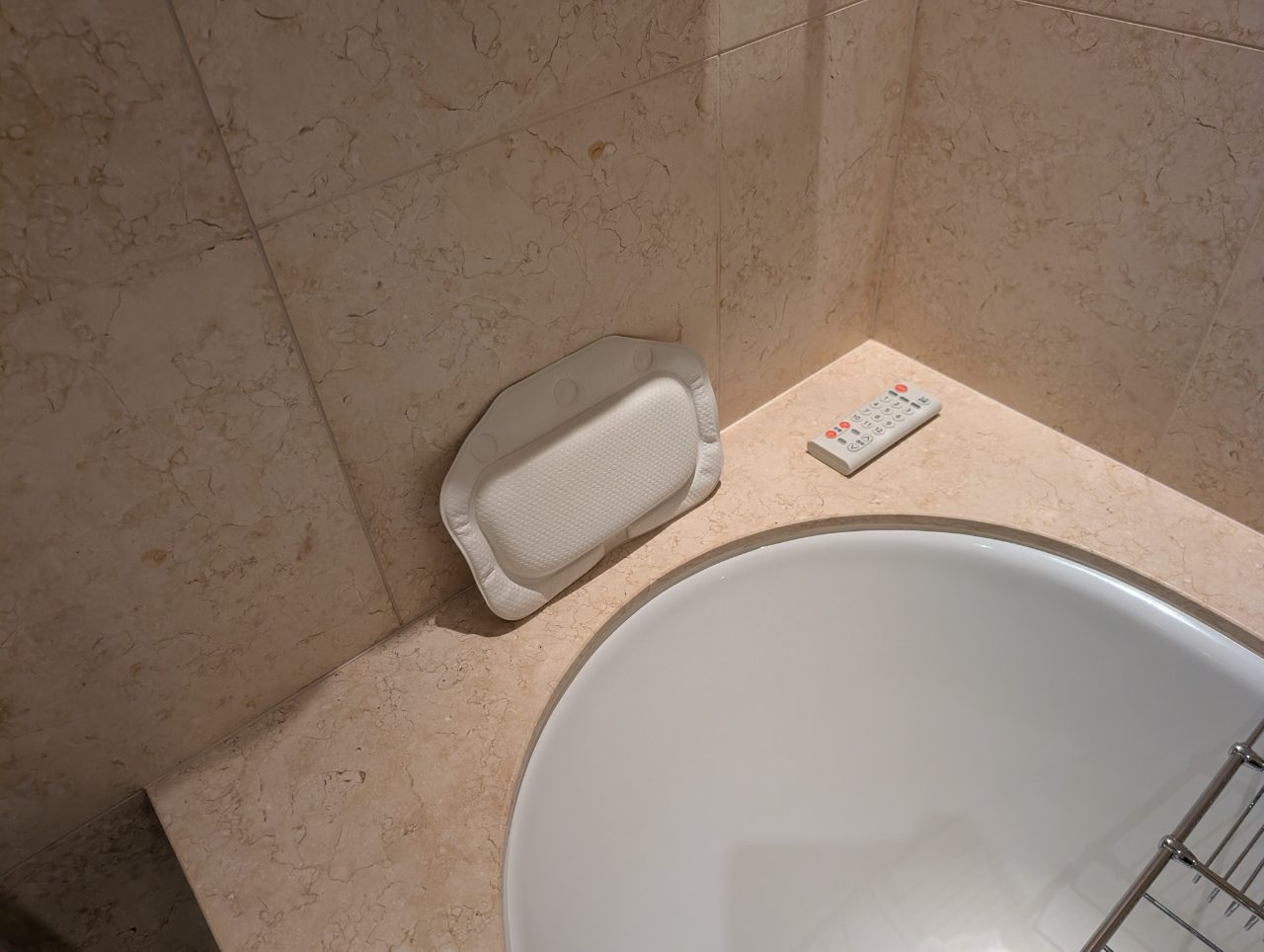
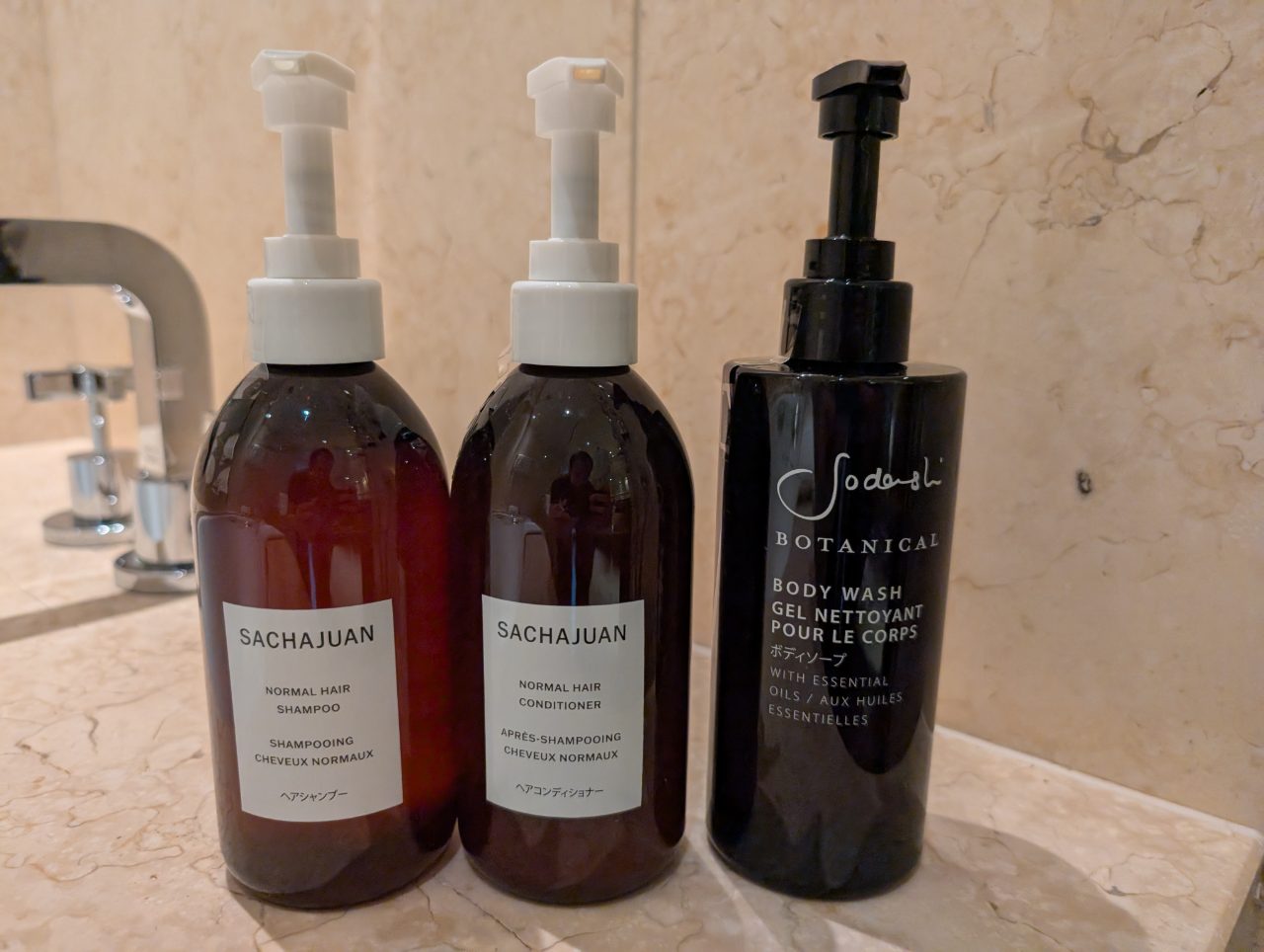
Sachajuan bath amenities are now the brand standard at St. Regis (Laboratorie Remede was phased out during COVID), and were provided in bulk-sized bottles.
St. Regis Osaka: Gym
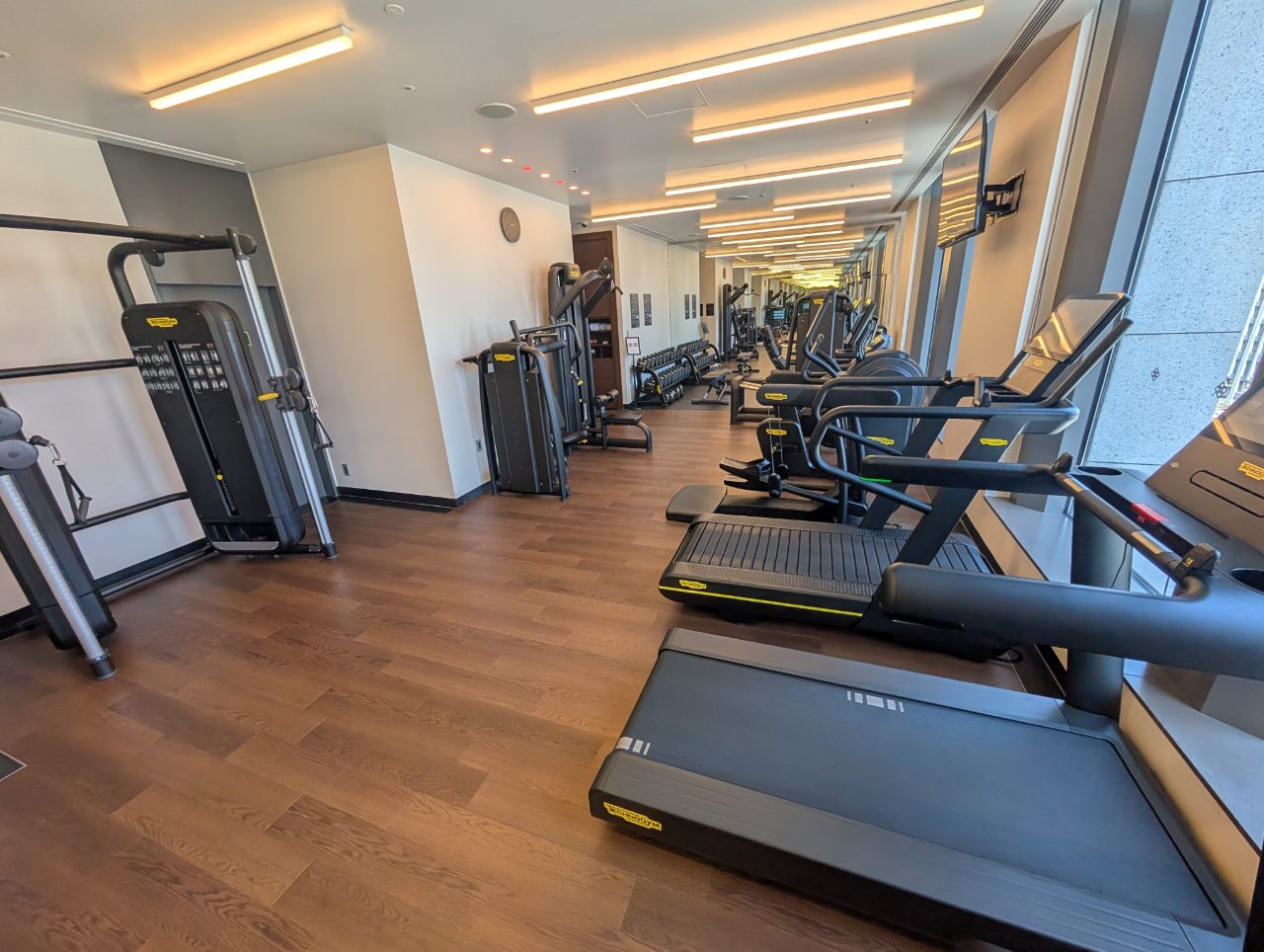
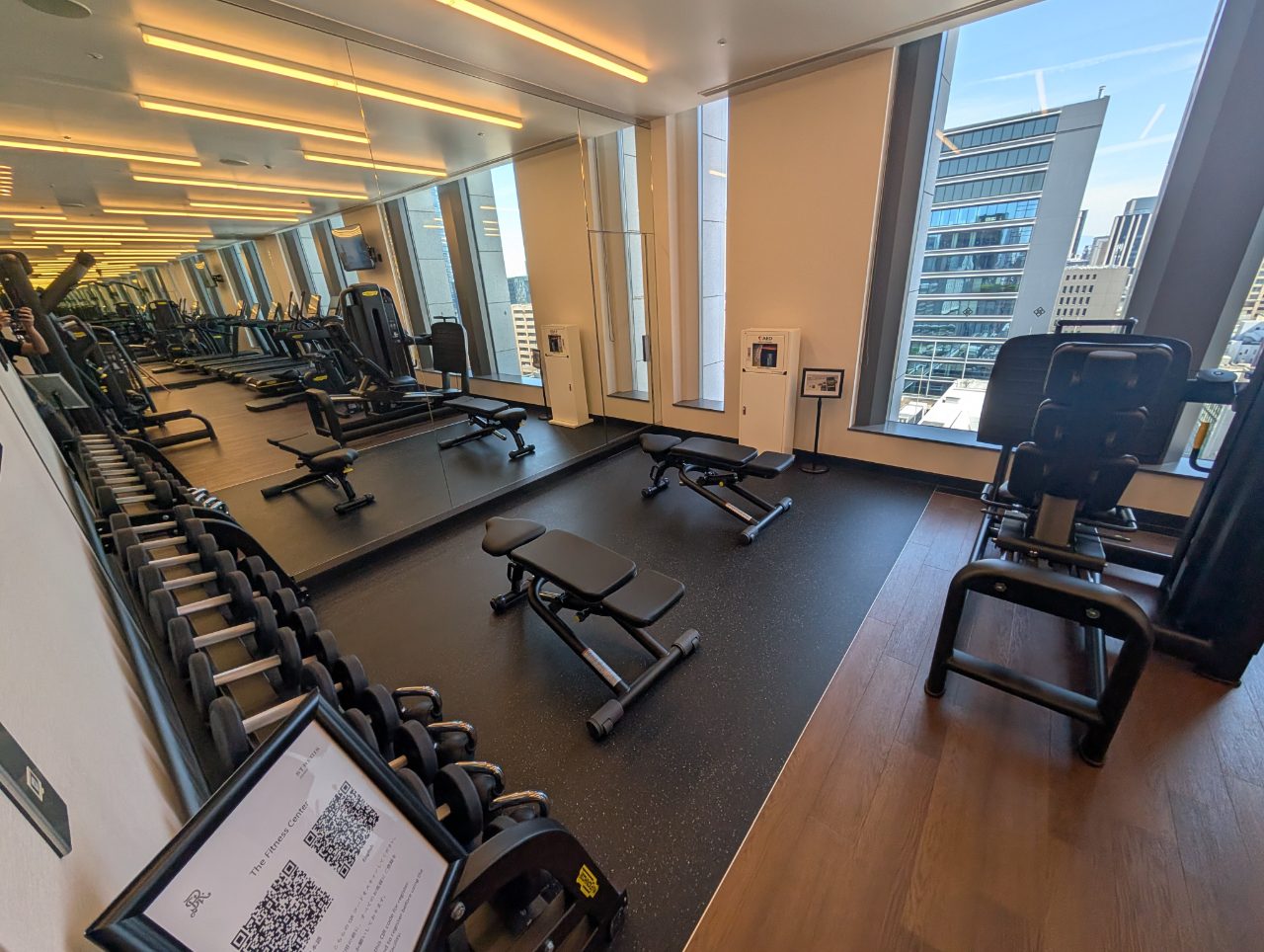
The St. Regis Osaka has a 24-hour fitness centre on the 14th floor.
It’s a relatively compact space, but manages to cram in most of the essentials such as cardio and resistance machines, together with a weights area. The equipment felt very new, and must have been replaced sometime in the past year or so.
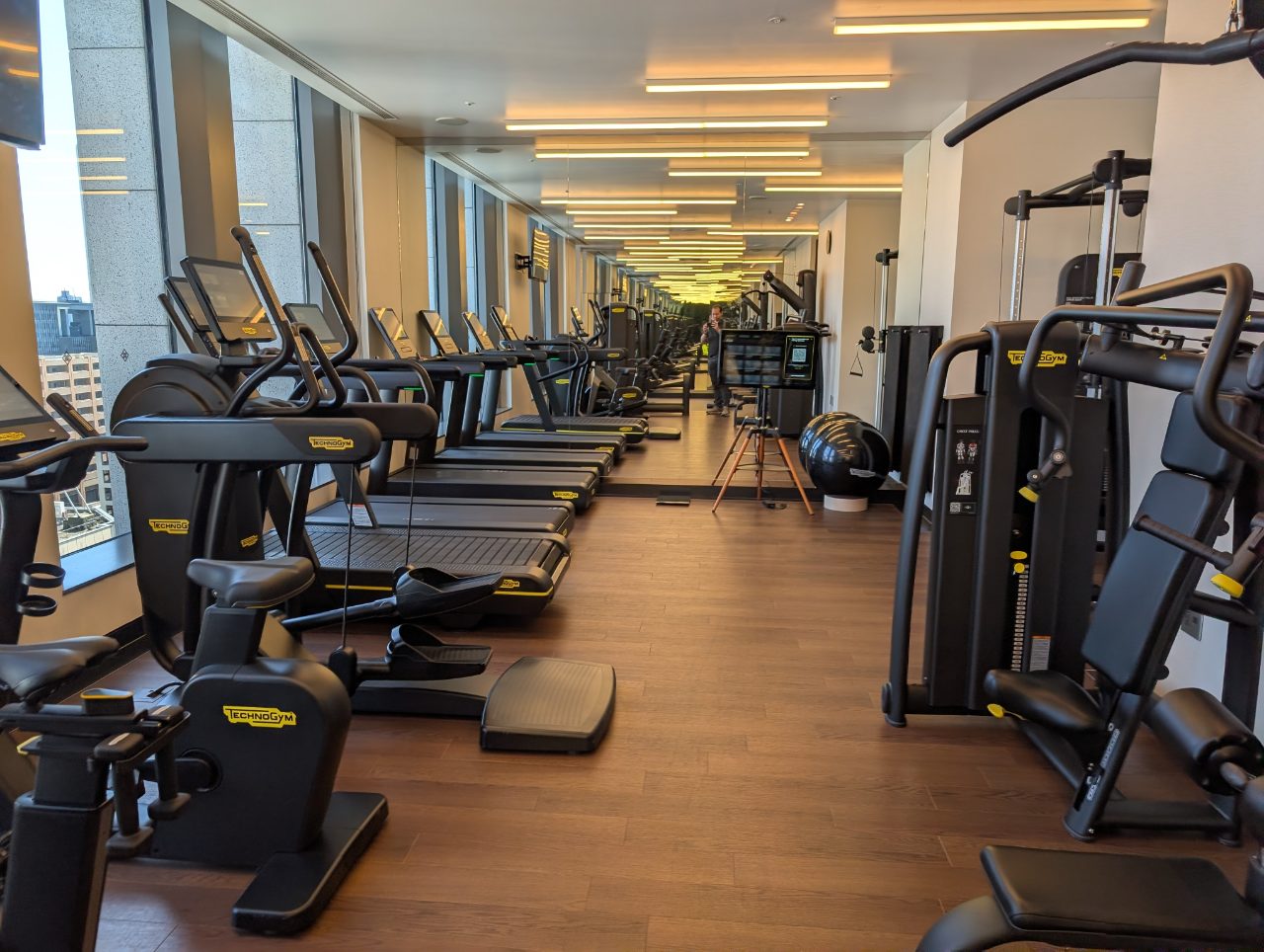
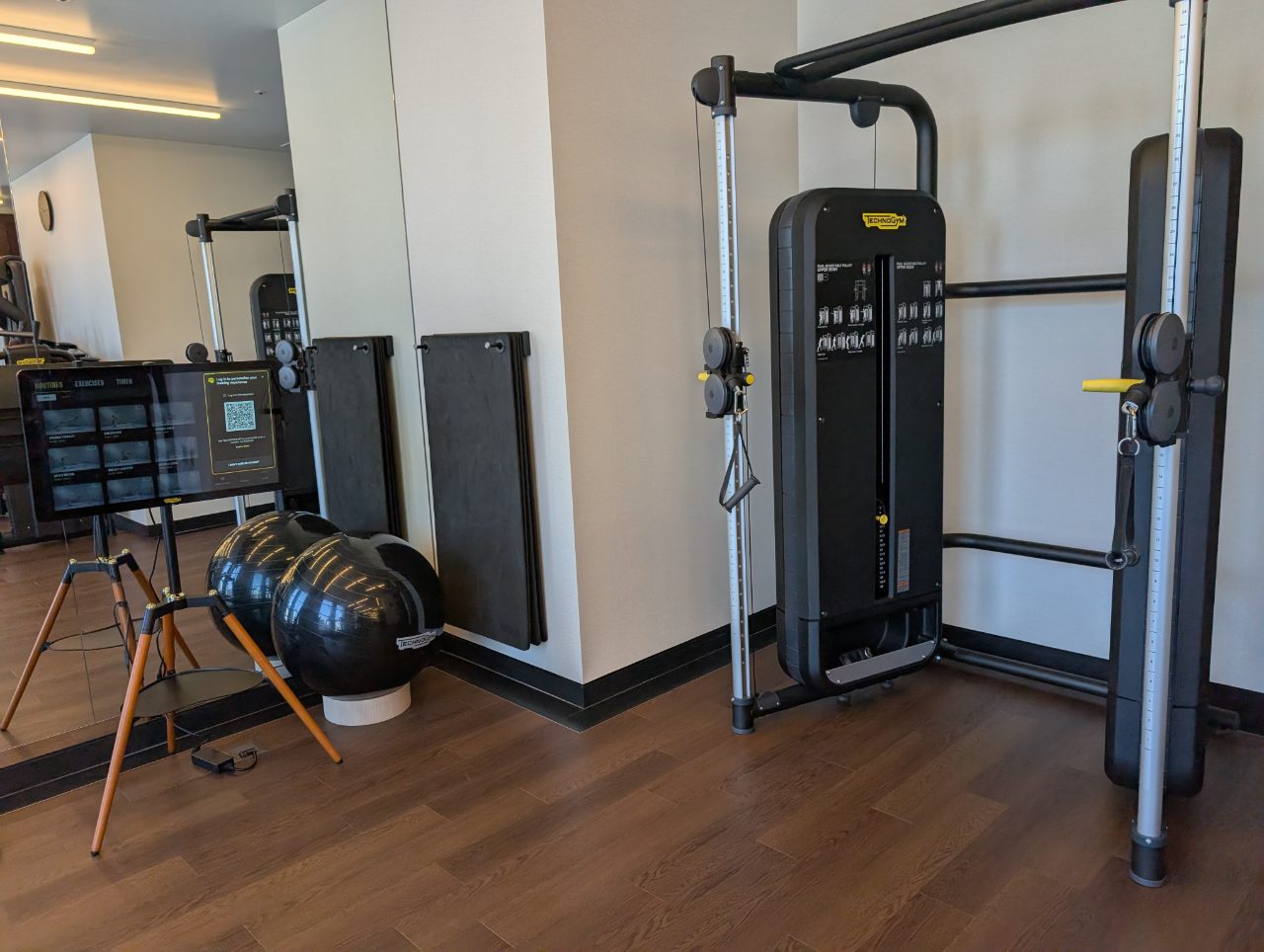
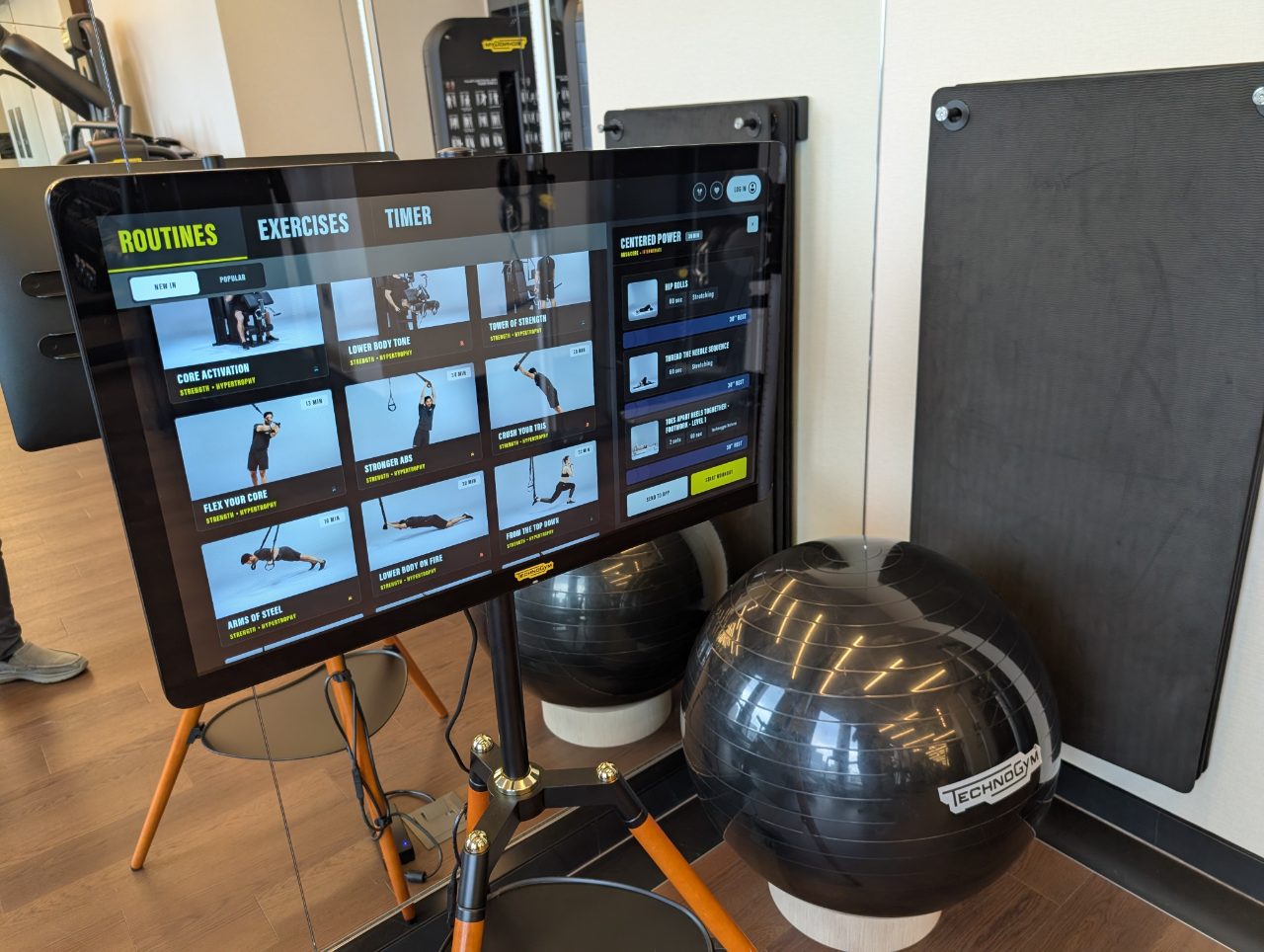
There was even a Technogym interactive training console, which displayed guided workouts.
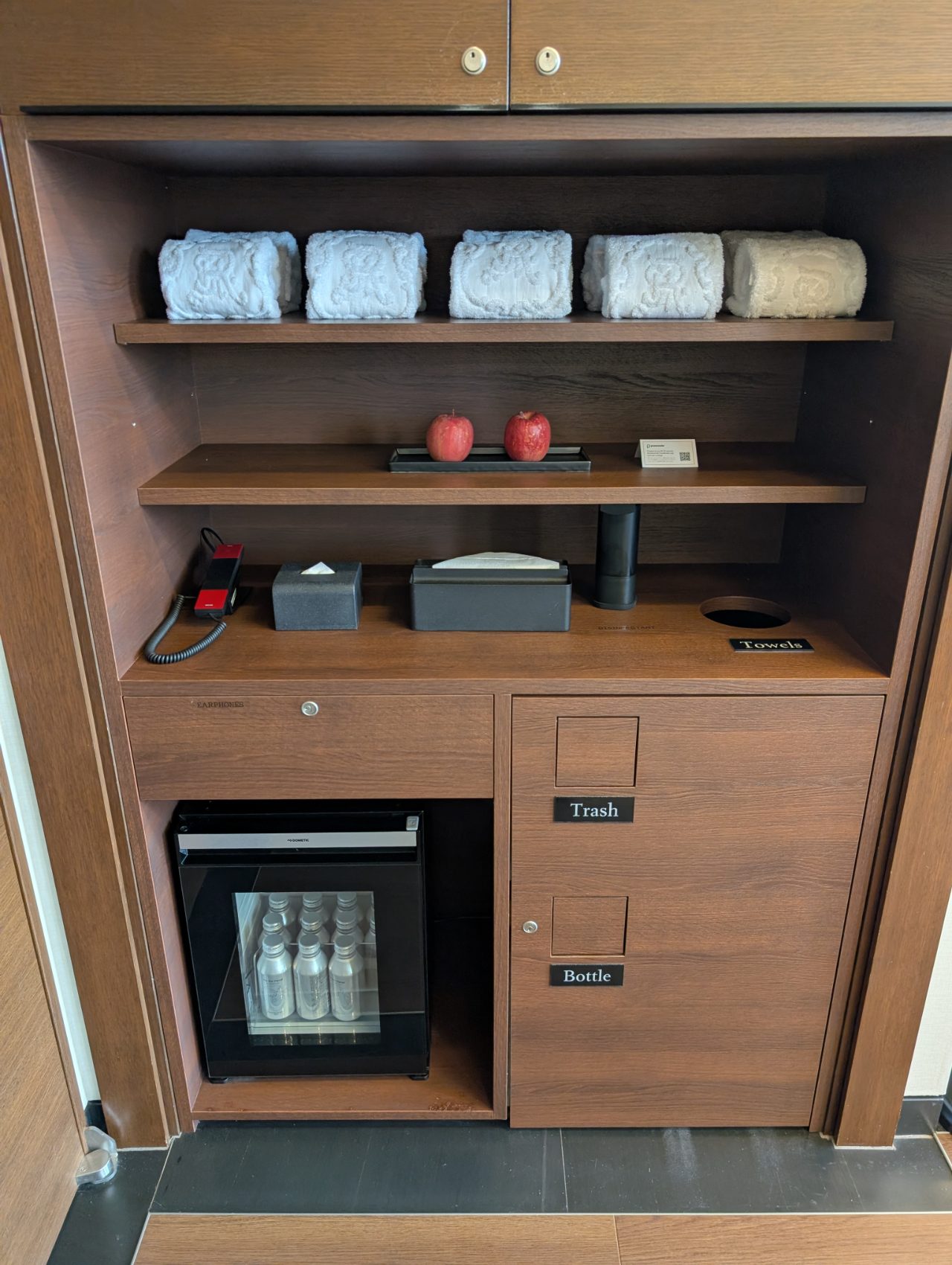
Towels and aluminium water bottles were provided. Unfortunately, the gym doesn’t have space for a toilet or changing room, so you’ll need to do that in your room before coming.
St. Regis Osaka: Spa
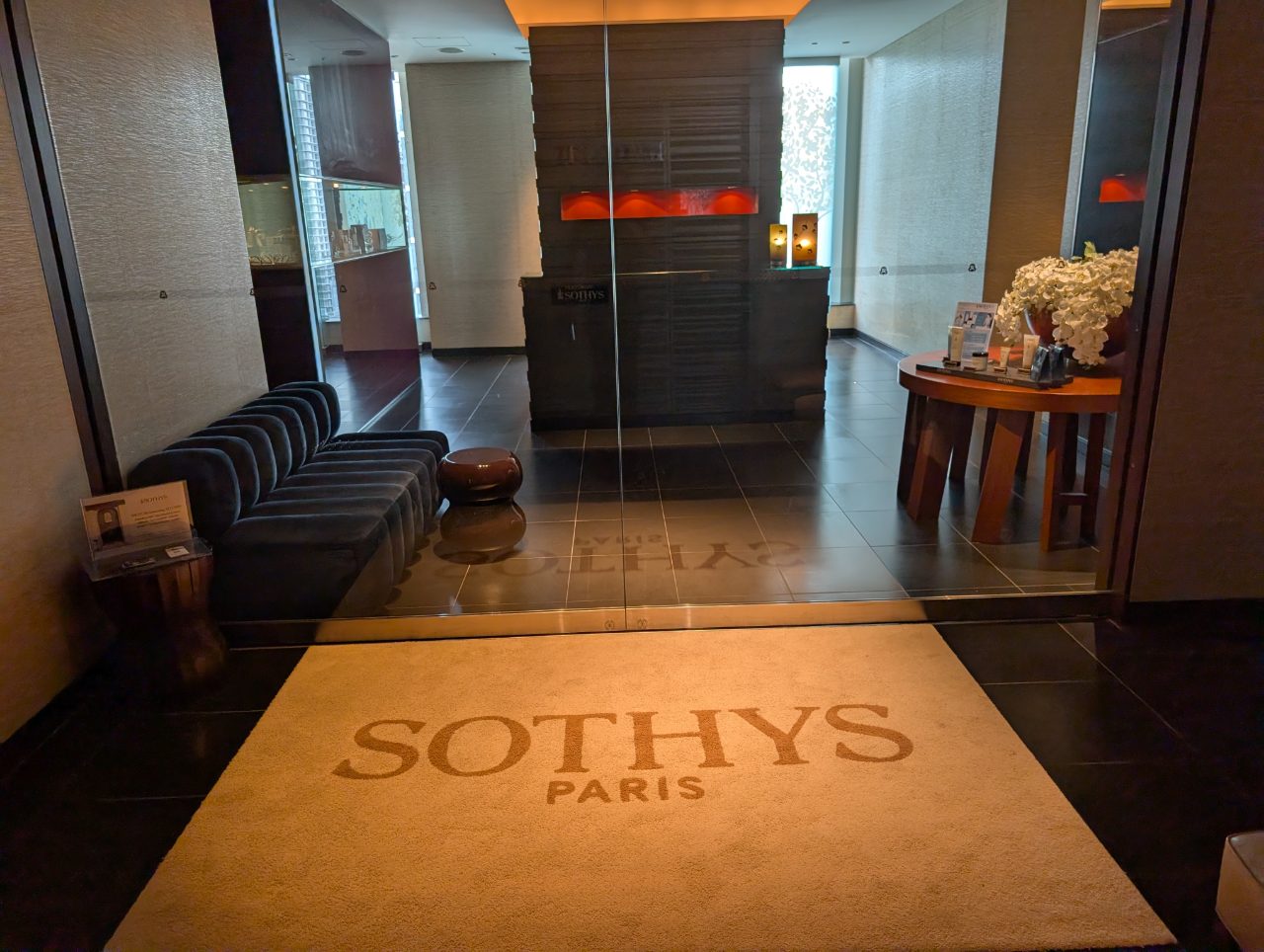
The St. Regis Osaka has an Iridium spa on the 14th floor. However, it’s a tiny facility at just 355 square metres, and consists of just treatment rooms, with no whirlpool, sauna or steam room.
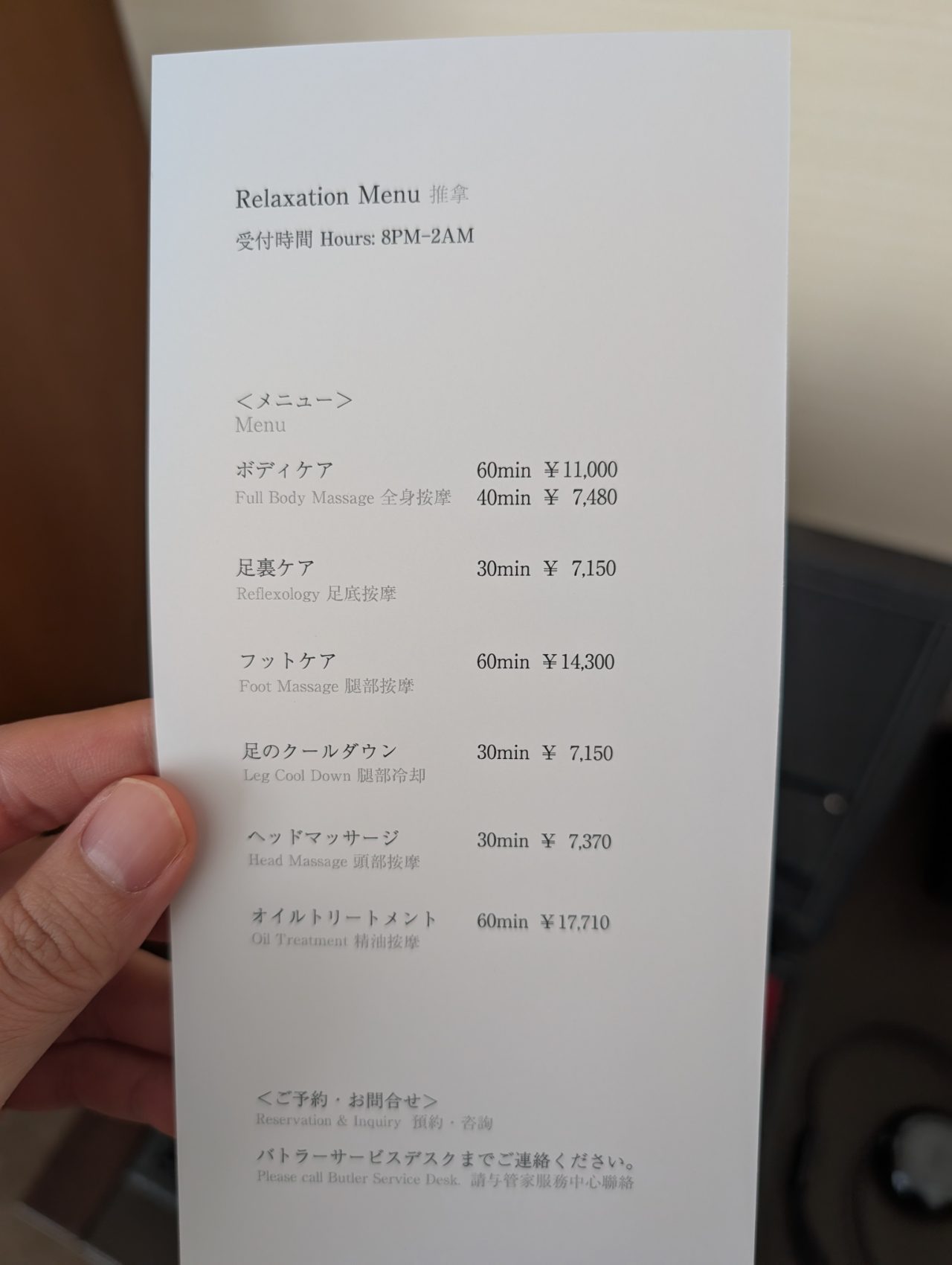
I didn’t visit the spa, but I did spot this menu in my room. It looked a little weird to me — treatments only from 8 p.m to 2 a.m, really? — and I couldn’t make sense of why a 60-minute foot massage would cost more than a 60-minute body treatment.
St. Regis Osaka: Breakfast
Breakfast is served from 6.30 a.m to 10.30 a.m daily, and costs 6,000 JPY per adult, or 3,000 JPY per child (aged 4-12). As usual, it’s complimentary for Marriott Bonvoy Platinum, Titanium and Ambassador members, for up to two adults per room.
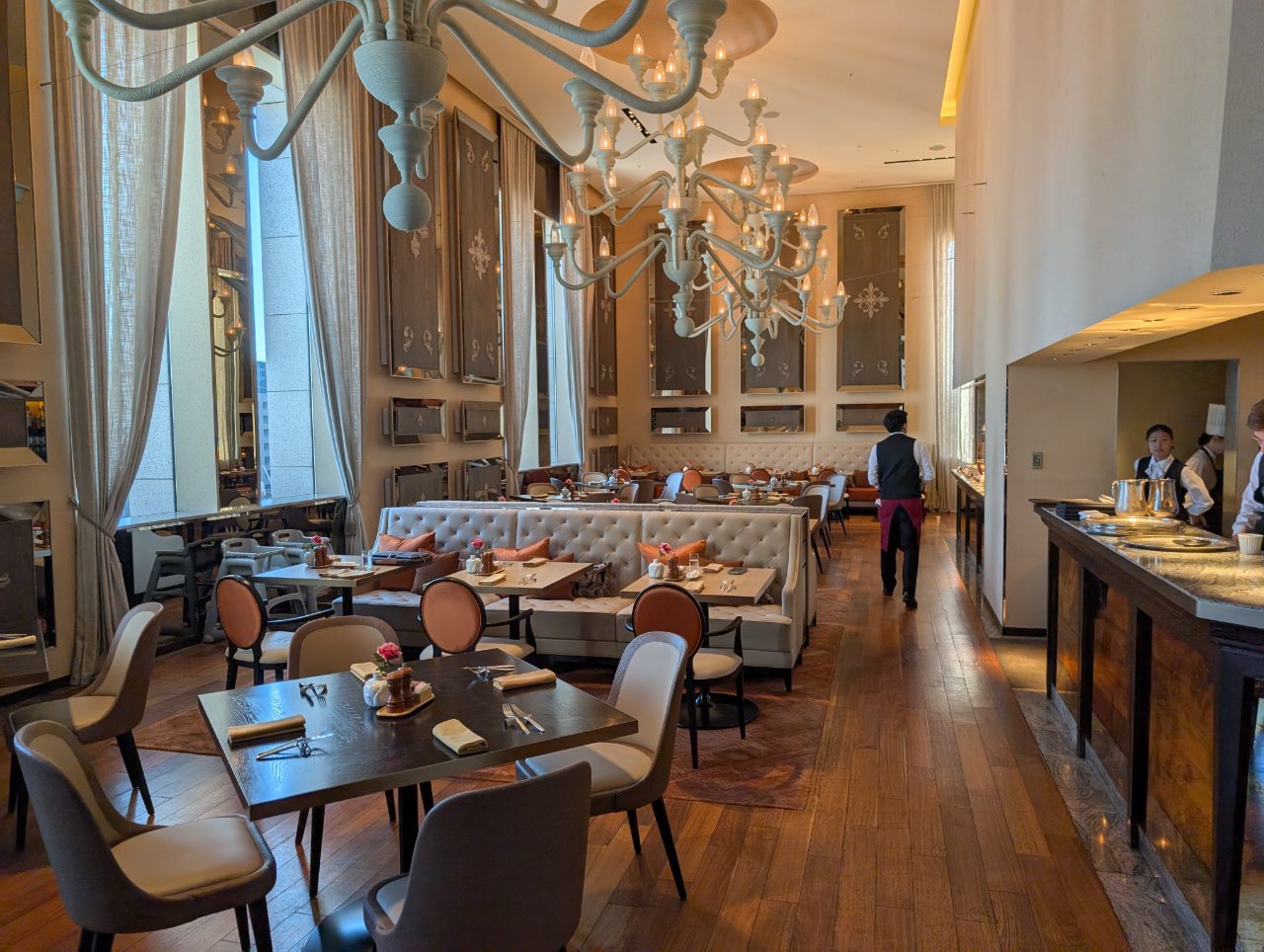
The spread is served across the St. Regis Bar and La Veduta, with the former acting as an overflow area during peak periods.
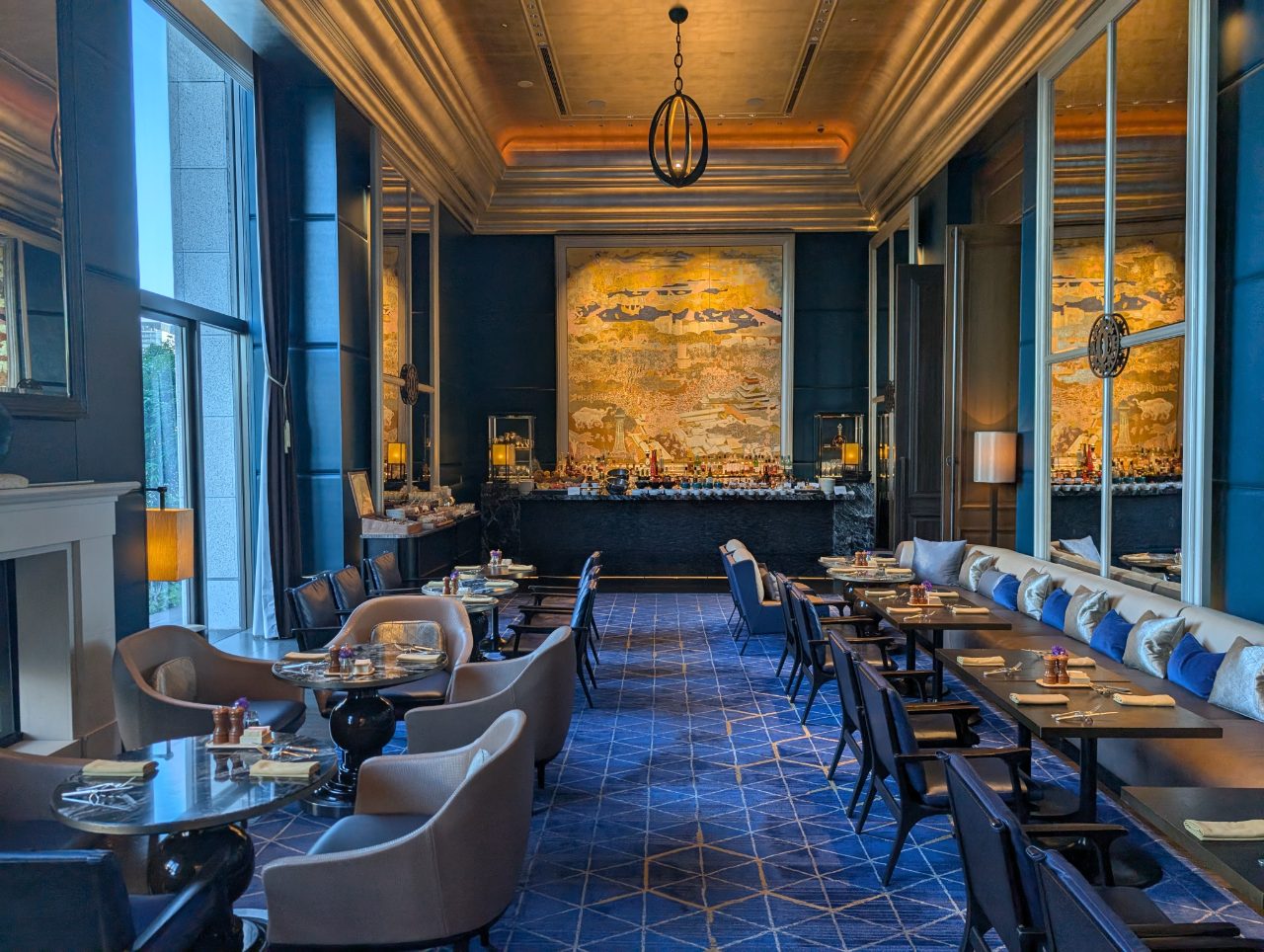
The St. Regis Bar is where most of the cold options are found, such as cereals, yoghurt, fruits, salads, cold cuts and cheese.
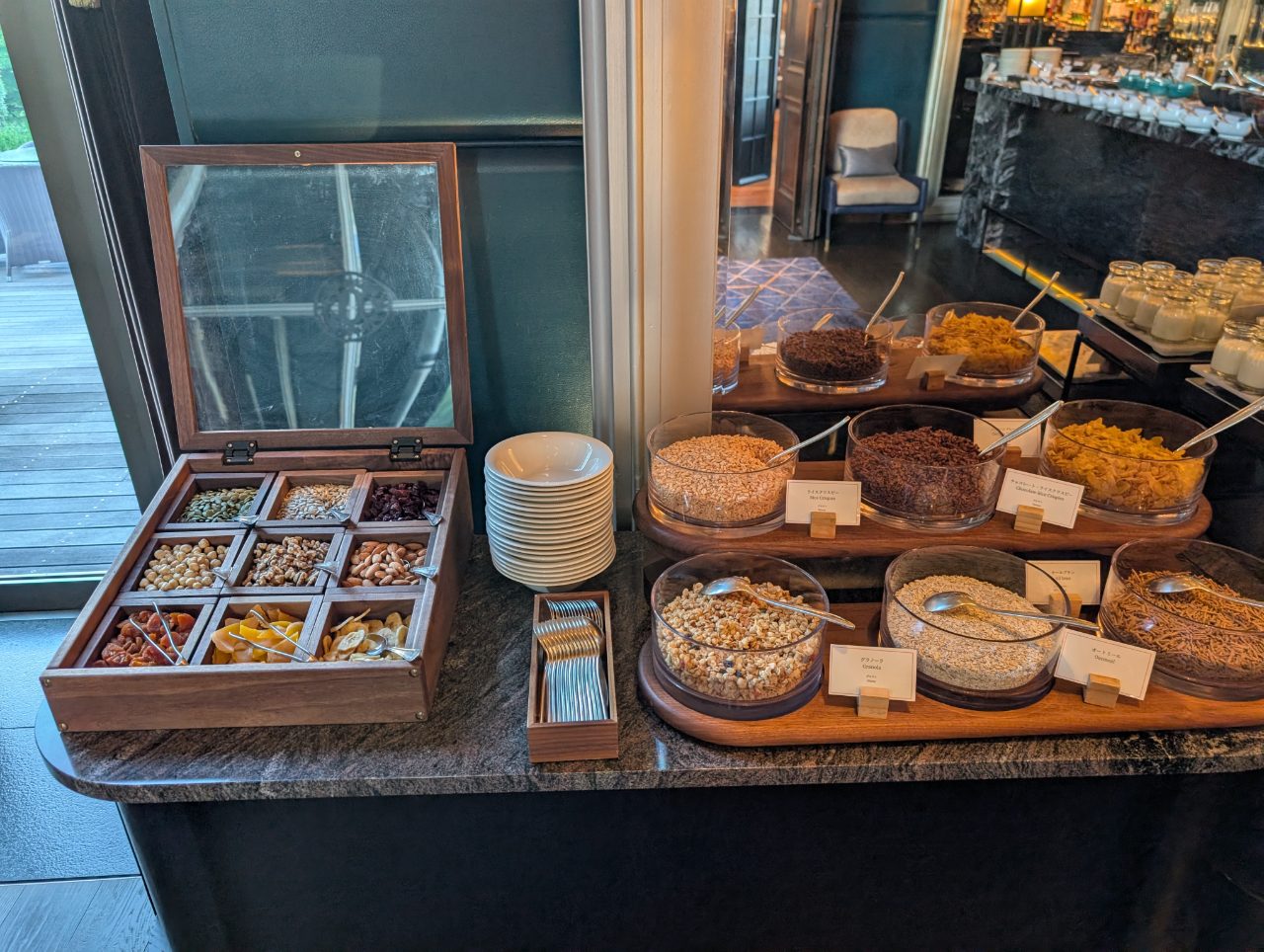
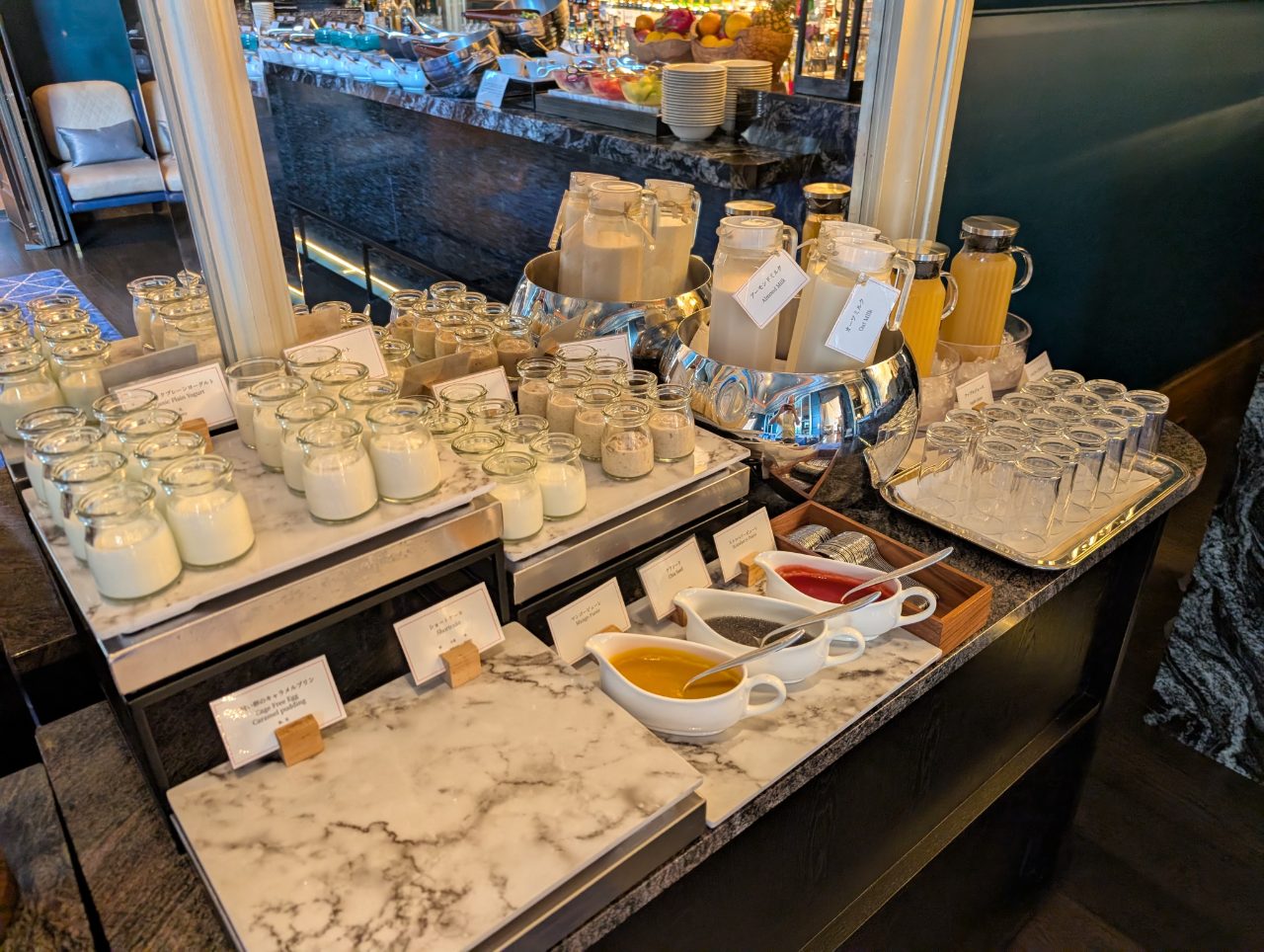
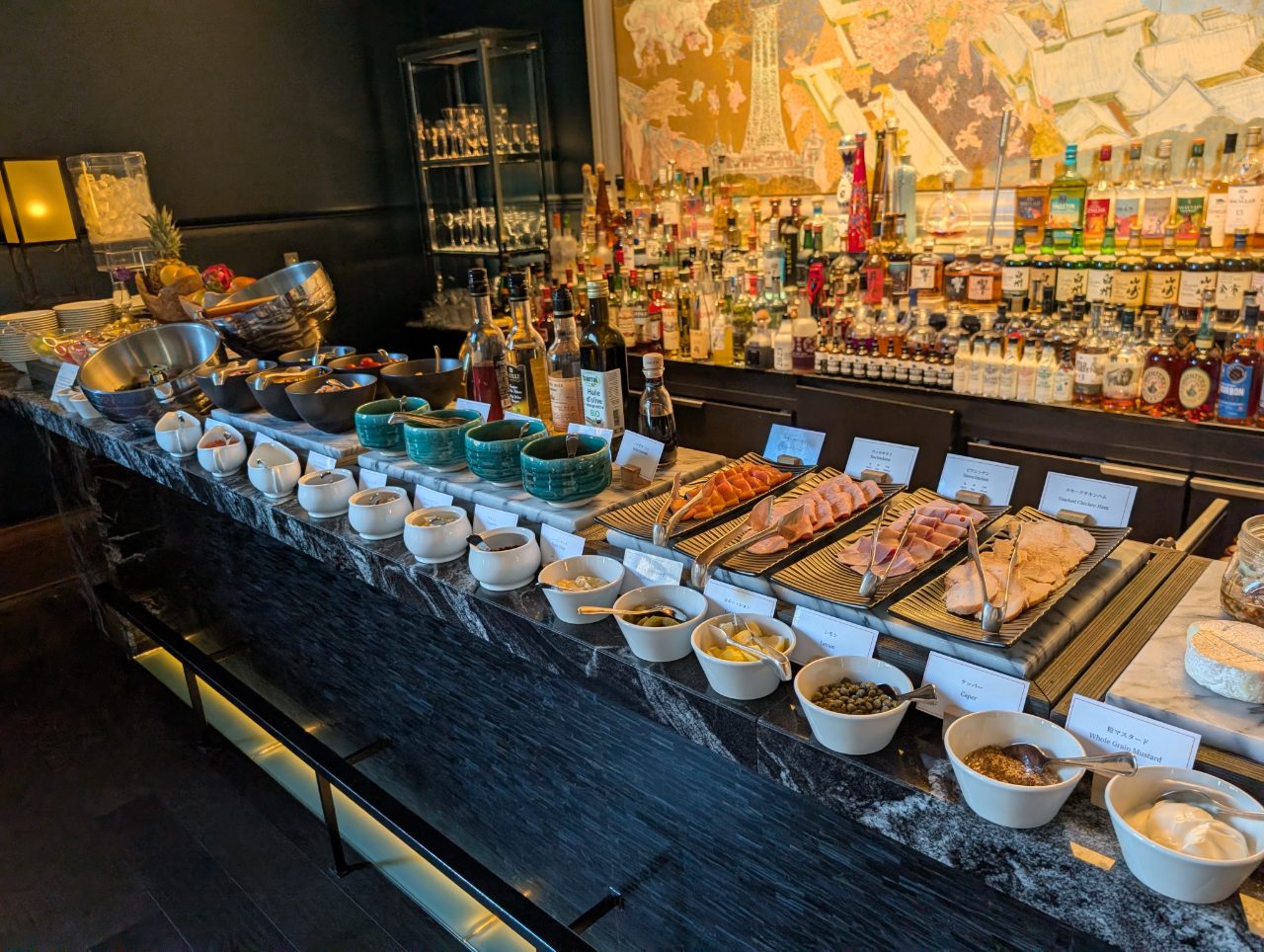
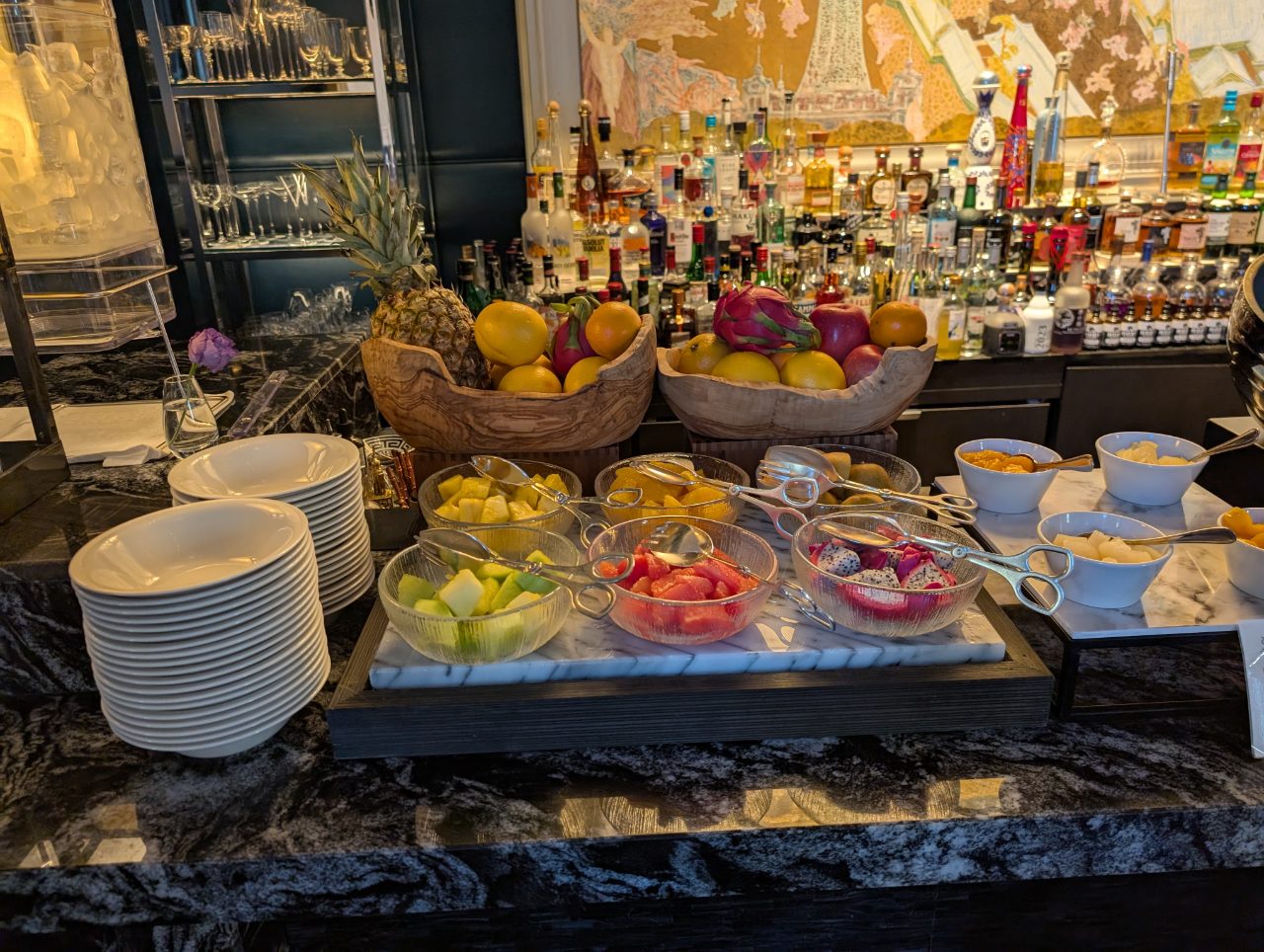
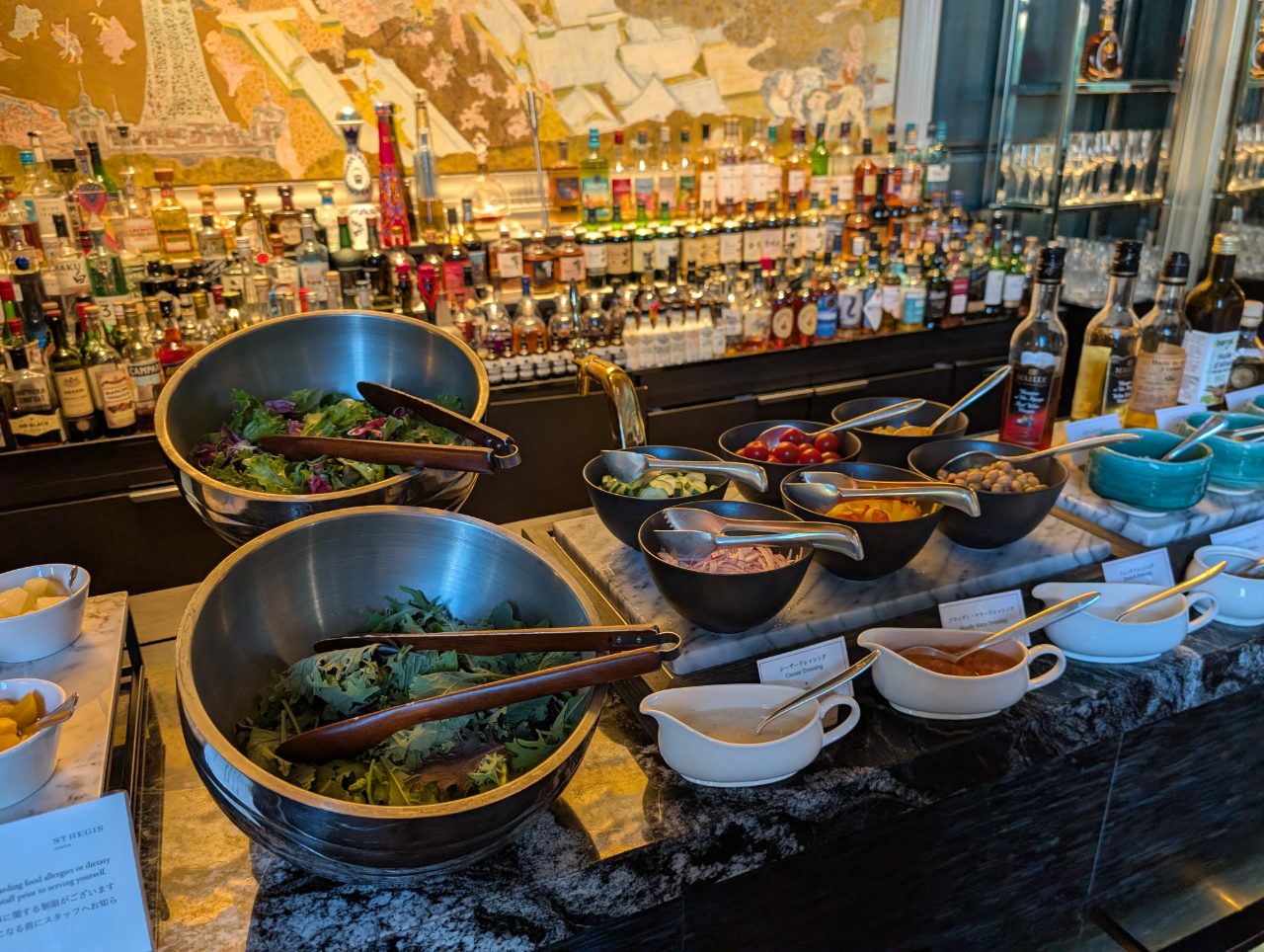
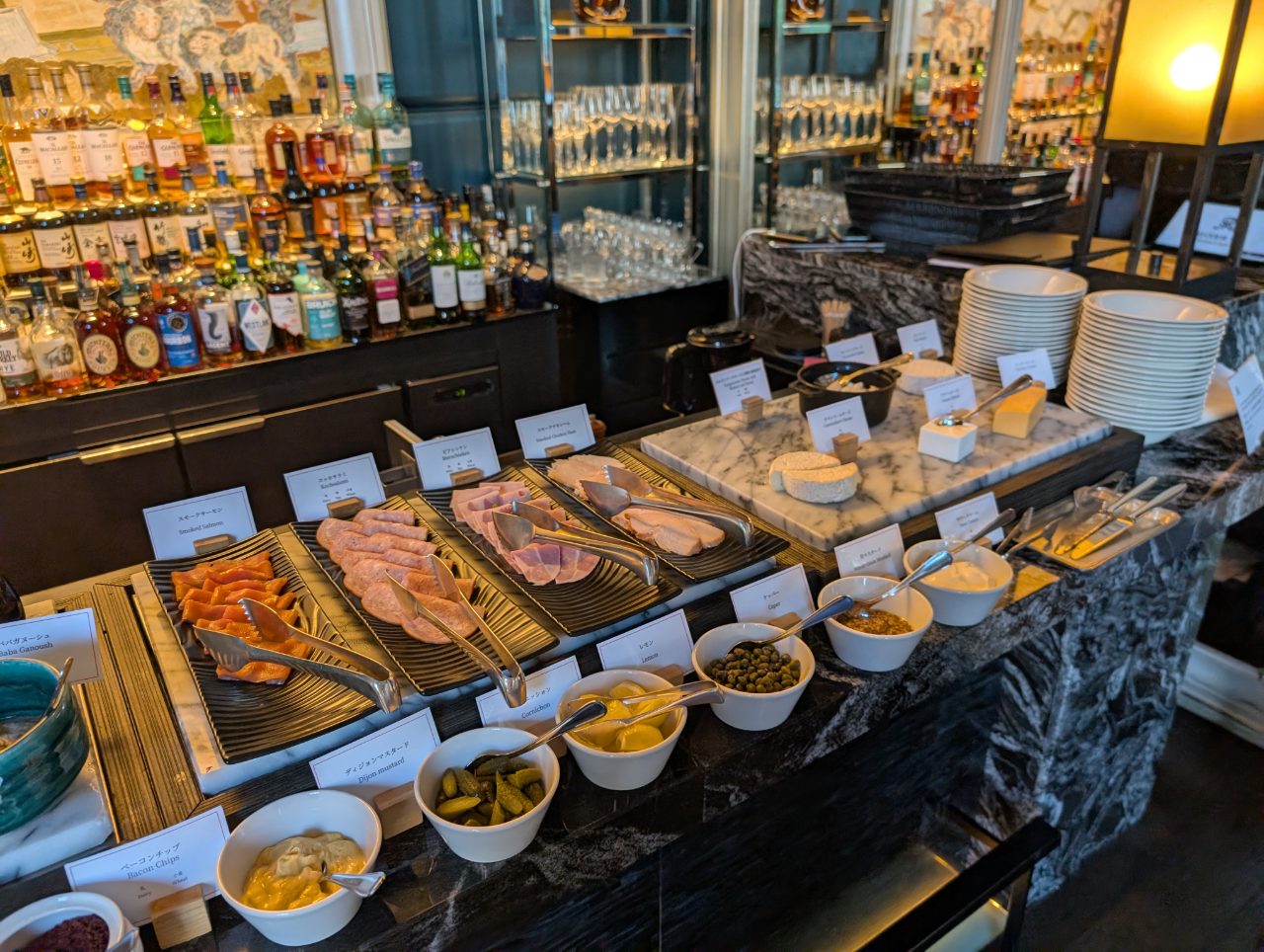
Over in La Veduta, there was a delicious assortment of house-made breads and pastries (the square brioche is a must-try), together with traditional Japanese and Western hot breakfast choices.
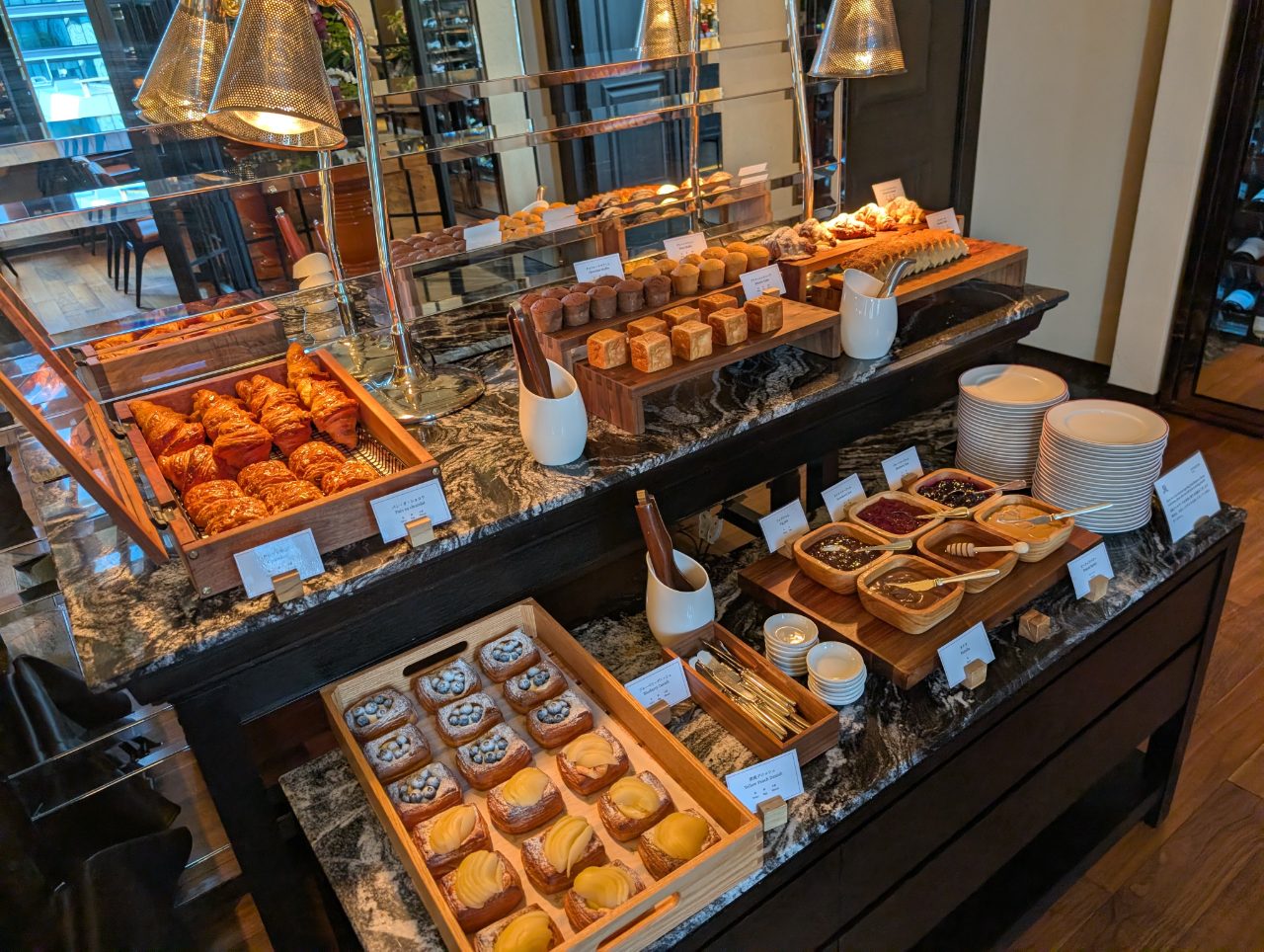
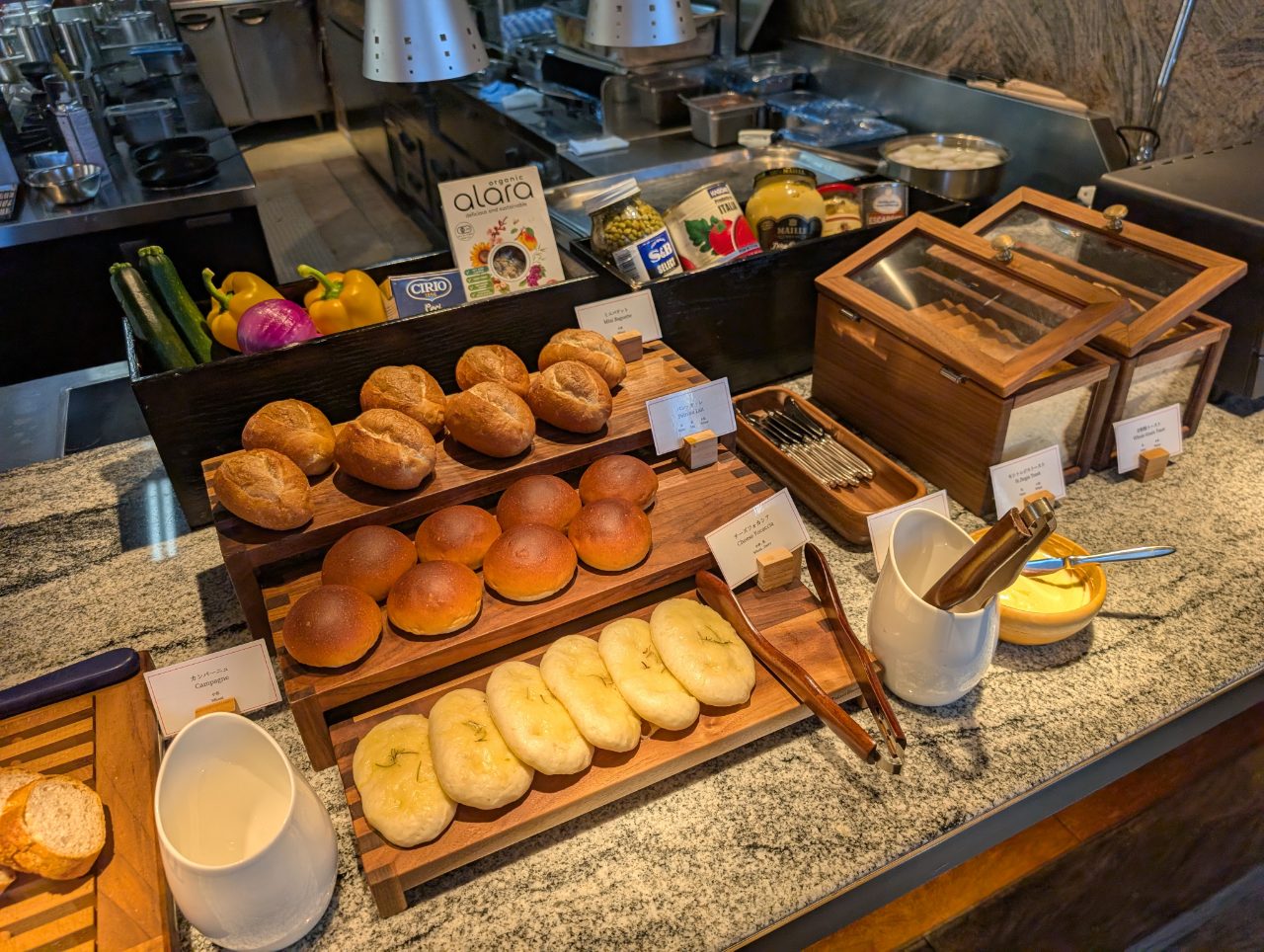
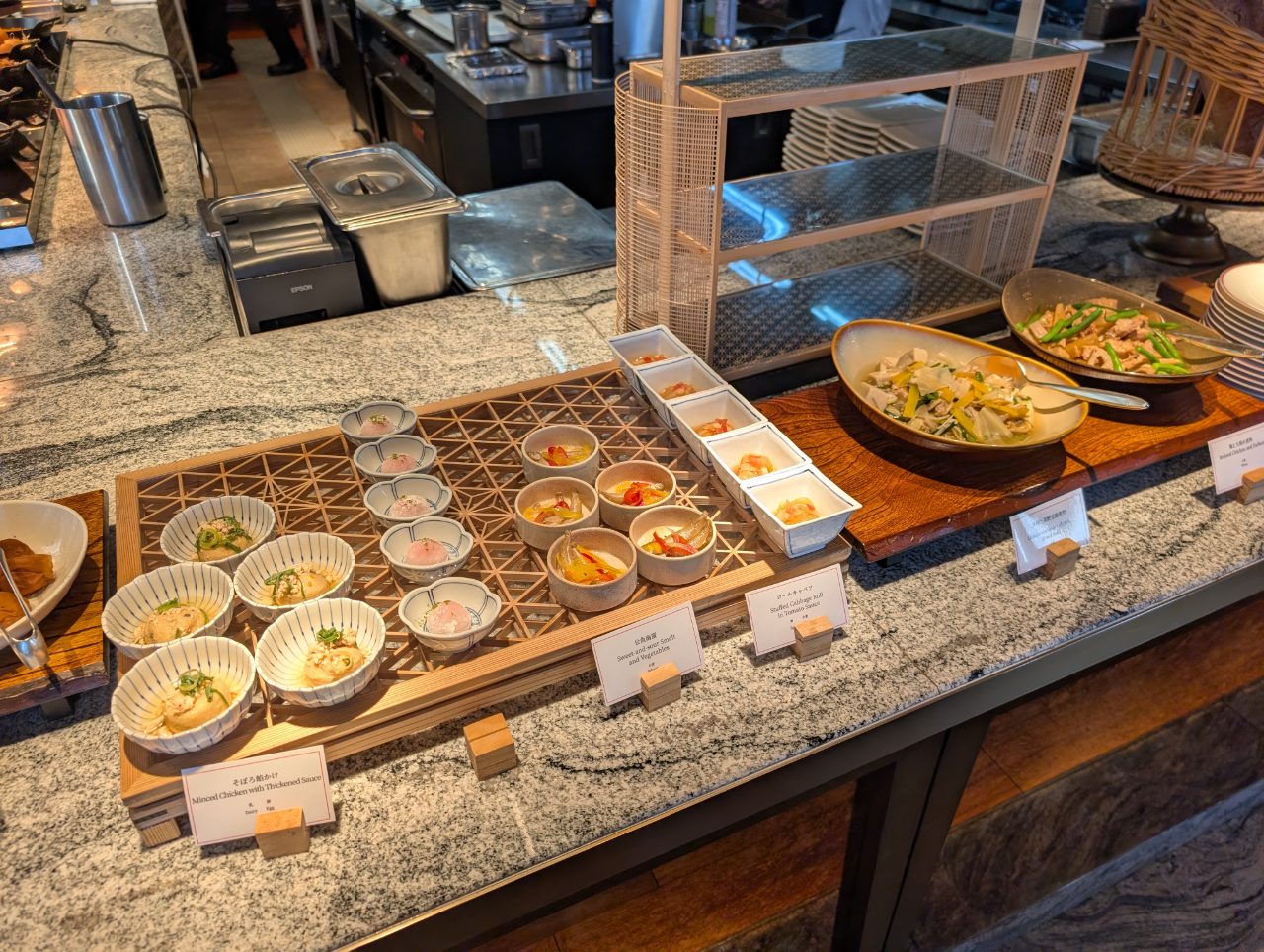
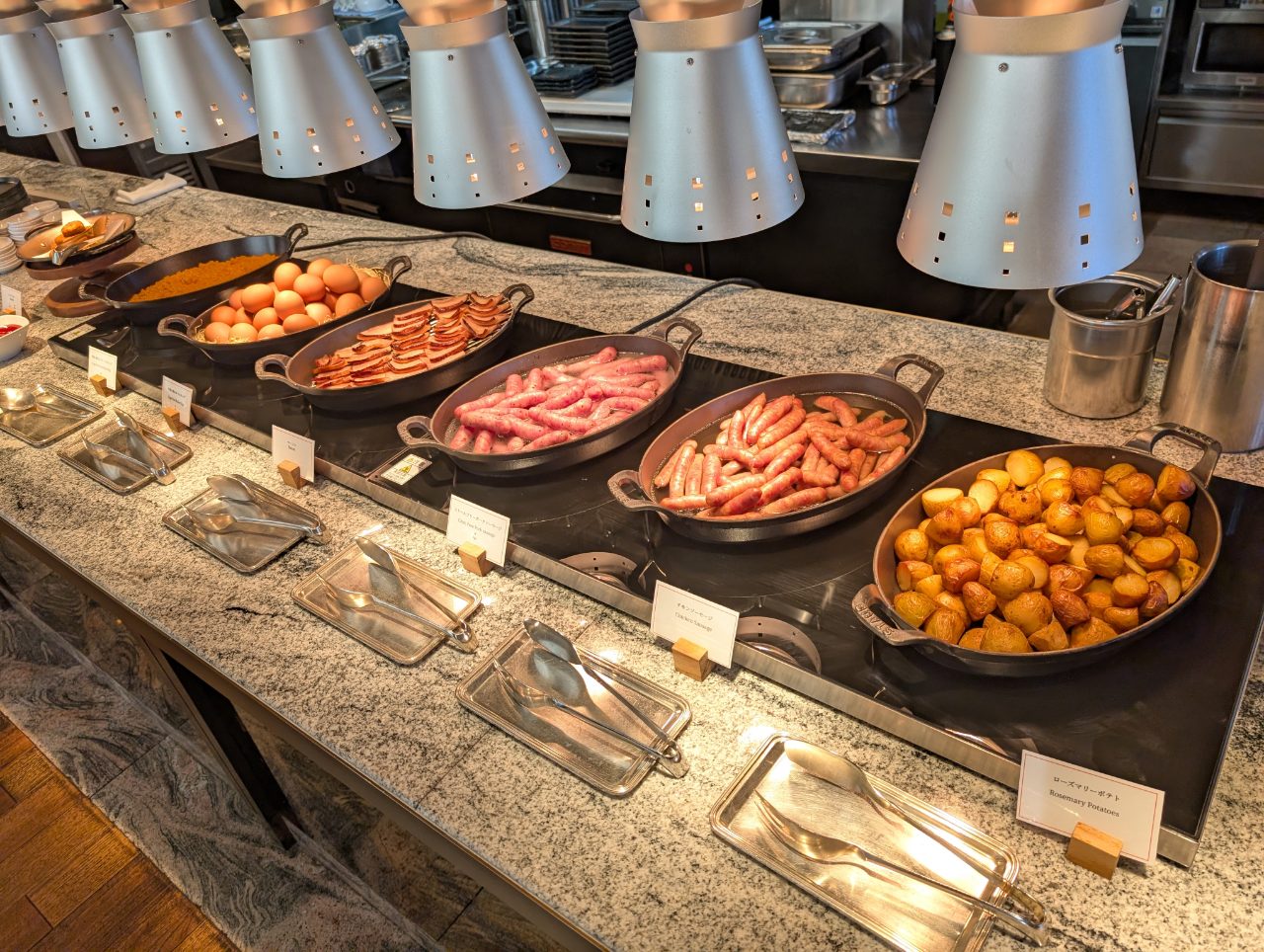
In addition to the buffet, guests can select one item from the a la carte menu (some items require a top-up, which can be as much as 6,000 JPY!). Most beverages are included, though there are upcharges for champagne and mineral water.
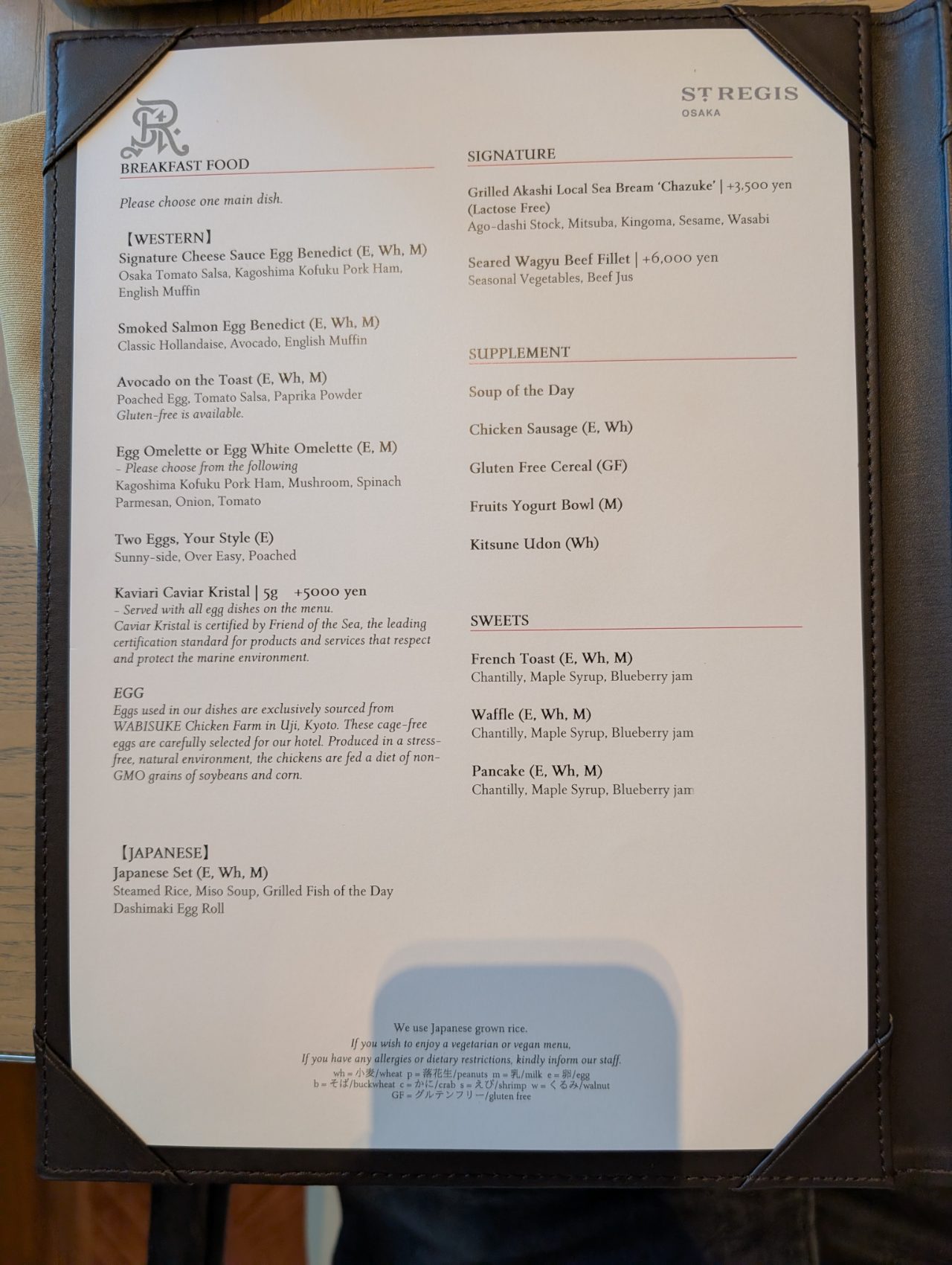
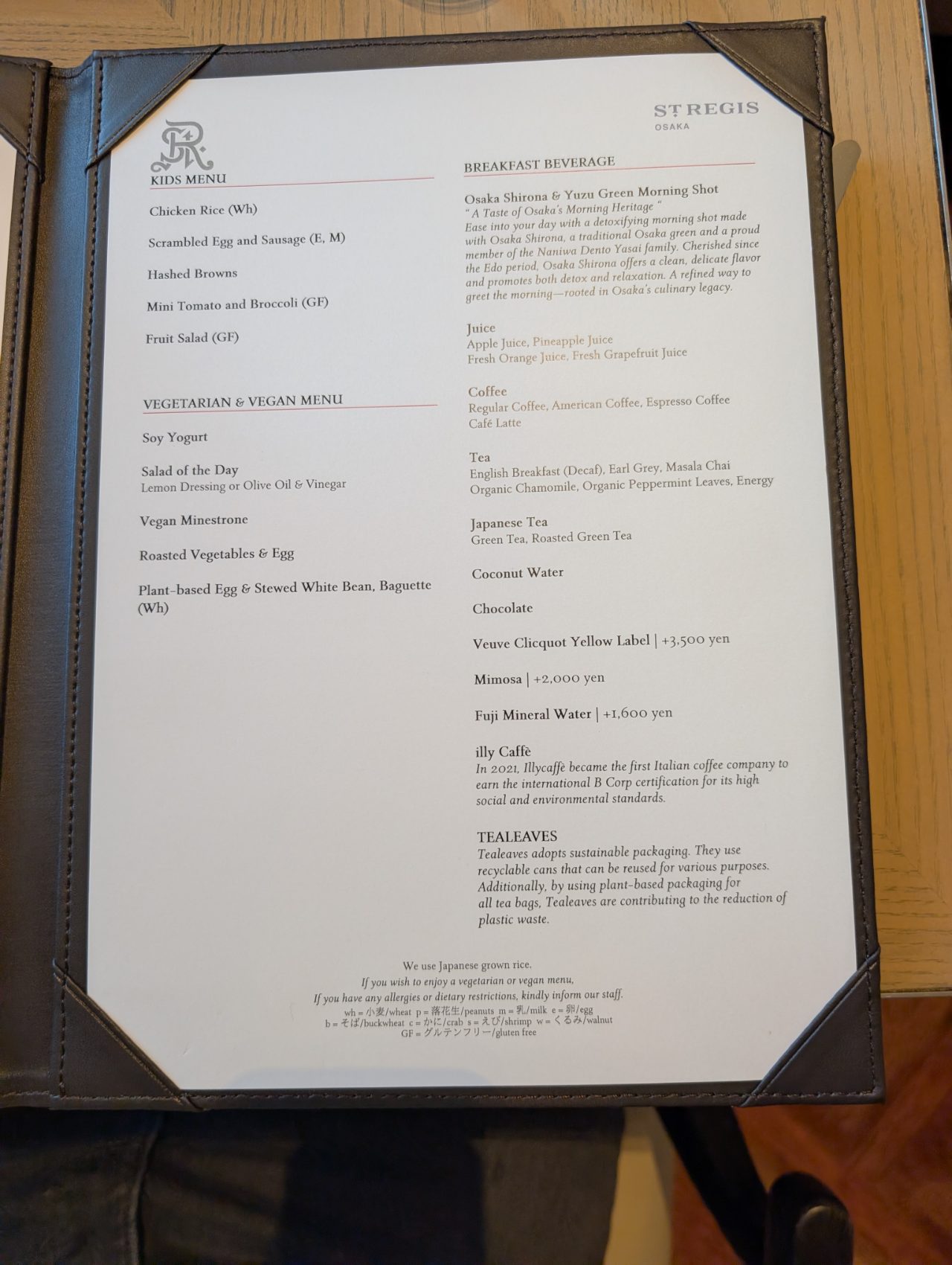
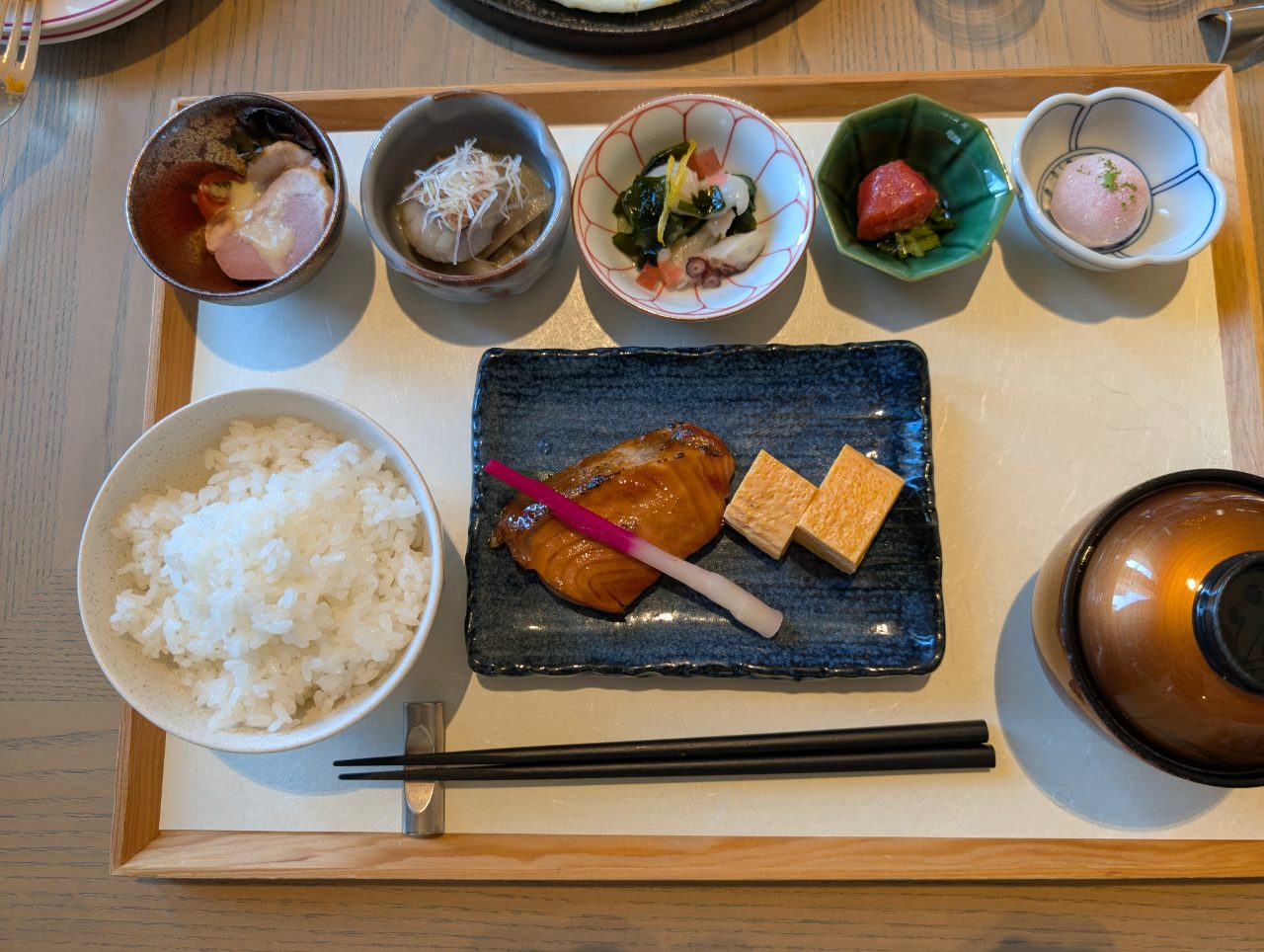
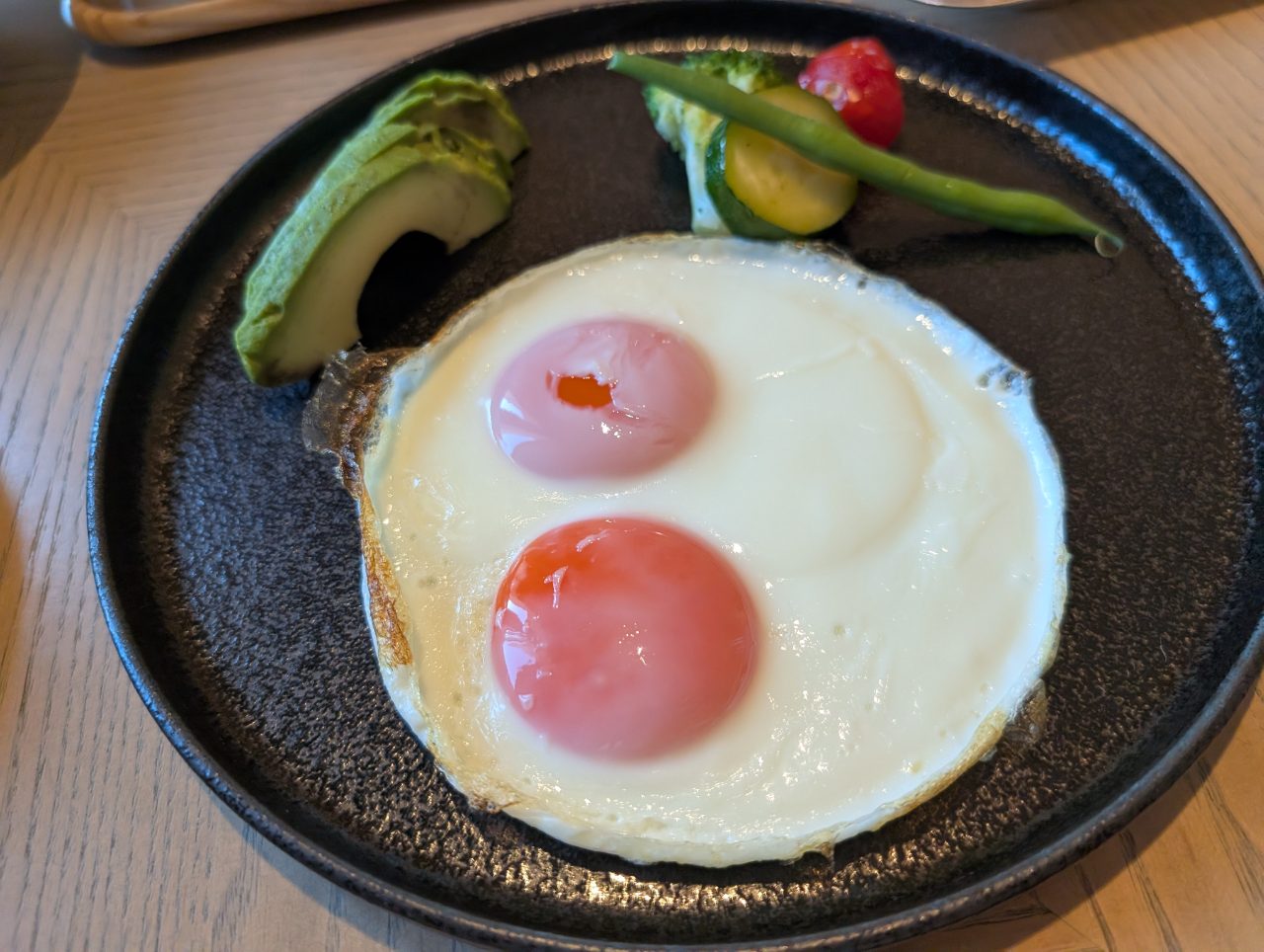
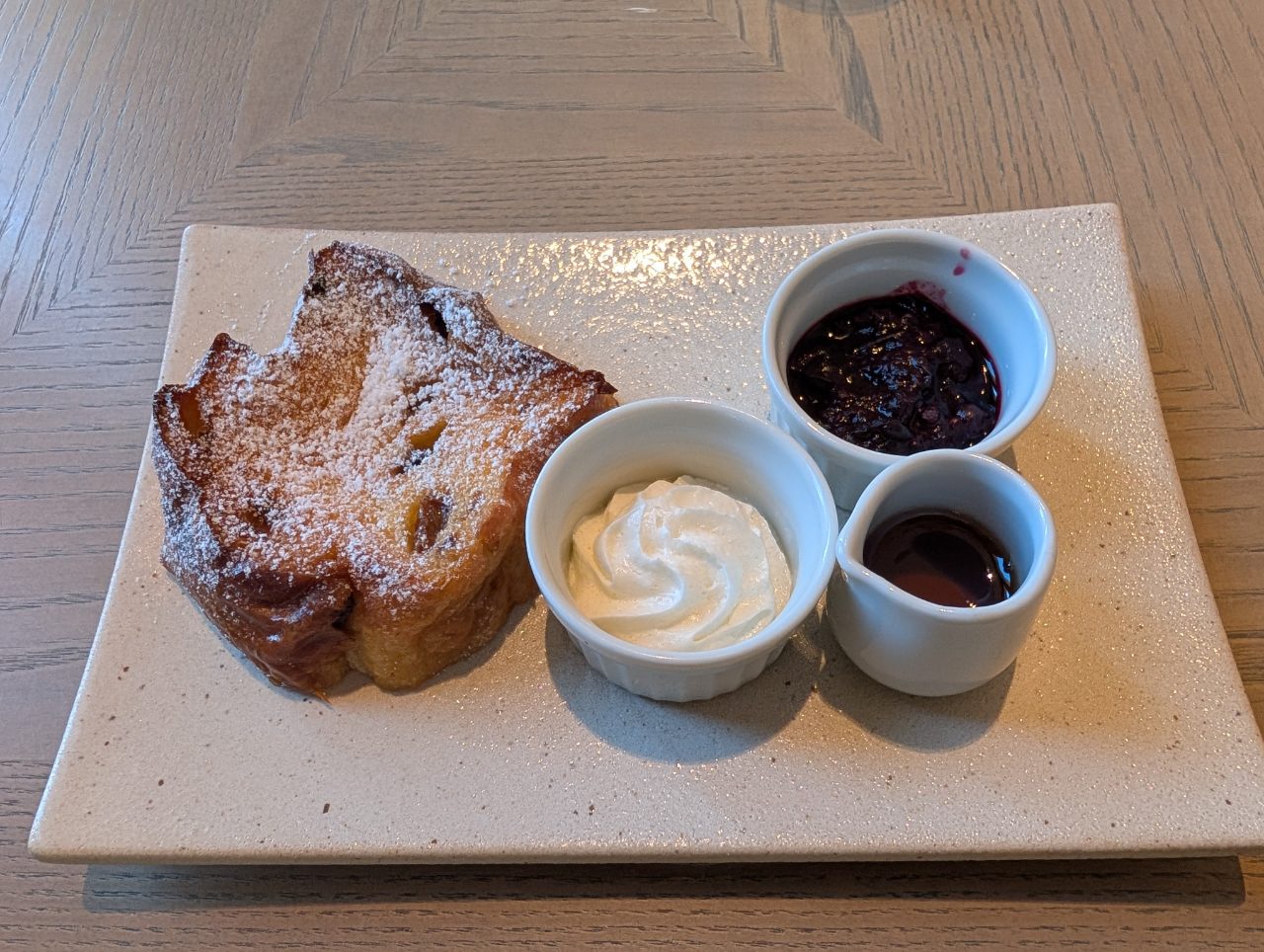
Fortunately, unlike the Waldorf Astoria Osaka, where the staff wanted to charge me for a side of eggs, the St. Regis wasn’t too strict on the one-item rule. In addition to my Japanese breakfast, I was also able to request some sunny side eggs with a side of avocado and French toast.
Conclusion
All things considered, the St. Regis Osaka feels like a property that’s resting a little too heavily on its brand name. While the location and breakfast are highlights, the dated rooms and limited facilities make it hard to justify its positioning as a true five-star hotel.
The long-overdue renovation will no doubt improve on the rooms, but even then, guests will have to live with the fact that this is a “5-Star hotel” with the most basic of facilities: a small gym, a tiny spa, no swimming pool, no onsen.
You can do far better in Osaka.

Who is getting a massage at 2am?!
not me, in case my wife is listening.
Because massaging foot is not smth most therapists are keen on. If you notice, in BKK, foot massage often costs the same as full body massage. That signals a “premium” for the service as they hope ppl would choose body for the “same” price. And if you go European countries, it’s mainly just full body massage or head&shoulder massage at the sauna spas.
Should try the Osaka Station Hotel next time, also under the Marriot Group. Top notch hotel for its price!
yes that was actually my fallback option. next trip!