
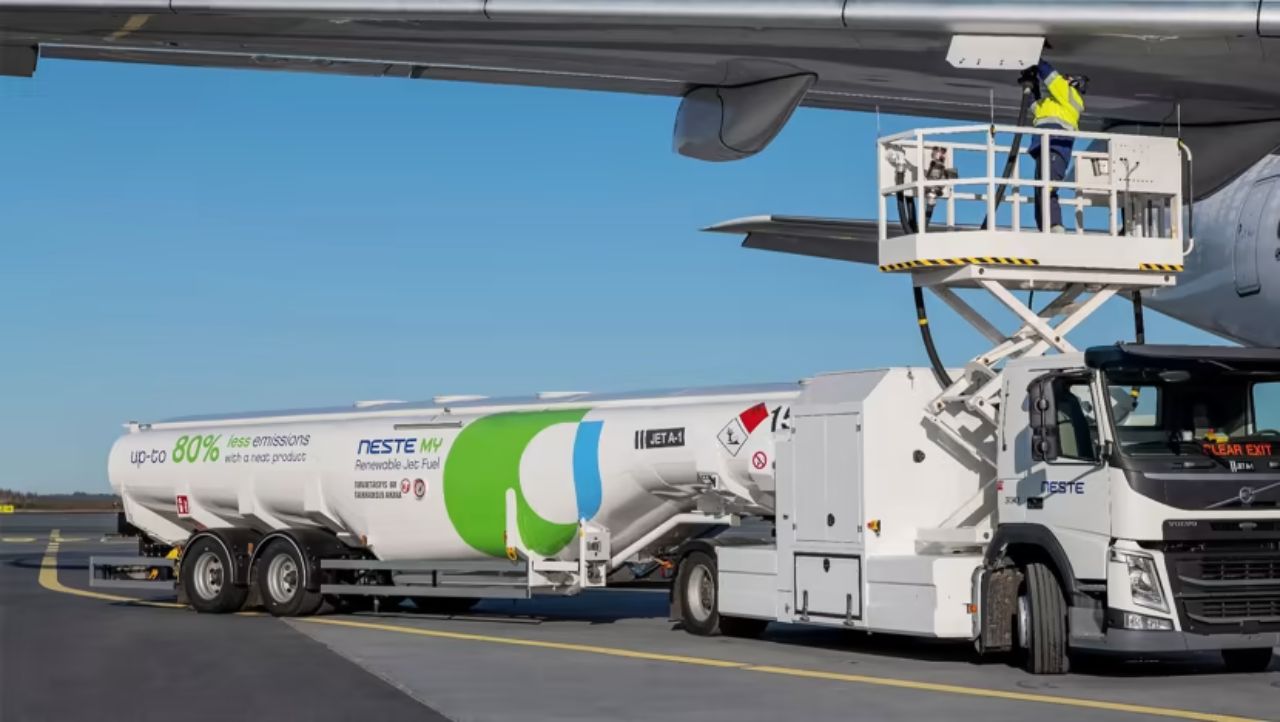
Back in February 2024, the Civil Aviation Authority of Singapore (CAAS) announced plans to introduce a sustainable aviation fuel (SAF) levy aimed at decarbonising airline operations.
Singapore will become the first country in the world to impose such a levy (yay?), which supports its goal of having 1% of all jet fuel used at Changi and Seletar Airports come from SAF by 2026. This will further increase to 3-5% by 2030, depending on “global developments and the wider availability and adoption” of SAF.
SAF is a liquid fuel currently used in commercial aviation which reduces CO2 emissions by up to 80%. It can be produced from a number of sources (feedstock) including waste oil and fats, green and municipal waste and non-food crops. It can also be produced synthetically via a process that captures carbon directly from the air. It is ‘sustainable’ because the raw feedstock does not compete with food crops or water supplies, or is responsible for forest degradation. Whereas fossil fuels add to the overall level of CO2 by emitting carbon that had been previously locked away, SAF recycles the CO2 which has been absorbed by the biomass used in the feedstock during the course of its life.
What is Sustainable Aviation Fuel?
❓ What is Sustainable Aviation Fuel?
CAAS has now revealed the levy rates, which apply to flights departing from October 2026. Depending on the cabin class and destination, passengers will pay an extra S$1 to S$41.60 per ticket.
While the amount is small in absolute terms, the imposition of what’s basically a mandatory “green tax”– and the fact that transit passengers are exempt – is bound to attract criticism in some quarters. Together with Changi Airport’s planned 21% increase in passenger fees by 2030, flying out of Singapore is set to become more expensive.
CAAS announces sustainable aviation fuel levy rates
The new SAF levy will be collected for tickets sold from 1 April 2026 onwards, for flights departing from Singapore on or after 1 October 2026.
To be clear: the levy will not apply to tickets sold before 1 April 2026, even if your flight departs on or after 1 October 2026. Therefore, you could forestall the levy by locking in your travel plans early- though airlines typically only sell tickets one year in advance, so sooner or later you’ll be impacted.
| Ticket Sold | Travel Date | Levy |
| Before 1 April 2026 | Before 1 October 2026 | No |
| Before 1 April 2026 | From 1 October 2026 | No |
| After 1 April 2026 | Before 1 October 2026 | No |
| After 1 April 2026 | From 1 October 2026 | Yes |
The levy will depend on two factors: destination and cabin. Destinations will be divided into four bands, with one charge for Economy and Premium Economy Class passengers, and another for Business and First Class passengers.
| Economy & Premium Economy | Business & First | |
| Band 1 Southeast Asia |
S$1 | S$4 |
| Band 2 Northeast Asia, South Asia, Australia, Papua New Guinea |
S$2.80 | S$11.20 |
| Band 3 Africa, Central and West Asia, Europe, Middle East, Pacific Islands, New Zealand |
S$6.40 | S$25.60 |
| Band 4 Americas |
S$10.40 | S$41.60 |
| 🤷♂️ Lower than expected? |
| I don’t know if it’s any consolation, but when the SAF levy was first announced in 2024, CAAS quoted rates of S$3 to S$16 for Economy Class passengers. However, the cost of SAF has since come down, leading to lower than expected rates. |
For flights with multiple stops, the levy will be calculated based on the immediate next destination after departing Singapore.
This, ironically, would have the effect of penalising passengers who fly non-stop routes, which are more fuel-efficient than connecting flights. For example, a passenger who flies from SIN-HKG-SFO on Cathay Pacific would pay a lower levy (S$2.80/S$11.20) than one who flies from SIN-SFO on Singapore Airlines (S$10.40/S$41.60).
Now, you might be thinking that one way of gaming the system would be to choose flights with stopovers. But those savings could very well be offset by the additional airport taxes incurred from a transit.
To illustrate, here’s the taxes and surcharges on Singapore Airlines’ two USA routes with non-stop and stopover options, based on current airport taxes and the new SAF levy.
| Economy & Premium Economy | Business & First | |
| SIN-LAX | S$99.60 Inc. S$10.40 SAF |
S$130.80 Inc. S$41.60 SAF |
| SIN-NRT-LAX | S$108.50 Inc. S$2.80 SAF |
S$116.90 Inc. S$11.20 SAF |
| Economy & Premium Economy | Business & First | |
| SIN-JFK | S$99.60 Inc. S$10.40 SAF |
S$130.80 Inc. S$41.60 SAF |
| SIN-FRA-JFK | S$136.40 Inc. S$6.40 SAF |
S$155.60 Inc. S$25.60 SAF |
In the case of Economy or Premium Economy travel, any savings on SAF from adding a stopover are more than offset by the higher airport taxes.
In Business or First, it’s slightly more complicated. For Singapore to New York JFK, the SAF savings would be offset by the cost of a stopover in Frankfurt, but for Singapore to Los Angeles, adding Tokyo Narita as a stopover does save you S$13.90 – though whether that’s worth the time lost to transit is another matter altogether.
Transit passengers escape the levy
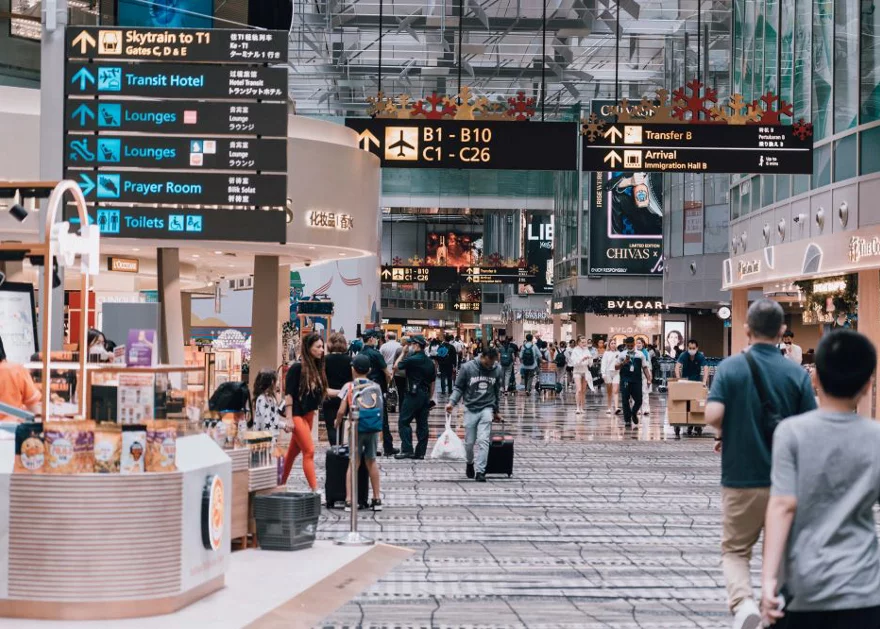
The SAF levy will not apply to passengers transiting through Singapore, a decision which is bound to ruffle some feathers.
On the one hand, the decision kind of makes sense. Transit passengers make up more than a third of Changi’s total traffic, and imposing additional fees could weaken Singapore’s position as a major transit hub.
On the other, the optics are problematic, because it makes it look as if Singapore residents have to subsidise transit passengers. I mean, transit passengers already pay lower airport taxes, but you could argue that they don’t make use of the immigration or public area facilities (assuming they don’t exit the secure area). It’s much harder to make a similar argument here, because it’s not as if a transit passenger’s air miles are less polluting than someone who originates from Singapore.
Will the SAF levy increase?
For what it’s worth, CAAS has stated that the levy will be fixed as long as the SAF target remains at 1%, even if the cost of SAF increases.
However, when the SAF target is raised from 1% to 3-5%, as it is expected to be by 2030, then the levy amount will “be relooked”.
This is particularly bad for award tickets
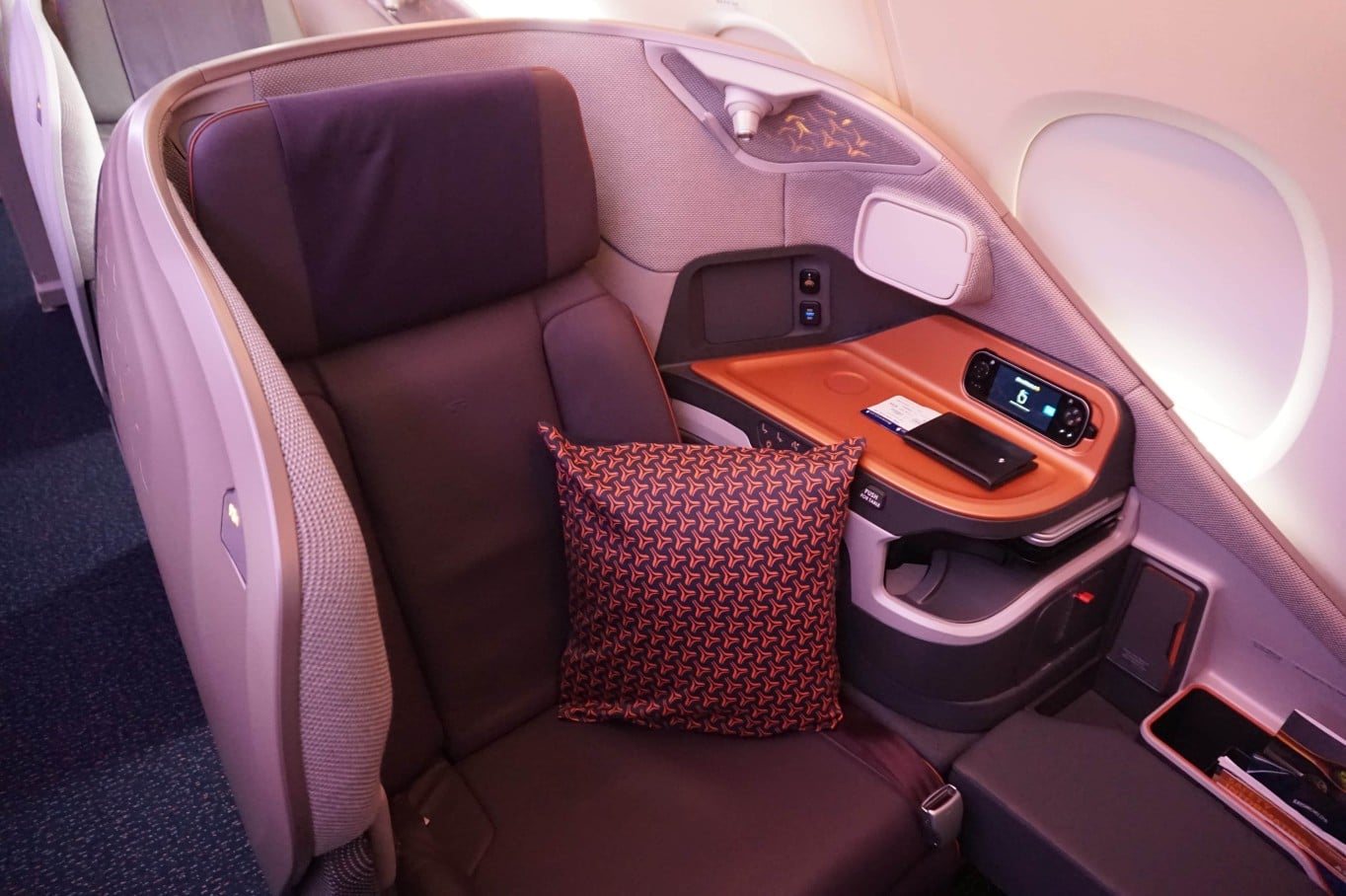
The introduction of a S$1 to S$41.60 SAF levy does not mean that the cost of commercial tickets will increase by S$1 to S$41.60.
Instead, airlines may tweak their base fares to keep the overall cost of tickets competitive, thereby absorbing some of the levy. In other words, the burden of the levy will end up being split between the passenger and airline, depending on the extent to which the latter believes the former will be willing to absorb it.
In the case of award tickets, however, it’s a completely different matter. The full burden of the levy will fall on the passenger, just like any other tax or surcharge.
Other fee hikes are coming soon
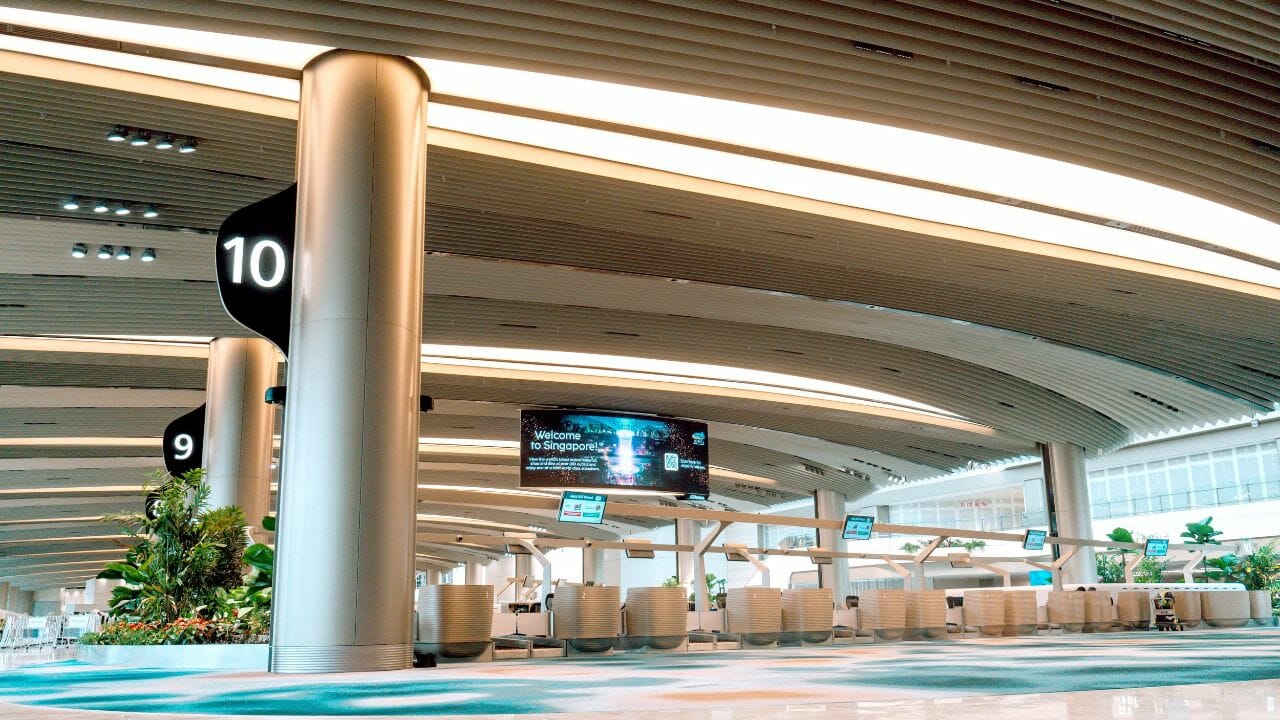
Unfortunately, the SAF levy is not the only fee hike on the horizon. Changi Airport previously announced plans to hike airline and passenger fees to finance a S$3 billion airport investment, which will be progressively implemented from 1 April 2027 onwards.
In short, the current fee of S$65.20 will be increased by 21% to S$79.20 by 2030.
| Passenger Service and Security Fee (PSSF) |
Aviation Levy (AL) |
Airport Development Levy (ADL) |
|
| Current S$65.20 |
S$46.40 | S$8 | S$10.80 |
| 1 April 2026 S$65.20 |
S$46.40 | S$8 | S$10.80 |
| 1 April 2027 S$70.20 |
S$49.40 +S$3 |
S$10 +S$2 |
S$10.80 |
| 1 April 2028 S$73.20 |
S$52.40 +S$3 |
S$10 | S$10.80 |
| 1 April 2029 S$76.20 |
S$55.40 +S$3 |
S$10 | S$10.80 |
| 1 April 2030 S$79.20 |
S$58.40 +S$3 |
S$10 | S$10.80 |
Together with the SAF levy, a departing passenger could have to pay as much as S$120.80 by 2030!
| ❓ Why am I being charged more? |
|
If you’re booking a ticket and wondering why you’re being charged more than the figures in the table above, it’s because some countries charge fees to arriving passengers as well.
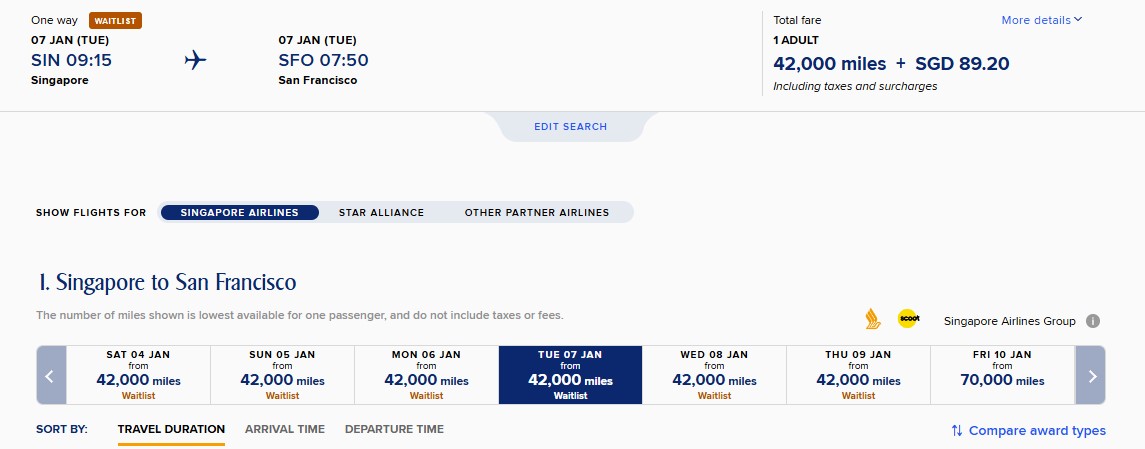
For example, a one-way Economy Class redemption from SIN-SFO has S$89.20 of fees. This is broken down into:
The fees in bold are collected by the USA authorities from arriving passengers. Countries which impose fees on arriving passengers include:
These fees are on top of those collected by the Singapore authorities. If you’re reviewing the charges on your ticket and want to know which country is responsible for what, you can look up the codes on this page. |
Conclusion
The CAAS has announced the rates for Singapore’s new sustainable aviation fuel levy, which will add up to S$41.60 to air tickets when it goes into effect in October 2026, with exemptions for transit passengers.
Because of how prices for commercial tickets are displayed, this levy will end up being shared between airline and passenger in some proportion. However, those flying on redemption tickets should expect to bear the full brunt of the levy, just like any other fee.
What do you make of this SAF levy?

Well, we charge single parents 9% GST on daily essentials. I’m not going to get annoyed over 1% surcharges to my J travels. Far beyond first world problem
these things aren’t either/or, you know. you can think that both are bad.
Yeah, but if I have to spend effort to complain about one, this one shall not be it.
How many 1% increases will it take before you get annoyed? Classic frog in slow-boiling water response.
I got already annoyed at the 9x 1% increases of the GST…
Should have just stuck to Jet A1 instead of this junk.
SIN is becoming one of the most expensive airports in the world to depart from. This is what you get when a monopoly keeps adding irrelevant frills like butterfly, cactus and sunflower gardens, movie theatrettes, countless of koi ponds while increasing the fees to departing passengers, all in its lust for the best airport title. Now they’ve gone woke with SAF, but the biggest irony is that the SAF levy, just like the full departure fees, only applies to departing passengers. Transit passengers, travel in the same polluting plane and use the same facilities at the airport but don’t need… Read more »
“woke” roflmao.
Greta Thunberg hurt your feelings or what?
I am sure the CAAS is scrambling to call a directors meeting after reading your comment.
That’s not what monopolies do. I expect more arrogance from them.
Just a money grab in the name of sustainability. If teh government can’t afford to build, then don’t.
It would be great to see more discussion about environmental issues and flying. I’m caught in the conundrum of playing the miles game, loving premium cabin seats but hating all the waste that goes into moving people around the planet regularly on flights. This levy is one part of the much bigger story and so am I. It’s not just about cost for me but the impact of the levy and how much of a shared responsibility is this between passengers/governments/airlines/the oil producing companies and countries. I know many of your readers may not have that as their premise though.… Read more »
A simple way for people to fly less is for flights to be priced high, like pre-1978. It’s like the COE.
Arguably, a cheaper product encouraged more consumption, but ultimately left room for 3rd parties like airports to soak up the fat.
I too have been thinking about this due to taking recent long haul J flights. Perhaps paying for carbon offsets via goldstandard.org or similar is the answer to alleviate guilt lol
I read that the SAF Production was 1 million tonnes in 2024. Singapore purchases nearly 10 million tonnes a year and 1 percent meant 100,000 tonnes. That meant 10% of 2024 production. Raising it to say 5% and is 50% of 2024 production. This will not be insignificant and may impact the price of SAF. How the balance of supply and demand is still largely unknown. Airlines would have to pay more for SAF fuel cost and will they pass the cost to us in terms of base fare? SQ is having close to full loads on most of her… Read more »
Great. Another junk fee.