
With oil prices easing on hopes of a resolution to the Middle East conflict — at least until the next ill-tempered tweet — Cathay Pacific will further reduce fuel surcharges from 1 July 2026.
The latest round of revisions sees a 15% decrease across the board, basically taking us back to where we were on 18 March 2026. That said, fuel surcharges are still roughly double compared to pre-conflict levels, so it may be worth holding off on bookings until they fall further.
Cathay Pacific reducing fuel surcharges from 1 July 2026
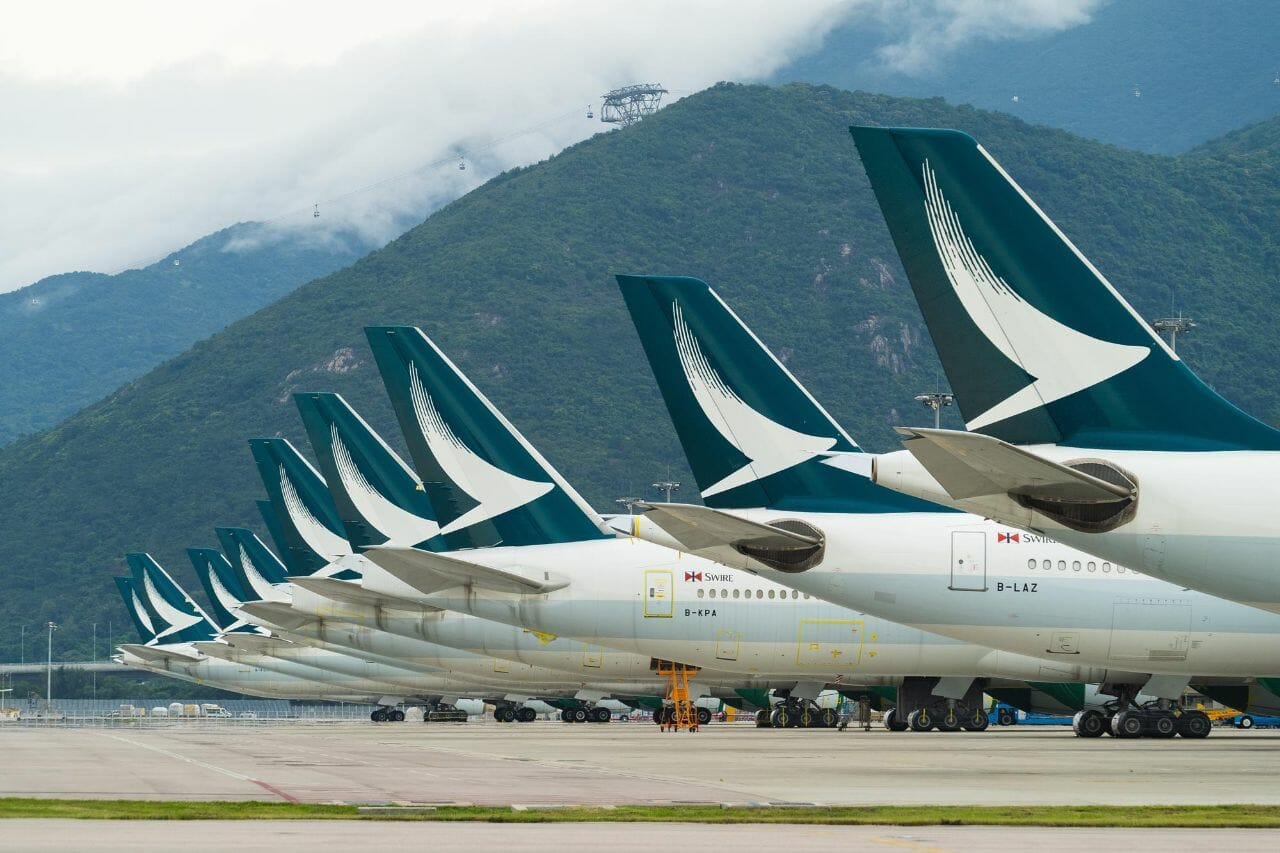
Cathay Pacific will lower its fuel surcharges by roughly 15% for all commercial and award tickets booked from 1 July 2026 onwards.
Again, I want to emphasise that the booking date is what matters, not the actual travel date. Fuel surcharges are locked in at the time you book your ticket, so you won’t have to pay a top-up should jet fuel prices subsequently increase (and you also won’t get a refund if they subsequently decline, unless of course you cancel and rebook).
| ⛽ Cathay Pacific Fuel Surcharges (Per Segment) |
||
| From Hong Kong To | Ticket Booking Date | |
| Till 30 Jun 2026 | From 1 Jul 2026 | |
| Singapore, North Asia, China | US$43.50 |
US$37.20 -14% |
| India and South Asia | US$81.20 |
US$69.40 -15% |
| Australia, New Zealand, USA, Canada, Europe, Middle East, Africa | US$174.60 |
US$149.20 -15% |
Cathay Pacific fuel surcharges are the same across all cabin classes, and are applied by sector. For example:
- a round-trip ticket between Singapore and Hong Kong currently has US$87 of fuel surcharges (2x US$43.50), which will decrease to US$74.40 (2x US$37.20) for bookings made from 1 July 2026
- a round-trip ticket between Singapore and San Francisco via Hong Kong currently has US$436.20 of fuel surcharges (2x [US$43.50 + US$174.60]), which will decrease to US$372.80 (2x [US$37.20 + US$149.20]) for bookings made from 1 July 2026
While any relief is welcome, it’s worth noting that fuel surcharges are still twice as high compared to pre-conflict levels.
To put that into more concrete terms, here’s a summary of how much you can expect to pay for fuel surcharges for one-way Cathay Pacific flights originating from Singapore (to see the round-trip cost, simply multiply the surcharges by two).
As a reminder, fuel surcharges are in addition to the usual airport taxes and fees, which currently amount to S$65.20 for a flight departing from Changi Airport, and will increase to S$79.20 by 2030.
| Passenger Service and Security Fee (PSSF) |
Aviation Levy (AL) |
Airport Development Levy (ADL) |
|
| Current S$65.20 |
S$46.40 | S$8 | S$10.80 |
| 1 April 2027 S$70.20 |
S$49.40 +S$3 |
S$10 +S$2 |
S$10.80 |
| 1 April 2028 S$73.20 |
S$52.40 +S$3 |
S$10 | S$10.80 |
| 1 April 2029 S$76.20 |
S$55.40 +S$3 |
S$10 | S$10.80 |
| 1 April 2030 S$79.20 |
S$58.40 +S$3 |
S$10 | S$10.80 |
If it’s any consolation, the sustainable aviation fuel levy has been delayed until at least October 2026— the last thing we need right now is another junk fee!
What can I redeem with Asia Miles?
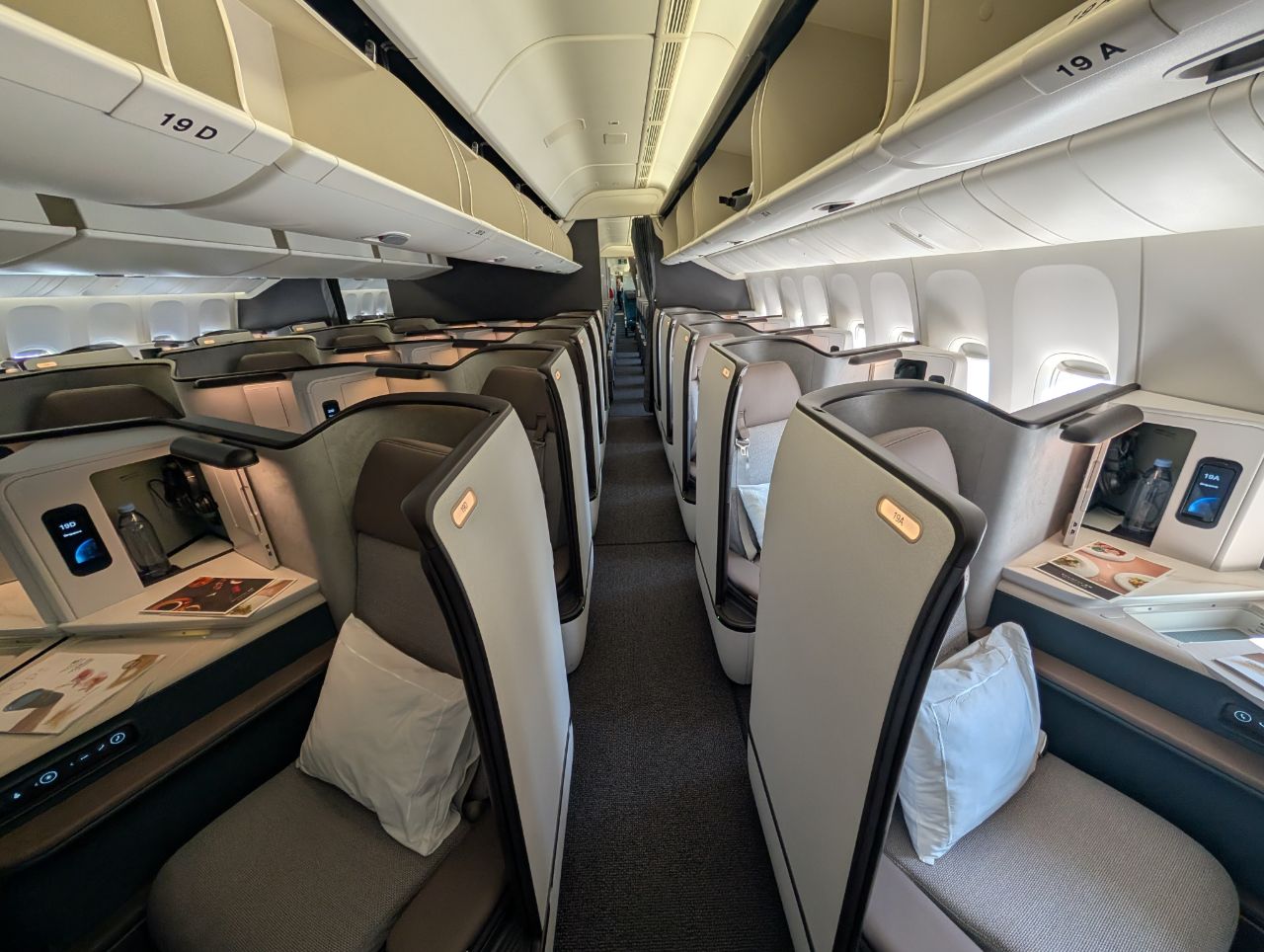
Cathay Pacific last devalued the Asia Miles programme in May 2026, which saw modest increases of 1,000 to 4,000 Asia Miles for selected awards.
Here are the revised award charts for Cathay Pacific and oneworld partner flights.
| ✈️ Asia Miles Redemptions for Cathay Pacific Flights |
||||
| Distance (in miles) |
Y | PY | J | F |
| 1-750 | 7K |
11K | 16K | 25K |
| 751 – 2,750 (Type 1)* |
9K | 18K | 27K | 43K |
| 751 – 2,750 (Type 2)^ |
13K | 23K | 33K | 50K |
| 2,751 – 5,000 | 20K | 39K | 60K | 90K |
| 5,001 – 7,500 | 27K | 52K | 91K | 125K |
| 7,501+ | 38K | 78K | 119K | 160K |
| Y = Economy | PY= Premium Economy | J= Business | F= First |
||||
| *Type 1= Routes to/from China, Singapore, Malaysia, South Korea ^Type 2= Routes to/from India, Indonesia, Japan |
||||
| ✈️ Asia Miles Redemptions for oneworld Flights |
||||
| Distance (in miles) |
Y | PY | J | F |
| 1-750 | 10K |
14K | 20K | 30K |
| 751 – 2,750 | 15K | 25K | 33K | 53K |
| 2,751 – 5,000 | 27K | 43K | 63K | 100K |
| 5,001 – 7,500 | 40K | 55K | 93K | 135K |
| 7,501+ | 47K | 80K | 120K | 170K |
| Y = Economy | PY= Premium Economy | J= Business | F= First |
||||
In terms of redemption opportunities, Asia Miles offers lower-cost awards than KrisFlyer to the following destinations.
| ✈️ Round-trip Business Class redemptions |
||
| From Singapore to | Asia Miles | KrisFlyer |
| 🇭🇰 Hong Kong | 54,000 miles |
71,000 miles |
| 🇧🇪 Brussels | 182,000 miles | 217,000 miles |
| 🇩🇪 Frankfurt | 182,000 miles | 217,000 miles |
| 🇮🇹 Milan | 182,000 miles | 217,000 miles |
| 🇨🇭 Zurich | 182,000 miles | 217,000 miles |
However, you shouldn’t just compare the mileage figures. You’ll need to factor in the fuel surcharges on Cathay Pacific, as well as the additional time and airport taxes added by the transit in Hong Kong, where Europe flights are concerned.
HeyMax x Cathay Pacific transfer bonus
 |
| Get 200 Max Miles when you open an account and complete your first transaction |
| Get a HeyMax Account |
If you’re thinking about making a transfer to Asia Miles, here’s a reminder that HeyMax users will enjoy a 20% bonus on conversions made by 14 July 2026, capped at 6,000 bonus miles.
Users will receive 1.2 Asia Miles for every 1 Max Mile transferred, instead of the usual 1 Asia Mile. A minimum transfer of 1,000 Max Miles is required, with blocks of 100 Max Miles beyond this.
|
 |
| Max Miles | Asia Miles |
| 1 mile | 1.2 points |
You will need to register your account to be eligible. Do note that the registration page only mentions a 10% bonus — the additional 10% is fulfilled on the HeyMax side.
Bonus miles (from Cathay and HeyMax) will be credited to your account by 30 September 2026.
Refer to the post below for more details.
HeyMax offering 20% transfer bonus to Cathay Pacific Asia Miles
Conclusion
Cathay Pacific will further reduce fuel surcharges by 15% from 1 July 2026, in its second cut since the onset of the Middle East conflict.
This is certainly good news, though I’d only pop the champagne once we’re back to the pre-conflict levels. If you had the misfortune to book your tickets when fuel surcharges were at all-time highs, you might want to consider cancelling and rebooking your tickets if it results in net savings.

It looks like the fuel surcharge has actually increased….
I was looking at a Jun 2027 flight from Tokyo to Singapore and the surcharge increased overnight instead…..