
The Trust Freedom Card launched its new Miles mode earlier this week, the fourth rewards option after Unlimited Cashback, Bonus Cashback and Stockback.
With Miles mode, cardholders earn 1.3 KrisFlyer miles or Max Miles per S$1 spent in Singapore and overseas. They’re also eligible for a massive 100,000 miles sign-up bonus if they’ve never held a Trust credit card before.

1.3 mpd may not sound very impressive — until you factor in the absence of foreign currency (FCY) transaction fees. Whatever you spend overseas is converted into SGD at the prevailing Visa rate, with no further mark-up.
This makes it Singapore’s first miles credit card with no FCY fees (before you say “what about Chocolate?“, remember that’s a debit card), and in a previous post, I argued that this could effectively kill the market for any overseas spending card earning less than 4 mpd.
This confused some people, so I want to explain my thinking in greater detail, and how I see the Trust Freedom Card fitting into my overseas spending strategy.
Why the Trust Freedom Card is bad news for general spending cards
 Trust Freedom Card Trust Freedom Card |
|||
| Apply via app with referral code 2GQEAM81 | |||
| Min. Income | S$30,000 p.a. | Points Validity | 3-4 years |
| Annual Fee | None | Min. Transfer | 1 Trust Mile (1 mile) |
| Miles with Annual Fee |
N/A | Transfer Partners | 2 |
| FCY Fee | None | Transfer Fee | S$27.25 |
| Local Earn | 1.3 mpd Miles Mode |
Points Pool | No |
| FCY Earn | 1.3 mpd Miles Mode |
Lounge Access? | No |
| Special Earn | N/A | Airport Limo? | No |
| Cardholder Terms and Conditions | |||
Let’s quickly recap the Trust Freedom Card’s earn rates, which are really quite simple:
- 1.3 Trust Miles per S$1 spent in SGD
- 1.3 Trust Miles per S$1 spent in FCY
- No minimum spend, no caps
First things first: forget about using the Trust Freedom Card for local spending — the 1.3 mpd return is far too low, given the abundance of 4 mpd options.
But it’s a different story altogether when it comes to overseas spending. Here’s a rundown of various general spending cards (with no minimum spend or caps), and how many miles they earn on FCY transactions.
| 💳 FCY Earn Rates for General Spending Cards (With no min. spend or caps) |
|||
| Cards | FCY Spend |
FCY Fee | Cost Per Mile |
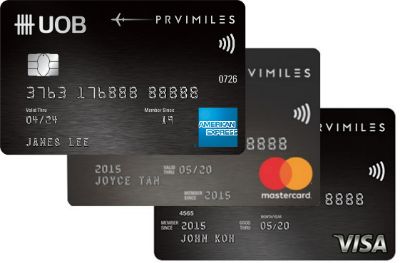 UOB PRVI Miles Card UOB PRVI Miles CardAMEX MC Visa |
3 mpd IDR, MYR, THB, VND 2.4 mpd All Others |
3.25% | 1.81¢ IDR, MYR, THB, VND 2.76¢ All Others |
 BOC Elite Miles Card BOC Elite Miles CardApply |
2.8 mpd | 3% | 1.89¢ |
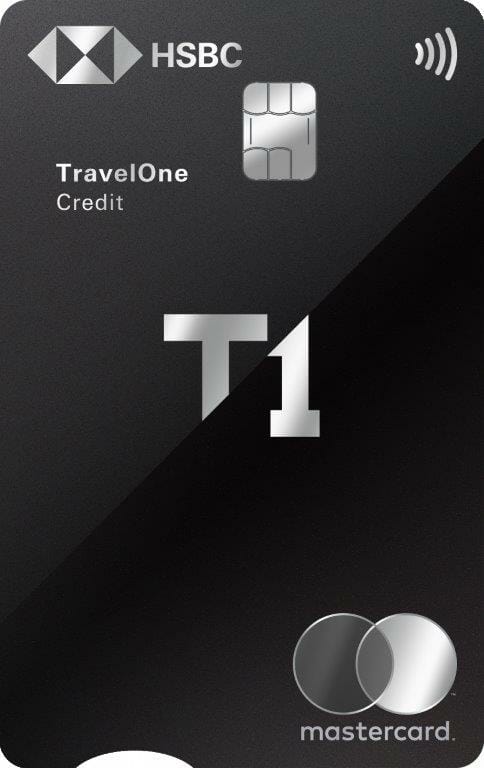 HSBC TravelOne Card HSBC TravelOne CardApply |
2.4 mpd | 3.25% | 2.76¢ |
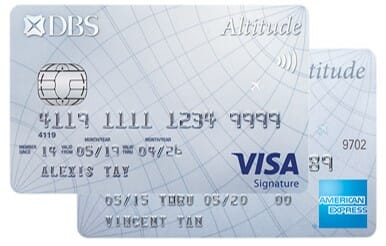 DBS Altitude Card DBS Altitude CardAMEX Visa |
2.2 mpd | 3.25% | |
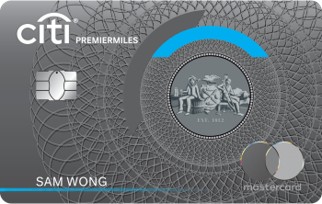 Citi PremierMiles Card Citi PremierMiles CardApply |
2.2 mpd | 3.25% | |
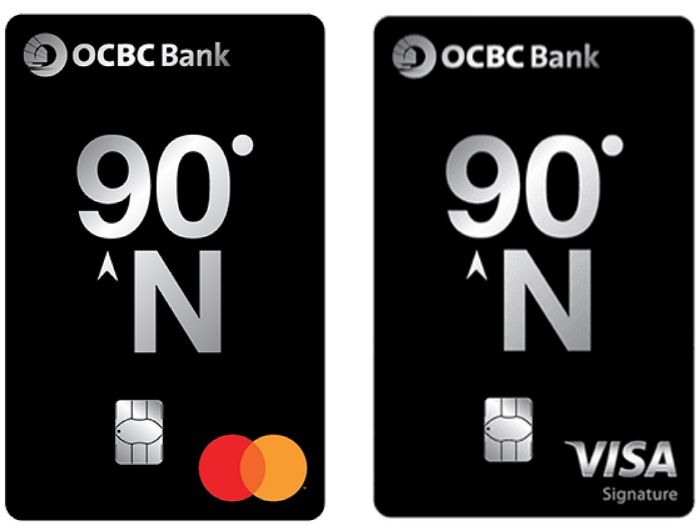 OCBC 90°N Card OCBC 90°N CardMC Visa |
2.1 mpd | 3.25% | |
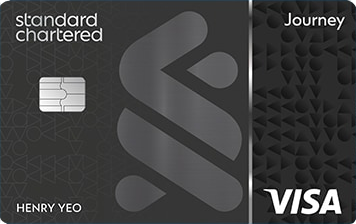 StanChart Journey Card StanChart Journey CardApply |
2 mpd | 3.5% | |
It’s the last column that probably confuses people the most. Here’s how to think about it.
- The
crossed outfigure is the cost per mile, in the absence of the Trust Freedom Card - The green figure is the adjusted cost per mile, factoring in the opportunity cost of the Trust Freedom Card
For example, the UOB PRVI Miles Card earns 2.4 mpd with a 3.25% FCY fee. Viewed in isolation, the cost per mile is 1.31 cents [3.25% ÷ (2.4 mpd x (1 + 3.25%)] (remember, the FCY fee also earns miles).
But because the Trust Freedom Card can earn 1.3 mpd with no FCY fee, you’re actually paying a 3.25% fee to earn an incremental 1.1 mpd (2.4 mpd − 1.3 mpd). With this in the picture, the cost per mile increases to 2.76 cents per mile [3.25% ÷ (2.4 mpd x (1 +3.25%) – 1.3 mpd)].
At the time of writing, the UOB Payment Facility allows cardholders to purchase unlimited miles at 1.8 cents each (or 1.6 cents if you have the UOB Reserve), so that sets an absolute ceiling on how much you should be willing to pay for miles.
None of the cards here manage to go below this threshold.
| ❓What about points flexibility? |
|
Since UOB UNI$ can only be transferred to Asia Miles and KrisFlyer, you could make an argument for paying >1.8 cents per mile with credit cards that offer more partners. That said, the adjusted cost per mile figures for such cards are significantly higher, e.g. 2.95 cents per mile for HSBC TravelOne Card, 3.61 cents per mile for the Citi PremierMiles Card. I value flexible points, yes, but not that highly. |
What about specialised spending cards?
Now, what if we widen the aperture to include specialised spending cards?
| 💳 FCY Earn Rates for Specialised Spending Cards (With min. spend and/or caps) |
|||
| Card | FCY Earn Rate | FCY Fee | Cost Per Mile |
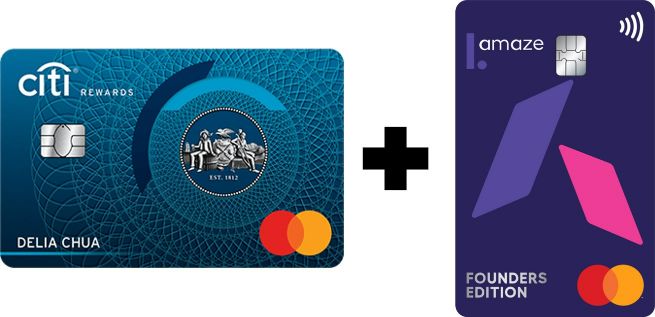 Citi Rewards + Amaze Citi Rewards + AmazeApply |
4 mpd1 Capped |
2% | 0.72¢ |
 UOB Visa Signature UOB Visa SignatureApply |
4 mpd2 Capped |
3.25% | 1.15¢ |
 Maybank XL Rewards Card Maybank XL Rewards CardApply |
4 mpd3 Capped |
3.25% | 1.15¢ |
 Maybank World Mastercard Maybank World MastercardApply |
3.2 mpd4 Uncapped |
3.25% | 1.62¢ |
 Maybank Visa Infinite Maybank Visa InfiniteApply |
3.2 mpd5 Uncapped |
3.25% | 1.62¢ |
 Maybank Horizon Visa Signature Maybank Horizon Visa SignatureApply |
2.8 mpd6 Uncapped |
3.25% | 2.04¢ |
| 1. Capped at S$1,000 per s. month, excludes travel 2. With min. S$1,000 FCY spend per s. month, capped at S$1,200 FCY spend per s. month 3. With min. S$500 spend per c. month, capped at S$1,000 spend per c. month 4. With min. S$4,000 spend per c. month, 2.8 mpd with min. S$800 spend per c. month, 0.4 mpd otherwise 5. With min. S$4,000 spend per c. month, 2 mpd otherwise 6. With min. S$800 spend per c. month, 1.2 mpd otherwise |
|||
The picture improves slightly here — to a point.
- The Amaze + Citi Rewards combo is still a great choice, with an adjusted cost per mile of 0.72 cents (but remember the travel-related spend exclusion)
- The Maybank XL Rewards Card and UOB Visa Signature are still acceptable options at 1.15 cents, but have limitations of their own, namely minimum spends (S$500 for the XL, S$1,000 for the Visa Signature) and caps (S$1,000 for the XL, S$1,200 for the Visa Signature)
- The Maybank Visa Infinite and Maybank World Mastercard are maybes at 1.62 cents, but remember, to even achieve that figure, you’ll need to spend at least S$4,000 per month
- The Maybank Horizon Visa Signature is a no-go, given the adjusted cost per mile of 2.04 cents
That’s why I said that the Trust Freedom Card is basically killing the market for any FCY spending card earning <4 mpd. Moreover, since there’s no minimum spend requirement, it’s by far the safer option in months where you’re unsure about meeting the minimum spend needed to unlock the higher overseas earn rates on cards such as the Maybank Visa Infinite and Maybank World Mastercard.
Of course, as pointed out in the Telegram group, this could boil down to a question of speed vs savings. At 1.3 mpd, the Trust Freedom Card will accumulate miles much slower than, say, the Maybank World Mastercard. Is it worth paying 1.62 cents per mile to accelerate the process? That’s very much a personal decision.
What’s my revised overseas spending strategy?
Does this mean I’m switching all my overseas spending to the Trust Freedom Card?
Nope.
My “order of battle” now looks like this:
| Priority | Card Earn Rate FCY Fee |
Remarks |
| #1 | Amaze + Citi Rewards 4 mpd 2% |
For up to S$1,000 per s. month, on non-travel transactions |
| #2 | Maybank XL Rewards 4 mpd 3.25% (Pair with Amaze for 2% fee) |
For up to S$1,000 per c. month, with min. spend of S$500 |
| #3 | UOB Visa Signature 4 mpd 3.25% |
For up to S$1,200 per s. month, with min. spend of S$1,000 |
| #4 | Trust Freedom Card 1.3 mpd None |
Everything else |
When I go overseas, my first choice still remains the Amaze + Citi Rewards pairing, to earn 4 mpd with a 2% fee.
The problem is that you’ll burn through its S$1,000 cap in no time, especially if you also use the Citi Rewards Card for online spending in Singapore. Moreover, the travel-related exclusion prevents you from using it for air tickets, cruises, hotels, trains and travel agencies.
For those expenses, or when the cap is exhausted, I switch to the Maybank XL Rewards Card:
- Pair it with Amaze for whitelisted categories like dining, shopping, travel, entertainment for 4 mpd with a 2% fee
- Use it “naked” for all other FCY spend for 4 mpd with a 3.25% fee
Following that, it’s the UOB Visa Signature for 4 mpd with a 3.25% fee, though it takes a bit of micromanagement to stay within the “green zone” of S$1,000 to S$1,200.
The Trust Freedom Card only enters the picture once I’ve exhausted the caps for #1-3, or when I’m not confident about hitting the minimum spend for #2 and #3 (especially the latter). Alternatively, I’d use it for transactions that won’t earn rewards with any of my cards, such as government services or insurance premiums (assuming the Chocolate Visa Card’s bill payment cap has been hit).
| ❓What about other 4 mpd cards? |
|
Other specialised spending cards like the HSBC Revolution, OCBC Rewards, UOB Preferred Visa and UOB Lady’s Cards also earn 4 mpd on overseas spending, provided the transaction falls under their bonus whitelist. With the standard 3.25% FCY fee, the adjusted cost per mile is the same as using the Maybank XL Rewards or UOB Visa Signature overseas. So you can also use these instead of the Trust Freedom Card for overseas spending, though keep in mind you’ll want to conserve some bonus cap for local spending. |
Caveats
S$5 earning blocks
Trust Bank has unfortunately decided to adopt S$5 earning blocks, where all transactions are rounded down to the nearest S$5 before awarding points. A S$9.99 transaction earns the same number of Trust Miles as a S$5 transaction, and anything less than S$5 earns no points at all!
| ❓ How do you calculate Trust Miles? |
|
To calculate Trust Miles, round your transaction down to the nearest S$5 and multiply by 1.3. Partial Trust Miles are awarded. For example, a S$9.80 transaction will earn 6.5 Trust Miles (S$9.80 > S$5 x 1.3 mpd). |
Because of this, you’ll want to be careful with using the Trust Freedom Card for smaller transactions. I realise it’s not easy to convert amounts into SGD on the fly, especially with the uncertainty around exchange rates, and for that reason, some may find it easier to use the Maybank World Mastercard (while Maybank has S$5 earning blocks, all eligible transactions are summed up before awarding points on this card, so the impact of rounding is muted).
If it’s any consolation, the impact of rounding grows smaller as the transaction size increases.
Someone else is paying the bill
If you’re travelling for work and your company reimburses you for expenses as they appear on your card statement, I don’t think you’re obliged to apply for a Trust Freedom Card just to save your employer money.
In that case, by all means use higher-earning cards with the standard 3.25% FCY fee.
FCY spending promos
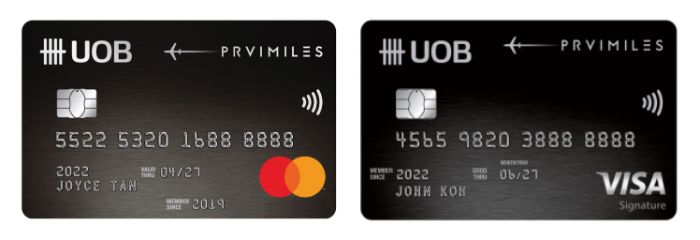
General spending cards fare poorly against the Trust Freedom Card under normal circumstances, but occasional promotions can significantly narrow the gap.
For example, the UOB PRVI Miles Card runs a biannual promotion offering 5 mpd on overseas shopping and dining. With this in play, the adjusted cost per mile falls to 0.88 cents (3.25% ÷ [5-1.3 mpd]).
HSBC Revolution 8 mpd mode
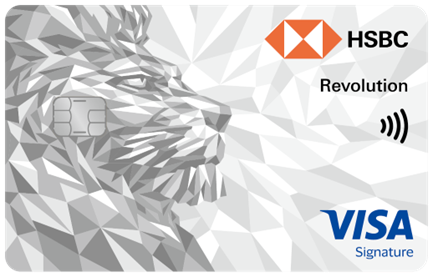
If you’ve decided to maintain S$50,000 in an HSBC Everyday Global Account to unlock 8 mpd with the HSBC Revolution, you should be trying your best to max out the S$1,200 bonus cap every month.
These bonuses also apply to overseas dining, shopping, transport and travel expenses, and with a 3.25% FCY fee, the adjusted cost per mile is 0.49 cents.
UOB Lady’s Cards 6 mpd mode
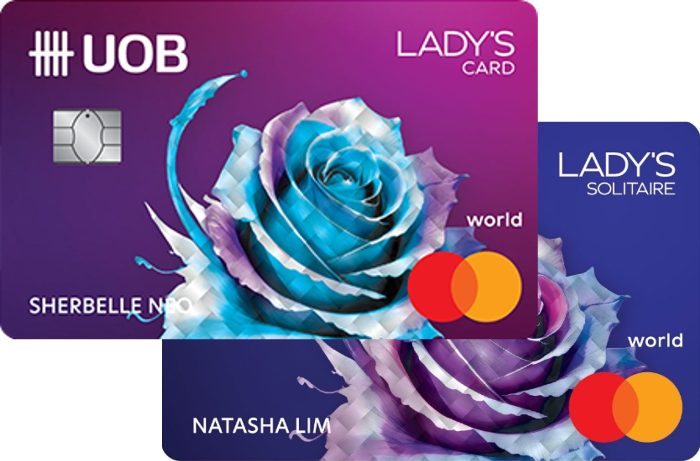
Likewise, if you’ve decided to maintain S$10,000 in a UOB Lady’s Savings Account to unlock 6 mpd with the UOB Lady’s Card/UOB Lady’s Solitaire, you should be trying to max out the respective bonus cap every month.
Bonuses also apply to overseas spending, and with a 3.25% FCY fee, the adjusted cost per mile is 0.69 cents.
Conclusion
The Trust Freedom Card’s biggest selling point — apart from the 100,000 miles sign-up bonus — is its lack of foreign currency transaction fees. The ability to earn “free miles” on overseas spending poses a serious challenge to the status quo, and warrants a long and hard think about whether a 3.25% fee is worth the incremental miles you’ll earn with other cards.
It remains to be seen how long Trust keeps this feature around, or if they eventually tie the benefit to AUM, but for now it’s a refreshing alternative that I’m glad we finally have.
How does the Trust Freedom Card fit into your overseas spending plans?

Card holders who are also Priority or Private clients still fare better using the Beyond card, unless they really just want to get free miles.
assuming you have bills to pay, sc easybill with 2.5% fee and 2 mpd earn rate is still cheaper miles than using sc beyond for overseas spending.
how about scb beyond?
well, the sums are simple enough. at Priority Private: 3.5% / (4-1.3)= 1.30 cents per mile.
Priority Banking: 3.5% / (3.5-1.3)= 1.59 cents per mile
good/bad? depends on you
of course I’d take 8 mpd on overseas dining without any question…
How about the Beyond Card for Priority Private customers? Even at 3.5% FCY fee, it is still a better option, and comes with no caps or travel exclusions. By the way, if you are an SCB cardholder, you will discover that they split your credit limits between your SCB cards and Trust card. SCB claims it is required by MAS. That was why I decided to cancel my Trust card.
Non-charge Amex cards and HSBC also split the limit. Most banks just share the limit which makes more sense. Different ways of complying with MAS limits. But it’s silly since people who really keep a balance would apply for cards with another bank. Until banks share data, it’s a pretty pointless MAS cap for the ‘vulnerable’ group that max out the rollover balance.
What about UOB PPV? Wouldn’t it rank equal to or higher than UOB VS given its lack of a minimum spend requirement?
sure, but I normally use it in SG anyway.
I’m in 2 minds about this card. Sounds like the mile accumulation speed might be a bit slow albeit mitigated by the 3 year mile expiry. Another number to keep track of. Most of my foreign spend tends to be for accommodation which I put on a particular card for the free nights. At 5 family trips a year assuming average 5k non-accommodation non-flight fx spend per trip it’s about about 100k miles after 3 years. Not quite enough for a return flight to Japan in J on SQ. After 3 years. And we don’t know when they will add… Read more »
My Trust card was the old card without the “Freedom” branding. Will it still work or will need to get the new card?
will still work. update app and select “miles” for reward category in the app
For me I would crown the trust freedom card the ”credit card of the year award 2026”. Not only does it allows freedom to choose between the different options like cashback and miles it also has a stockback option , which is kinda interesting But what the use of any rewards if the cost > rewards? E.g 4mdp with 3.25% is you paying $0.0081 /mile 1.3mdp with 0% fx cost = $0/mile But even better for the rest of 2026? I’m opting for the 3% stockback instead which would be giving me a value of 3% stockback + 3.25%(the lack… Read more »
What do you think of buying luxury items in Japan or Europe? I currently use a 2.4MPD card but it seems like this card provides better value.
Does it work like UOB cards (UNI$ are calculated based on the accumulated spend) for SimplyGo transactions?
While it earns 1.3 mpd, it still need $27.25 to transfer the miles to max miles or krisflyer miles. Imagine if I accumulate 10,000miles over three years, it will cost appx 0.27c per mile.
Hi Aaron, not sure if my math adds up, but the way I looked at it:
Trust – 1.3 miles for every $1 in FCY spent
Maybank XL – 4 miles for every $1.0325 in FCY spent….which works out to 3.87 miles for every $1 spent
3.87mpd outperforms 1.3mpd….am I doing the sums right here?
maybank xl rewards card has 3.25% fee and earns 4 mpd. let’s say you spend the equivalent of S$1,000 > that then becomes S$1,032.50 x 4 = 4,130 miles (ignoring rounding). if you spent the same amount on trust freedom card, you would have earned 1,300 miles with no fee. so you basically paid S$32.50 to earn an incremental 2,830 miles. cpm is 1.15 cents.