
The PPS Club is Singapore Airlines’ premier loyalty programme, and is exclusively reserved for big spenders on First and Business Class travel. Naturally, this comes with elevated benefits and priority treatment at every stage of the journey — especially for Solitaires.
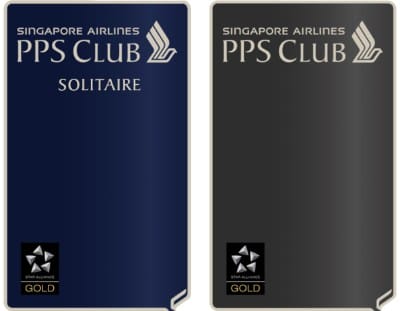
Now, as soon as I say that, I’m sure there’s going to be members jumping out of the woodwork shouting “Benefits? What benefits? Everything used to be better in the old days!” Is this just a case of romanticising the past, or do they have a point?
To answer that question, we’ll need to go back more than four decades to 1984. Steve Jobs has just launched the Macintosh personal computer. Diego Maradona is transferred from FC Barcelona to SSC Napoli for a world-record fee of £6.9M. Michael Jackson suffers an unfortunate hair-related mishap while filming a Pepsi commercial.
And Singapore Airlines is trying to solve a problem…
A history of the PPS Club
1984: The PPS Club launches
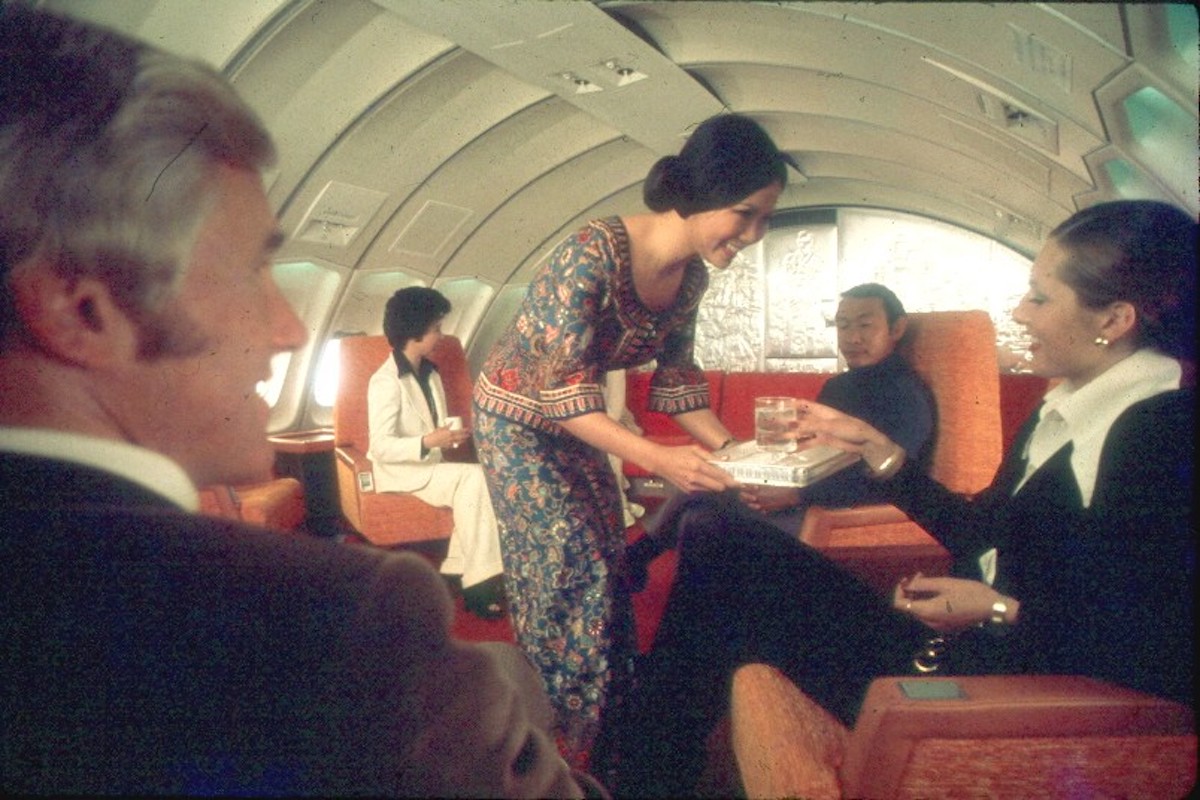
Frequent flyer programmes may feel like they’ve been around forever, but in the early 1980s, they were virtually unheard of.
American Airlines is widely credited with launching the world’s first programme, when it introduced AAdvantage in May 1981— beating United’s Mileage Plus by a mere 10 days. Delta and TWA were quick to follow suit, but the concept remained a largely North American phenomenon. Many carriers, particularly in Asia, were skeptical, believing that passenger loyalty would naturally follow from superior service, rather than a points system.
Singapore Airlines wasn’t in a rush to join the frequent flyer fray. Passages, its joint programme with Cathay Pacific and Malaysia Airlines (which feels almost surreal, given how far the three have diverged today), wouldn’t arrive until 1993, and KrisFlyer would only debut at the turn of the century in 1999.
However, it did want a way of recognising its most valuable passengers. After a pilot project in early 1984 demonstrated that customer information could be accurately tracked via computer, the airline began laying the groundwork for the so-called Priority Passenger Service, or PPS as we know it today.
The PPS Club was never designed as a mileage programme. Instead, it was part of a two-pronged strategy where SIA would use it to recognise premium cabin travellers worldwide, while piggybacking on the newly-launched AAdvantage programme to enable passengers to earn miles on North America flights, thereby avoiding a competitive disadvantage in that market.
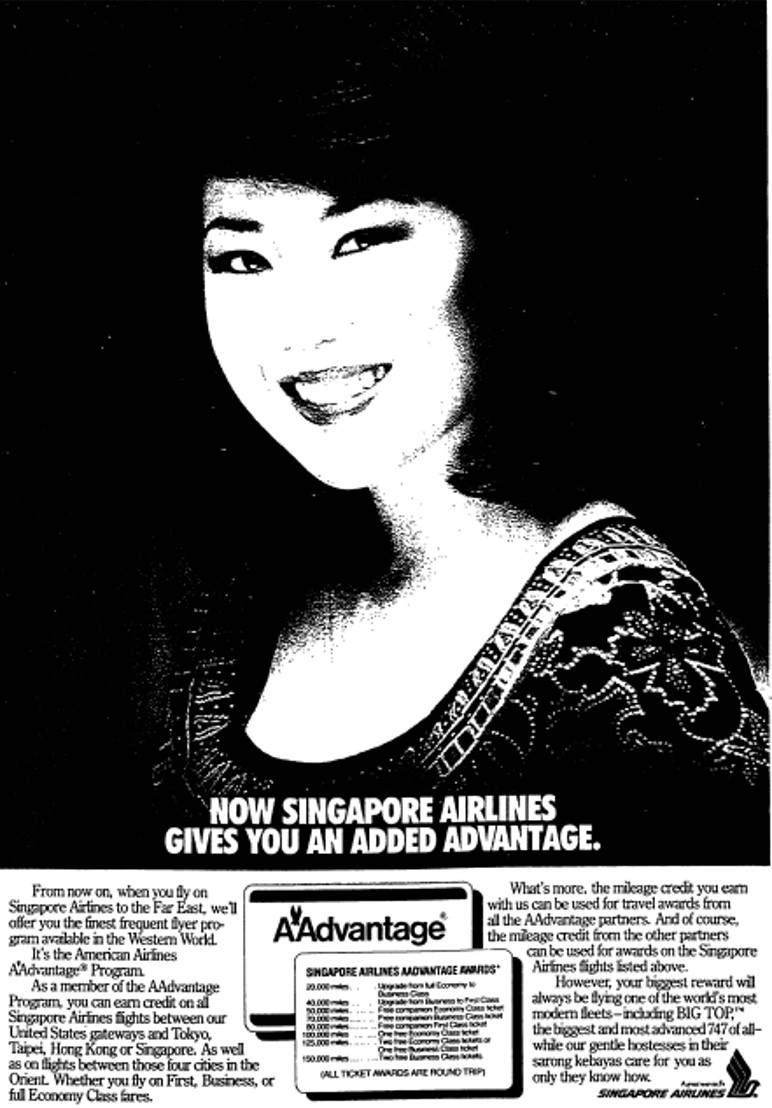
So in September 1984, SIA announced a tie-up with AAdvantage, with passengers able to accrue miles on flights to and from Los Angeles, San Francisco and Honolulu. 150,000 miles could be redeemed for two round-trip Business Class tickets on any of those routes— what a time to be alive!
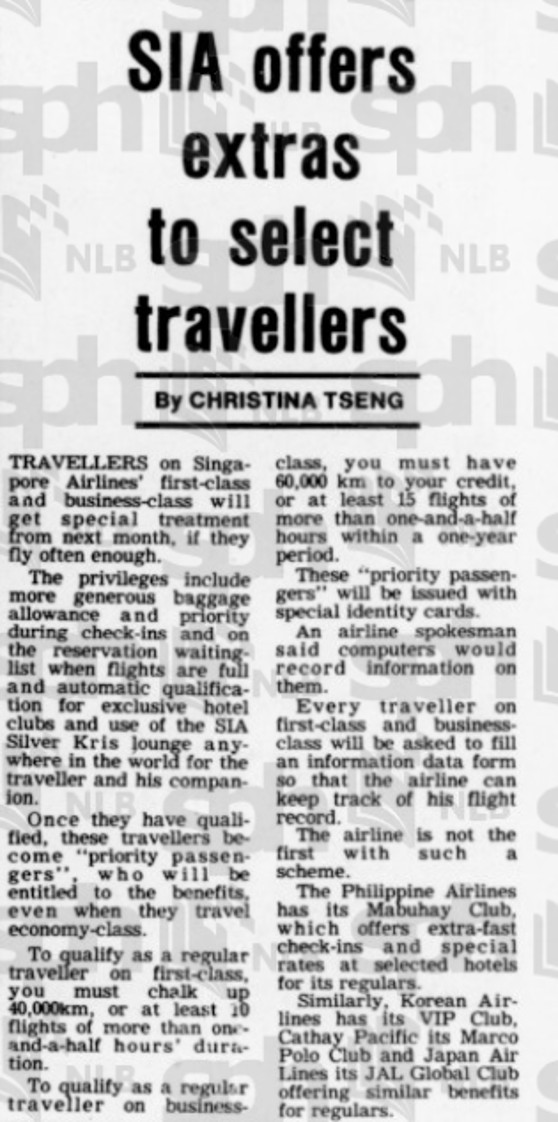
The PPS Club was launched the following month in October 1984. There was only a single tier at the time, and qualification required:
- 60,000 km or 15 flight sectors in Business Class, or
- 40,000 km or 10 flight sectors in First Class
And yes, that’s kilometres, not miles. In the days before KrisFlyer, SIA’s frequent flyer programme was metric!
Members enjoyed perks such as priority check-in, extra baggage allowances, lounge access and a 10% discount on mail-order items from the SilverKris shop (plus Metro, for whatever reason).
The programme proved to be extremely popular, with SIA reporting 57,000 applications in the space of two years (though only 2,000 met the qualification criteria). The airline announced that it expected 6,000 PPS Club passengers by March 1987.
| 🙅 But not upgrades! |
|
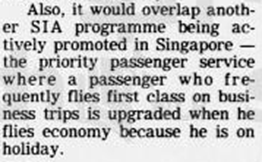
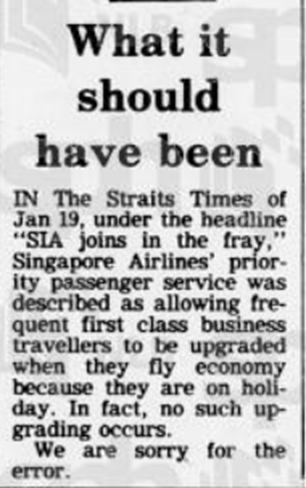
In one of the earliest articles covering the nascent PPS scheme, it was suggested that PPS members could be upgraded when they flew in Economy on holidays.
I’ll always find it amusing how Singapore Airlines found the idea so antithetical that it requested a correction, which was duly published the following week.
So if you’re a long-suffering PPS member who’s never been upgraded, chin up. It’s a feature, not a bug. |
1994: Solitaire tier introduced
By March 1994, SIA had increased the qualification requirement for PPS Club to 80,000 km or 25 flight sectors in either First or Business Class.
But that’s not all. It also launched an additional tier called “Priority Solitaire” (now known as Solitaire PPS Club) to provide additional recognition for long-time PPS Club members.
| Qualification | Requalification | |
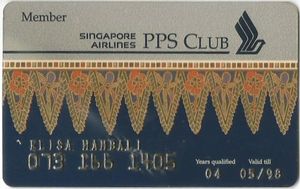 PPS Club PPS Club |
|
|
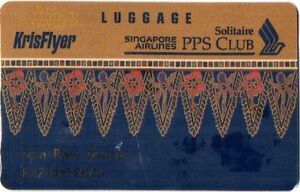 Solitaire PPS Club* Solitaire PPS Club* |
|
|
| *Note: This would technically not be the right card art, as KrisFlyer was only introduced in 1999. If you have something more accurate, do share it! |
||
Qualification for Priority Solitaire required customers to accumulate at least 800,000 km or 250 flight sectors, as well as five consecutive years of PPS Club status. If you had a lean year for whatever reason, too bad— you started from zero again!
For those who reached the promised land, however, great privileges awaited. Not only did Solitaires get all the standard PPS Club benefits, they also enjoyed:
- A supplementary card for spouses, with the same privileges
- Twice the regular baggage allowance
- First Class check-in, regardless of class of travel
- First Class SilverKris Lounge access worldwide, regardless of class of travel, even when travelling on other airlines
These benefits mostly remain till today— with the exception of the lounge access policy. It still blows my mind that until 2007, Solitaires could visit the First Class lounge whenever they travelled, period. They could be flying ValuAir (remember them?) and knocking back free champagne before boarding!
It wasn’t so bad for PPS Club members either, because they could access the First Class lounge whenever they flew in Business Class (then known as Raffles Class), or the Business Class lounge otherwise.
Oh, and have I mentioned the welcome and renewal gifts?
|
When you first qualify for Priority Passenger Service, you receive a handsome ‘Welcome Pack’, which includes an elegant leather portfolio. After completing your first year in PPS, you can select a gift from our special catalogue for each year that you remain in the programme. Naturally, Singapore Airlines has taken great care in the selection of gifts. We’ve chosen items of high quality and value from all over the world. The selection ranges from fine crystal, travel accessories and elegant writing instruments to ornate Selangor pewter, quality silverware and valuable objects d’art. -Singapore Airlines |
SIA offered its PPS Club members a gift for each year of membership. In your first year, you received an elegant Waterman pen, and in the second and subsequent years, you could take your pick from a catalogue that featured other options like wallets and passport holders.
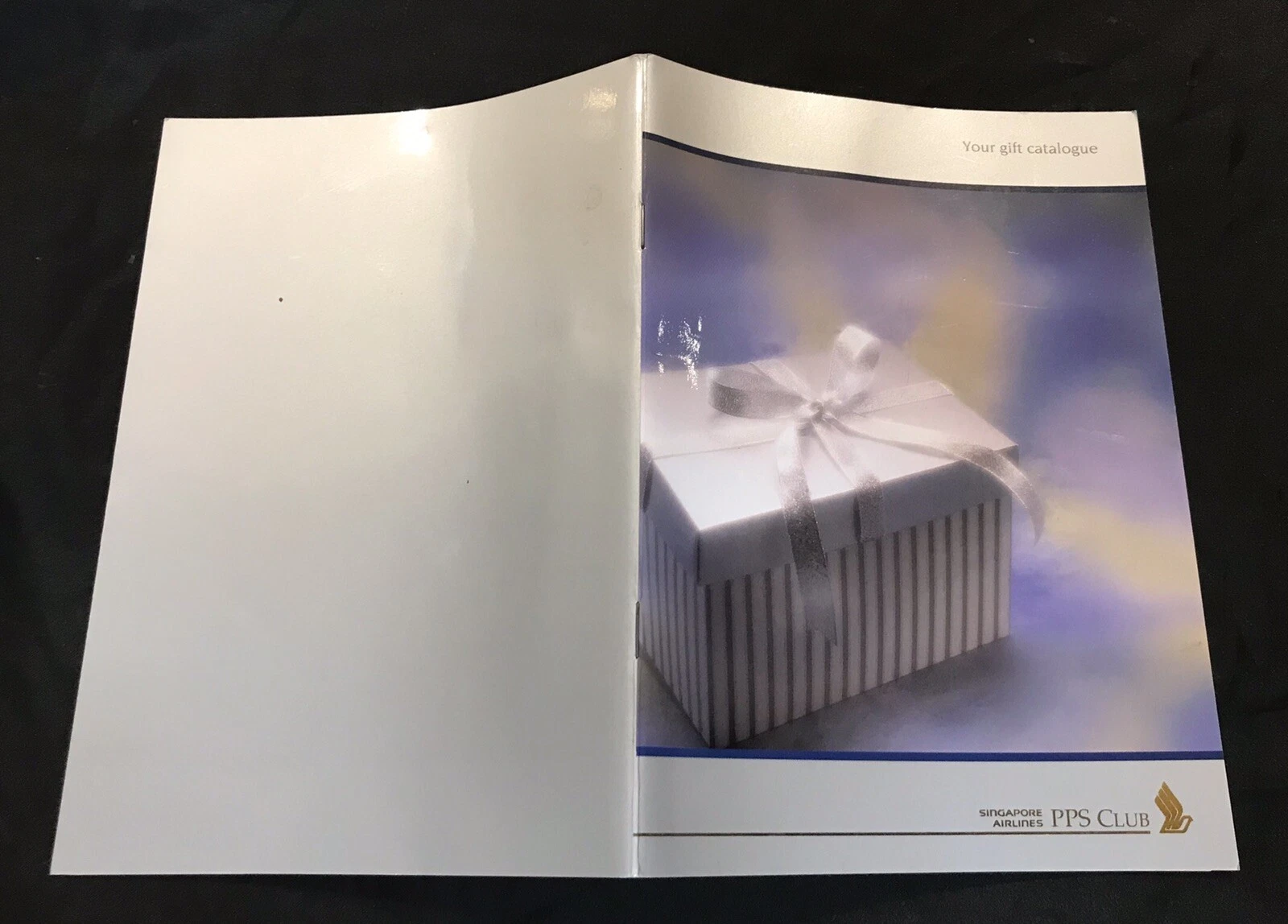
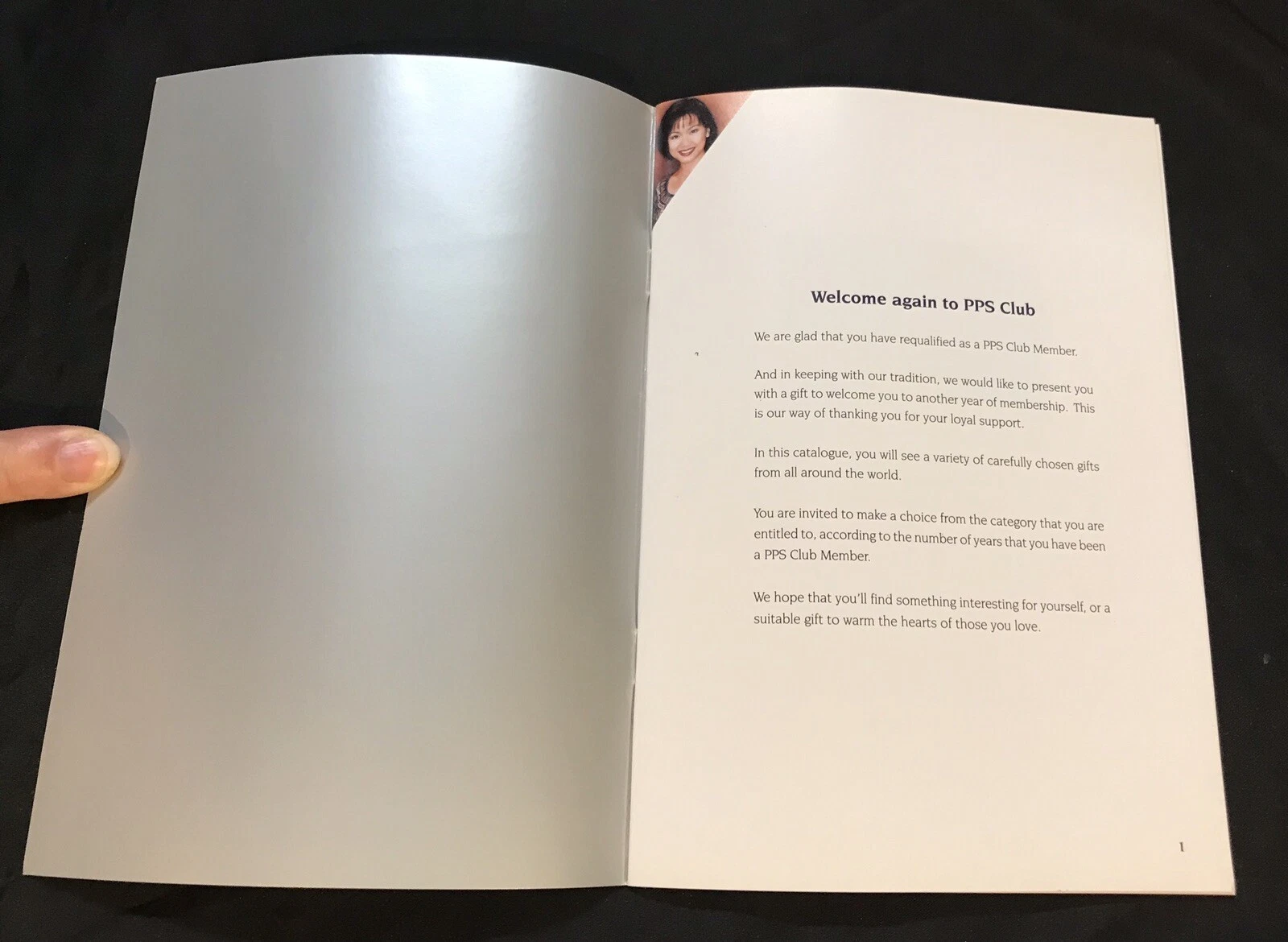
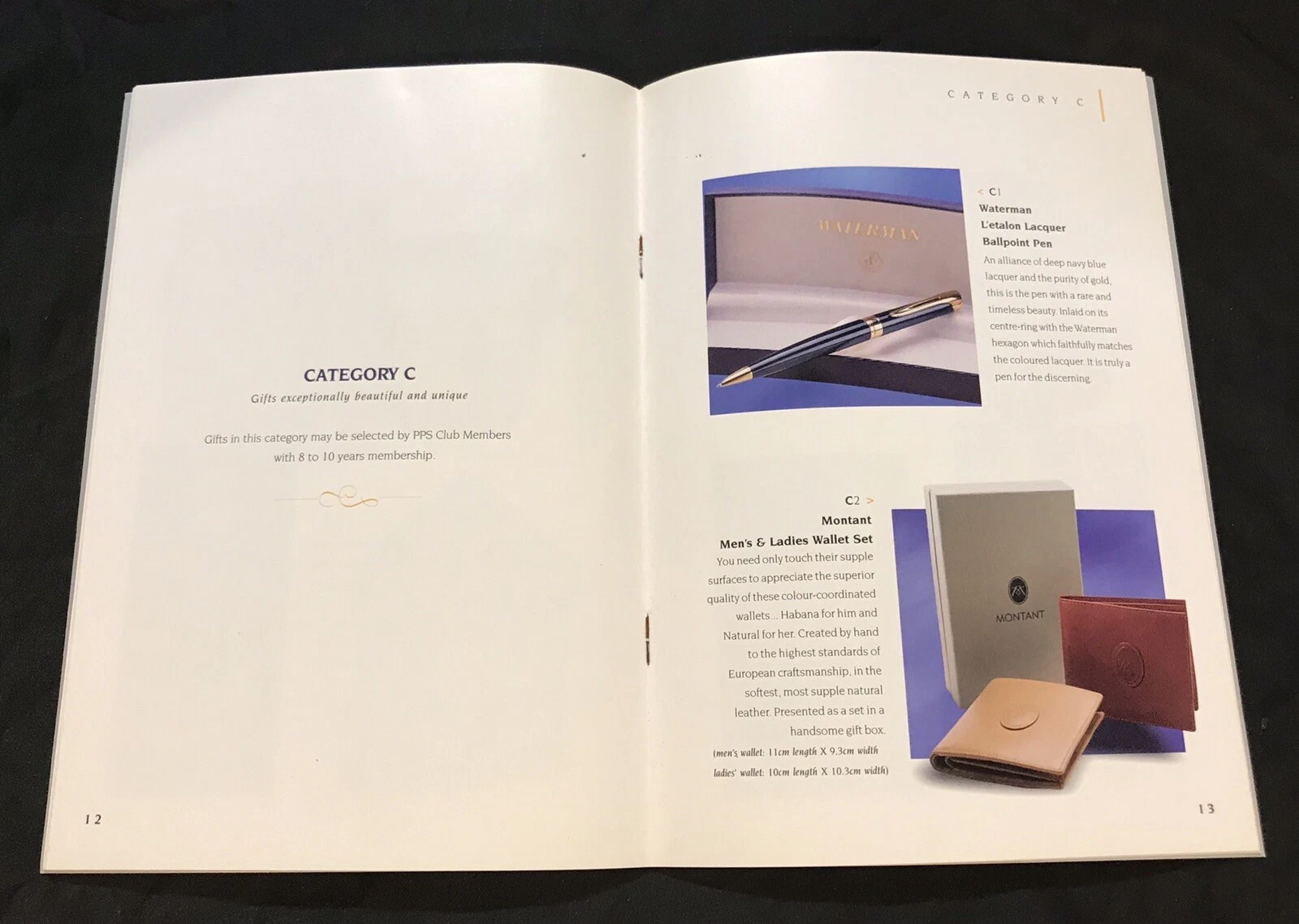
Sadly, in 2004, SIA replaced the gift catalogue with KrisShop vouchers. I guess in one sense they’re more practical, because the member can choose exactly what they want, but it’s definitely less romantic!
Today, Solitaire PPS Club members can expect to receive S$380 of KrisShop vouchers, and PPS Club members S$280.
1997: Life Solitaire PPS Club introduced
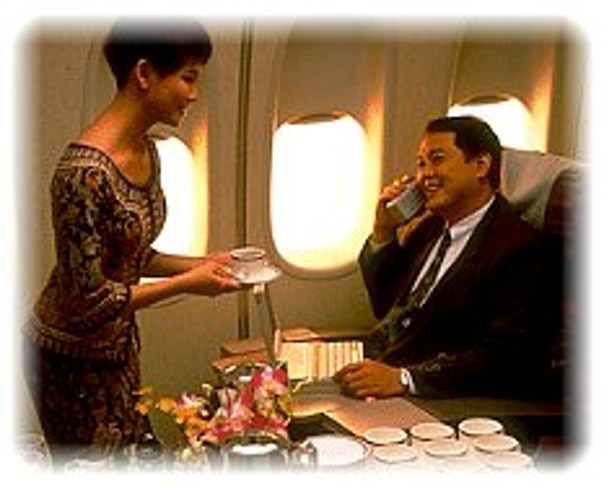
Another major development came in early 1997, when Singapore Airlines introduced Lifetime Solitaire PPS Club status. Members who accumulated at least 3,000,000 km or 1,000 flight sectors over their lifetime would never again have to bother with requalification.
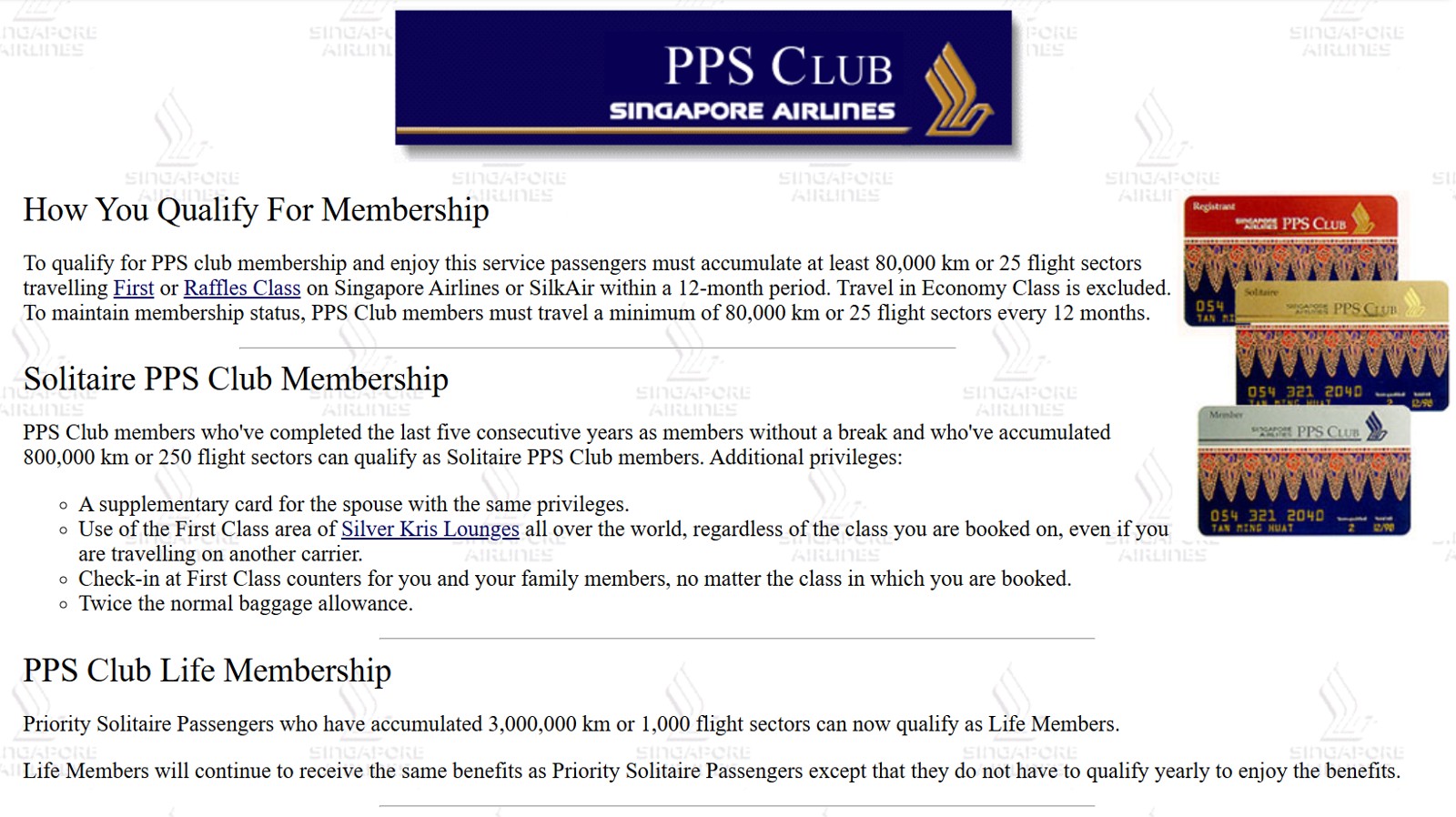
Life status quickly became the holy grail of many a Solitaire member, especially those who were reaching the twilight years of their careers.
3,000,000 km is roughly equivalent to 75 trips around the globe, or four round-trips to the moon. That said, the vast majority probably qualified through sectors, and cabin multipliers reduced the actual distance one had to fly.
1999: KrisFlyer launches (and everything goes imperial)
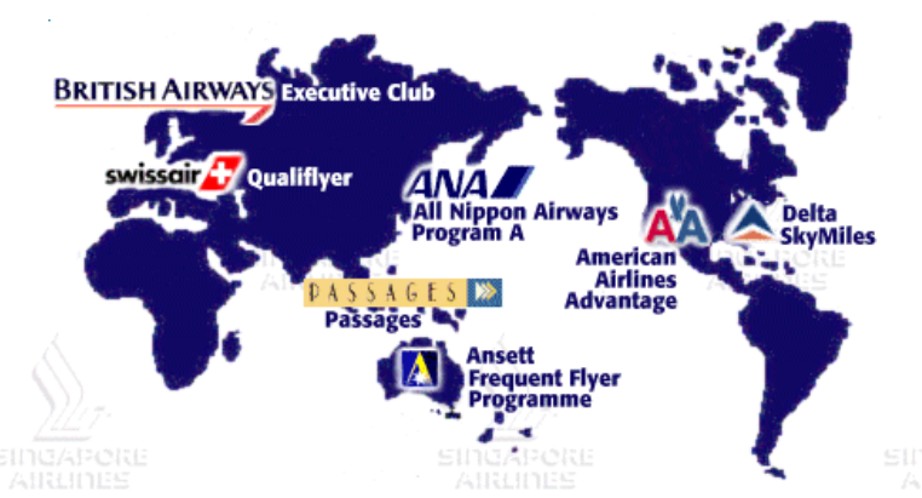
Before KrisFlyer, Singapore Airlines was using a patchwork of frequent flyer programmes.
 |
|
| Resident | Programme |
| Singapore, Asia (ex-Japan), Africa | Passages |
| North and South America | American Airlines AAdvantage Delta SkyMiles |
| Europe | British Airways Executive Club Swissair Qualiflyer |
| Australia and New Zealand | Ansett Global Rewards |
| Japan | All Nippon Airways Program A |
Members in Singapore joined Passages, but if you were based on Australia, you’d use Ansett Global Rewards. If you were in Japan, you’d use ANA’s Program A. If you were in Europe, you had a choice between British Airways Executive Club or Swissair Qualiflyer (I’m sure some of those names will take you way back!) and so on.
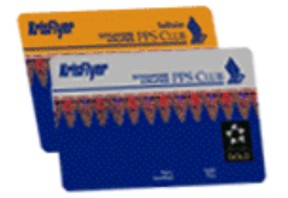
This was vastly simplified in 1999, when Singapore Airlines launched its very own frequent flyer programme KrisFlyer. With KrisFlyer, metric went imperial, and the existing distance-based qualification thresholds were adjusted by a factor of 1.6. Seems fair, right?
| Qualification | Requalification | |
 PPS Club PPS Club |
|
|
| Solitaire PPS Club |
|
|
| Solitaire PPS Club Life Member |
|
N/A |
Not quite. 80,000 km is actually 49,710 miles, so members found themselves having to fly an extra 290 miles (for scale, SIN-KUL is 184 miles) to qualify.
Additional perks during this era included a fast-track to Hilton Honors Gold VIP (back when it actually meant something!), Hertz Gold status (with upgrade coupons), a Singtel international calling card, a Hyatt Regency Club upgrade voucher, and a one-year subscription to a magazine of your choice.
2003: Solitaire qualification eased
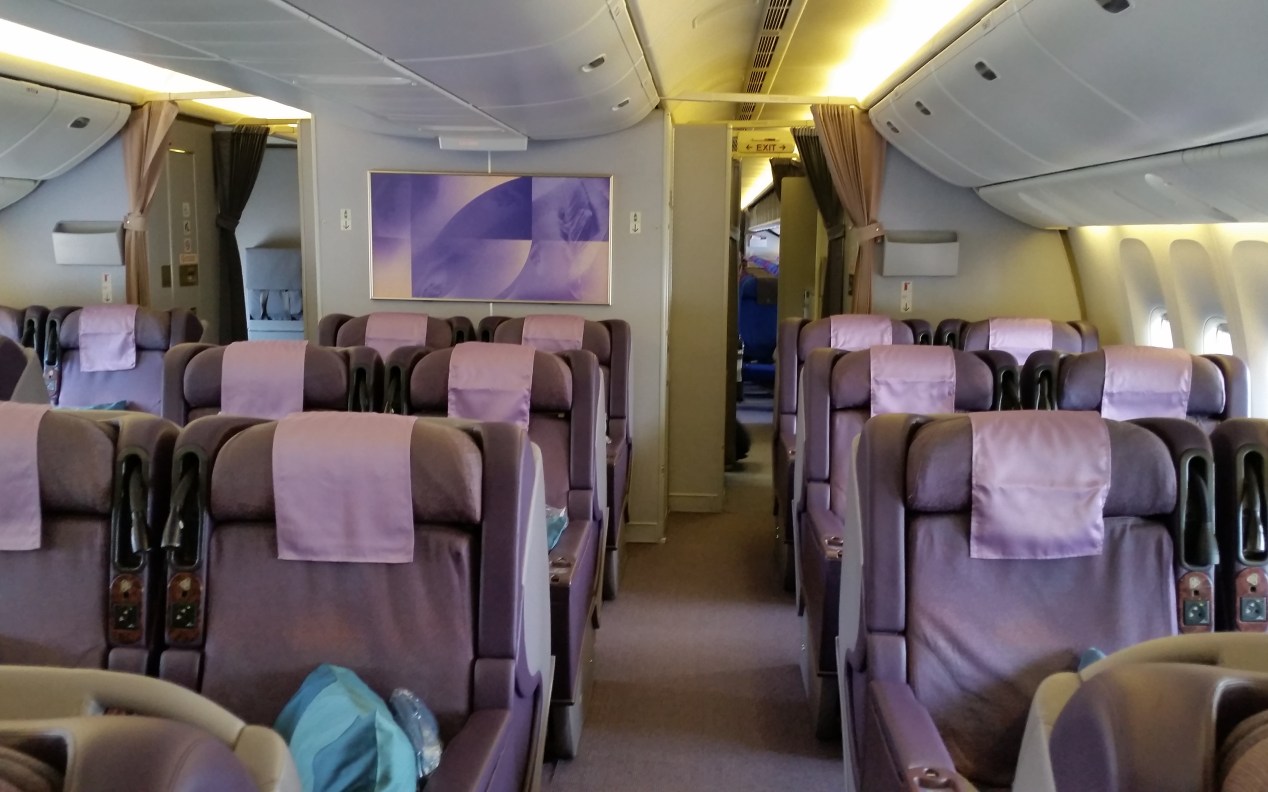
Remember that “five consecutive years” requirement that vexed so many PPS Club members? Singapore Airlines finally did away with it in 2003.
|
We are very pleased to announce that upgrading to the Solitaire Tier will happen without the need to reach the fifth consecutive year as a PPS Club member, as long as you have either 500,000 miles or 250 sectors. -Singapore Airlines |
This meant that someone could either sprint to Solitaire by having a manic one or two years, or work their way slowly by accumulating PPS Club miles or sectors over a prolonged period.
| Qualification | Requalification | |
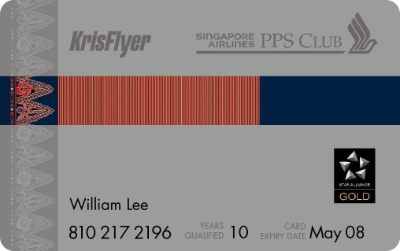 PPS Club PPS Club |
|
|
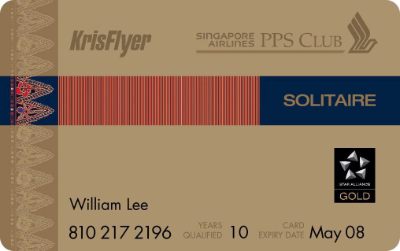 Solitaire PPS Club Solitaire PPS Club |
|
|
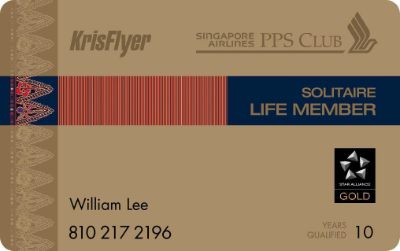 Solitaire PPS Club Life Member Solitaire PPS Club Life Member |
|
N/A |
Life was good. And then…
2007: The great PPS cull
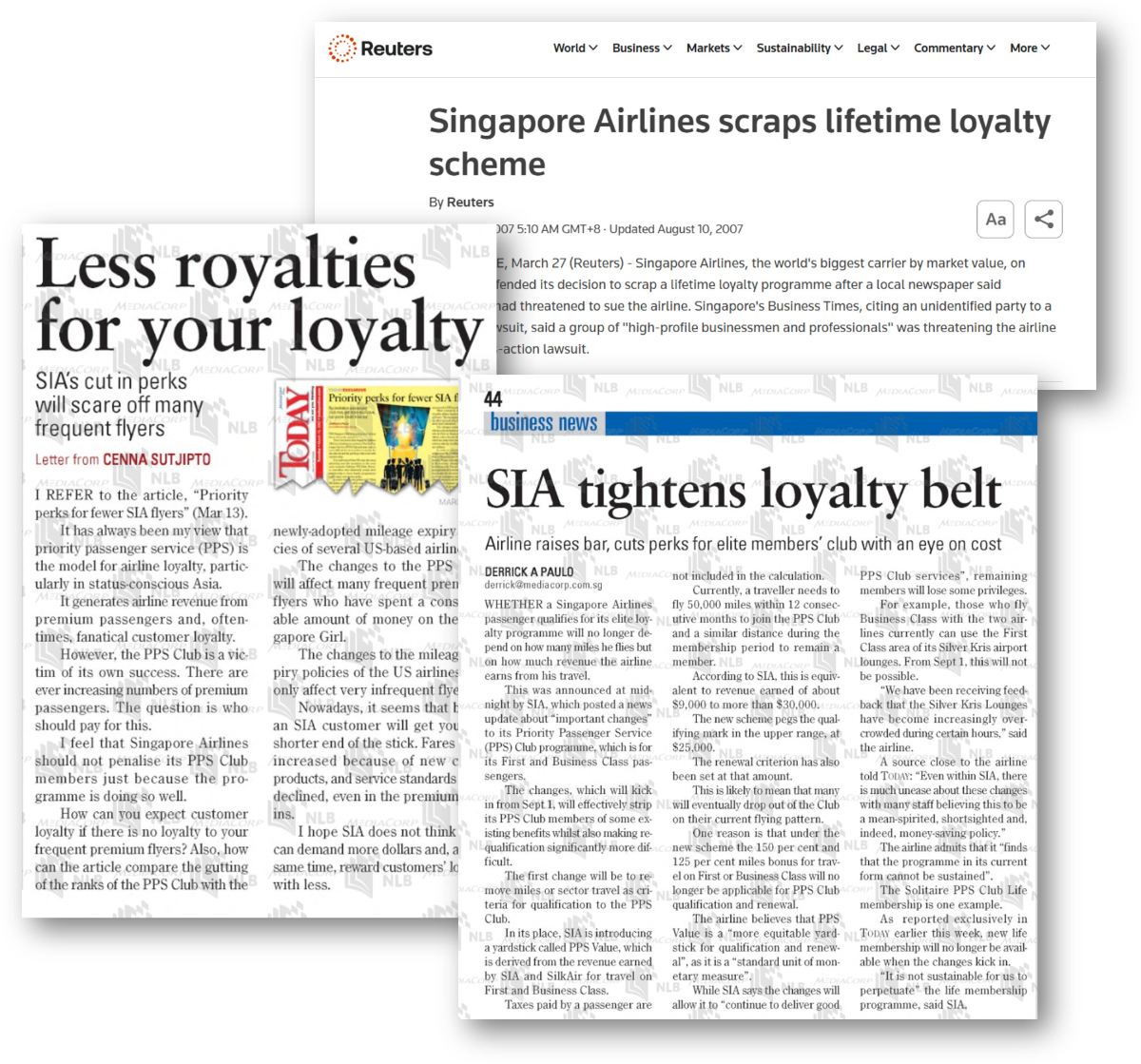
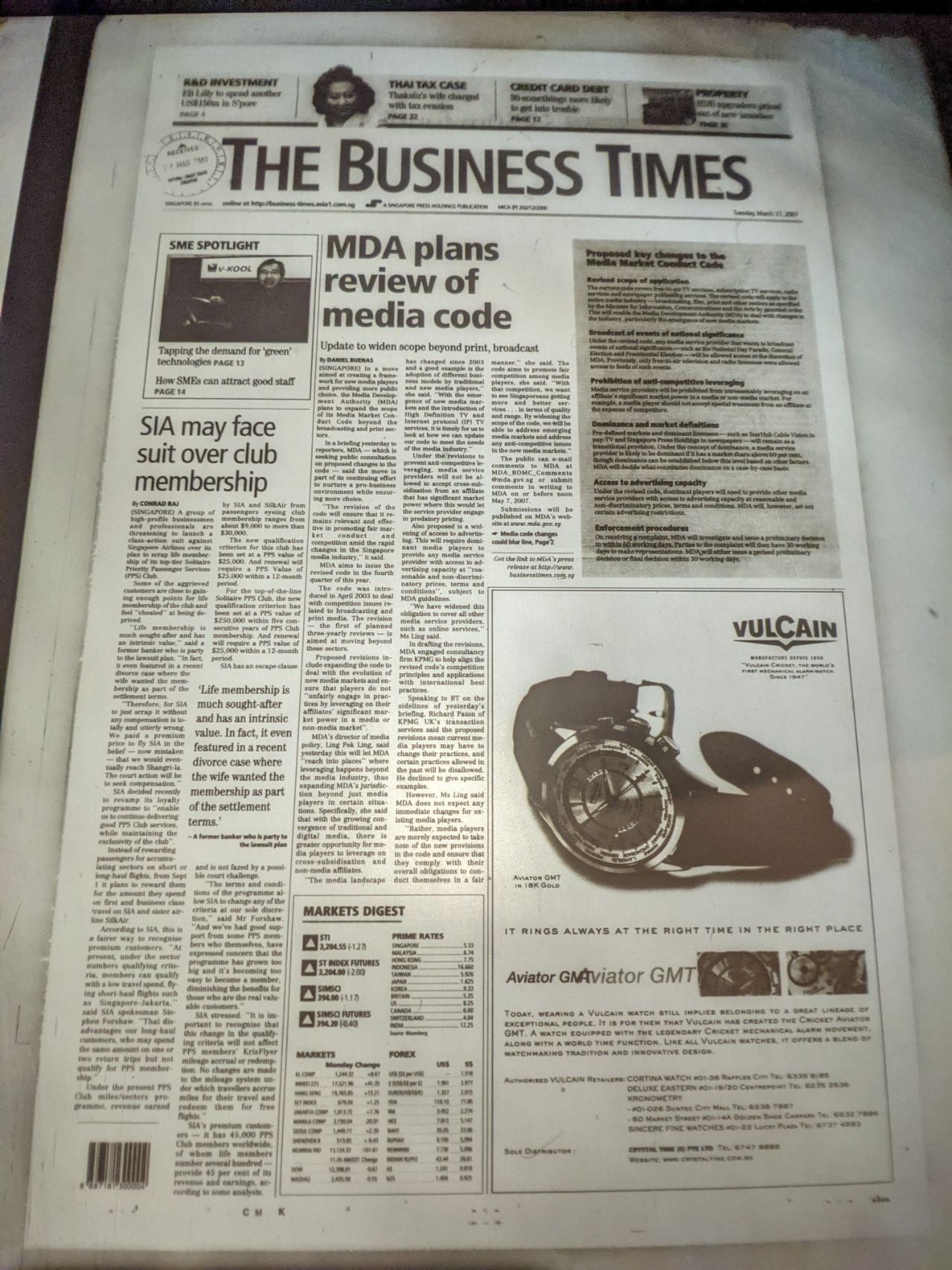
In March 2007, Singapore Airlines dropped a bombshell by announcing a major shake-up to the PPS Club.
|
Over the last 20 years, many services and benefits have become an integral part of the PPS Club programme. After careful consideration, we find that the programme in its current form cannot be sustained into the future. The primary consideration for the change in the membership qualification and renewal criteria is that the PPS Value, being a standard unit of monetary measure, is a more equitable yardstick for qualification and renewal. For instance, under the current PPS Club miles/sectors programme, the revenue earned by Singapore Airlines and SilkAir to be eligible for PPS Club membership range from about S$9,000 to more than S$30,000. The new PPS Club qualification and renewal criteria have been set at a PPS Value of S$25,000. For us to continue to deliver good PPS Club services and still maintain the exclusivity of the PPS Club, we will be introducing a number of changes to the programme from 1 September 2007. -Singapore Airlines |
If you believe the rumours, the objective of this exercise was to thin the herd of PPS members significantly, which at the time numbered more than 45,000.
“Yes this is an attempt to make the PPS Club more exclusive. But it’s also a more questionable one. There are drawbacks for the estimated 80 per cent of current members as they will simply be kicked out of the programme.”
-Ravindra Bhagwanani, Global Flight
The biggest change of all was that qualification became strictly revenue-based, by replacing PPS Club miles and sectors with the PPS Value we know today.
Qualification was set at 25,000 PPS Value for PPS Club, and 250,000 PPS Value within five consecutive years for Solitaire PPS Club. The addition of the “five consecutive years” requirement eliminated the “slow and steady” approach to Solitaire, made possible following 2003’s change.
| Qualification | Requalification | |
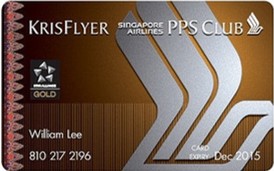 PPS Club PPS Club |
|
|
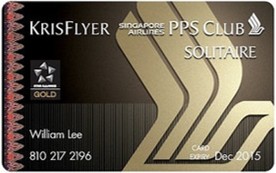 Solitaire PPS Club Solitaire PPS Club |
|
|
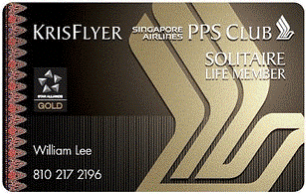 Life Solitaire PPS Club Life Solitaire PPS Club |
Closed to new members | |
SIA positioned this as a “more equitable yardstick”, citing that it was currently possible to qualify for the PPS Club with as little as S$9,000. How did that work? I imagine it would involve earning PPS Sectors from flights at the lower range of each distance band.
| ✈️ Pre-September 2007 PPS Club sectors |
||
| Actual Miles Flown | PPS Club sectors (First Class) |
PPS Club sectors (Business Class) |
| 6,214 miles and above | 6 | 5 |
| 4,350 to 6,213 miles | 4.5 | 3.75 |
| 2,485 to 4,349 miles | 3 | 2.5 |
| 482 to 2,484 miles | 1.5 | 1.25 |
| 481 miles and under | 0 | 0 |
Take Jakarta, for example. At 546 miles, it just snuck into the lowest qualifying band (no PPS Sectors were earned on Kuala Lumpur, Penang, or any other routes below 481 miles). At 2.5 PPS Sectors per Business Class round-trip, 10 round-trips were all that was necessary for PPS Qualification, making S$9,000 spend very much possible.
Just like PPS Sectors, PPS Value could only be earned on First and Business Class travel with SIA or SilkAir. In fact, when the concept was first introduced, it did not even include fuel surcharges! Fuel surcharges were only included in the calculation from July 2013 (and SIA did away with them altogether in 2017).
Lounge access was also tightened significantly. PPS Club members were no longer granted access to the First Class lounge when they flew in Business Class, and Solitaire PPS Club members had to be flying on SIA or SilkAir to access the First Class lounge.
Perhaps more controversially, SIA also decided to stop accepting new Lifetime Solitaire PPS Club members, though it allowed existing members to keep their status.
|
Q: Why are you taking away Life membership? A: Simply that it is not sustainable for us to perpetuate the Solitaire PPS Club Life membership programme. Therefore Solitaire PPS Club Life membership will be closed to new members from 1 September 2007. Current Life members will retain their Solitaire PPS Club Life membership status. |
This led to a lawsuit — ultimately unsuccessful — by a group of disgruntled members. Said one of the plaintiffs, rather poetically, “We paid a premium price to fly SIA in the belief — now mistaken — that we would eventually reach Shangri-La. The court action will be to seek compensation.”
The general sentiment (at least at Airline House) was that Lifetime Solitaire PPS was “too easy” to earn, and while 1,875,000 PPS Club miles may sound like an astronomical amount of flying, the alternative route of 1,000 PPS Club sectors was actually very achievable, given enough time. For example, if you were to hop between Singapore and Jakarta twice a week in Business Class, as many business travellers did, it would take you around four years to earn lifetime status.
Incidentally, the discontinuation of lifetime membership has led to an awkward issue. Just how do you know when a member dies, anyway?
2009: PPS Reserve introduced
In 2009, SIA introduced the concept of PPS Reserve for Solitaire PPS Club members. This was basically a tool to allow them to store up value in “good years”, and redeem it in “lean years”.
|
From 1 June 2009, when you renew your Solitaire PPS Club membership, the PPS Value that is above S$25,000 will be stored in your account as Reserve Value.
In future years, your Reserve Value can be used to top up your PPS Value if you are unable to accrue the PPS Value of S$25,000 necessary for Solitaire PPS Club membership renewal. -Singapore Airlines |
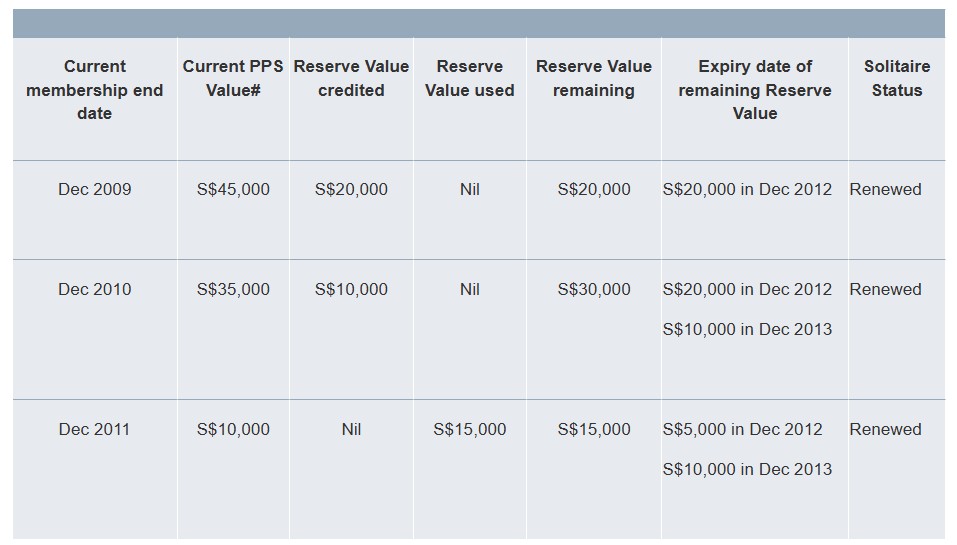
In October 2013, PPS Reserve was extended to regular PPS Club members too, at which point, the validity for Solitaires was doubled to six years— though as we’ll see, it got cut again later.
2017: Another major shake-up
The next big shake-up to the PPS Club came in June 2017.
It wasn’t all bad, because Singapore Airlines added valuable new benefits:
- Miles would never expire for Solitaire PPS and PPS Club members, so long as they maintained their status
- A new milestone benefits scheme called PPS Rewards was introduced
- Solitaire PPS and PPS Club members received Priority access to Saver awards
- Solitaire PPS and PPS Club members received complimentary exit row seats in Economy or Premium Economy
- Solitaire PPS members received reimbursement of the application fee for an APEC Business Travel Card
Moreover, it became easier to qualify for the Solitaire PPS Club, with the criteria changed from 250,000 PPS Value within five consecutive years to 50,000 PPS Value in a single year.
| Qualification | Requalification | |
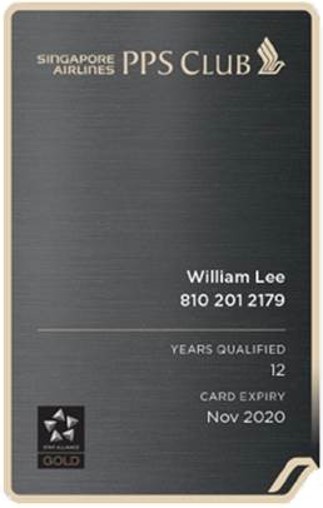 PPS Club PPS Club |
|
|
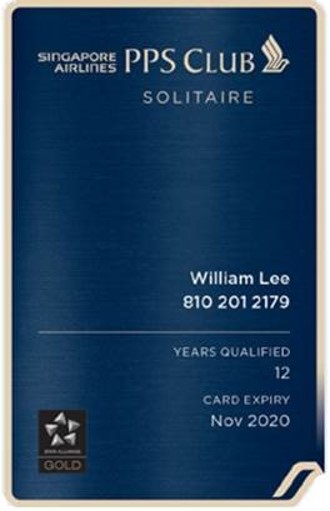 Solitaire PPS Club Solitaire PPS Club |
|
|
But here’s the catch: Solitaire was easier to earn, but harder to retain. SIA doubled the requalification threshold for Solitaire from 25,000 PPS Value to 50,000 PPS Value, and cut the PPS Reserve validity for this group back to three years.
To be fair, it did grandfather anyone who qualified before 1 June 2018, allowing them to retain their membership for “just” 25,000 PPS Value.
| Solitaire PPS Club (Qualified before 1 Jun 18) |
Solitaire PPS Club (Qualified from 1 Jun 18) |
|
| PPS Value for Qualification | 250,000 over a max. of 5 consecutive years | 50,000 in 1 year |
| PPS Value for Renewal (in 12-month period) |
25,000 | 50,000 |
| Reserve Value Validity Period | 6 years | 3 years |
So if you were ever confused about why we have a two-tiered Solitaire PPS system today, this is why. In fact, we see relics of it everywhere:
- Non-flight status credits are capped at 2,500 PPS Value for Solitaire PPS Club earned before 1 June 2018, and 5,000 PPS Value otherwise. This ensures that members earn a maximum of 10% of the qualifying status credits from non-flight activity
- During the COVID pandemic, SIA awarded 25,000 Reserve Value to legacy Solitaires, and 50,000 Reserve Value to post-June 2018 Solitaires. The idea was to extend everyone’s membership by a further year
What’s next?
While there have been incremental perks added to the PPS Club since 2017, such as SilverKris Lounge access for Solitaire PPS Club members flying Scoot, the programme has remained largely unchanged since 2017.
| ✈️ Overview: Solitaire PPS Club & PPS Club | ||
| PPS |
Solitaire PPS |
|
| PPS Value Req. (in 12-mth period) |
25,000 | 50,000* |
| Star Alliance Status | Gold | Gold |
| Mileage Bonus | 25% | 25% |
| Non-Expiring Miles | ✅ | ✅ |
| Priority Award Redemptions | ✅ | ✅ |
| Priority Waitlist | ✅ | ✅ |
| Free Seat Selection | ✅ | ✅ |
| Birthday Bonus | ✅ (2,000 miles) |
✅ (2,000 miles) |
| Discounted Service Fees | ✅ | ✅ |
| Priority Check-in | ✅ Business Class |
✅ First Class |
| Extra Baggage | ✅ | ✅ |
| Priority Baggage | ✅ | ✅ |
| Priority Boarding | ✅ | ✅ |
| Lounge Access | ✅ SKL Business Class |
✅ SKL First Class |
| Shangri-La Jade Fast Track | ✅ | ✅ |
| Heathrow Express Upgrade | ✅ | ✅ |
| Supp. Solitaire PPS Club Card | ✅ | |
| APEC Card Reimbursement | ✅ | |
| *25,000 if status attained before 1 June 2018 | ||
But we’re fast approaching 10 years since the last major revision to PPS qualification criteria, and based on historical precedent, we should expect to see some changes announced soon.
An increase in the minimum spend for PPS qualification is almost certain, in my opinion. Think about it: it’s remarkable that the minimum spend for PPS Club has remained at S$25,000 for almost 20 years, and if anything, it’s easier to qualify today than it was in 2007, given inflation and the fact that from 2007 to 2013, fuel surcharges weren’t included in the calculation.
The question isn’t really when, but rather how much. That’s another topic for another time, though I’ve already shared some benefits I’d like to see added as the carrot to the inevitable stick.
Conclusion
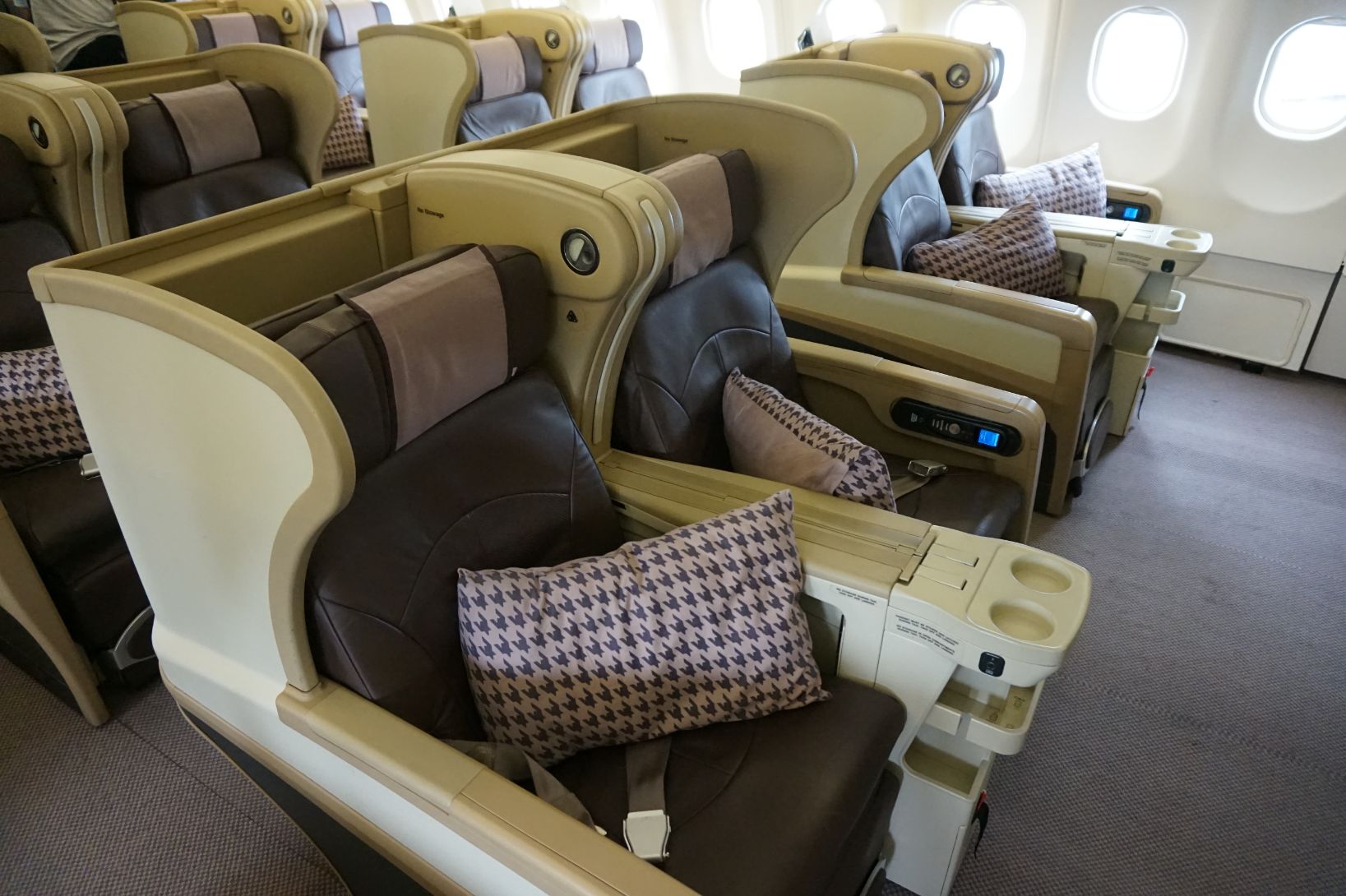
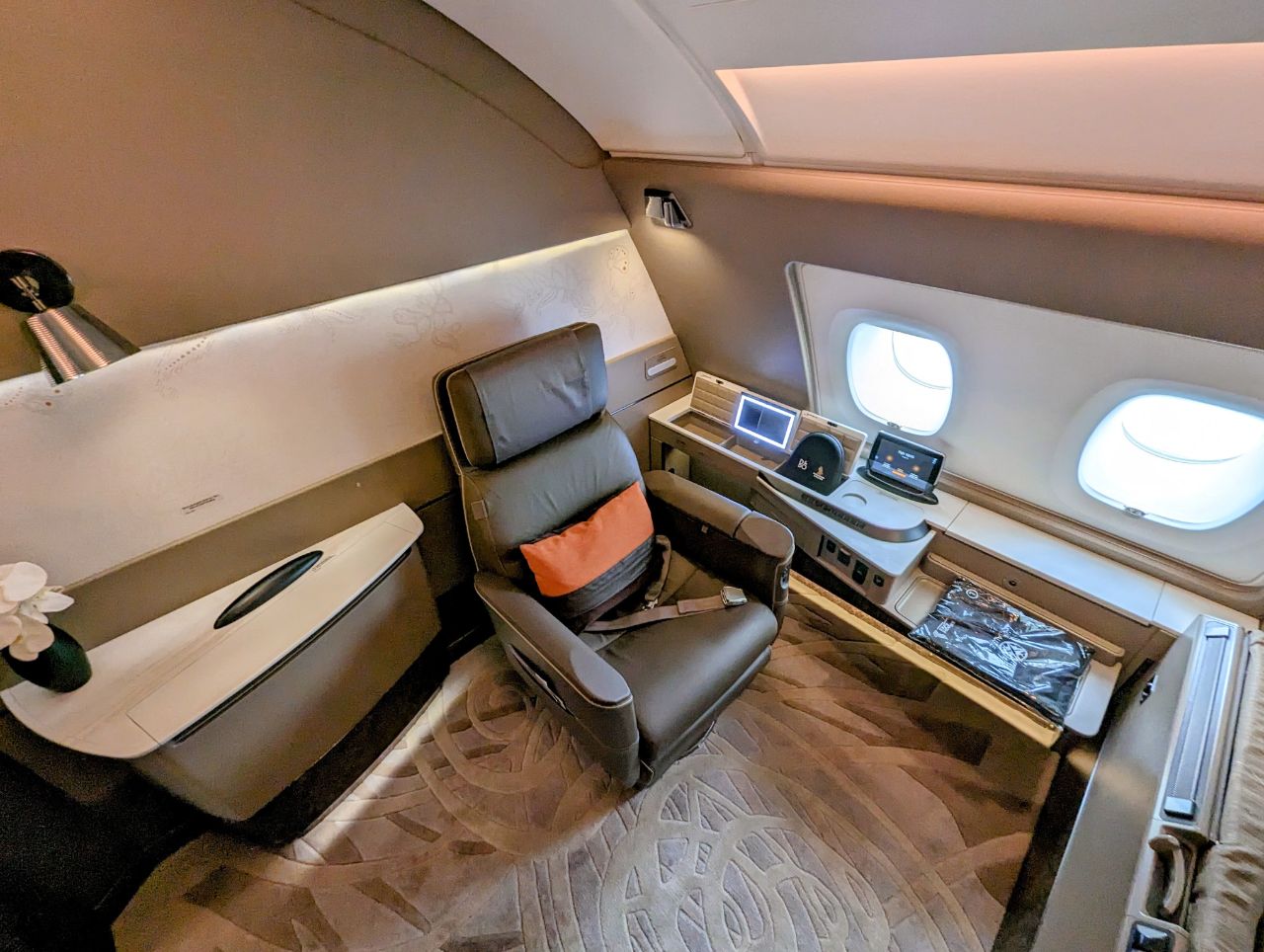
Singapore Airlines’ Priority Passenger Service has come a long way since 1984, and while I’m sure there are some who are nostalgic for the good old days of anytime lounge access and renewal gift catalogues, I doubt they’d trade modern-day Business Class seats for Spacebeds and Ultimo recliners.
As for what the future holds, your guess is as good as mine.
Should there be a return of lifetime status, perhaps in the form of non-expiring PPS Reserve? Does SIA need an invite-only tier beyond Solitaire (I call dibs on SolitaireOne), similar to Global Services and ConciergeKey? And is it time to introduce other sorts of PPS Rewards, like force clears for waitlists or TPR lounge passes?
We’ll have to wait and see!
What other memories of the PPS Club do you have?




I liked the PPS sticker that they used to put on your boarding pass. It was a great differentiator at boarding gate and upon entering the aircraft to be recognised as a high value loyal member.
i remember those stickers! They still do it now, but only for TPPS i believe
I confirm and only ex-SIN and only from the First Check-In.
Another enjoyable trip down memory lane!
I used to enjoy browsing the PPS Gift Catalogue each year and reading the printed subscriptions to Fortune and later The Economist.
I was one of those leeches in 2006 that qualified on sectors with one creative SQ/VS RTW J ticket. Paid around S$7K for it, and it was a nice bonus. I remember one of the perks back then was a big discount on Rimowa – I bought a Salsa 28 for S$600 that I still have.
I love it when Aaron does these deep dives.
Great article Aaron thank you, although it’s made me late for work today because I spent so long reading it haha!
On a side note I really prefer the old school PPS cards with the SQ Batik design on them compared to the modern minimalist designs – so much better in my opinion!